Makola Market
This central market, a cornerstone of Accra's commerce, once faced a dramatic and controversial demolition.
Full story unlocks in the tour
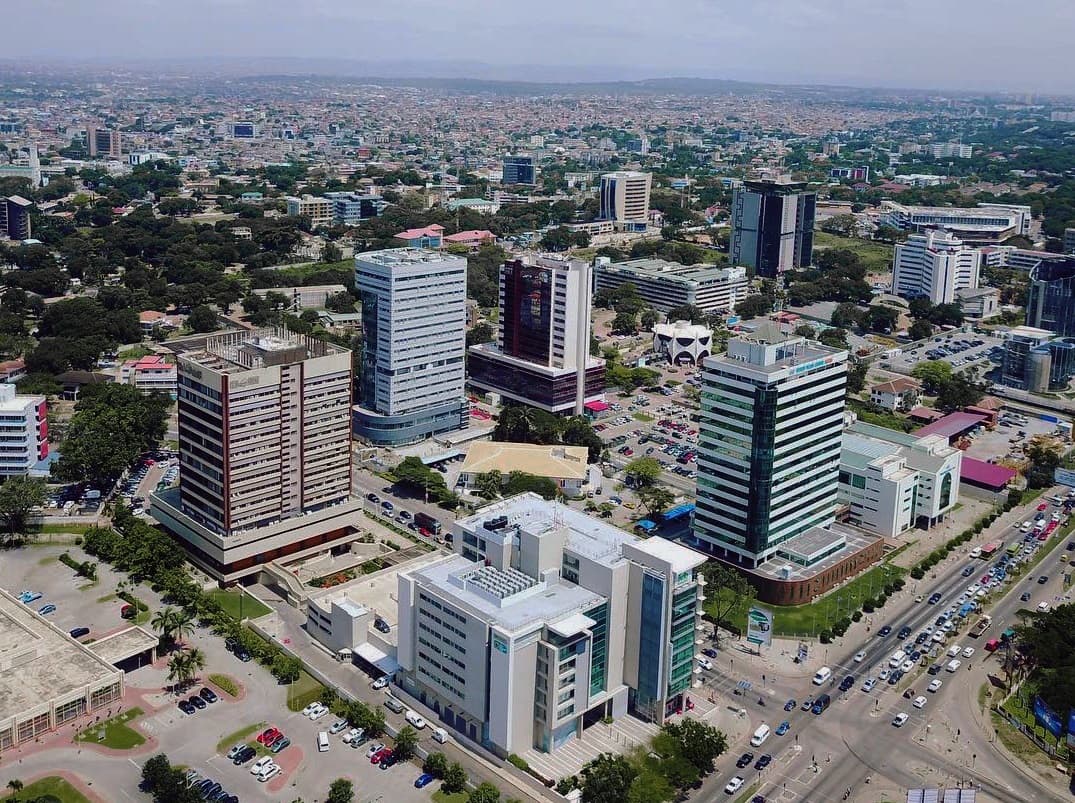 Amoat7 / CC BY-SA 4.0, via Wikimedia Commons
Self-guided audio walking tour of Accra — GPS route, offline playback, story-driven narration in 32 languages.
“Accra: The heartbeat of West Africa resonates through lively markets and enduring narratives.”
Not the postcards. The stories even locals don't know — whispered in your ear, right where they happened.
This central market, a cornerstone of Accra's commerce, once faced a dramatic and controversial demolition.
This imposing castle, a former seat of government, was once seized by an unexpected group disguised as merchants.
The current lighthouse is not the original, and its site holds an even older, fortified secret.
Discover every secret of Accra
Every address, every reveal in full — in your ear, right where it happened.
You pick your stops. You walk. The voice reveals what the others miss.
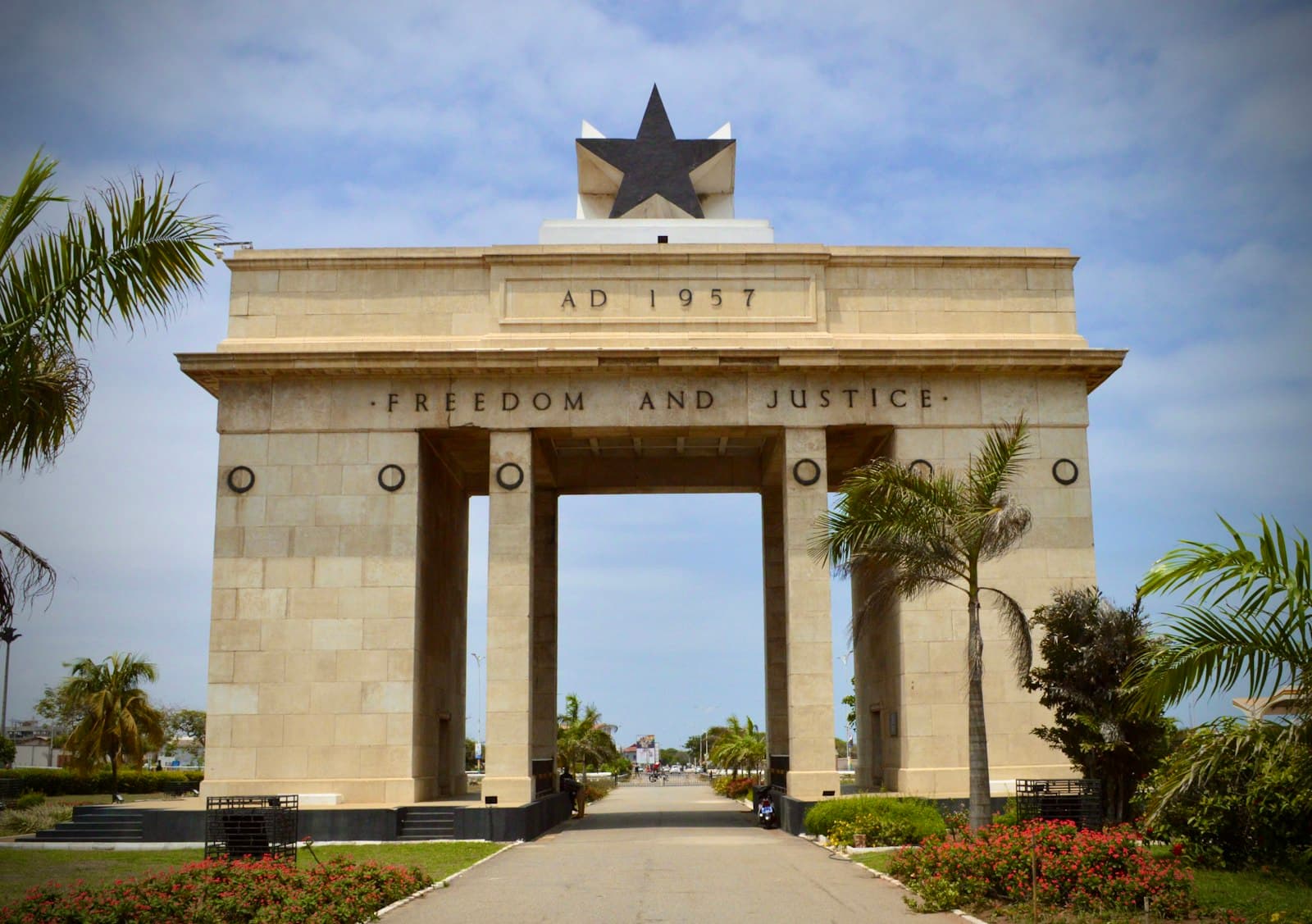
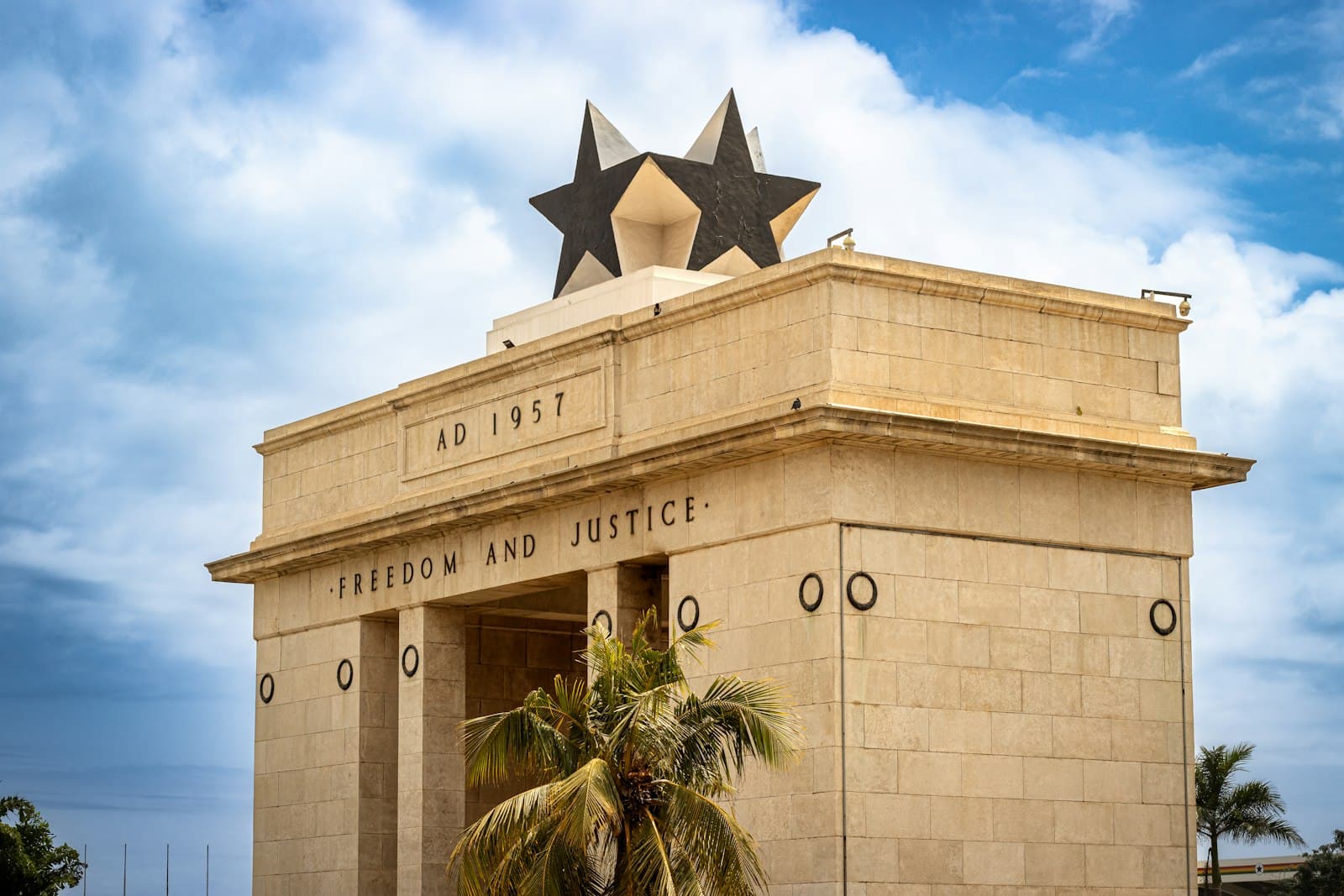
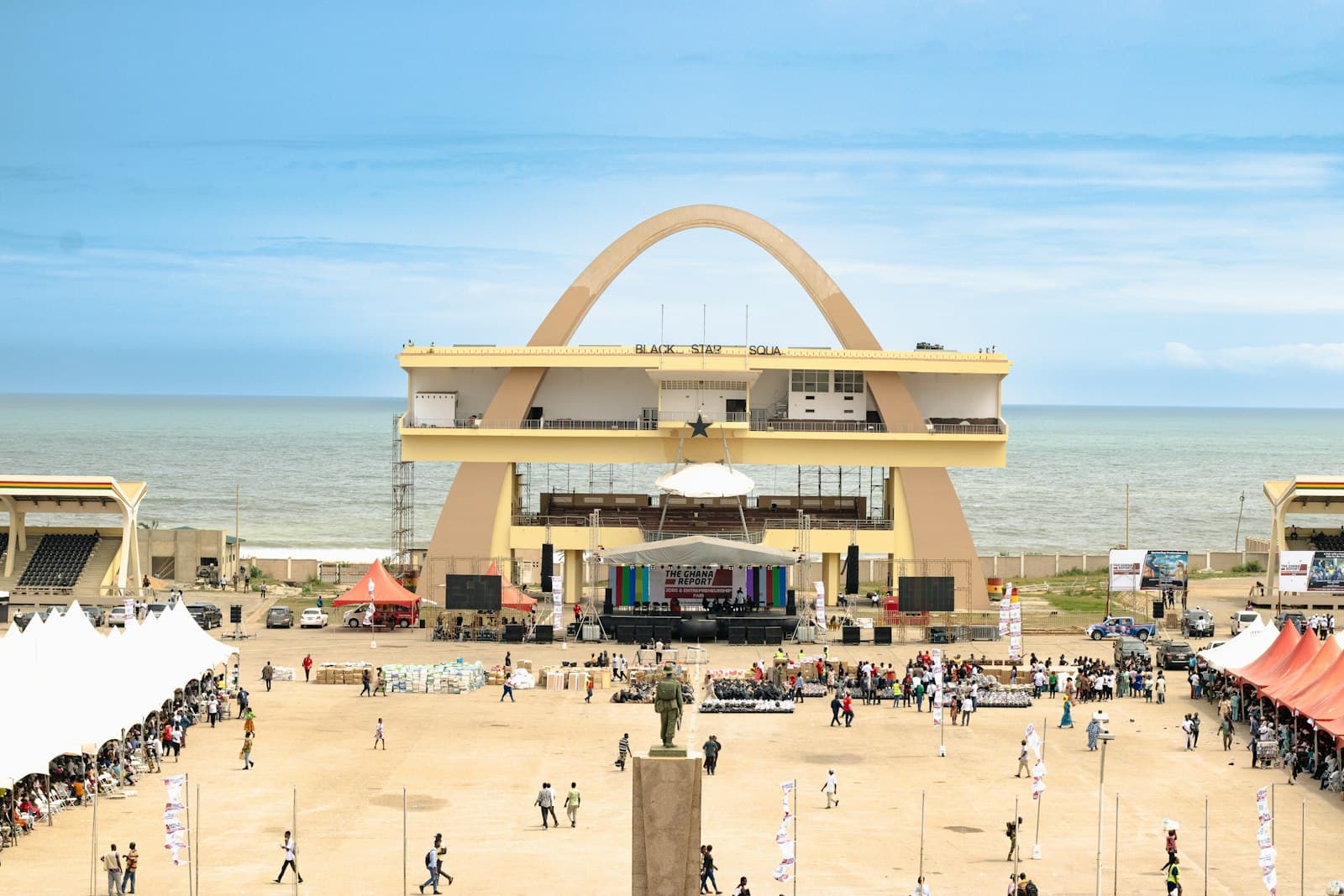
Your self-guided audio tour of Accra is ready — pick your landmarks, choose your language, and start the moment you arrive.
BuyLume has a built-in augmented-reality guide. Hold your phone up and its camera shows the street ahead of you, with a glowing arrow laid over the real view that always points to your next stop — no map to puzzle over, no wrong turns. Like everything in Lume, it works fully offline.
Accra, Ghana's capital, pulses with an energy that is both deeply rooted in history and dynamically forward-looking. Spreading along the Gulf of Guinea, this coastal metropolis is a captivating blend of tradition and modernity, where the echoes of ancient Ga settlements intermingle with the contemporary hum of a rapidly developing African city. From its busy markets to its solemn historical sites, Accra offers a sensory journey, inviting visitors to delve into its complex past and embrace its lively present.
The city's narrative is one of endurance, shaped by indigenous cultures, European colonial powers, and a hard-won struggle for independence. Accra's strategic location made it a sought-after trading post, leading to the construction of formidable European forts that stand as stark reminders of the transatlantic slave trade. Today, these historical landmarks exist alongside modern skyscrapers and a flourishing arts scene, creating a compelling portrait of life in West Africa.
Whether you are drawn to the rhythmic activity of Makola Market, the poignant history of Osu Castle, or the celebratory atmosphere of Independence Square, Accra promises an immersive experience. It is a city that challenges, educates, and ultimately, captivates, revealing the enduring spirit of Ghana with every step.
## From Ant Hills to a Capital City Accra's origins trace back to the 15th century when the Ga people established a settlement along the coast, naming it 'Nkran,' meaning 'ants,' due to the many anthills in the area. By the 17th century, the region became a focal point for European trade, with the Portuguese, Dutch, Danish, and British constructing fortified trading posts along the Gold Coast. Notable among these were the Danish Christiansborg Castle (Osu Castle) built in 1659, and the British James Fort in 1673.
## Colonial Rule and the Fight for Independence Accra's significance grew, and in 1877, the British colonial administration moved the capital of the Gold Coast colony from Cape Coast to Accra. This period saw the city expand, with European residential neighborhoods like Victoriaborg emerging. However, colonial rule was met with resistance. A pivotal moment occurred on February 28, 1948, when police opened fire on a peaceful demonstration of war veterans, sparking widespread unrest and fueling the independence movement. Accra became the central location for Ghana's independence struggle, led by Kwame Nkrumah.
## Post-Independence Era On March 6, 1957, Ghana became the first sub-Saharan African nation to gain independence from Britain, with Accra as its capital. Kwame Nkrumah, Ghana's first president, played a substantial role in shaping Accra into a modern metropolis and fostering a sense of national identity. The city has since experienced rapid growth, transforming into one of West Africa's largest metropolises, with modern infrastructure and a lively cultural scene. However, its journey has not been without difficulties, including infrastructure development and political shifts, with Accra witnessing several military regimes and elected governments since Nkrumah's overthrow in 1966.
Begin your exploration at Kwame Nkrumah Memorial Park and Mausoleum, a solemn tribute to Ghana's first president, offering insights into his life and the nation's independence. Next, head to Independence Square, also known as Black Star Square, a vast public space symbolizing Ghana's freedom, featuring the Independence Arch and Black Star Monument. Delve into Ghanaian history and culture at the National Museum of Ghana, which houses diverse artifacts spanning archaeology, ethnography, and fine art.
Experience the lively heart of Accra at Makola Market, a bustling open-air market where you can find everything from fresh produce and textiles to local crafts. For a glimpse into colonial history, visit Osu Castle (Christiansborg Castle), a former Danish fort that served as a seat of government and was involved in the slave trade. Explore the historic Jamestown neighborhood, home to the iconic Jamestown Lighthouse with its distinctive red and white stripes, offering wide views of the Gulf of Guinea and the active fishing harbor. Do not overlook the W.E.B. Du Bois Memorial Centre for Pan-African Culture, the final resting place of the influential American sociologist.
The best time to visit Accra is during the dry season, from November to March. During these months, temperatures range from 24°C to 32°C (75°F to 90°F) with cooler nights and minimal rainfall, making it ideal for outdoor activities and exploring the city's lively atmosphere. December is particularly popular, coinciding with festivals like Afrochella and AfroFuture. While the wet season (May to October) brings lush greenery and harvest festivals, coastal areas can be humid. For fewer crowds and potentially better deals on flights and hotels, consider visiting in September, October, and November, which precede the peak dry season.
Most foreign visitors require a visa to enter Ghana, so apply in advance. A Yellow Fever vaccination certificate is also mandatory. The local currency is the Ghanaian Cedi (GHS); while credit cards are accepted in major cities, it is advisable to carry cash, especially for local markets and rural areas. ATMs are widely available in urban centers. Tipping is not mandatory but appreciated in upscale restaurants and bars (5-10%).
English is the official language, but learning a few basic phrases in local languages like Twi can enhance your experience. Pack light, breathable clothing made of cotton or linen, along with sunscreen, a hat, and comfortable walking shoes. Mosquito repellent and anti-malarial tablets are also recommended. Traffic can be chaotic, so exercise caution when walking and crossing roads. For getting around, ride-sharing apps like Bolt and Uber are available, and registered taxis are a good option.
Accra in Korean, in Chinese or in Hebrew — and 29 more languages, every stop narrated by a native voice. The widest language range of any self-guided audio tour.
Available in: