Beroun City Walls
The city walls of Beroun are not just old stones; they once hosted a rather unusual, and surprisingly effective, form of medieval defense.
Full story unlocks in the tour
 I would appreciate being notified if you use my work outside Wikimedia. More of my work can be found in my personal gallery. / CC BY-SA 3.0, via Wikimedia Commons
Self-guided audio walking tour of Beroun — GPS route, offline playback, story-driven narration in 32 languages.
“Where ancient walls guard geological wonders and bears tell bedtime stories.”
Not the postcards. The stories even locals don't know — whispered in your ear, right where they happened.
The city walls of Beroun are not just old stones; they once hosted a rather unusual, and surprisingly effective, form of medieval defense.
Look closely at the facades around the main square, and you might spot a subtle, almost playful detail that speaks to a very old tradition of civic pride and perhaps a touch of rivalry.
The seemingly tranquil Berounka River, which flows through the city, holds a dark secret from the not-so-distant past, a tale of unexpected danger lurking beneath its surface.
Discover every secret of Beroun
Every address, every reveal in full — in your ear, right where it happened.
You pick your stops. You walk. The voice reveals what the others miss.


Your self-guided audio tour of Beroun is ready — pick your landmarks, choose your language, and start the moment you arrive.
BuyLume has a built-in augmented-reality guide. Hold your phone up and its camera shows the street ahead of you, with a glowing arrow laid over the real view that always points to your next stop — no map to puzzle over, no wrong turns. Like everything in Lume, it works fully offline.
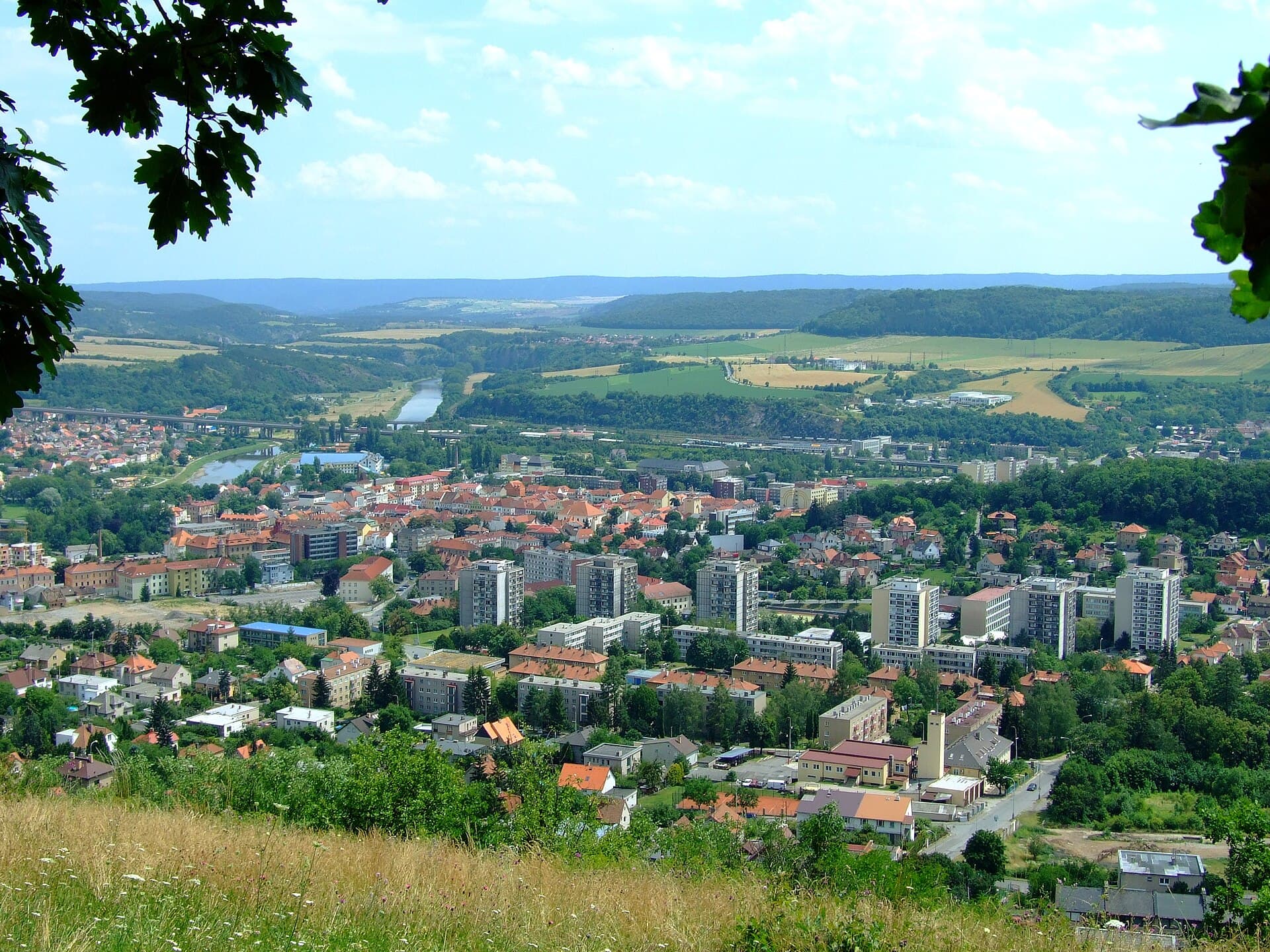
Beroun, a captivating town where the Berounka and Litavka rivers meet, sits amidst the scenic embrace of the Bohemian Karst, just a short journey southwest of Prague. It is a place where history feels alive, with well-preserved medieval walls encircling a central square.
Beyond its picturesque appearance, Beroun serves as a gateway to some of the Czech Republic's most compelling natural landscapes and significant historical sites, including the formidable Karlštejn Castle. Yet, Beroun itself holds plenty to discover, from its unique geological past to its local markets, making it a rewarding destination for those seeking an authentic Czech experience away from the bustling capital.
This town balances its past with a lively present, where ancient fortifications stand guard over modern life, and the echoes of medieval trade blend with the chatter of contemporary cafes. It is a place that rewards a curious eye and a willingness to wander, promising discoveries around every corner.
## From Royal Town to Industrial Hub Beroun's story begins in the late 13th century, specifically around 1265, when it was established as a royal town by King Otakar II of Bohemia. Strategically located at the confluence of the Berounka and Litavka rivers and on important trade routes, it quickly grew in significance. The robust city walls, still largely intact today, were a testament to its strategic importance and wealth, protecting it from various conflicts throughout the centuries.
The town flourished as a market center, particularly known for its pottery and brewing. Its position within the Bohemian Karst also meant a long history of limestone quarrying, which shaped both the landscape and the local economy. The Hussite Wars in the 15th century, a tumultuous period in Czech history, left their mark on Beroun, as did the Thirty Years' War in the 17th century, which brought significant destruction and hardship.
The 19th century ushered in a new era of industrialization. The construction of the railway in 1862 connected Beroun more firmly to Prague and other major centers, further boosting its economic development. Industries such as cement production and textile manufacturing became prominent, transforming the town's character. Despite these changes, Beroun managed to retain much of its historical charm, with its medieval layout and many architectural treasures surviving to this day.
In the 20th century, Beroun continued to evolve, navigating the challenges of two World Wars and the communist era. Today, it stands as a testament to its resilient past, a town that embraces its heritage while looking towards the future, attracting visitors with its unique blend of history, nature, and culture.
Begin your exploration at Husovo náměstí, Beroun's main square, where colorful historic buildings with intricate sgraffito facades frame the impressive Baroque Plague Column. The square is a lively hub, often hosting markets and events. From here, you can easily access the well-preserved medieval city walls, including the Plzeňská Gate and Pražská Gate, which offer a glimpse into Beroun's defensive past.
A short walk up Městská hora (Town Mountain) leads to the Beroun Bear Sanctuary, home to the popular bears Vojta, Kuba, and Matěj, and an observation tower providing panoramic views of the town and surrounding Bohemian Karst. Do not miss the Church of St. James the Great, an architectural marvel with a long history. For those interested in the region's unique geology, the Bohemian Karst Museum offers fascinating insights into the area's paleontological discoveries and natural formations.
Beroun is delightful throughout the year, but the shoulder seasons of spring (April-May) and early autumn (September-October) offer the most pleasant experience. The weather is mild, ideal for exploring the town and surrounding nature, and the crowds are thinner than in the peak summer months. In spring, the landscape comes alive with blossoms, while autumn brings a spectacular display of fall colors to the Bohemian Karst. Summer (June-August) is also popular, with warmer weather perfect for river activities, though it can be busier.
Beroun is easily accessible from Prague by train or bus, with frequent connections taking approximately 30-45 minutes. The town center is compact and walkable, making it easy to explore on foot. For venturing further into the Bohemian Karst, consider renting a bicycle or utilizing local bus services. The official currency is the Czech Koruna (CZK), and credit cards are widely accepted, though it is always good to have some cash for smaller purchases at markets or cafes. Basic Czech phrases are appreciated, but English is generally understood in tourist-oriented establishments.
Beroun in Korean, in Chinese or in Hebrew — and 29 more languages, every stop narrated by a native voice. The widest language range of any self-guided audio tour.
Available in: