Round Tower (Prison Tower) and Lighthouse
A shadowy tale links Lankaran's historic Round Tower to a notorious revolutionary.
Full story unlocks in the tour
 Interfase / public domain, via Wikimedia Commons
Self-guided audio walking tour of Lankaran — GPS route, offline playback, story-driven narration in 32 languages.
“Where ancient legends meet subtropical allure on the Caspian shore.”
Not the postcards. The stories even locals don't know — whispered in your ear, right where they happened.
A shadowy tale links Lankaran's historic Round Tower to a notorious revolutionary.
The forests around Lankaran hold a tree so dense, it defies a fundamental property of wood.
In the Soviet era, Lankaran's tea plantations offered a unique form of 'rehabilitation' for a select group of individuals.
Discover every secret of Lankaran
Every address, every reveal in full — in your ear, right where it happened.
You pick your stops. You walk. The voice reveals what the others miss.
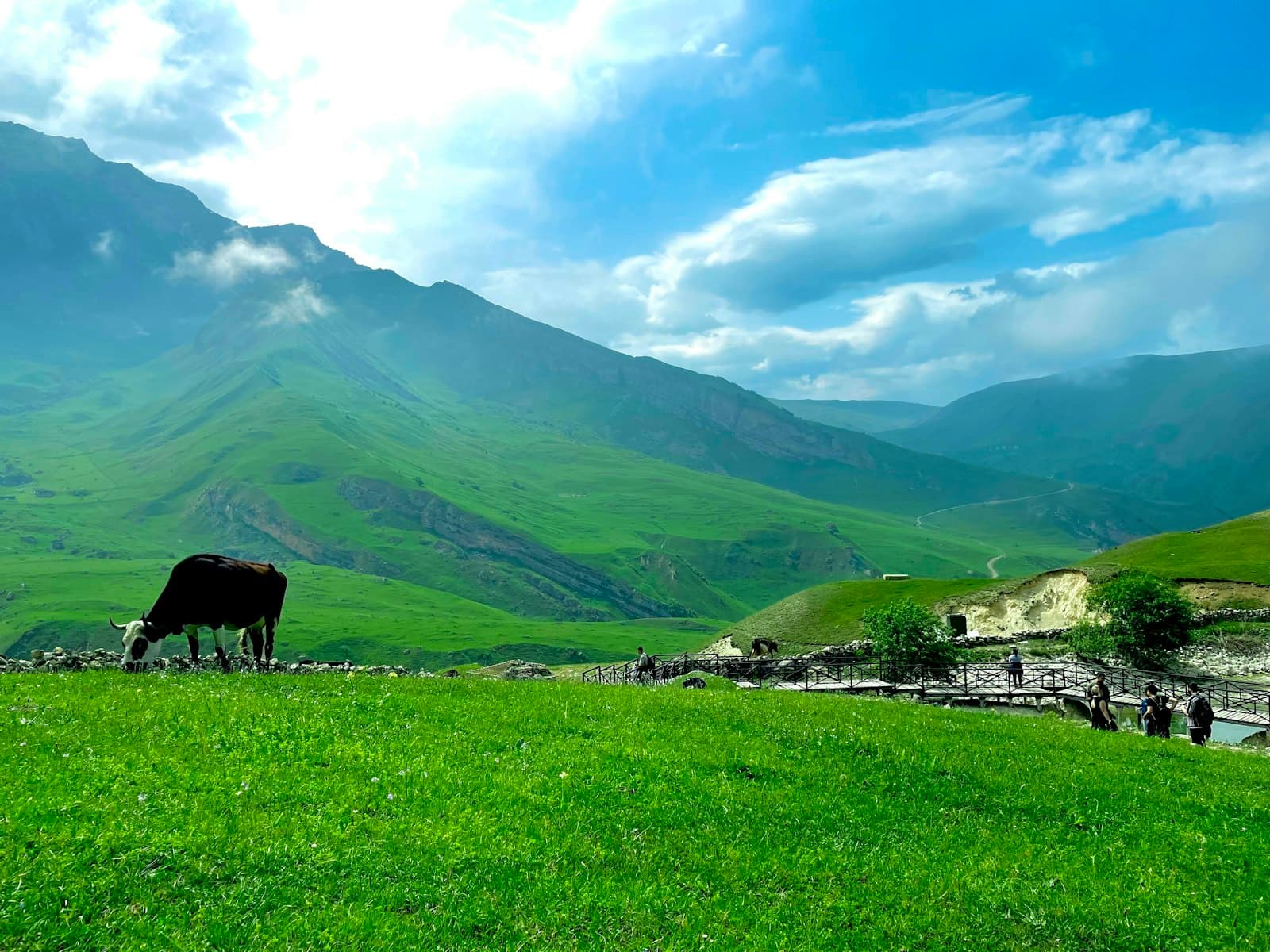
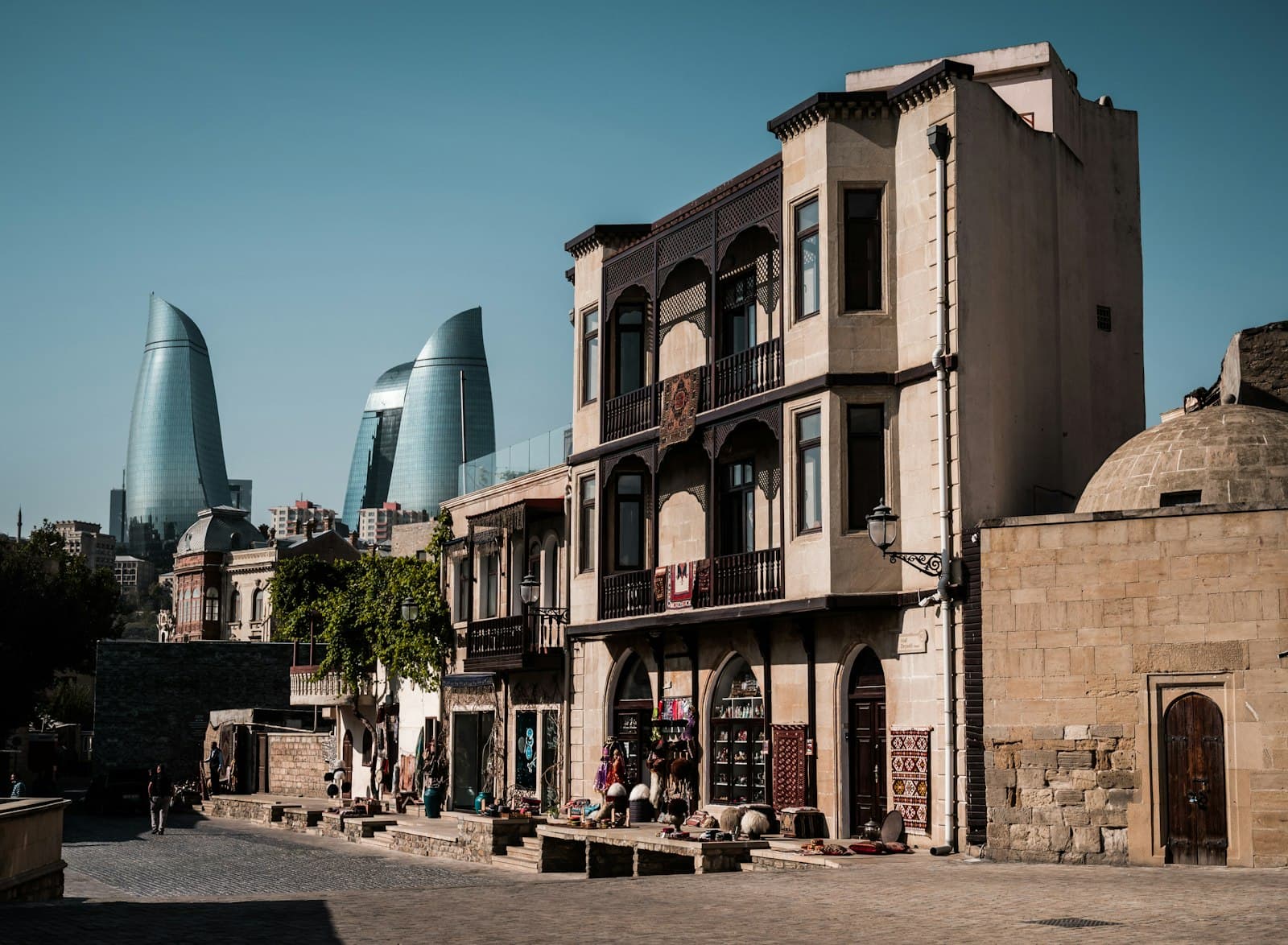
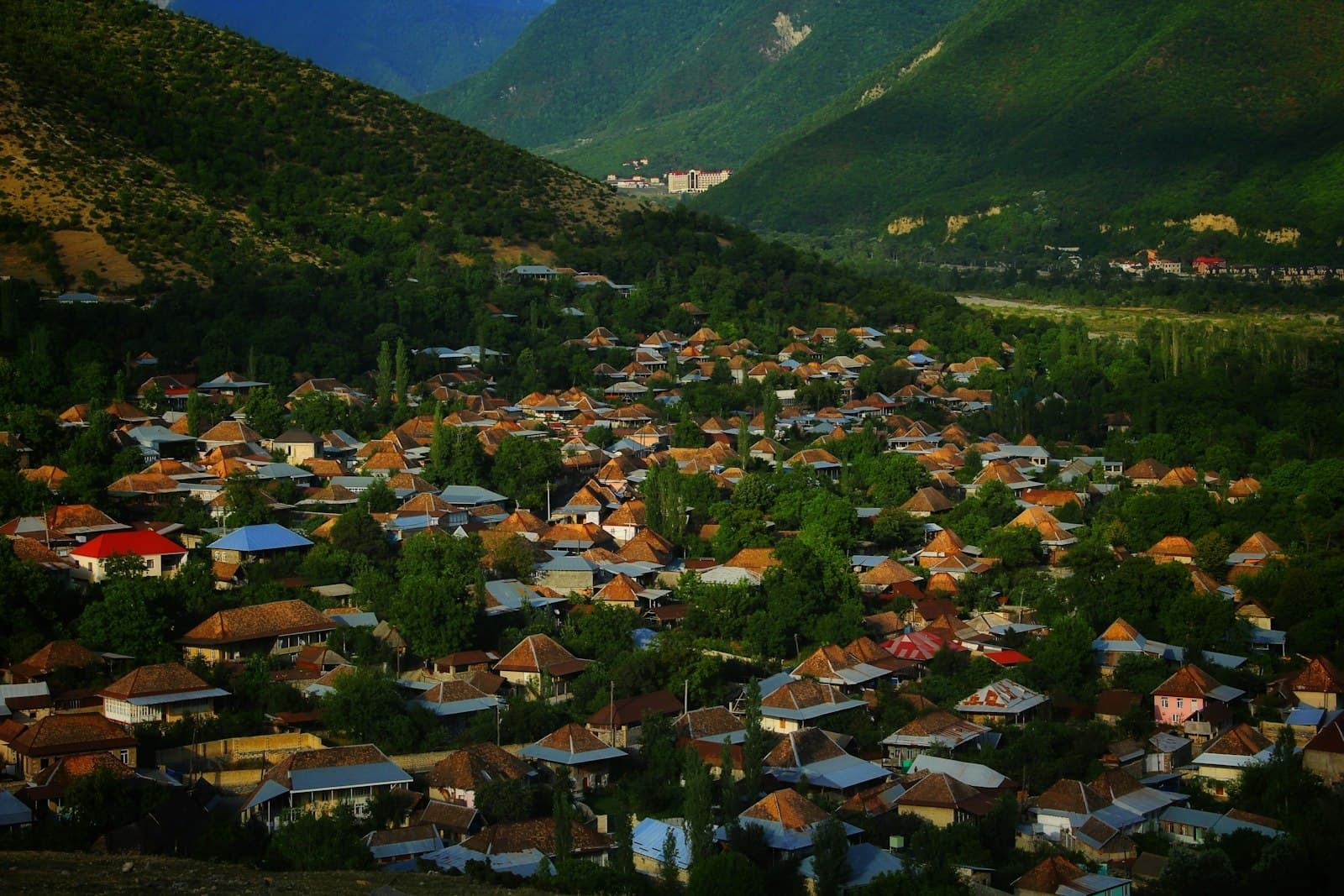
Your self-guided audio tour of Lankaran is ready — pick your landmarks, choose your language, and start the moment you arrive.
BuyLume has a built-in augmented-reality guide. Hold your phone up and its camera shows the street ahead of you, with a glowing arrow laid over the real view that always points to your next stop — no map to puzzle over, no wrong turns. Like everything in Lume, it works fully offline.
Lankaran, a coastal city on Azerbaijan's southeastern edge, offers a distinct experience where the Caspian Sea meets the verdant Talysh Mountains. This subtropical region, far greener and wetter than the arid landscapes closer to Baku, is a mosaic of tea plantations, citrus groves, and ancient forests. It is a place where history resonates from Bronze Age settlements to the remnants of an 18th-century khanate, and where the local culture is deeply intertwined with the traditions of the Talysh people.
The city itself, an old port, serves as a gateway to a region of remarkable natural diversity. From the bird-filled wetlands of the Gizil-Agach State Reserve to the ancient ironwood trees of Hirkan National Park, Lankaran invites those seeking both tranquility and adventure. Its unique climate also fosters a lively culinary scene, celebrated for its fresh Caspian fish, aromatic teas, and distinctive regional dishes.
Lankaran's story stretches back to the Bronze Age, with archaeological findings confirming its status as one of Azerbaijan's oldest inhabited areas. Its strategic position along the ancient Silk Road meant it thrived as a vital stopover for caravan routes, connecting East and West. This fertile land attracted numerous civilizations, including Persians, Arabs, and Russians, each leaving their indelible mark on its architecture, language, and customs.
In 1742, Lankaran rose to prominence as the capital of the Talysh Khanate, founded by Seyyed Abbas from the Safavid dynasty. This period saw a significant surge in trade relations with powers like Iran, Turkey, Russia, China, India, Pakistan, and Central Asia. The khanate's prosperity was built on a diverse economy that included animal husbandry, horticulture, aquaculture, sericulture, and skilled trades such as blacksmithing, coppersmithing, pottery, and weaving.
The 18th century was also a time of intense rivalry between Russia and Iran for control of the region, leading to the destruction of many of the city's older structures. In 1813, with the signing of the Treaty of Gulistan, Lankaran definitively passed to the Russian Empire, becoming known as Lenkoran and serving as the center of the Lenkoran Uyezd in the Baku Governorate. Under Russian rule, new industries like viniculture, ceramics, and brick making developed, further strengthening trade ties.
Following the fall of the Russian Empire, Lankaran briefly became part of the Azerbaijan Democratic Republic before being absorbed into the Azerbaijan Soviet Socialist Republic. With the dissolution of the Soviet Union in 1991, Lankaran became part of independent Azerbaijan. Today, it remains a significant port and a center for the Talysh people, whose unique cultural heritage continues to shape the city's identity.
Lankaran offers a blend of natural beauty and historical intrigue. Begin at the Lankaran Fortress, an 18th-century fortification, where remnants of its towering walls still stand. At its heart lies the Round Tower, also known as the Prison Tower, a circular brick structure that once served as a watchtower and later a prison.
Delve into the city's past at the Khan's House, a magnificent early 20th-century palace built by Mir Ahmet Khan, which now functions as a museum. It showcases historical artifacts dating back to the Bronze Age, alongside personal belongings of the last khan of Lankaran and his wife. Nearby, the Kichik Bazar Mosque, built in 1906, offers a glimpse into local religious architecture.
Nature enthusiasts will find solace at Khanbulan Lake, a scenic picnic area surrounded by iron tree forests, perfect for a tranquil break. The region is also recognized as the 'Tea Capital of Azerbaijan,' and a visit to a tea plantation and factory offers insight into the tea-making process, from leaf to cup. Do not miss the therapeutic black-sand beaches along the Caspian Sea, known for their mineral-rich sands.
For a deeper immersion into nature, explore Hirkan National Park, a UNESCO World Heritage site known for its ancient ironwood forests and endangered Persian leopards. The Old Bazaar provides a lively local experience, bustling with fresh produce, aromatic spices, and handmade crafts.
The ideal times to visit Lankaran are during spring (April–June) and autumn (September–October), when the weather is most pleasant for outdoor activities and exploration. During these seasons, the landscapes are adorned with greenery and blossoming flowers, or rich autumn colors. Summers (July-August) can be hot and humid, with daytime temperatures hovering around 30°C (86°F), but the sea is comfortably warm for swimming from mid-May to late September. Winters are generally mild but rainy, and the humidity can be high.
Lankaran is generally considered a safe city for tourists, though it is always wise to remain aware of your surroundings. The local currency is the Azerbaijani Manat (AZN). While major hotels and larger restaurants may accept credit cards, cash is preferred for smaller establishments, taxis, and the bustling local bazaars. ATMs are readily available. Tipping is appreciated but not mandatory, with 10% being customary for good service in restaurants.
Public transport within the city relies on buses and minibusses, with taxis also readily available. It is advisable to negotiate taxi fares before starting your journey. For those planning to explore the surrounding mountains or villages, hiring a taxi for the day or utilizing a marshrutka (minibus) offers a more local experience. English is not widely spoken, so a translation app or a local guide can be very helpful. Accommodations range from guesthouses to boutique hotels and resorts, with booking in advance recommended, especially during peak seasons.
Lankaran in Korean, in Chinese or in Hebrew — and 29 more languages, every stop narrated by a native voice. The widest language range of any self-guided audio tour.
Available in: