Strumica Carnival
The Strumica Carnival is a spectacle of masks and revelry, yet its origins are far older and more primal than mere Christian tradition.
Full story unlocks in the tour
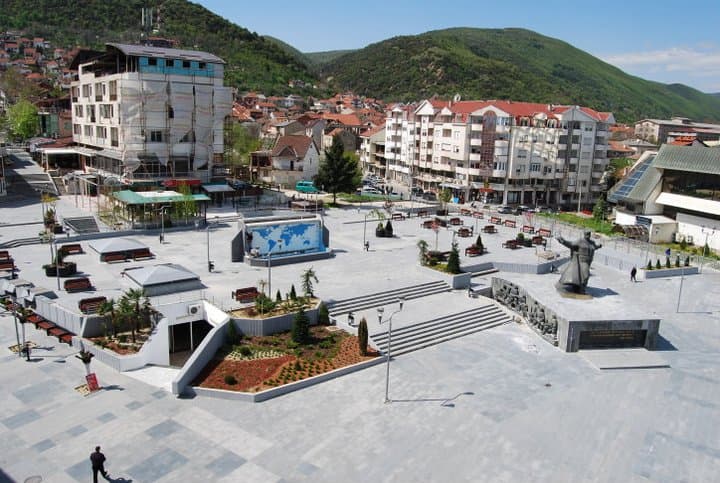 Тиверополник / cc by-sa 3.0, via Wikimedia Commons
Self-guided audio walking tour of Strumica — GPS route, offline playback, story-driven narration in 32 languages.
“Where ancient roots meet spirited festivities, a city of stars and enduring legends.”
Not the postcards. The stories even locals don't know — whispered in your ear, right where they happened.
The Strumica Carnival is a spectacle of masks and revelry, yet its origins are far older and more primal than mere Christian tradition.
During the carnival, masked men would traditionally visit the homes of engaged women. It was not just a social call, but a playful test.
The city's current Slavic name, Strumica, has a Roman-era legend tied to it, involving a forbidden love and an emperor's daughter.
Discover every secret of Strumica
Every address, every reveal in full — in your ear, right where it happened.
You pick your stops. You walk. The voice reveals what the others miss.
Your self-guided audio tour of Strumica is ready — pick your landmarks, choose your language, and start the moment you arrive.
BuyLume has a built-in augmented-reality guide. Hold your phone up and its camera shows the street ahead of you, with a glowing arrow laid over the real view that always points to your next stop — no map to puzzle over, no wrong turns. Like everything in Lume, it works fully offline.
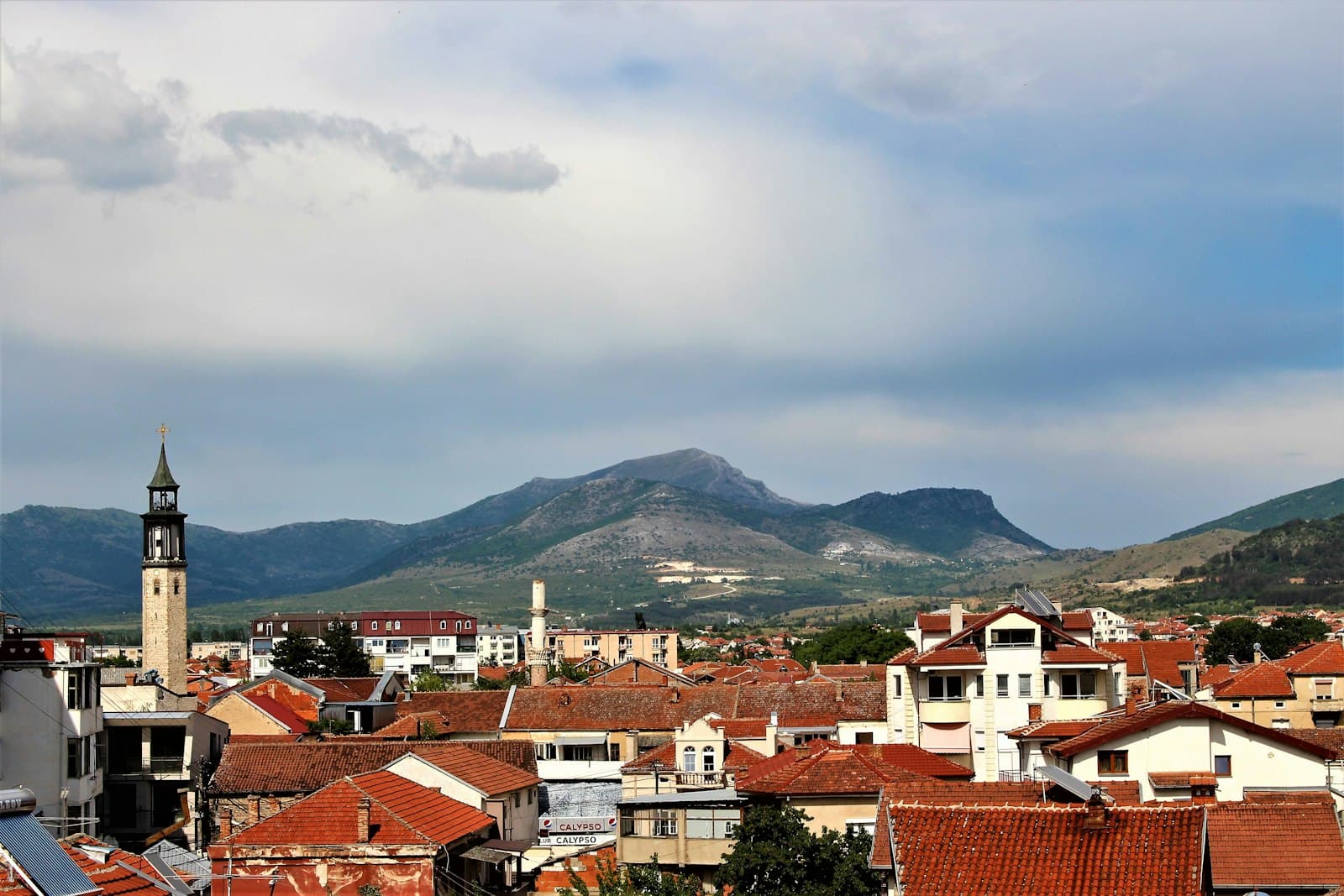
Strumica, a city in southeastern North Macedonia, is a place where layers of history and lively cultural traditions are woven into the fabric of daily life. Known as 'the City of Stars' (a nod to its ancient name, Astraion), Strumica rests in a fertile plain, guarded by the medieval echoes of Tsar's Towers on Mount Elenica. It is a city that has witnessed empires rise and fall, serving as a passageway for armies and a stage for revolutions, yet it has always remained a resilient cultural, economic, and spiritual heart of the region.
Beyond its historical depth, Strumica is celebrated for its warm climate, offering around 230 sunny days a year, a pleasant blend of Mediterranean and continental influences. This inviting weather, coupled with the genuine hospitality of its people, makes it an appealing destination for those seeking an authentic Balkan experience. From its ancient archaeological sites to its spirited festivals and arresting natural landscapes, Strumica offers a captivating journey through time and tradition.
## From Ancient Astraion to Ottoman Ustrumca Strumica's story stretches back to the Neolithic period, with evidence of early settlements near the village of Angelci. The city itself is first mentioned in written sources in 181 BC by the Roman historian Livy, under the name Astraion, meaning 'starry town.' During the Roman era, it was also known as Tiberiopolis.
In the first half of the 6th century, Slavic tribes, the Strumyani, settled along the Struma and Strumica rivers. The region then became part of the Bulgarian state for over 150 years until 1014, when it was retaken by the Byzantines. In the 11th century, the town began to be referred to by its Slavic name, Strumica.
The city's medieval period saw it change hands between the Byzantine Empire and the Serbian Kingdom. Serbian magnate Hrelja ruled the region until 1334, after which it came under the direct rule of King Stefan Dušan. The Ottoman Empire finally conquered Strumica in 1383, and under their administration, the town was renamed Ustrumca. Nomadic Turkic populations settled in the area, giving the city a more oriental appearance. Census data from 1519 and 1570 reveal a significant increase in the Muslim population during this time, indicating a period of peak conversion to Islam.
## The Tumultuous 20th Century The late 19th and early 20th centuries brought significant changes. Following the Berlin Congress of 1878, refugees, known as 'muhajirs,' flowed into the area after the Ottoman Empire lost territory in the Balkans. The Internal Macedonian Revolutionary Organization (IMRO) was formed in 1893, with a local committee established in Strumica in 1895, reflecting growing discontent under Turkish rule.
The First Balkan War in 1912 saw the defeat of the Turks and Strumica came under Bulgarian rule. However, a brief but brutal Greek occupation followed in the summer of 1913 during the Second Balkan War, culminating in the burning of Strumica, which destroyed over 1,900 buildings. After World War I and the Treaty of Neuilly-sur-Seine in 1919, Strumica was ceded to the Kingdom of Serbs, Croats, and Slovenes (later Yugoslavia). During World War II, Strumica was occupied by the German army in April 1941.
Begin your exploration in Strumica's modern city center, particularly Goce Delcev Square, a lively pedestrian area featuring fountains, gardens, and the Clock Tower. Here, you will find statues like 'The Masked Strumica Citizen,' honoring the city's celebrated carnival heritage. Nearby, visit the Church of Cyril and Methodius.
For a journey into the past, head to the Institute for the Protection of Cultural Monuments and Museum of Strumica, where you can delve into the region's rich archaeological findings. Overlooking the city are the remains of Carevi Kuli, or Tsar's Towers, a medieval fortress offering expansive views of the Strumica valley.
Just outside the city, discover the spiritual heritage of the region at the 11th-century Vodoca Monastery of St. Leontius and the Monastery of the Holy Mother of God Eleusa in Veljusa. Both are significant historical sites with well-preserved frescoes and mosaics. Nature lovers should not miss the captivating waterfalls of the Belasica Mountain: Smolare Waterfall, the highest in North Macedonia, and the picturesque Kolesino Waterfall. For relaxation, the ancient Roman thermal baths at Bansko offer a unique historical spa experience.
The best time to visit Strumica for general outdoor tourist activities is from late May to late July and from mid-August to late September, with a peak in the second week of September. During these months, the weather is pleasant, with warm days and comfortable temperatures. For hot-weather activities like swimming, late June to late August is ideal, with July being the hottest month. If you are interested in the celebrated Strumica Carnival, it typically takes place in February or March, 40 days before Orthodox Easter.
The local currency in North Macedonia is the Macedonian Denar (MKD). While credit cards are widely accepted in hotels, restaurants, and larger stores, carrying some cash for smaller establishments and markets is advisable. The official language is Macedonian, and while English may not be widely spoken, especially among the older population, learning a few basic Macedonian phrases or using a translation app can be helpful. Strumica is a small city, making many attractions walkable. For longer distances, local buses, taxis, or rental cars are available. Accommodation options include various hotels and apartments, with some offering free parking and pet-friendly policies. Strumica is generally considered safe for travelers.
Strumica in Korean, in Chinese or in Hebrew — and 29 more languages, every stop narrated by a native voice. The widest language range of any self-guided audio tour.
Available in: