The Small Bridge
Zrenjanin is known as the city of bridges, but one particular crossing holds a secret about its construction, reflecting the city's ambition at the turn of the 20th century.
Full story unlocks in the tour
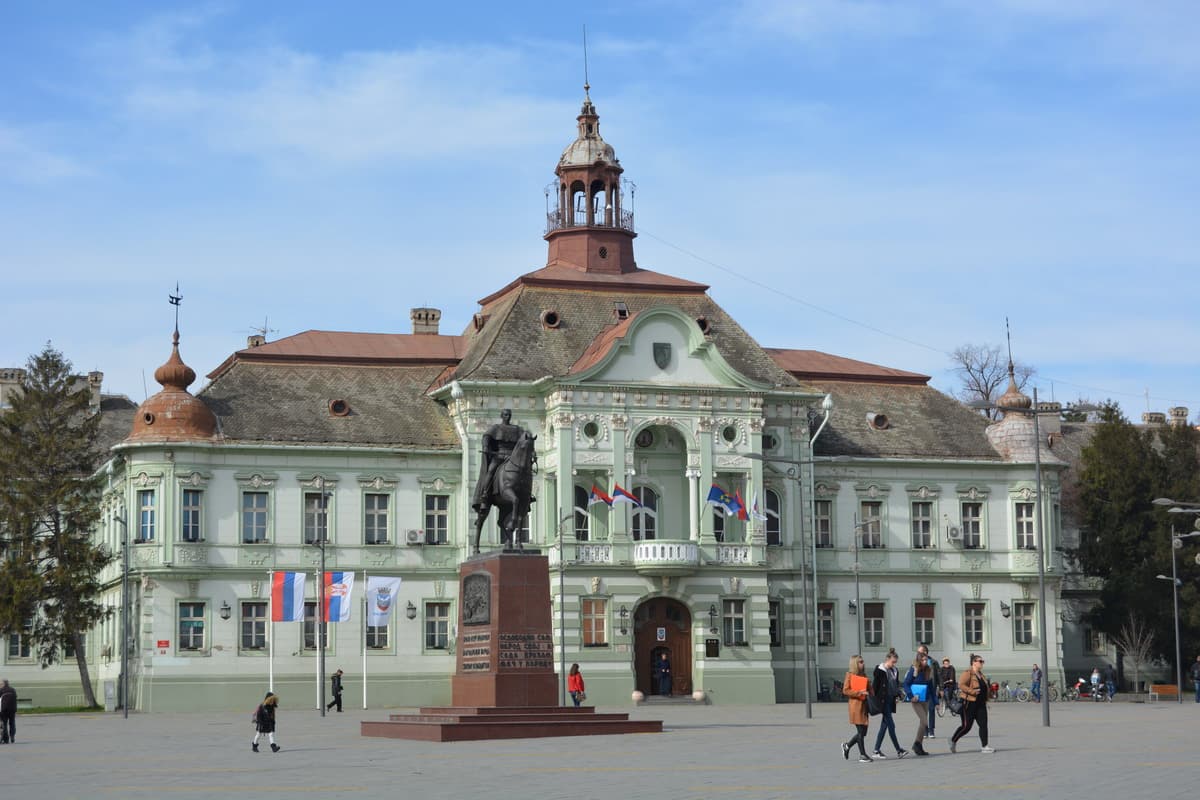 Alexzr88 / CC BY-SA 4.0, via Wikimedia Commons
Self-guided audio walking tour of Zrenjanin — GPS route, offline playback, story-driven narration in 32 languages.
“Where Banat's past flows into a lively present, with a bridge around every corner.”
Not the postcards. The stories even locals don't know — whispered in your ear, right where they happened.
Zrenjanin is known as the city of bridges, but one particular crossing holds a secret about its construction, reflecting the city's ambition at the turn of the 20th century.
Beneath the grand facade of Zrenjanin's City Hall lies a subtle detail in its construction, speaking to a forgotten era of opulence.
Zrenjanin has a long and proud brewing tradition, but the city's historic brewery holds a secret about its elaborate interior that goes beyond mere functionality.
Discover every secret of Zrenjanin
Every address, every reveal in full — in your ear, right where it happened.
You pick your stops. You walk. The voice reveals what the others miss.
Your self-guided audio tour of Zrenjanin is ready — pick your landmarks, choose your language, and start the moment you arrive.
BuyLume has a built-in augmented-reality guide. Hold your phone up and its camera shows the street ahead of you, with a glowing arrow laid over the real view that always points to your next stop — no map to puzzle over, no wrong turns. Like everything in Lume, it works fully offline.
Zrenjanin, a city in Serbia's Vojvodina province, offers a distinctive blend of history, culture, and a relaxed pace of life. Situated on the flat plains of the Banat region, where the canalized Begej River flows, it's often referred to as the "city of bridges" due to the numerous crossings over its waterways. Once known as Veliki Bečkerek, and later Petrovgrad, its current name honors national hero Žarko Zrenjanin.
The city's architecture, a captivating mix of Art Nouveau, Neo-Baroque, and Neo-Romantic styles, tells tales of its past as an important administrative and commercial center. Zrenjanin is a place where diverse cultures have converged over centuries, evident in its numerous religious buildings and the multicultural fabric of its community. From lively squares to serene riverfront promenades, Zrenjanin invites visitors to uncover its unique character.
The earliest documented mention of Zrenjanin, then known as Becskerek, dates back to 1326. It was initially a large village predominantly inhabited by Hungarian peasants. In the early 15th century, the Hungarian King Sigismund of Luxembourg granted Becskerek to Serbian despot Stefan Lazarević as a vassal. The town's strategic location meant it frequently changed hands, falling under Ottoman rule in 1551, a period that lasted until 1717 when it was liberated by the Austrian army.
Under Habsburg rule, the town began to flourish. A significant fire in 1807 destroyed much of the city center, leading to a comprehensive rebuilding effort that included new street regulations and the construction of more robust buildings. The 19th century saw considerable development, with the establishment of the first brewery in 1745, the opening of the Toša Jovanović National Theatre in 1839 (one of Serbia's oldest playhouses), and the founding of the Grammar School in 1846. The city also played a role in the 1848–49 Revolutions, with Serbs in Bečkerek participating in the uprising for autonomy within the Austrian Empire.
Following World War I in 1918, Becskerek, along with the entire Vojvodina region, became part of the Kingdom of Serbs, Croats, and Slovenes. It was renamed Petrovgrad in honor of King Peter I the Great Liberator. The city's current name, Zrenjanin, was adopted in 1946 after World War II, paying tribute to national hero Žarko Zrenjanin. In the post-war era, Zrenjanin emerged as a significant agricultural, industrial, cultural, and sports hub within Yugoslavia, once known as "the largest food factory in the Balkans." Today, it continues to be an important economic driver for Serbia.
Begin your exploration in Freedom Square (Trg Slobode), the city's central hub, surrounded by architectural highlights like the ornate City Hall, a Neo-Baroque masterpiece from 1820. Nearby, you'll find the Roman Catholic Cathedral of St. John of Nepomuk, recognizable by its red roof and steeple, housing frescoes, stained glass, and a copy of Da Vinci's 'The Last Supper.' The Toša Jovanović National Theatre, one of Serbia's oldest theaters, is also on the square, offering a glimpse into local arts.
Stroll along Kralja Aleksandra I Karađorđevića Street, Zrenjanin's main pedestrian zone, admiring the diverse architectural styles from Art Nouveau to Neo-Baroque. Do not overlook the National Museum of Zrenjanin, which offers extensive collections covering regional archaeology, ethnography, and art. Explore the many bridges over the Begej River, including the historic Small Bridge, and enjoy the pleasant riverfront promenade. For a taste of local life, visit the Green Market (Gradska pijaca) for fresh produce and regional specialties.
The best time to visit Zrenjanin for pleasant weather and outdoor activities is from late May to late September. During these months, you can expect mild to warm temperatures, with July being the warmest, averaging around 23°C (73°F). Daylight hours are longer, offering more time for exploration. While Zrenjanin isn't a major tourist destination, summer does see an increase in local activity, particularly during festivals like the "Dani piva" (Beer Days) in late August, which transforms the city with music and events. For fewer crowds and potentially better value, the cooler months from November to February offer a quieter experience.
Zrenjanin is a compact city, making its core easily walkable. For longer distances or to reach surrounding areas, a public bus network operates with tickets priced around 100 RSD (less than 1 Euro). Taxis are also available and affordable. Zrenjanin is well-connected by bus to major Serbian cities like Belgrade (approximately 1.5 hours) and Novi Sad (about 1 hour). Train services also run between Novi Sad and Zrenjanin.
Accommodation options include hotels in the city center and nearby, as well as private apartments. While generally safe, it's always wise to be aware of your surroundings, especially in less-lit areas at night. Free Wi-Fi is widely available in cafes, restaurants, malls, and public spaces throughout the city. The local currency is the Serbian Dinar (RSD).
Zrenjanin in Korean, in Chinese or in Hebrew — and 29 more languages, every stop narrated by a native voice. The widest language range of any self-guided audio tour.
Available in: