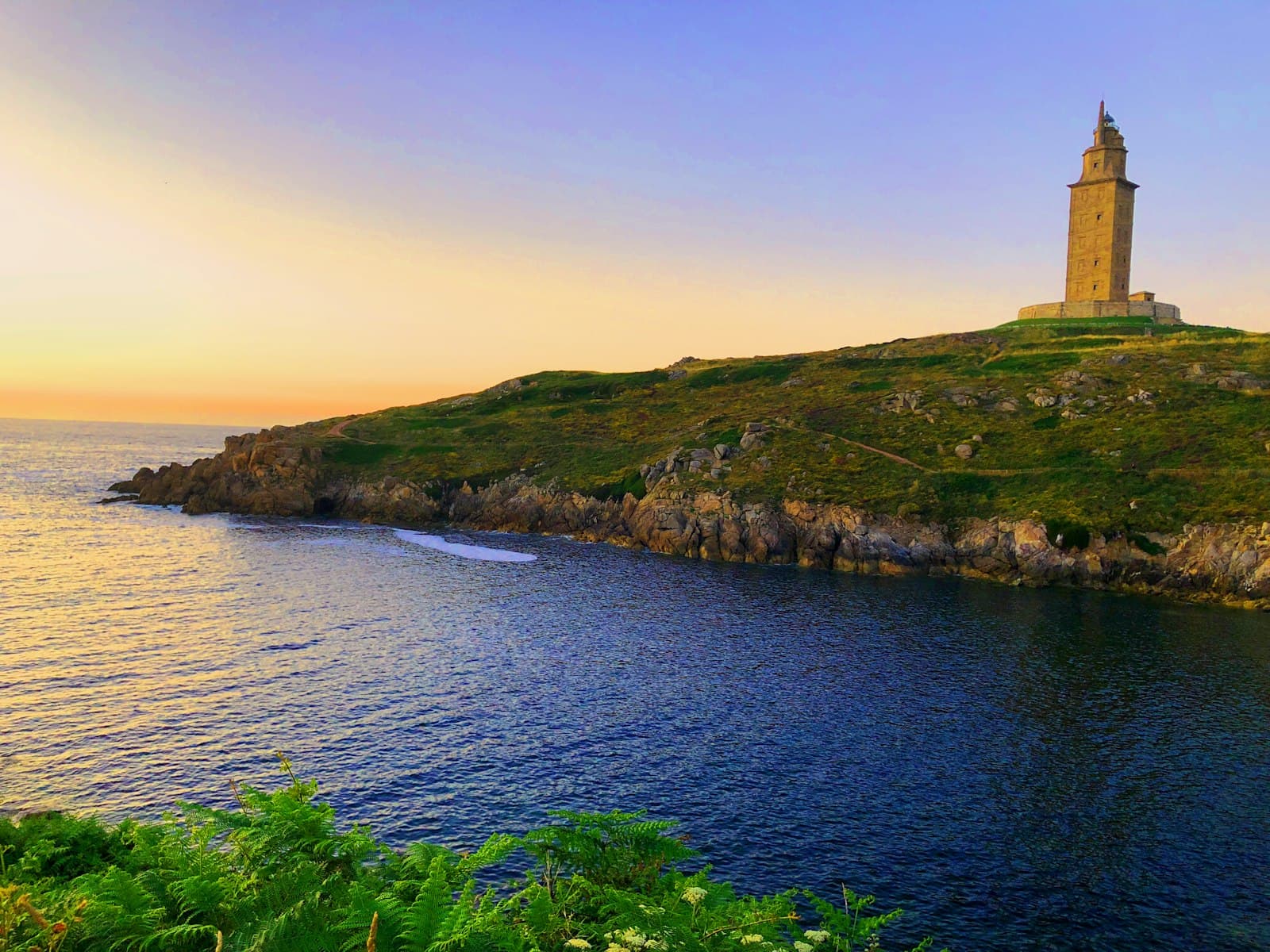
Tower of Hercules
This ancient Roman lighthouse, still actively guiding ships, holds a surprising secret about its original dedication.
Full story unlocks in the tour
 Diego Delso / CC BY-SA 4.0, via Wikimedia Commons
Self-guided audio walking tour of A Coruña — GPS route, offline playback, story-driven narration in 32 languages.
“Where ancient legends meet Atlantic waves and glass facades reflect maritime history.”
Not the postcards. The stories even locals don't know — whispered in your ear, right where they happened.
This ancient Roman lighthouse, still actively guiding ships, holds a surprising secret about its original dedication.
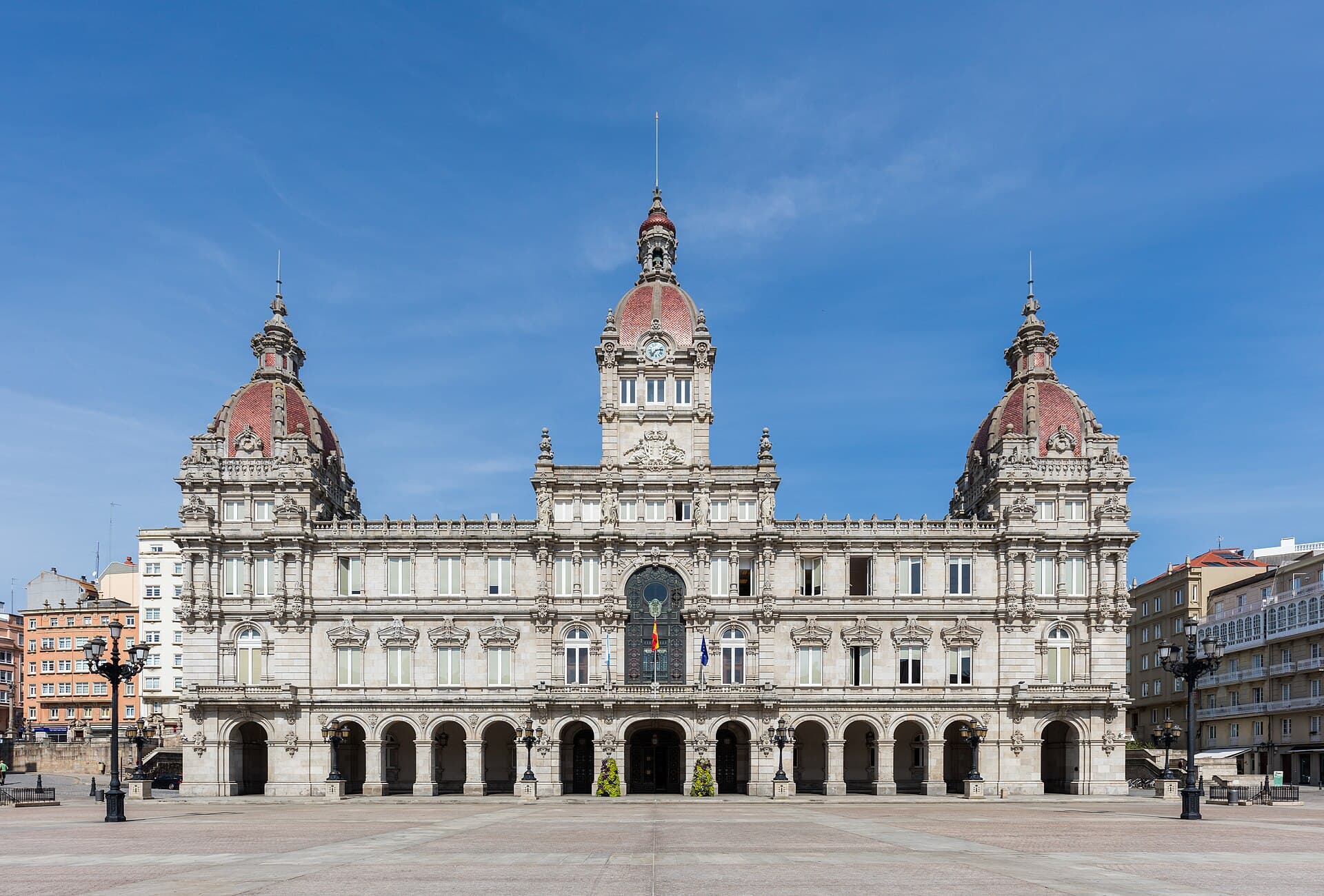
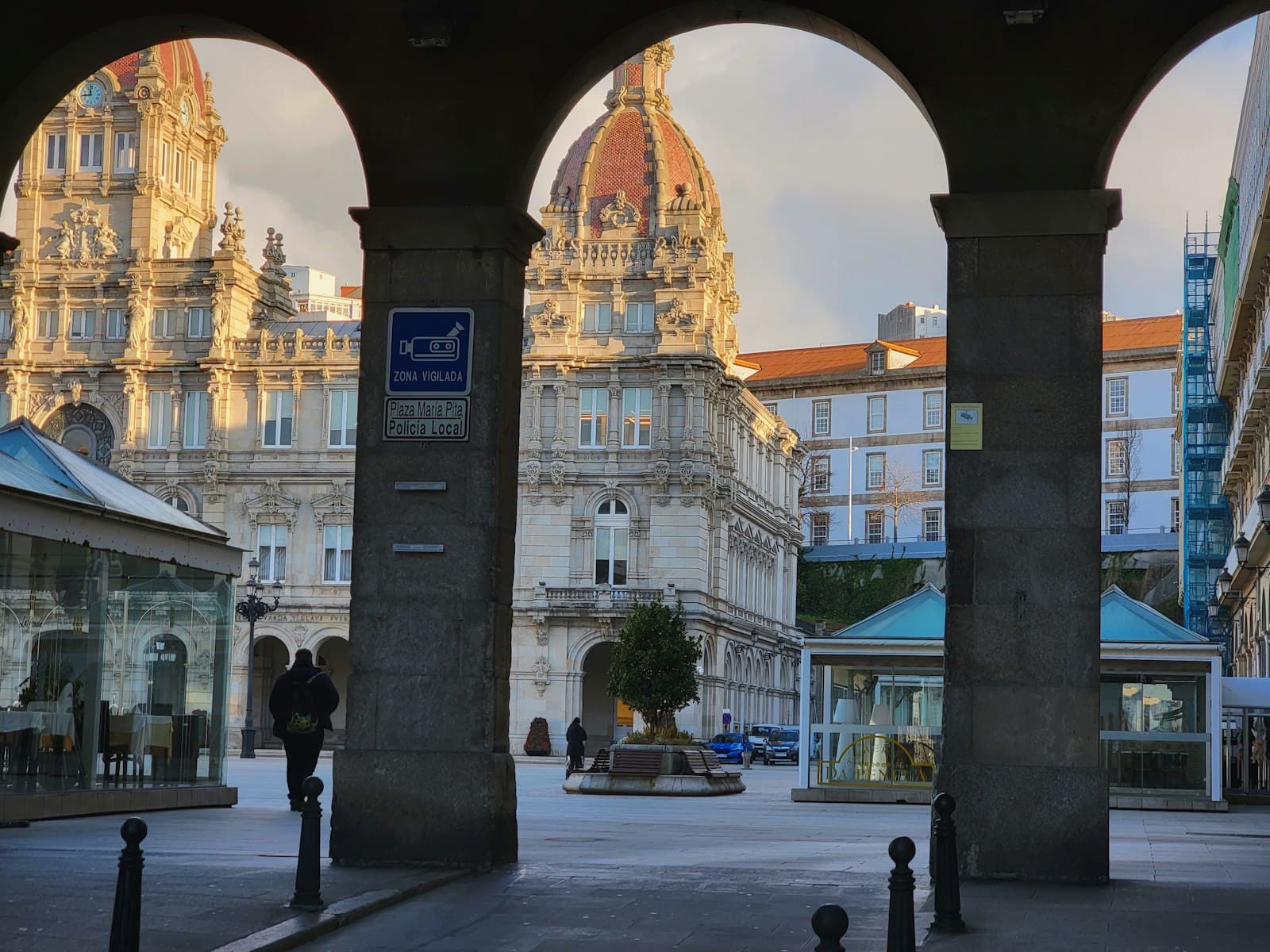
The grand City Hall dominating this central square has a subtle detail that suggests a much older facade than its true age.
The imposing bronze statue of A Coruña's heroine, María Pita, includes a subtle, symbolic element at its base that few visitors notice.
Discover every secret of A Coruña
Every address, every reveal in full — in your ear, right where it happened.
You pick your stops. You walk. The voice reveals what the others miss.
Lume has a built-in augmented-reality guide. Hold your phone up and its camera shows the street ahead of you, with a glowing arrow laid over the real view that always points to your next stop — no map to puzzle over, no wrong turns. Like everything in Lume, it works fully offline.
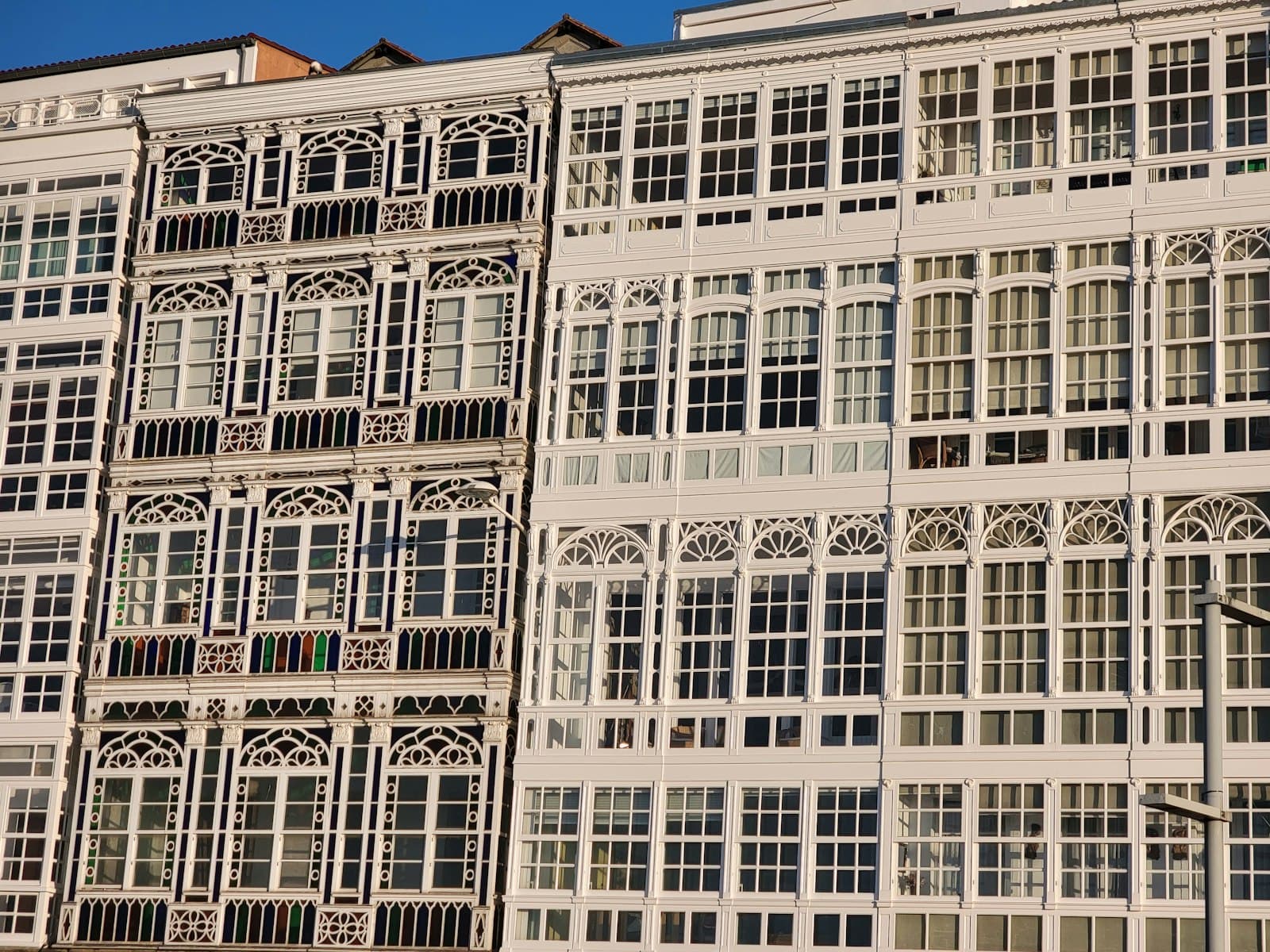
A Coruña, a compelling port city in Spain's northwestern Galicia region, offers a distinct blend of ancient history, maritime heritage, and contemporary urban life. On a peninsula that extends into the Atlantic Ocean, the city is characterized by its dramatic coastal landscapes and a unique architectural feature: the galerías, or glass-enclosed balconies, that adorn many buildings, earning it the nickname "The Glass City."
Beyond its striking appearance, A Coruña provides an authentic Galician experience, where Celtic traditions intertwine with Roman roots and modern Spanish culture. It is a city that invites exploration on foot, with a long seafront promenade, the Paseo Marítimo, offering expansive ocean views and connecting urban beaches like Riazor and Orzán. A Coruña serves as an active base for discovering the wider region, including the pilgrimage city of Santiago de Compostela and the rugged beauty of the Costa da Morte.
A Coruña's history is deeply intertwined with its strategic location on the Atlantic coast. Evidence of Celtic settlements dates back to the 3rd century BC. The city's true flourishing began with the Romans, who established a significant port here, known as Brigantium, in the 1st and 2nd centuries AD. It was during this period that the iconic Tower of Hercules, the world's oldest continuously functioning Roman lighthouse, was constructed to guide ships along crucial maritime trade routes.
Following the fall of the Roman Empire, A Coruña endured numerous Viking raids in the 9th century, leading to the construction of coastal defenses. In 1208, King Alfonso IX officially re-founded the city as Crunia, granting it special trade privileges that spurred economic growth and solidified its role as an important port for pilgrims traveling to Santiago de Compostela. From the 16th to the 19th centuries, A Coruña served as the political capital of the Kingdom of Galicia and became a vital center for trade with the New World.
The city played a significant role in major historical events, including the departure of the Spanish Armada against England in 1588. The following year, A Coruña faced an attack by a British fleet led by Sir Francis Drake, an assault famously repelled by the city's defenders, notably the heroine María Pita. During the Peninsular War, A Coruña was the site of the Battle of Corunna in 1809, where British troops fought the French to cover their evacuation. The 19th century also saw A Coruña as a hub of anti-monarchist sentiment and a key player in the Rexurdimento, the revival of Galician culture and language. The city continued to grow, transforming from agricultural dwellings to urban districts, particularly in the mid-20th century.
Begin your exploration at the Tower of Hercules, a UNESCO World Heritage Site and the oldest working Roman lighthouse in the world. Climb its 242 steps for expansive views of the Atlantic coastline and explore the surrounding sculpture park. In the heart of the city, Plaza de María Pita is a grand central square dominated by the early 20th-century City Hall and a monument to the local heroine, María Pita. Wander through the narrow streets of the Ciudad Vieja (Old Town), where you will find Romanesque churches like the 12th-century Iglesia de Santiago. Stroll along the Paseo Marítimo, a long seafront promenade that wraps around the city, offering access to urban beaches such as Riazor and Orzán. Do not overlook the distinctive *glass-fronted galerías along Avenida de la Marina, which give A Coruña its "City of Glass" nickname. For a deeper dive into the city's past, visit the Castillo de San Antón*, a 16th-century fortress now housing the Archaeological and Historical Museum.
A Coruña experiences mild temperatures year-round, but the most pleasant time to visit for warm-weather activities is from late June to early September. During these months, the weather is comfortably warm, rarely sweltering due to the Atlantic breeze, making it ideal for enjoying the beaches and coastal paths. July and August are the warmest months, with average highs around 23-24°C (73-75°F). This period also sees the city at its most festive, with cultural events and food festivals. Spring and fall offer milder temperatures and fewer crowds, while winters are longer, wetter, and cooler.
A Coruña is a walkable city, with many sights within a short distance, particularly the Old Town. Public buses are available for longer distances, and taxis are easily found. The city's airport is conveniently located just eight kilometers from the center, with daily flights to various destinations. Trains and buses offer connections to other parts of Spain, though driving is recommended for greater mobility when exploring the wider Galician region. A Coruña is renowned for its seafood, with local markets like Mercado de San Agustín offering fresh catches. Be sure to try pulpo a feira (Galician-style octopus) and navajas (razor clams). The local language is Galician, though Spanish (Castilian) is also spoken.
A Coruña in Korean, in Chinese or in Hebrew — and 29 more languages, every stop narrated by a native voice. The widest language range of any self-guided audio tour.
Available in: