Da Lat Railway Station
This charming Art Deco station holds a secret that once made it a global rarity.
Full story unlocks in the tour
 Diane Selwyn / CC BY-SA 3.0, via Wikimedia Commons
“Where French Indochina meets the Central Highlands, a cool escape blooms.”
Not the postcards. The stories even locals don't know — whispered in your ear, right where they happened.
This charming Art Deco station holds a secret that once made it a global rarity.
Beyond the lively displays, one particular flower here has a surprising origin story.
This romantic destination wasn't always known by its current affectionate name.
Discover every secret of Đà Lạt
Every address, every reveal in full — in your ear, right where it happened.
You pick your stops. You walk. The voice reveals what the others miss.
No tours available yet. Check back soon — we're preparing them.
At an elevation of 1,500 meters in Vietnam's Central Highlands, Đà Lạt offers a refreshing contrast to the country's tropical lowlands. Known as the 'City of Eternal Spring,' its mild, temperate climate, pine-covered hills, and serene lakes have long made it a favored retreat. The city's unique allure stems from its French colonial heritage, evident in the European-inspired architecture and carefully planned boulevards.
Beyond its architectural appeal, Đà Lạt is celebrated for its abundant agriculture. The cool climate nurtures a diverse array of temperate-zone vegetables, fruits, and, most notably, flowers, earning it the moniker 'City of Flowers.' From fragrant coffee plantations to flower gardens, the city presents a sensory experience distinct from other Vietnamese destinations. It's a place where misty mornings give way to sunny afternoons, inviting leisurely exploration and a slower pace of travel.
The origins of modern Đà Lạt trace back to the late 19th century when French explorers sought a cool mountain retreat in French Indochina. In 1893, bacteriologist Alexandre Yersin, a protégé of Louis Pasteur, surveyed the Langbiang Plateau and recognized its potential for a resort similar to those in British India. Governor-General Paul Doumer officially decreed the establishment of a resort station in 1899. The initial urban planning was undertaken by Ernest Hébrard, who envisioned a city with villas, schools, hotels, and a golf course, but no industry. The first hotel was constructed in 1907.
Construction gained momentum after World War I, and Đà Lạt was officially established as a town in 1916. The French endowed the city with boulevards and distinctive architecture, blending European styles like Norman, Basque, and Savoy chalets with local influences. This unique architectural landscape, coupled with the temperate climate, led to Đà Lạt being nicknamed 'Le Petit Paris' or 'Little Paris.' Many Europeans traveled to Đà Lạt to escape the heat of the lower coastal areas and the Mekong Delta.
After the French withdrawal, Đà Lạt remained a popular resort city in South Vietnam, favored by both civilians and military personnel for its cool climate and colonial-era hotels. Despite its strategic location, the city was not heavily impacted by the Vietnam War, with its most significant involvement being during the 1968 Tet Offensive. Following the reunification of Vietnam, Đà Lạt continued to evolve. In the late 1980s, it experienced a renaissance driven by Vietnam's economic growth. By 2009, it was recognized as a first-class urban area, solidifying its place as a key city in the Central Highlands and a significant tourist destination.
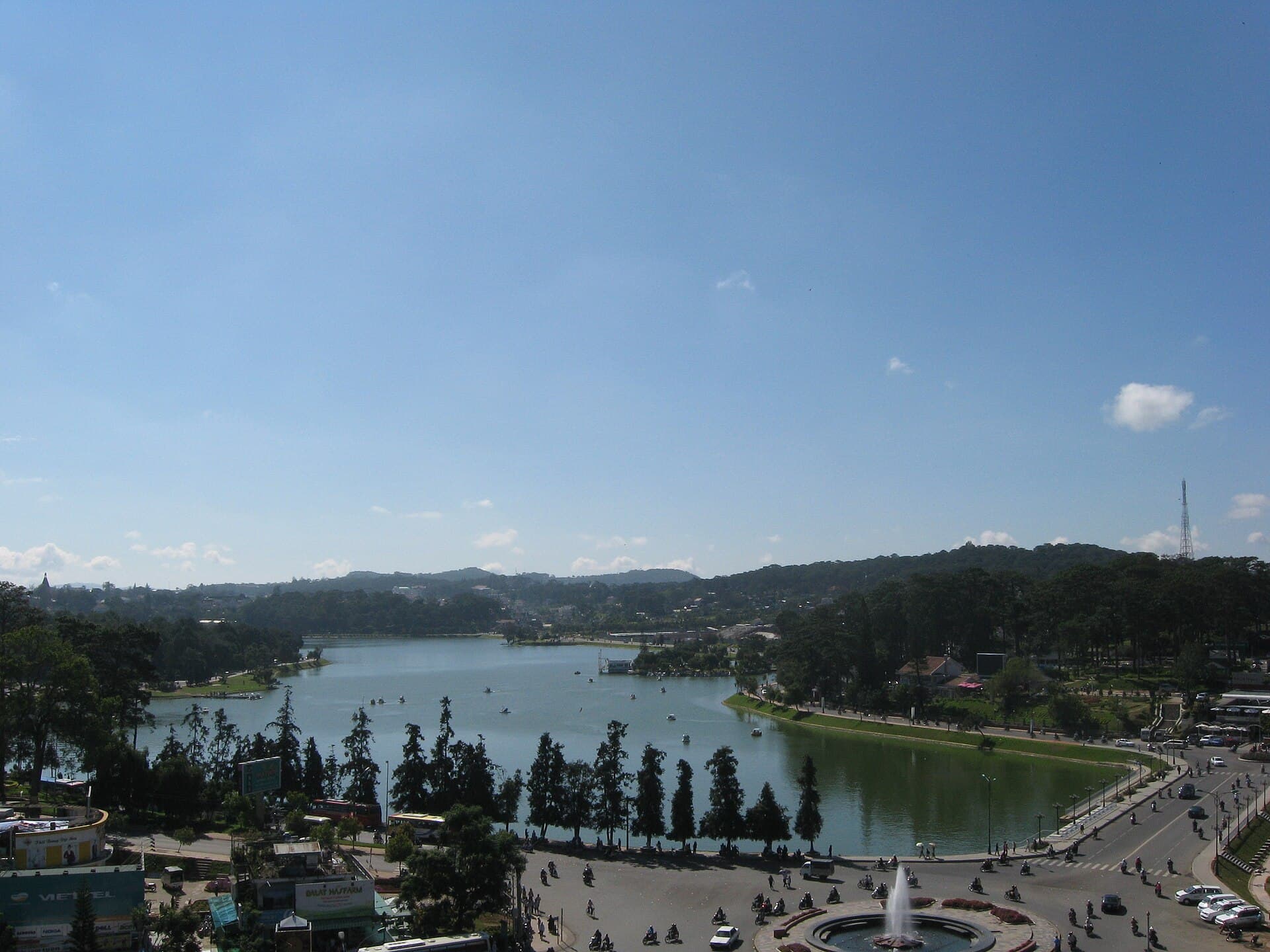
Begin your exploration at Xuan Huong Lake, a crescent-shaped artificial lake at the city's heart, perfect for a leisurely stroll or a swan boat ride. Nearby, the Da Lat Flower Park showcases hundreds of flower species, from roses and hydrangeas to orchids, blooming year-round. For a truly unique architectural experience, visit the Crazy House (Hằng Nga Guesthouse), a whimsical, tree-like structure designed by Vietnamese architect Đặng Việt Nga.
Journey to Da Lat Railway Station, an Art Deco masterpiece with a distinctive three-peaked roof resembling the Langbiang Mountains, offering scenic tourist train rides to Trại Mát. Discover the serene Truc Lam Zen Monastery, accessible via a cable car that provides panoramic views of the pine forests and Tuyen Lam Lake. For nature enthusiasts, the Datanla Waterfall offers a thrilling alpine coaster ride. Do not miss the Da Lat Night Market for local street food and souvenirs.
Đà Lạt enjoys a comfortable climate year-round, with average daytime temperatures ranging from 15°C to 24°C. The dry season, from November to March, is considered the best time to visit, offering cool, dry, and sunny weather ideal for outdoor activities and exploration. Evenings can be chilly, especially from mid-December to late February, with temperatures dropping to around 10°C. If you appreciate flowers and a festive atmosphere, January and February, coinciding with the Lunar New Year (Tet), are particularly lively.
Lien Khuong Airport (DLI) serves Đà Lạt, with domestic flights available from major Vietnamese cities like Hanoi, Ho Chi Minh City, and Da Nang. Buses and limousine vans are popular and affordable options for travel from cities such as Ho Chi Minh City or Nha Trang. Once in Đà Lạt, taxis and ride-sharing services are readily available, though renting a motorbike is a popular choice for independent exploration of the scenic routes and surrounding areas. The city center is walkable, allowing you to explore many attractions on foot. Accommodations range from budget hostels to luxury hotels, with many options concentrated around the central market. Layers of clothing are recommended due to the fluctuating temperatures between day and night.