Catedral de Aquisgrán
La grandiosa Catedral de Aquisgrán guarda una peculiar leyenda sobre su construcción, que involucra a un financiero bastante inesperado.
La historia completa se desbloquea en el tour
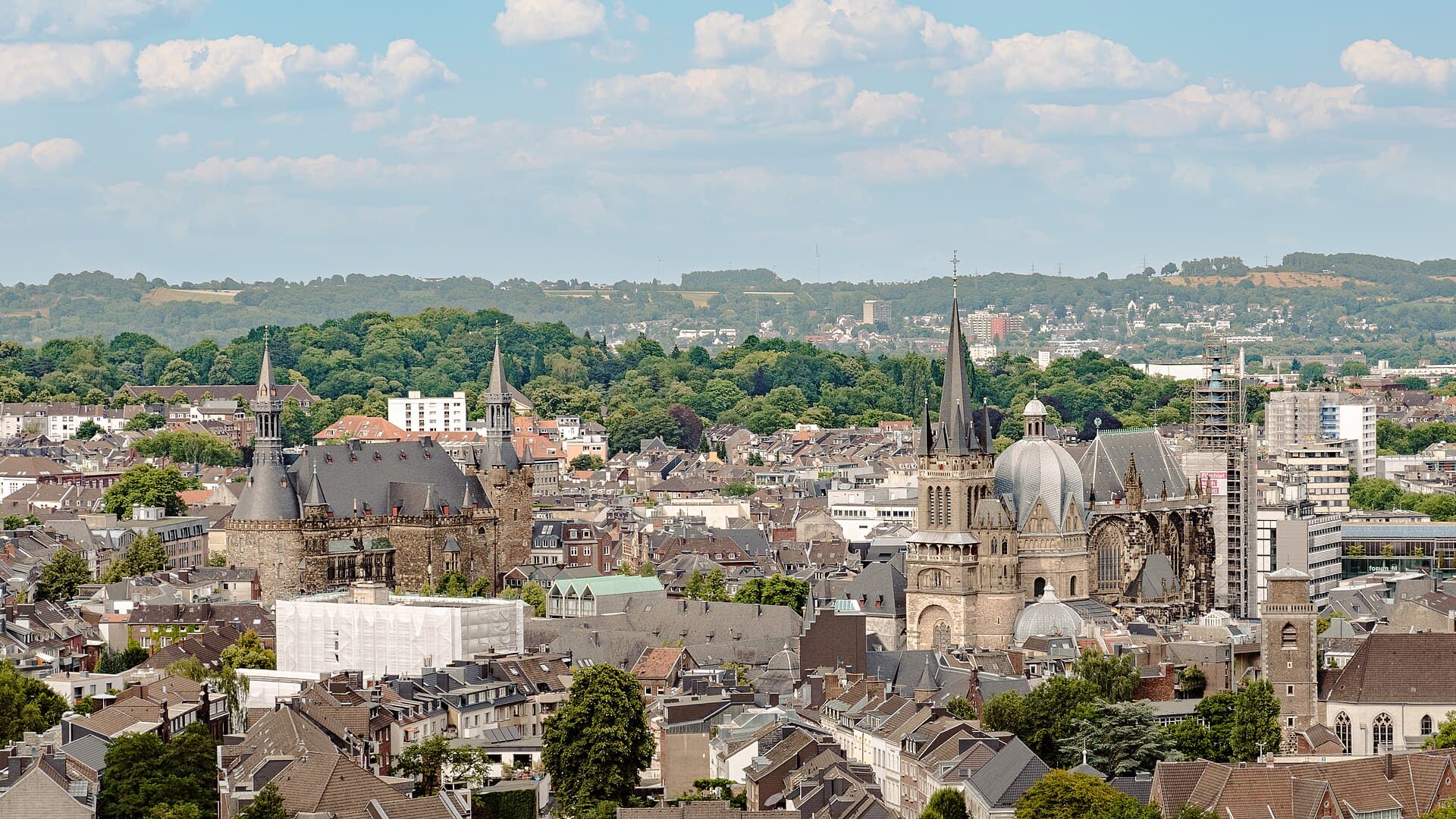 Sascha Faber / CC BY-SA 4.0, via Wikimedia Commons
Tour de audio autoguiado de Aquisgrán — ruta GPS a pie, reproducción offline, narración en 32 idiomas.
“Donde se forjaron imperios y la historia respira en cada piedra.”
No las postales. Las historias que ni los locales conocen — al oído, justo donde ocurrieron.
La grandiosa Catedral de Aquisgrán guarda una peculiar leyenda sobre su construcción, que involucra a un financiero bastante inesperado.
Este impresionante edificio gótico, erigido sobre los cimientos del palacio de Carlomagno, oculta un sorprendente secreto dentro de sus muros relacionado con un juego.
Carlomagno, el venerado emperador, poseía una mascota bastante exótica que recorrió una vasta distancia para residir en Aquisgrán.
Descubre todos los secretos de Aquisgrán
Cada dirección, cada revelación al completo — a tu oído, justo donde ocurrió.
Eliges tus paradas. Caminas. La voz te revela lo que los demás ignoran.


Tu tour de audioguía por Aquisgrán te espera — elige tus lugares, tu idioma y empieza al llegar.
ComprarLume incluye una guía de realidad aumentada. Levanta el móvil y su cámara muestra la calle que tienes delante, con una flecha luminosa sobre la imagen real que siempre apunta a tu próxima parada — sin mapas que descifrar, sin giros equivocados. Como todo en Lume, funciona completamente sin conexión.
Aix-la-Chapelle, conocida por los alemanes como Aachen, es una ciudad en el oeste de Alemania, situada cerca de las fronteras belga y holandesa. Su narrativa está profundamente entrelazada con Carlomagno, quien la estableció como el corazón de su imperio a finales del siglo VIII. El atractivo perdurable de la ciudad proviene de sus profundas raíces históricas, desde las termas romanas hasta su papel como ciudad de coronación para los reyes alemanes.
Hoy en día, Aix-la-Chapelle prospera como un centro de ciencia, ingeniería y tecnología de la información, mientras preserva cuidadosamente su encanto histórico. La fusión de la herencia antigua y la innovación contemporánea de la ciudad crea un destino singular, que ofrece una conexión tangible con el pasado junto con un espíritu de futuro.
Los orígenes de Aix-la-Chapelle se remontan a la era neolítica, hace aproximadamente 5.000 años, con los primeros habitantes atraídos por sus cálidas fuentes minerales. Los romanos establecieron aquí una ciudad balneario, llamándola Aquae Granni, en honor al dios celta de la curación, Grannus. Las cálidas fuentes sulfurosas ganaron renombre por sus propiedades terapéuticas y han sido celebradas durante siglos.
La verdadera prominencia de la ciudad comenzó con Carlomagno. El rey Pipino, padre de Carlomagno, mantuvo un palacio aquí ya en el año 765 d.C., y se cree que el propio Carlomagno nació en Aix-la-Chapelle. Entre 777 y 786, Carlomagno erigió un magnífico palacio en el sitio del de su padre, elevando la ciudad a la segunda más importante de su imperio y convirtiéndola en un centro significativo de la cultura y el aprendizaje occidentales. Declaró Aquisgrán la capital permanente de su reino alrededor del año 790 d.C. y construyó una capilla dedicada a la Virgen María, que formaría el núcleo de la futura catedral.
Desde 936 hasta 1531, la Catedral de Aquisgrán sirvió como iglesia de coronación para treinta y un reyes alemanes y doce reinas del Sacro Imperio Romano Germánico. Esta tradición solidificó la posición de Aix-la-Chapelle como un centro político y religioso fundamental en Europa. En 1166, el emperador Federico I, Barbarroja, concedió a Aquisgrán la inmediatez imperial, declarándola Ciudad Imperial Libre.
La ciudad ha enfrentado numerosos desafíos a lo largo de su existencia. Un devastador incendio en 1656 arrasó 4.000 casas y dañó el Ayuntamiento, lo que llevó a una reconstrucción de algunos elementos en estilo barroco. El Ayuntamiento sufrió más daños en un incendio en 1883, que consumió su techo y torres, y nuevamente durante los bombardeos de la Segunda Guerra Mundial en 1943. A pesar de estas adversidades, la ciudad y sus estructuras icónicas fueron meticulosamente restauradas, salvaguardando su integridad histórica. Aix-la-Chapelle también desempeñó un papel en la diplomacia internacional, albergando conferencias de paz que concluyeron la Guerra de Devolución en 1668 y la Guerra de Sucesión Austriaca en 1748.
La Catedral de Aquisgrán, reconocida como Patrimonio de la Humanidad por la UNESCO desde 1978, es un testimonio de la visión de Carlomagno. Su núcleo es la Capilla Palatina carolingia-románica, construida entre 796 y 805, que fue la primera estructura abovedada al norte de los Alpes desde la antigüedad. El diseño octogonal de la capilla se inspiró en la arquitectura bizantina, como la Basílica de San Vitale en Rávena. Carlomagno fue enterrado aquí en 814, y sus restos están ahora consagrados en un cofre de oro y plata, el Karlsschrein.
A lo largo de los siglos, la catedral se expandió con adiciones góticas, incluyendo una imponente sala del coro completada en 1414, a menudo referida como la “Casa de Cristal de Aquisgrán” debido a sus altas ventanas. El tesoro de la catedral salvaguarda una invaluable colección de artefactos arqueológicos, estéticos e históricos, incluyendo importantes reliquias reunidas por Carlomagno.
El Ayuntamiento de Aquisgrán, o Rathaus, es otra maravilla arquitectónica, erigido en estilo gótico entre 1330 y 1349 sobre los cimientos del antiguo palacio de Carlomagno, la Aula Regia. La Torre Granus, que data de la época de Carlomagno, se incorporó al edificio y se amplió. El Ayuntamiento sirvió como centro administrativo de la ciudad y albergó famosamente banquetes de coronación para reyes alemanes hasta 1531. El Salón de la Coronación presenta frescos del siglo XIX de Alfred Rethel, que representan leyendas de la vida de Carlomagno.
Comience su exploración en la Catedral de Aquisgrán, Patrimonio de la Humanidad de la UNESCO y lugar de descanso de Carlomagno. Admire los intrincados mosaicos de la Capilla Palatina, la parte más antigua de la catedral, y ascienda a la galería superior para ver el Trono Imperial. Tómese un tiempo para visitar el Tesoro de la Catedral, que alberga una extraordinaria colección de artefactos y reliquias medievales.
Adyacente a la catedral se encuentra el Ayuntamiento de Aquisgrán (Rathaus), una obra maestra gótica construida sobre los cimientos del palacio de Carlomagno. Explore el Salón de la Coronación, adornado con frescos que representan escenas de la vida de Carlomagno, y observe la Torre Granus, un vestigio de la estructura carolingia original.
Pasee por el Katschhof, la plaza situada entre la Catedral y el Ayuntamiento, que una vez fue el patio interior del palacio de Carlomagno. Descubra la Elisenbrunnen (Fuente de Elisa), un pabellón neoclásico donde podrá probar las célebres aguas termales sulfurosas de la ciudad. El parque circundante ofrece un agradable respiro. Finalmente, busque la Estatua de Carlomagno en la Marktbrunnen (Fuente del Mercado) en la plaza del mercado.
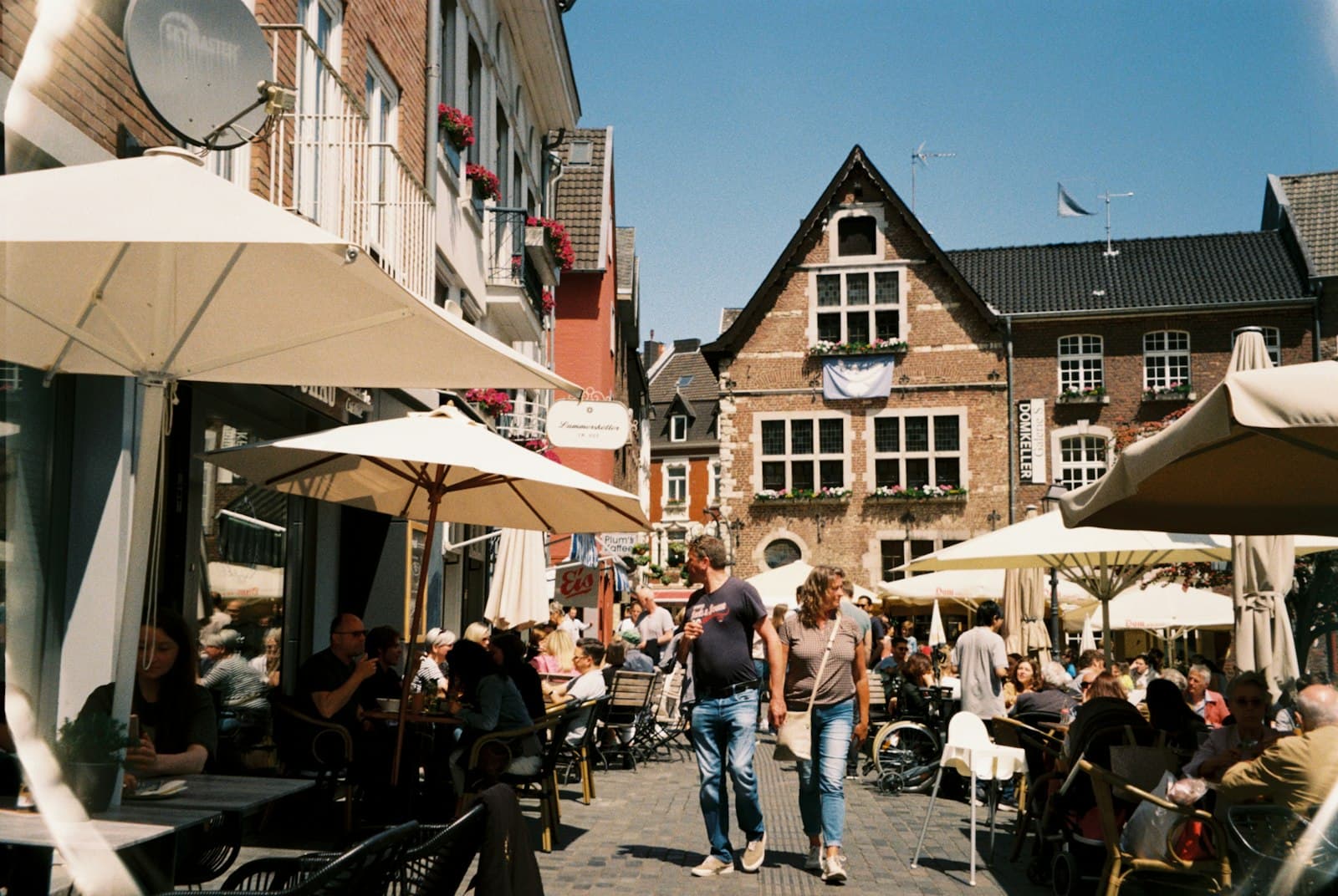
Aix-la-Chapelle ofrece una experiencia atractiva durante todo el año. Para un clima agradable y excursiones al aire libre, los meses de primavera (abril a junio) y otoño (septiembre a octubre) son ideales, con temperaturas más suaves. El verano (julio y agosto) ofrece días más cálidos, perfectos para disfrutar de los cafés al aire libre y eventos, aunque puede estar más concurrido de visitantes. La ciudad también alberga un renombrado mercado navideño, lo que convierte los meses de invierno (finales de noviembre a diciembre) en una época festiva para visitar, con el centro histórico bellamente iluminado.
Aix-la-Chapelle (Aachen) es fácilmente accesible en trenes de alta velocidad desde las principales ciudades europeas como Colonia, Maastricht, Bruselas y Lieja. El centro de la ciudad es compacto y se explora mejor a pie, lo que le permite apreciar su arquitectura histórica y sus acogedoras calles. El transporte público, incluidos los autobuses, es eficiente para llegar a zonas más alejadas. Considere adquirir una Aachen Card para obtener descuentos en atracciones y transporte público si planea una estancia prolongada. La moneda utilizada es el Euro. Muchos establecimientos aceptan tarjetas de crédito, pero siempre es aconsejable llevar algo de efectivo para compras más pequeñas.
Aquisgrán en coreano, en chino o en hebreo — y 29 idiomas más, cada parada narrada por una voz nativa. La mayor variedad de idiomas de cualquier audioguía autoguiada.
Disponible en: