Hotel Los Flamingos
Este hotel rosa pastel, situado en un acantilado, guarda un sorprendente secreto de Hollywood.
La historia completa se desbloquea en el tour
 Mitrush / CC BY-SA 3.0, via Wikimedia Commons
Tour de audio autoguiado de Acapulco — ruta GPS a pie, reproducción offline, narración en 32 idiomas.
“Donde el Pacífico abraza la leyenda y el glamour.”
No las postales. Las historias que ni los locales conocen — al oído, justo donde ocurrieron.
Este hotel rosa pastel, situado en un acantilado, guarda un sorprendente secreto de Hollywood.
Los renombrados clavadistas de Acapulco participan en un ritual previo al salto que va más allá de la mera preparación física.
Esta serena laguna de agua dulce, un santuario para la vida aviar, también ha desempeñado un papel inesperado en la historia cinematográfica.
Descubre todos los secretos de Acapulco
Cada dirección, cada revelación al completo — a tu oído, justo donde ocurrió.
Eliges tus paradas. Caminas. La voz te revela lo que los demás ignoran.
Tu tour de audioguía por Acapulco te espera — elige tus lugares, tu idioma y empieza al llegar.
ComprarLume incluye una guía de realidad aumentada. Levanta el móvil y su cámara muestra la calle que tienes delante, con una flecha luminosa sobre la imagen real que siempre apunta a tu próxima parada — sin mapas que descifrar, sin giros equivocados. Como todo en Lume, funciona completamente sin conexión.
Acapulco, oficialmente Acapulco de Juárez, es una ciudad en la costa del Pacífico de México, dentro del estado de Guerrero. Se asienta sobre una bahía profunda y semicircular, estableciéndose como uno de los fondeaderos naturales más excepcionales del mundo. Antaño un refugio favorito de la élite de Hollywood a mediados del siglo XX, Acapulco sigue siendo una importante ciudad portuaria y un destino muy apreciado por los viajeros mexicanos.
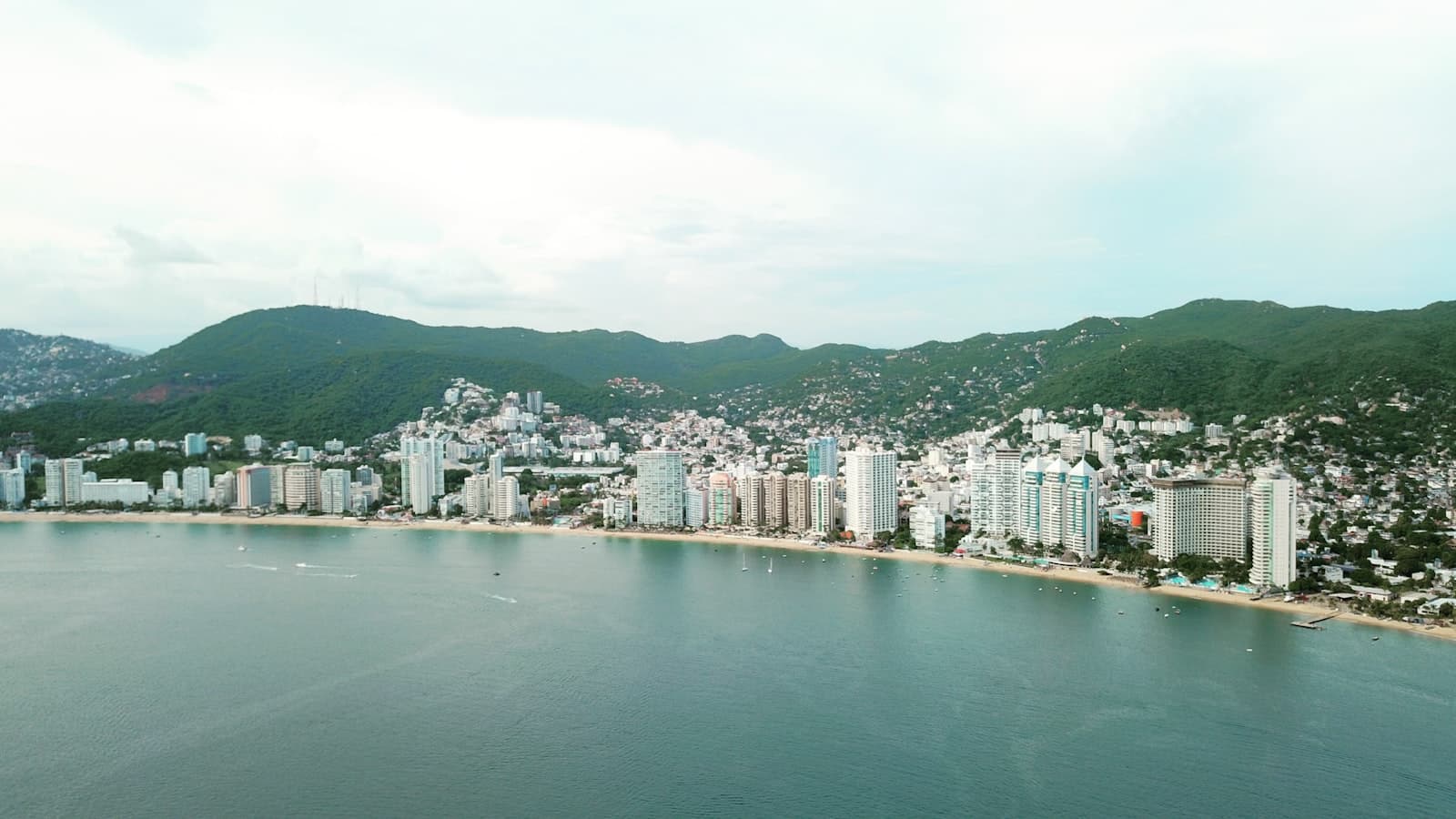
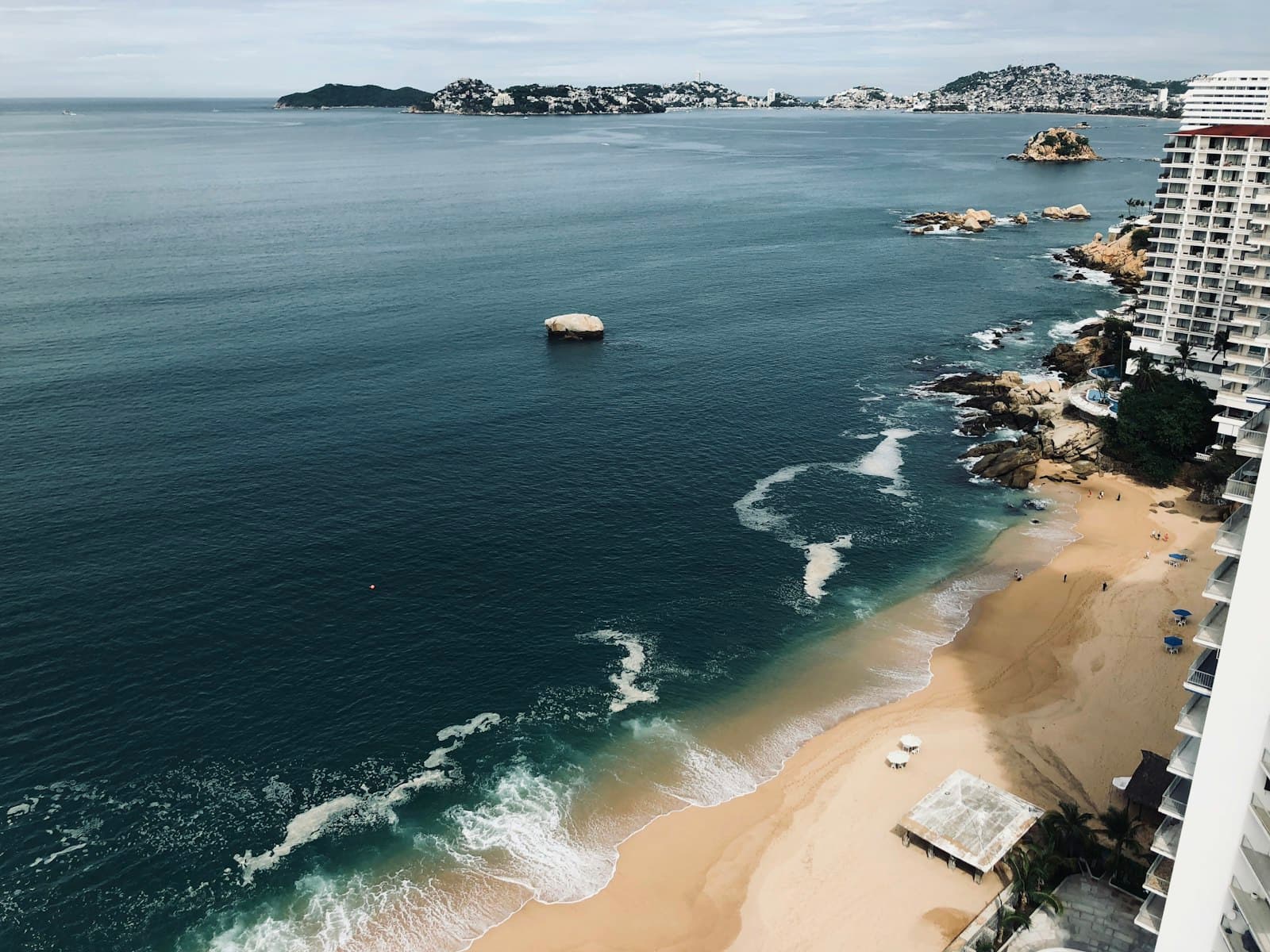
La vista de la ciudad combina imponentes hoteles rascacielos con las dramáticas montañas de la Sierra Madre del Sur, que descienden hasta la costa. Más allá de sus célebres playas y su animado ambiente, Acapulco presenta una mezcla de sitios históricos, una cultura vibrante y oportunidades para diversas actividades al aire libre, desde el snorkel hasta la exploración de exuberantes jardines botánicos.
Aunque Acapulco ha superado su cuota de dificultades, continúa evolucionando, con inversiones continuas en nuevas atracciones e infraestructura. El perdurable atractivo de la ciudad proviene de su distintiva fusión de esplendor natural, profundidad histórica y un espíritu persistente y festivo, invitando a los visitantes a descubrir sus múltiples dimensiones.
La historia de Acapulco se remonta a miles de años, con hallazgos arqueológicos que indican habitáculos indígenas en la zona de la bahía alrededor del 3000 a.C. El pueblo nahua, que llegó alrededor del siglo VIII a.C., dio a la bahía su nombre, que se traduce como "donde los juncos fueron destruidos o arrastrados" o "en los grandes juncos". Para el siglo XII d.C., los mexicas (aztecas) también llegaron a la región.
La presencia europea en Acapulco comenzó a principios de la década de 1530, cuando los conquistadores españoles, bajo el liderazgo de Hernán Cortés, reconocieron la importancia estratégica de la bahía y establecieron un asentamiento. Para 1531, se construyó la primera carretera importante que conectaba la Ciudad de México con Acapulco. En 1550, treinta familias españolas fueron enviadas para forjar una presencia europea permanente. El rey Felipe II designó oficialmente el asentamiento como ciudad en 1599.
La era dorada de Acapulco comenzó en 1565 con el establecimiento de la ruta comercial del Galeón de Manila-Acapulco. Este paso transpacífico unía Asia (a través de Manila) con las Américas y Europa, elevando a Acapulco al segundo puerto más crucial de la Nueva España, después de Veracruz. Para salvaguardar este valioso comercio de corsarios como Francis Drake, el Fuerte de San Diego, de forma pentagonal, fue erigido entre 1615 y 1617. El fuerte fue reconstruido entre 1778 y 1783 tras un terremoto en 1776.
La Guerra de Independencia de México trajo una considerable transformación a Acapulco. En 1810, José María Morelos y Pavón atacó e incendió la ciudad, capturando posteriormente el Fuerte de San Diego en 1813. La independencia de México en 1821 marcó la conclusión del comercio del Galeón de Manila, lo que llevó a un período de recesión económica para el puerto. El nombre oficial de la ciudad se actualizó en 1885 a Acapulco de Juárez, en honor al expresidente Benito Juárez.
Un nuevo capítulo se abrió en 1927 con la construcción de la primera carretera que unía Acapulco con la Ciudad de México, reduciendo significativamente el tiempo de viaje y abriendo la ciudad al turismo. Las décadas de 1940 a 1960 fueron testigos del ascenso de Acapulco a la prominencia como un elegante escape para luminarias de Hollywood e individuos adinerados, incluyendo a John y Jacqueline Kennedy, quienes pasaron allí su luna de miel. Este período solidificó su reputación como un destino turístico de primer nivel, a menudo conocido como la "Perla del Pacífico". La ciudad fue sede de los eventos de vela para los Juegos Olímpicos de Verano de 1968 en la Ciudad de México. Una extensa expansión del puerto ocurrió en la década de 1970.
En las últimas décadas, Acapulco ha continuado su desarrollo, siendo el principal eje de planificación urbana el malecón Costera Miguel Alemán, que conecta el centro antiguo con playas y hoteles más nuevos. La ciudad se ha expandido hacia el sureste, con nuevas creaciones arquitectónicas. Aunque sigue siendo un importante destino turístico, particularmente para visitantes nacionales, Acapulco ha encontrado dificultades, incluyendo un aumento de la violencia de pandillas desde 2014. En 2023, la ciudad fue severamente afectada por el huracán Otis, una de las tormentas más poderosas en la historia de la costa del Pacífico de México. A pesar de estos desafíos, Acapulco continúa atrayendo visitantes con su singular mezcla de historia, esplendor natural y cultura dinámica.
Acapulco presenta una variedad de lugares de interés y actividades. Los icónicos Acantilados de La Quebrada ofrecen un espectáculo dramático, donde buceadores profesionales saltan desde alturas vertiginosas al Océano Pacífico. Puedes observar esta actuación desde varias plataformas de observación o desde el restaurante La Perla, en el acantilado.
Para los interesados en la historia, el Fuerte de San Diego, en forma de estrella, es una parada importante. Erigido en el siglo XVII para defenderse de los corsarios, ahora alberga un museo histórico.
Explora el Viejo Acapulco en el lado oeste de la ciudad, incluyendo el Zócalo (Plaza Álvarez), una animada plaza central con tiendas, cafés y restaurantes. Cerca, la Catedral de Nuestra Señora de la Soledad de Acapulco se erige como un hito prominente.
Embárcate en un viaje en barco a la Isla de la Roqueta, una reserva ecológica al otro lado de la bahía de Playa Caleta. Aquí, puedes hacer snorkel, caminar, visitar un pequeño zoológico y ver un faro. Los barcos con fondo de cristal también ofrecen vistas de una estatua submarina de la Virgen de Guadalupe.
Para vistas panorámicas de la Bahía de Acapulco, visita la Capilla de la Paz, una capilla no confesional situada en un punto alto sobre la ciudad. El adyacente Jardín Botánico de Acapulco ofrece una oportunidad para sumergirse en la flora y fauna local.
Para aquellos que buscan emoción, la tirolesa Xtasea sobre la Bahía de Puerto Marqués se describe como la tirolesa sobre el agua más larga del mundo, alcanzando velocidades de hasta 120 kilómetros por hora.
Acapulco experimenta un clima tropical, con calidez durante todo el año. El momento más oportuno para visitar es durante la estación seca, de noviembre a abril. En estos meses, el clima es cálido y árido, con temperaturas que suelen oscilar entre los 24 y 29°C (mediados de los 70 a mediados de los 80 grados Fahrenheit), creando condiciones ideales para actividades de playa y exploración al aire libre.
La estación húmeda se extiende de mayo a octubre, caracterizada por condiciones más cálidas y húmedas y frecuentes lluvias, con potencial de huracanes en la última parte del verano. Si bien la temporada baja ofrece menos multitudes y precios potencialmente más bajos, la estación seca proporciona constantemente el clima más agradable.
Acapulco es fácilmente accesible por aire, con el Aeropuerto Internacional General Juan N. Álvarez (ACA) situado aproximadamente a 22 kilómetros del Casco Antiguo (centro de la ciudad). También se puede llegar a la ciudad en coche a través de una carretera de peaje desde la Ciudad de México.
Navegar por Acapulco es relativamente sencillo. Los taxis son un medio de transporte fiable y común, con taxis Volkswagen azules, taxis amarillos y blancos, y taxis turísticos disponibles. Es aconsejable acordar las tarifas con los conductores de taxis azules antes de comenzar el viaje. La ciudad también mantiene un extenso y asequible sistema de autobuses que cubre varias rutas, incluyendo las regiones del Zócalo y La Costera.
Generalmente se recomienda evitar consumir agua del grifo; opte por agua embotellada o purificada, y asegúrese de que el hielo en las bebidas esté hecho con agua purificada. Mientras explora, permanezca dentro de las zonas turísticas populares, como la playa, el centro y las principales zonas comerciales y de restaurantes, que suelen estar bien iluminadas y patrulladas. Sea consciente de su entorno, especialmente por la noche, y evite las zonas poco iluminadas o desiertas.
Acapulco en coreano, en chino o en hebreo — y 29 idiomas más, cada parada narrada por una voz nativa. La mayor variedad de idiomas de cualquier audioguía autoguiada.
Disponible en: