Le Parthénon
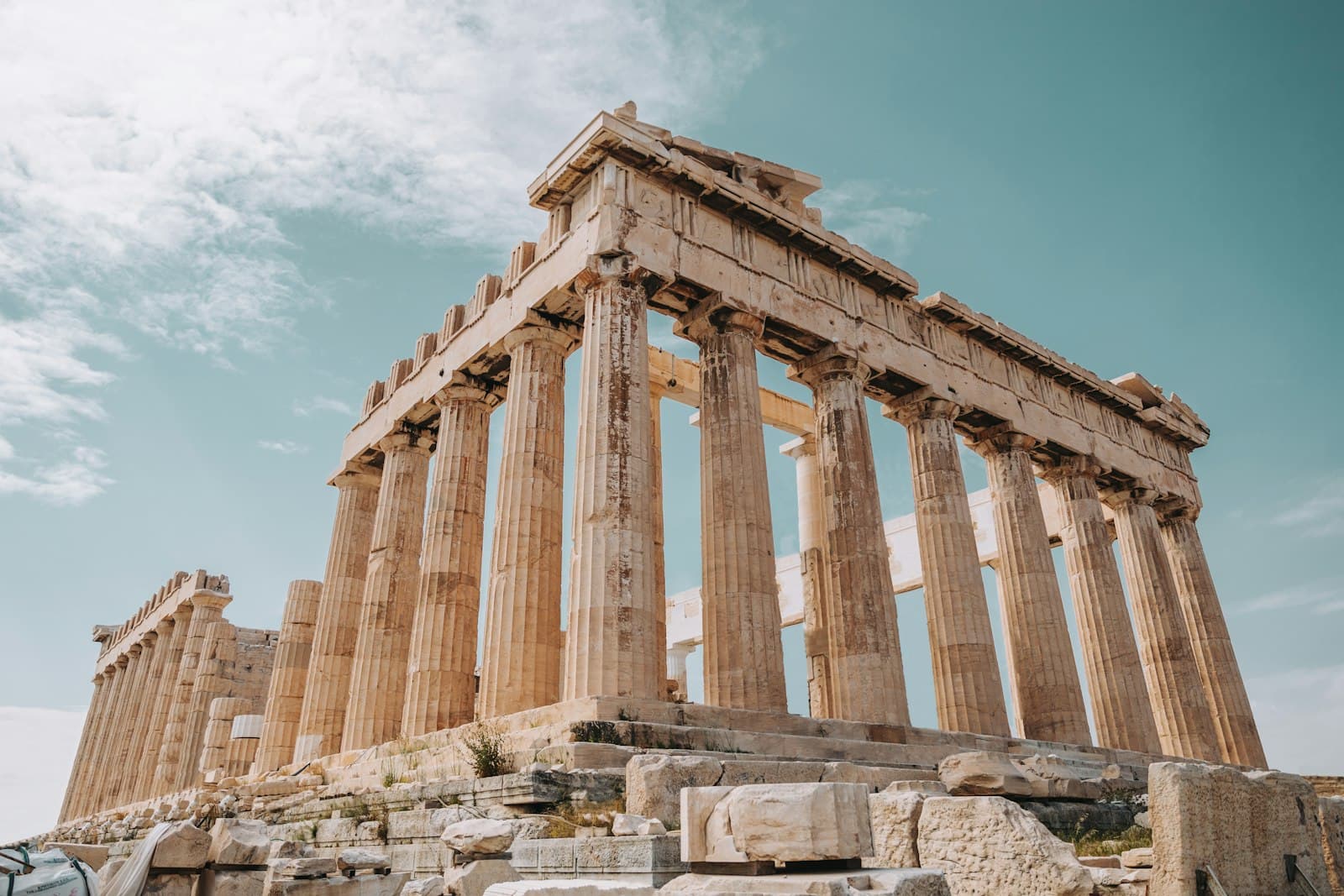
Les lignes apparemment parfaites du Parthénon sont une illusion artistique.
L'histoire complète se débloque dans le tour
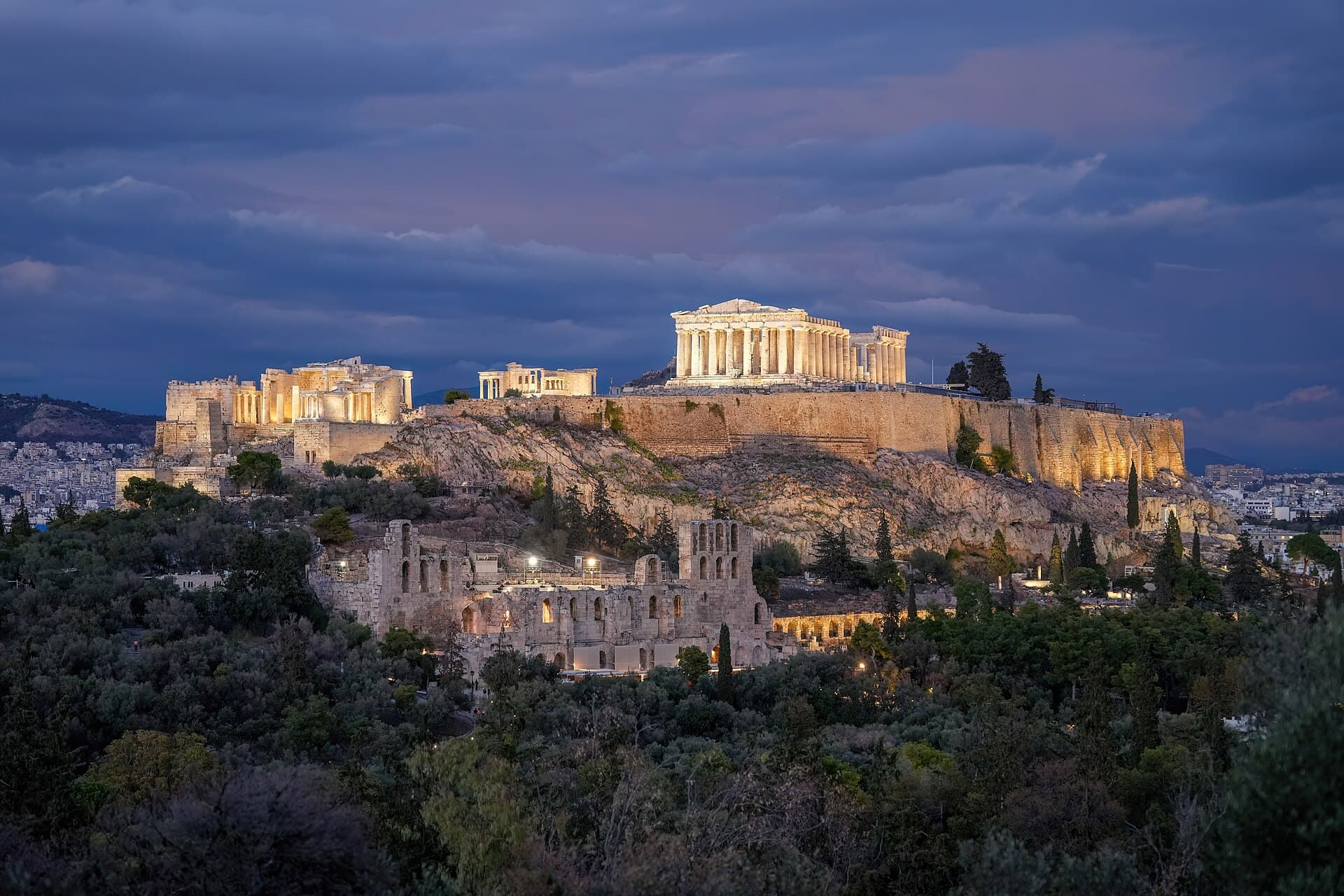 Giles Laurent / CC BY-SA 4.0, via Wikimedia Commons
Visite audio autoguidée de Acropole d'Athènes — parcours GPS à pied, lecture hors ligne, narration en 32 langues.
“Là où les pierres millénaires racontent des histoires de dieux et de démocratie.”
Pas les cartes postales. Les histoires que même les habitants ignorent — soufflées à l'oreille, là où elles se sont passées.
Les lignes apparemment parfaites du Parthénon sont une illusion artistique.
Bien avant ses temples célèbres, l'Acropole servait de lieu sacré d'une nature différente.
Les gracieuses jeunes filles soutenant le porche de l'Érechthéion ne sont pas les originales que l'on pourrait attendre.
Découvrez tous les secrets de Acropole d'Athènes
Chaque adresse, chaque révélation en entier — dans ton oreille, là où elle s'est passée.
Tu choisis tes lieux. Tu marches. La voix te révèle ce que les autres ignorent.
Lume intègre un guide en réalité augmentée. Levez votre téléphone : sa caméra montre la rue devant vous, avec une flèche lumineuse posée sur l'image réelle qui pointe toujours vers votre prochain arrêt — aucune carte à déchiffrer, aucun mauvais virage. Comme tout dans Lume, ça fonctionne entièrement hors-ligne.
L'Acropole d'Athènes est une preuve durable de la civilisation grecque antique, une forteresse rocheuse couronnée de bâtiments monumentaux qui ont façonné la pensée et l'architecture occidentales. S'élevant au-dessus de la ville moderne animée, ce site classé au patrimoine mondial de l'UNESCO offre des vues imprenables sur Athènes et une connexion profonde avec son passé. Le nom lui-même, « Acropole », signifie « ville haute » ou « bord de la ville », soulignant son importance stratégique et symbolique en tant que cœur de l'Athènes antique.
À son apogée au Ve siècle avant notre ère, sous l'homme d'État Périclès, l'Acropole fut transformée en un magnifique complexe religieux dédié principalement à Athéna, la déesse protectrice de la ville. Les structures ici, y compris l'emblématique Parthénon, les Propylées, l'Érechthéion et le temple d'Athéna Nikè, n'étaient pas seulement des merveilles architecturales, mais aussi de puissants symboles de l'opulence, de l'autorité et des idéaux démocratiques athéniens. Un voyage à l'Acropole est un passage immersif à travers des millénaires d'histoire, offrant un lien tangible avec les philosophes, les artistes et les citoyens qui ont jeté les bases de la démocratie et de la culture occidentale.
L'histoire de l'Acropole s'étend bien au-delà de l'ère classique, avec des preuves d'habitation sur l'affleurement rocheux remontant au 4e millénaire av. J.-C. Elle est devenue un lieu sacré au 8e siècle av. J.-C., avec l'établissement du culte d'Athéna Polias.
Les temples existants sur l'Acropole furent dévastés en 480 av. J.-C. pendant les guerres perses. Suite à cette destruction, le site resta en ruines pendant des années. C'est au milieu du Ve siècle av. J.-C., pendant l'« âge d'or » d'Athènes et sous la direction de Périclès, qu'un programme de reconstruction monumental commença. Ce projet ambitieux visait à montrer la richesse et la puissance d'Athènes, transformant l'Acropole en le centre architectural et spirituel que nous reconnaissons largement aujourd'hui.
La construction du Parthénon, dédié à Athéna Parthénos, commença en 447 av. J.-C. et fut achevée en 432 av. J.-C. Les architectes Ictinos et Callicratès, ainsi que le sculpteur Phidias, furent responsables de sa conception et de sa décoration sculpturale. Les Propylées, la grande porte cérémonielle, faisaient également partie de ce programme de construction péricléen. Le temple d'Athéna Nikè et l'Érechthéion, avec son porche des Cariatides distinctif, furent achevés pendant la guerre du Péloponnèse (431-404 av. J.-C.).
Au fil des siècles, l'Acropole a connu de nombreuses transformations. Le Parthénon, à l'origine un temple et un trésor, fut converti en église chrétienne pendant l'Empire byzantin, puis en mosquée sous l'Empire ottoman. Tragiquement, en 1687, pendant la guerre de Morée, le Parthénon subit de graves dommages lorsque la poudre à canon stockée par les dirigeants turcs fut enflammée par un bombardement vénitien, provoquant une explosion massive. La Grèce reprit le contrôle de l'Acropole en 1822 pendant la guerre d'indépendance grecque. Aujourd'hui, d'importants efforts de restauration se poursuivent pour préserver ces monuments inestimables pour les générations futures.
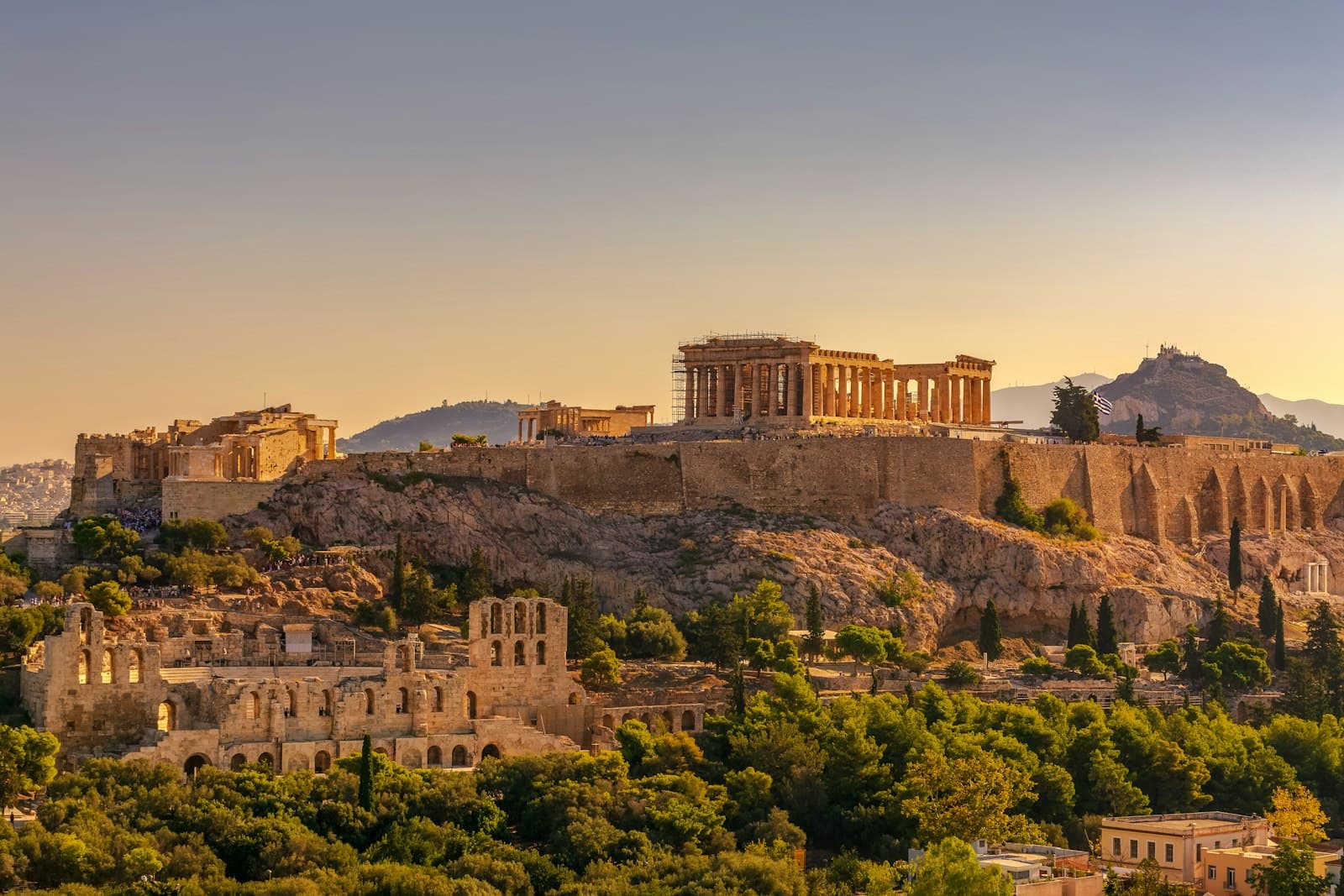
L'Acropole abrite une collection de chefs-d'œuvre architecturaux antiques. Le plus reconnaissable est le Parthénon, un temple dorique honorant la déesse Athéna. Sa précision architecturale et ses subtils raffinements optiques sont une merveille d'ingénierie antique. Les Propylées servent d'entrée monumentale au quartier sacré, une grande porte qui accueillait autrefois les Athéniens de l'Antiquité. Au sud-ouest se dresse le petit mais élégant temple d'Athéna Nikè, dédié à la déesse de la victoire. Sur le côté nord de l'Acropole, l'Érechthéion est remarquable pour son design unique et l'emblématique Porche des Cariatides, où six statues de Cariatides soutiennent le toit. Au-delà du plateau principal, les pentes de l'Acropole présentent des sites importants tels que l'Odéon d'Hérode Atticus, un théâtre romain bien conservé encore utilisé pour des spectacles, et l'ancien Théâtre de Dionysos, considéré comme le berceau du drame. Ne manquez pas le musée de l'Acropole au pied de la colline, qui abrite de nombreux artefacts originaux du site, offrant un contexte crucial et une compréhension plus approfondie des monuments. De divers points de l'Acropole, vous pouvez également admirer des vues imprenables sur Athènes, y compris l'Agora antique, le temple de Zeus Olympien et le mont Lycabette.
Les périodes les plus agréables pour visiter l'Acropole sont les saisons intermédiaires d'avril, mai et octobre. Pendant ces mois, les températures sont agréables (19-24°C au printemps, 20-26°C en automne) et le nombre de visiteurs est plus gérable qu'en plein été. L'été, particulièrement juillet et août, apporte des foules importantes et des températures élevées, dépassant souvent les 32°C. L'Acropole peut même fermer pendant les heures les plus chaudes de la journée lors de fortes vagues de chaleur pour protéger les visiteurs. Pour éviter les périodes les plus chargées, visez tôt le matin, dès l'ouverture à 8h00, ou en fin d'après-midi, quelques heures avant la fermeture. Les jours de semaine sont généralement moins fréquentés que les week-ends.
Prévoyez une visite de deux à trois heures pour explorer l'Acropole et ses monuments. Si vous comptez également visiter le musée de l'Acropole, prévoyez une à deux heures supplémentaires. Il est fortement recommandé de réserver vos billets en ligne à l'avance, car les créneaux horaires d'entrée sont obligatoires et aident à éviter les longues files d'attente, surtout en haute saison. Il y a une limite quotidienne de 20 000 visiteurs. Portez des chaussures confortables, robustes et antidérapantes, car le terrain comprend des marches en marbre et des pierres anciennes inégales. L'ombre est limitée, alors apportez un chapeau, des lunettes de soleil et de la crème solaire. Emportez votre propre bouteille d'eau, car les boissons ne sont pas vendues sur le site, bien que des fontaines à eau soient disponibles. Il est interdit de manger sur le site de l'Acropole. L'Acropole est accessible par les transports en commun, le métro étant une option pratique. Un ascenseur est disponible sur le côté nord pour les visiteurs à mobilité réduite.
Acropole d'Athènes en coréen, en chinois ou en hébreu — et dans 29 autres langues, chaque étape narrée par une voix native. La plus large gamme de langues de tous les audioguides autoguidés.
Disponible en :