Taşköprü (Steinbrücke)
Diese römische Brücke ist nicht nur ein Relikt; sie war jahrhundertelang eine wichtige Lebensader.
Die ganze Geschichte wird in der Tour freigeschaltet
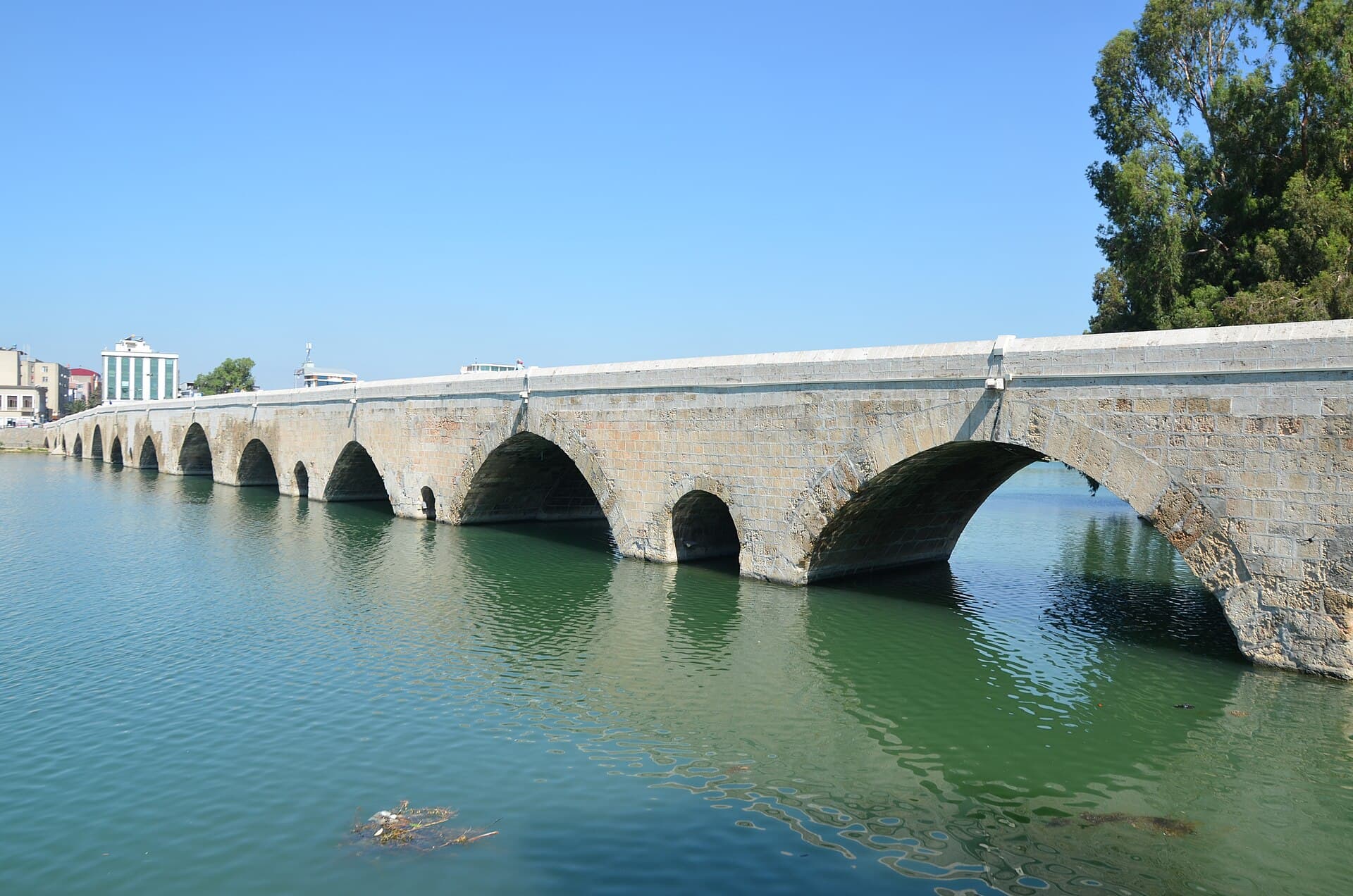 Carole Raddato from FRANKFURT, Germany / CC BY-SA 2.0, via Wikimedia Commons
Selbstgeführte Audio-Walking-Tour durch Adana — GPS-Route, Offline-Wiedergabe, erzählerische Narration in 32 Sprachen.
“Adana: Wo alte Steine auf feurige Aromen treffen.”
Nicht die Postkarten. Die Geschichten, die selbst Einheimische nicht kennen – dir ins Ohr geflüstert, genau dort, wo sie geschahen.
Diese römische Brücke ist nicht nur ein Relikt; sie war jahrhundertelang eine wichtige Lebensader.
Der Name dieser Moschee, der „Ölmoschee“ bedeutet, deutet auf eine überraschende Vergangenheit hin.
Eine katholische Kirche in Adana trägt einen seltsamen Spitznamen.
Entdecke jedes Geheimnis von Adana
Jede Adresse, jede Enthüllung vollständig – in deinem Ohr, genau dort, wo es geschah.
Du wählst deine Stationen. Du gehst. Die Stimme enthüllt, was andere übersehen.


Deine selbstgeführte Audio-Tour durch Adana ist bereit – wähle deine Sehenswürdigkeiten, deine Sprache und starte, sobald du ankommst.
KaufenLume enthält einen integrierten Augmented-Reality-Guide. Halten Sie Ihr Handy hoch: Die Kamera zeigt die Straße vor Ihnen, mit einem leuchtenden Pfeil über dem echten Bild, der immer auf Ihren nächsten Stopp zeigt — keine Karte zum Rätseln, keine falschen Abzweigungen. Wie alles bei Lume funktioniert es komplett offline.
Adana, die sechstbevölkerungsreichste Stadt der Türkei, bildet einen zentralen Punkt in der Mittelmeerregion und erstreckt sich über die fruchtbare Çukurova-Ebene entlang des Flusses Seyhan. Diese südliche türkische Stadt bietet eine fesselnde Mischung aus beständiger Geschichte, tiefgründiger Kultur und einer ausgeprägten kulinarischen Landschaft. Adana, oft durch seine kühne und energiegeladene Atmosphäre gekennzeichnet, bietet ein authentisches Erlebnis, bei dem der echte lokale Charakter über den weit verbreiteten Tourismus gestellt wird.
Die strategische Lage der Stadt hat sie über Jahrtausende hinweg zu einem Kreuzungspunkt der Zivilisationen gemacht, was ihre Architektur, Bräuche und insbesondere ihre Küche geprägt hat. Vom gefeierten Adana-Kebab bis zum belebenden Şalgam-Getränk zieht die Gastronomie der Stadt viele an und verspricht unvergessliche Geschmäcker. Über seinen kulinarischen Reiz hinaus lädt Adana Besucher ein, seine historischen Wahrzeichen, weitläufigen Parks und den lebendigen Rhythmus des täglichen Lebens entlang des Seyhan-Flusses zu erkunden.
Adanas Geschichte erstreckt sich über beeindruckende 8.000 Jahre, wobei archäologische Funde in der Nähe auf menschliche Präsenz seit der Altsteinzeit hinweisen. Der Tepebağ-Hügel, der als älteste Siedlung in der Çukurova-Region gilt, stammt aus der Jungsteinzeit. Der Name der Stadt selbst trägt alte Echos und erscheint um 1550 v. Chr. auf hethitischen Tafeln als „Uru Adania“. Der griechischen Mythologie zufolge wurde Adana von Adanus und Saurus, Söhnen des Gottes Uranus, gegründet, wobei Adanus der Stadt seinen Namen und Saurus dem Fluss Seyhan seinen Namen gab.
Im Laufe seiner langen Existenz stand Adana unter der Herrschaft von mindestens achtzehn verschiedenen Zivilisationen, darunter die Hethiter, Assyrer, Perser und Römer. Im 1. Jahrhundert v. Chr. wurde es Teil des Römischen Reiches, und später, im 1. Jahrhundert n. Chr., errichtete der römische Kaiser Hadrian die Taşköprü (Steinbrücke) über den Fluss Seyhan, ein Bauwerk, das bemerkenswerterweise noch heute in Gebrauch ist. Die Stadt erlebte auch Perioden muslimischer, byzantinischer und seldschukischer Herrschaft.
Das Fürstentum Ramazanoğlu herrschte zwischen 1377 und 1517 über das Gebiet und hinterließ bedeutende architektonische Hinterlassenschaften wie die Ulu Cami (Große Moschee), die zwischen 1509 und 1541 erbaut wurde. Im Jahr 1517 wurde Adana von Sultan Selim I. erobert und Teil des Osmanischen Reiches. Nach dem Ersten Weltkrieg wurde die Stadt von den Franzosen besetzt, bevor sie am 5. Januar 1922 Teil der modernen Türkei wurde. In den 1950er Jahren erfolgte eine rasante Entwicklung mit dem Bau des Seyhan-Staudamms, der Adanas Rolle als wichtiges Wirtschaftszentrum, insbesondere in der Baumwollproduktion und Textilindustrie, weiter festigte. Heute enthüllt die Stadt weiterhin ihre vielschichtige Vergangenheit durch laufende Ausgrabungen in Gebieten wie dem Viertel Tepebağ, wo antike Artefakte und zivile Architektur aus der osmanischen Zeit freigelegt werden.
Adanas historische Monumente konzentrieren sich entlang seiner Hauptstraßen, die vom kleinen Uhrenplatz bis zum Büyük Saat (Großer Uhrturm) reichen. Die Große Uhr, 32 Meter hoch, wurde 1882 von Gouverneur Ziya Paşa als Symbol der Modernisierung errichtet. Weitere bemerkenswerte Bauwerke sind die Agca Mescid, die älteste Moschee der Stadt, erbaut 1409, und die Çarşı Hamamı (Türkisches Bad), die aus dem Jahr 1529 stammt und noch heute in Betrieb ist.
Die Ulu Cami, eine Verschmelzung seldschukischer, mamlukischer und osmanischer Architekturstile, mit ihrem achteckigen Minarett im mamlukischen Stil, wurde 1513 fertiggestellt. Die Yağ Cami, ursprünglich eine Kreuzfahrerkirche, wurde 1501 durch den Anbau eines Minaretts in eine Moschee umgewandelt. Diese Bauwerke sowie andere wie das Atatürk-Hausmuseum, ein traditionelles Adana-Haus aus dem 19. Jahrhundert, in dem Mustafa Kemal Atatürk wohnte, bieten greifbare Verbindungen zur vielfältigen Vergangenheit der Stadt.
Beginnen Sie Ihre Erkundung in der Sabancı Zentralmoschee, einer der größten Moscheen der Türkei, deren sechs Minarette die Skyline entlang des Seyhan-Flusses prägen. Ihre Mischung aus osmanischer und zeitgenössischer Architektur, kunstvollen Fliesenarbeiten und ruhigen Gärten ist besonders eindrucksvoll, wenn die Dämmerung hereinbricht. Ein kurzer Spaziergang entfernt steht die Taşköprü (Steinbrücke), ein ingenieurtechnisches Meisterwerk aus der Römerzeit, erbaut von Kaiser Hadrian im 2. Jahrhundert n. Chr. und noch heute in Gebrauch. Schlendern Sie über ihre antiken Bögen und beobachten Sie das tägliche Leben am Seyhan-Fluss.
Tiefen Sie in die Vergangenheit der Stadt ein im Archäologiemuseum Adana, das Artefakte aus neolithischer bis osmanischer Zeit beherbergt, darunter hethitische Relikte und römische Sarkophage. Für einen Einblick in die lokale Kultur zeigt das Ethnographische Museum Adana, untergebracht in einer ehemaligen Kirche, traditionelle Trachten, Handwerk und Haushaltsgegenstände. Erkunden Sie den Kazancılar Basar für ein authentisches Markterlebnis, wo Sie handgefertigte Kupferwaren, Gewürze und Textilien entdecken können.
Außerhalb des Stadtzentrums sollten Sie eine Fahrt zur Varda Köprüsü in Betracht ziehen, bekannt als James-Bond-Brücke, eine beeindruckende Eisenbahnbrücke, die in Skyfall zu sehen war. Für Naturliebhaber bietet die Kapıkaya-Schlucht dramatische Klippen und klares Wasser zum Wandern und zur stillen Kontemplation. Die Uferpromenade des Seyhan-Flusses und der Merkez Park bieten weitläufige Grünflächen für Spaziergänge, Radtouren oder einfach nur zum Genießen des Flussblicks.
Adana erlebt ein mediterranes Klima mit intensiv warmen, trockenen Sommern und milden, feuchten Wintern. Die angenehmsten Besuchszeiten sind im späten Frühling (März bis Juni) und im späten Herbst (Oktober und November), wenn die Temperaturen für Erkundungen angenehm sind. Die Sommer, insbesondere der August, können außergewöhnlich heiß und feucht sein, mit Durchschnittstemperaturen von 36 °C (97 °F). Der meiste Regen fällt im Dezember und Januar, was diese Monate für Reisen weniger ideal macht. Ein Besuch von mindestens drei oder vier Tagen wird empfohlen, um die Stadt vollständig zu erleben.
Der Flughafen Adana Şakirpaşa (ADA) liegt nur 4 Kilometer vom Stadtzentrum entfernt. Öffentliche Busse, Dolmuş (kleine Minibusse) und Taxis stehen für den Transport zur Verfügung. Die Buslinien 135, 159, 250, 251 und 252 verbinden den Flughafen mit verschiedenen Teilen der Stadt. Innerhalb Adanas verkehren öffentliche Busse häufig, und für die Nutzung ist eine Prepaid-„Kent Kart“ erforderlich. Dolmuş bieten ebenfalls feste Routen und Preise. Taxis sind weit verbreitet, und Mietwagen sind eine Option für die Erkundung der weiteren Region.
Die Türkische Lira (TRY) ist die lokale Währung. Kreditkarten werden an vielen Orten akzeptiert, aber Bargeld ist für kleinere Geschäfte und lokale Märkte nützlich. Englisch wird möglicherweise weniger häufig gesprochen als in großen Touristenzentren, daher kann es hilfreich sein, eine Übersetzungs-App dabei zu haben oder grundlegende türkische Sätze zu kennen. Adana ist bekannt für seine herzliche Gastfreundschaft; es ist höflich, die Schuhe auszuziehen, wenn man in ein lokales Haus eingeladen wird, und zur Begrüßung die Hand zu reichen. Ein Angebot von Tee abzulehnen, wenn möglich, gilt im Allgemeinen als unhöflich.
Adana — Koreanisch, Chinesisch, Hebräisch und 29 weitere Sprachen, jede Station von einer muttersprachlichen Stimme erzählt. Die größte Sprachauswahl aller selbstgeführten Audiotouren.
Verfügbar auf: