Nara Inlet, Hook Island
Más allá de las aguas cristalinas y las arenas pálidas, una de las Islas Whitsunday conserva un legado artístico.
La historia completa se desbloquea en el tour
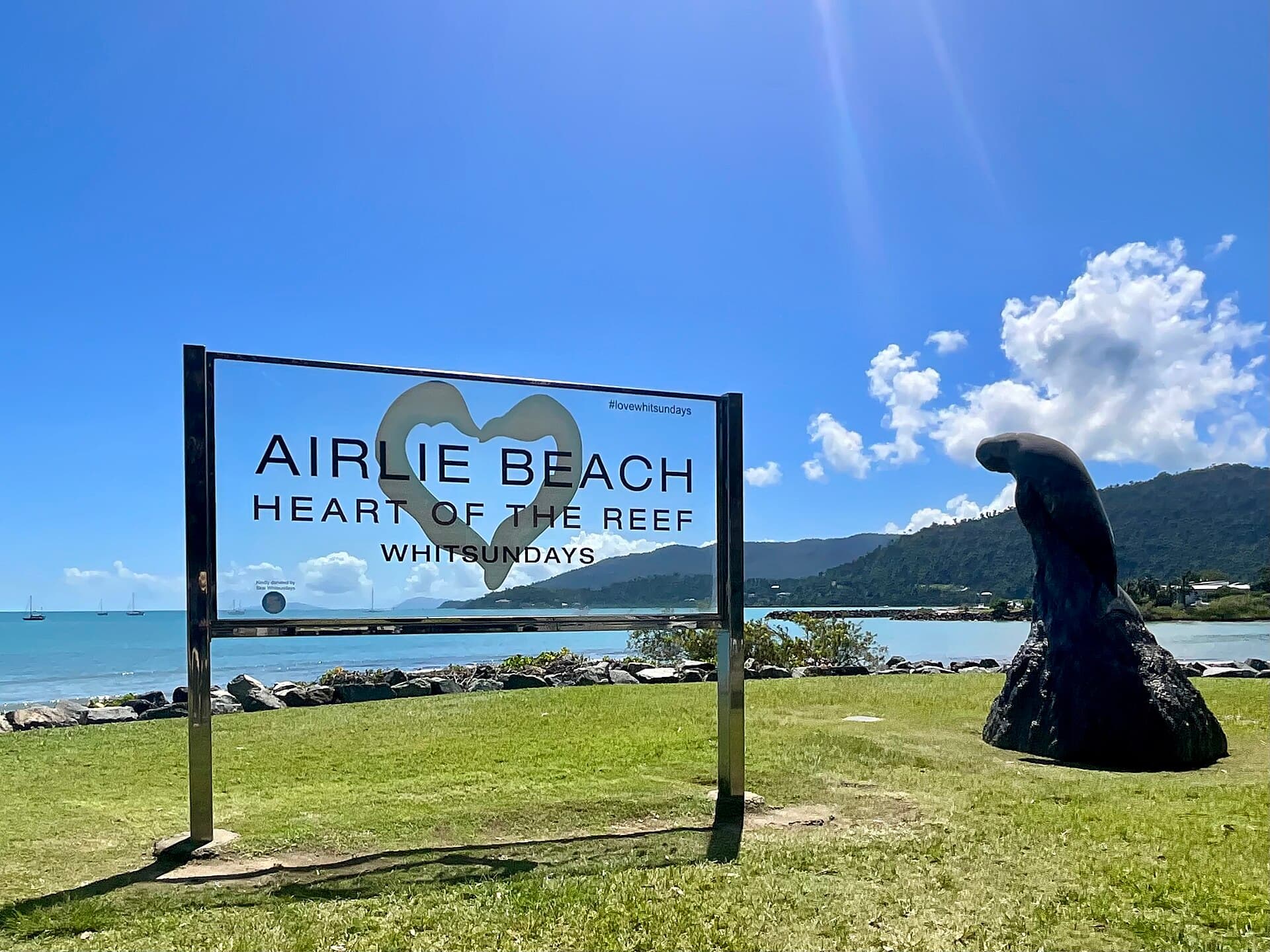 Richard N Horne / CC BY 4.0, via Wikimedia Commons
Tour de audio autoguiado de Airlie Beach — ruta GPS a pie, reproducción offline, narración en 32 idiomas.
“Donde el Mar del Coral susurra y las islas invitan.”
No las postales. Las historias que ni los locales conocen — al oído, justo donde ocurrieron.
Más allá de las aguas cristalinas y las arenas pálidas, una de las Islas Whitsunday conserva un legado artístico.
La marina principal en Airlie Beach lleva un nombre que insinúa los sorprendentes orígenes del pueblo, aunque la historia ha evolucionado.
Bajo la tranquila superficie de un río cercano yace una potente y solemne narrativa indígena, ligada a un fenómeno local único.
Descubre todos los secretos de Airlie Beach
Cada dirección, cada revelación al completo — a tu oído, justo donde ocurrió.
Eliges tus paradas. Caminas. La voz te revela lo que los demás ignoran.


Tu tour de audioguía por Airlie Beach te espera — elige tus lugares, tu idioma y empieza al llegar.
ComprarLume incluye una guía de realidad aumentada. Levanta el móvil y su cámara muestra la calle que tienes delante, con una flecha luminosa sobre la imagen real que siempre apunta a tu próxima parada — sin mapas que descifrar, sin giros equivocados. Como todo en Lume, funciona completamente sin conexión.
Airlie Beach, una ciudad costera en Queensland, Australia, sirve como el principal punto de entrada a las Islas Whitsunday y la Gran Barrera de Coral. Es un lugar donde el ritmo pausado de una ciudad tropical se encuentra con la emoción de la exploración acuática. Con playas bordeadas de palmeras, espacios verdes frente al mar y restaurantes al aire libre, Airlie Beach invita a los visitantes a abrazar su ambiente relajado.
Más allá de su papel como punto de partida para la famosa Whitehaven Beach y la abundante vida marina de la Gran Barrera de Coral, Airlie Beach ofrece su propio encanto particular. La ciudad cuenta con una gran laguna artificial para nadar durante todo el año, mercados animados y selvas tropicales cercanas con cascadas en el Parque Nacional Conway. Es un destino que satisface intereses variados, desde el reposo tranquilo hasta el descubrimiento enérgico.
La historia del área de Airlie Beach se remonta a miles de años, mucho antes de la llegada de los europeos. Las tierras costeras y las islas fueron habitadas originalmente por los pueblos aborígenes Ngaro y Gia, quienes prosperaron con los abundantes recursos marinos durante al menos 9.000 años. Su profunda conexión con la tierra y el mar es evidente en su cultura, espiritualidad y existencia diaria. Se han descubierto artefactos como hachas y herramientas, que datan de milenios, en la región, algunos de los cuales se exhiben en el Museo Histórico de Proserpine.
El Capitán James Cook navegó por el Pasaje de Whitsunday en 1770, cartografiando la región y atrayendo la atención europea a estas aguas. El asentamiento europeo en el área de Airlie Beach comenzó a finales del siglo XIX y principios del XX, siendo la tala y la agricultura las industrias primarias. Uno de los primeros colonos europeos fue Thomas Abell, quien llegó con su familia en 1904. El nombre de la familia Abell es recordado en Abell Point, la ubicación de la principal marina de la ciudad, ahora conocida como Coral Sea Marina.
El nombre "Airlie" recibió aprobación oficial en 1936, después de una solicitud del Departamento de Tierras de Queensland para un nombre para una nueva subdivisión costera. Se cree que fue nombrado en honor a la Parroquia de Airlie en Escocia, el hogar ancestral de Robert Shepherd, entonces presidente del Consejo de Proserpine Shire.
Durante muchos años, Airlie Beach siguió siendo un pequeño asentamiento, a menudo sirviendo como refugio para agricultores del interior de Queensland. Los primeros desarrollos de infraestructura incluyeron la finalización de una carretera que conectaba Airlie Beach con Proserpine en 1918 y el establecimiento de un servicio de ferry desde Shute Harbour a Hamilton Island en 1963, lo que impulsó significativamente el acceso turístico a las islas. La Oficina de Correos de Airlie Beach abrió en 1959, y el Hotel Airlie Beach le siguió en 1968.
El turismo comenzó a florecer en la década de 1970, evolucionando de excursiones de un día a las islas a estancias nocturnas más populares. Airlie Beach se convirtió en una ciudad turística oficial en 1987, tras la aprobación de su desarrollo por parte del Consejo de Whitsunday Shire. La construcción de la Laguna de Airlie Beach en 2001 consolidó aún más su estatus como destino turístico, ofreciendo una opción segura para nadar durante todo el año.
En el siglo XXI, Airlie Beach ha seguido expandiéndose, con considerables inversiones en infraestructura como la Marina de Port of Airlie, completada en 2013 en lo que antes se conocía como Muddy Bay. La región ha experimentado una mayor accesibilidad y demanda, evolucionando hacia un destino durante todo el año con creciente atractivo nacional e internacional. Sin embargo, la ciudad también ha enfrentado dificultades, incluido el impacto de ciclones tropicales severos como Debbie en 2017, que causó daños significativos pero fue seguido por extensos esfuerzos de recuperación.
Proyectos en curso, como el propuesto Whitsunday Skyway, un teleférico que ofrece vistas panorámicas, indican un enfoque continuo en mejorar las experiencias turísticas mientras se adhieren a las directrices ambientales.
Airlie Beach presenta una variada gama de actividades, tanto en tierra como en el mar. Un viaje a la famosa Whitehaven Beach es esencial, reconocida por su prístina arena de sílice blanca y sus arremolinadas aguas turquesas visibles desde el mirador de Hill Inlet. Numerosos tours parten de Airlie Beach para explorar las 74 Islas Whitsunday y la Gran Barrera de Coral, ofreciendo oportunidades para navegar, hacer snorkel y bucear.
Dentro de la ciudad, la Laguna de Airlie Beach ofrece una zona de baño segura y artificial rodeada de un parque tropical, ideal para un refrescante chapuzón. Pasee por el Paseo Marítimo Bicentenario, que une Airlie Beach con Cannonvale Beach, ofreciendo vistas al océano y acceso a cafeterías. Para probar la cultura local, explore los Mercados Comunitarios de Airlie Beach los sábados por la mañana en busca de productos locales, arte y artesanías.
Más allá de la costa inmediata, aventúrese a Cedar Creek Falls, un lugar de baño favorito local accesible a través de un pintoresco recorrido en coche por campos de caña. Las cataratas son particularmente impresionantes después de las lluvias. El Parque Nacional Conway, justo al sur de Airlie Beach, cuenta con exuberantes selvas tropicales, senderos para caminar y circuitos para bicicletas de montaña con vistas panorámicas. Para una experiencia de playa más tranquila, considere conducir hasta Hideaway Bay o Dingo Beach, ambos ofrecen un ambiente relajado lejos de las principales zonas turísticas.
Airlie Beach disfruta de un clima tropical durante todo el año. La estación seca, de junio a octubre, se considera un período óptimo con clima cálido y seco, menor humedad y aguas claras, ideal para navegar, hacer snorkel y avistar ballenas (junio-septiembre). Las temperaturas durante este tiempo oscilan entre 22°C y 25°C.
Las temporadas intermedias, particularmente de abril a mayo y de finales de agosto a noviembre, ofrecen temperaturas agradables con menos multitudes. La primavera (septiembre a noviembre) es especialmente recomendada para el alquiler de yates y actividades de playa, con mares tranquilos y temperaturas cálidas alrededor de 27°C. La estación húmeda, de noviembre a mayo, es más cálida y húmeda con aguaceros tropicales, pero puede ofrecer tarifas más económicas y menos visitantes. La temporada de ciclones se extiende típicamente de noviembre a abril, con la mayor actividad en febrero y marzo.
Airlie Beach está bien conectada, con el Aeropuerto de la Costa de Whitsunday (PPP) en Proserpine como el aeropuerto principal, aproximadamente a 30 minutos en coche. Servicios de transporte, taxis y coches de alquiler están disponibles desde el aeropuerto. El Aeropuerto de Hamilton Island (HTI) también sirve a la región, con ferries que conectan con Airlie Beach.
Aunque gran parte del centro de la ciudad es transitable a pie, hay un servicio de autobús local y taxis disponibles. Para explorar más lejos o visitar atracciones cercanas como Cedar Creek Falls o Hideaway Bay, se recomienda alquilar un coche, ya que la zona circundante puede ser montañosa. La mayoría de los tours a las Islas Whitsunday y la Gran Barrera de Coral parten de Coral Sea Marina o Port of Airlie, y muchos operadores ofrecen recogida en el alojamiento. Es aconsejable reservar los tours con antelación, especialmente durante la temporada alta. Durante la estación húmeda (octubre a mayo), se recomienda usar un traje de protección contra medusas para nadar en el océano.
Airlie Beach en coreano, en chino o en hebreo — y 29 idiomas más, cada parada narrada por una voz nativa. La mayor variedad de idiomas de cualquier audioguía autoguiada.
Disponible en: