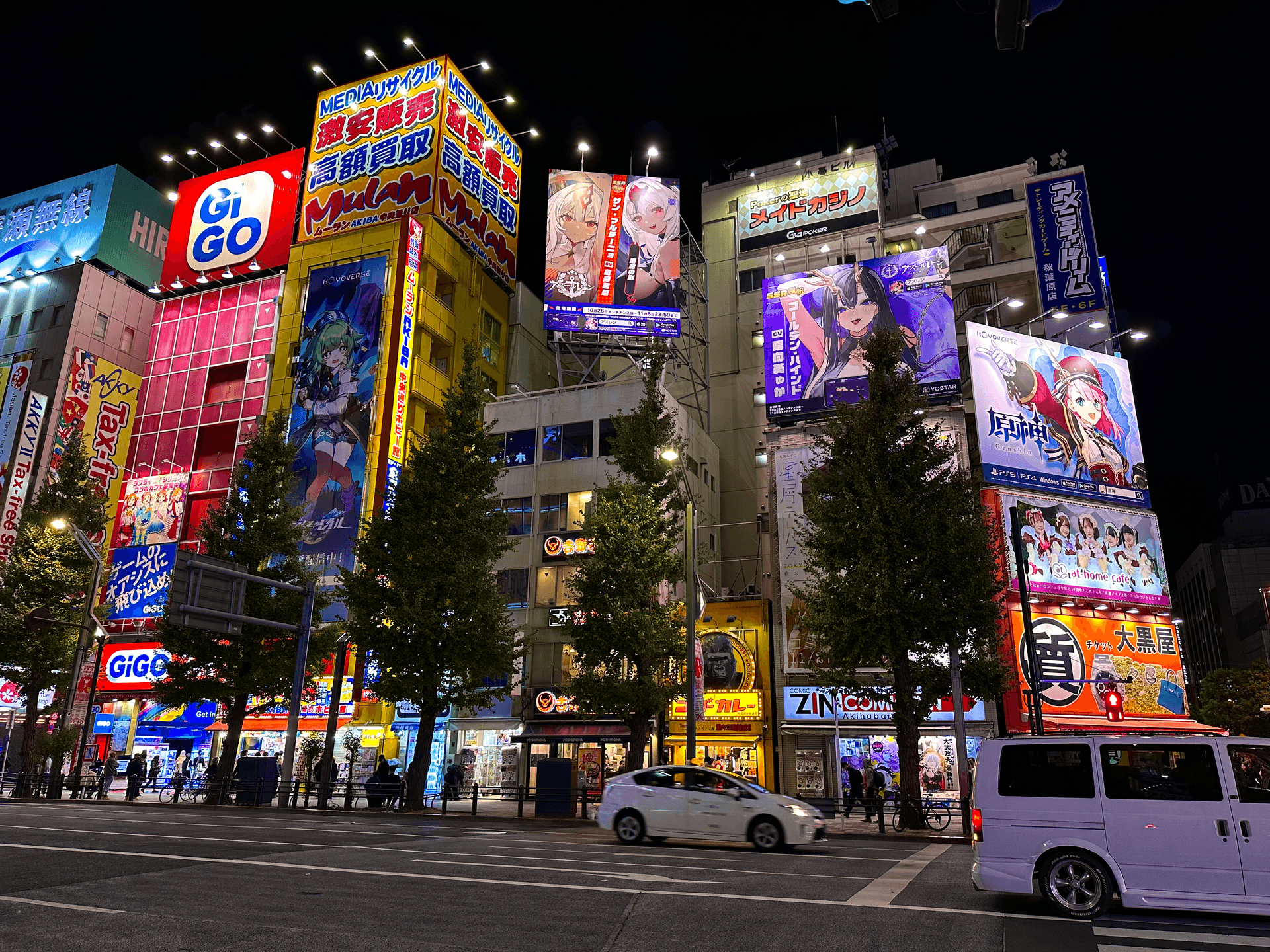
Radio Kaikan
This landmark building, a beacon for anime and manga enthusiasts, once held a different kind of revolutionary power.
Full story unlocks in the tour
 Phineyes / CC0, via Wikimedia Commons
Self-guided audio walking tour of Akihabara: Anime & Manga — GPS route, offline playback, story-driven narration in 32 languages.
“Enter the neon-drenched core of Tokyo's otaku culture.”
Not the postcards. The stories even locals don't know — whispered in your ear, right where they happened.
This landmark building, a beacon for anime and manga enthusiasts, once held a different kind of revolutionary power.
Among the traditional omamori (charms) available at this ancient shrine, you can acquire a blessing for something surprisingly contemporary.
The AKB48 Theater, a modest venue where the idol group performs almost daily, employs a distinctive method for marking its passage through time.
Discover every secret of Akihabara: Anime & Manga
Every address, every reveal in full — in your ear, right where it happened.
You pick your stops. You walk. The voice reveals what the others miss.
Your self-guided audio tour of Akihabara: Anime & Manga is ready — pick your landmarks, choose your language, and start the moment you arrive.
BuyLume has a built-in augmented-reality guide. Hold your phone up and its camera shows the street ahead of you, with a glowing arrow laid over the real view that always points to your next stop — no map to puzzle over, no wrong turns. Like everything in Lume, it works fully offline.
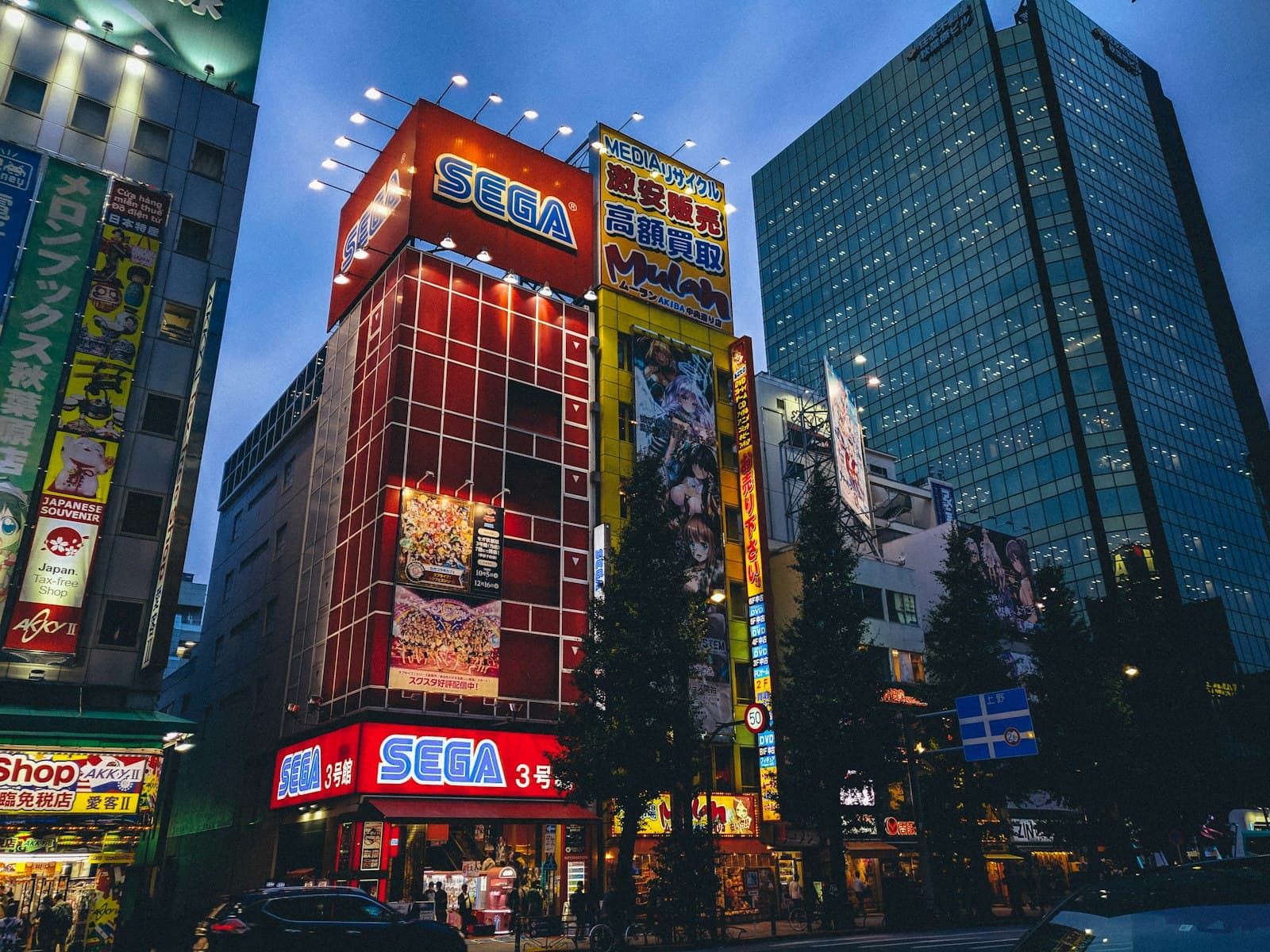
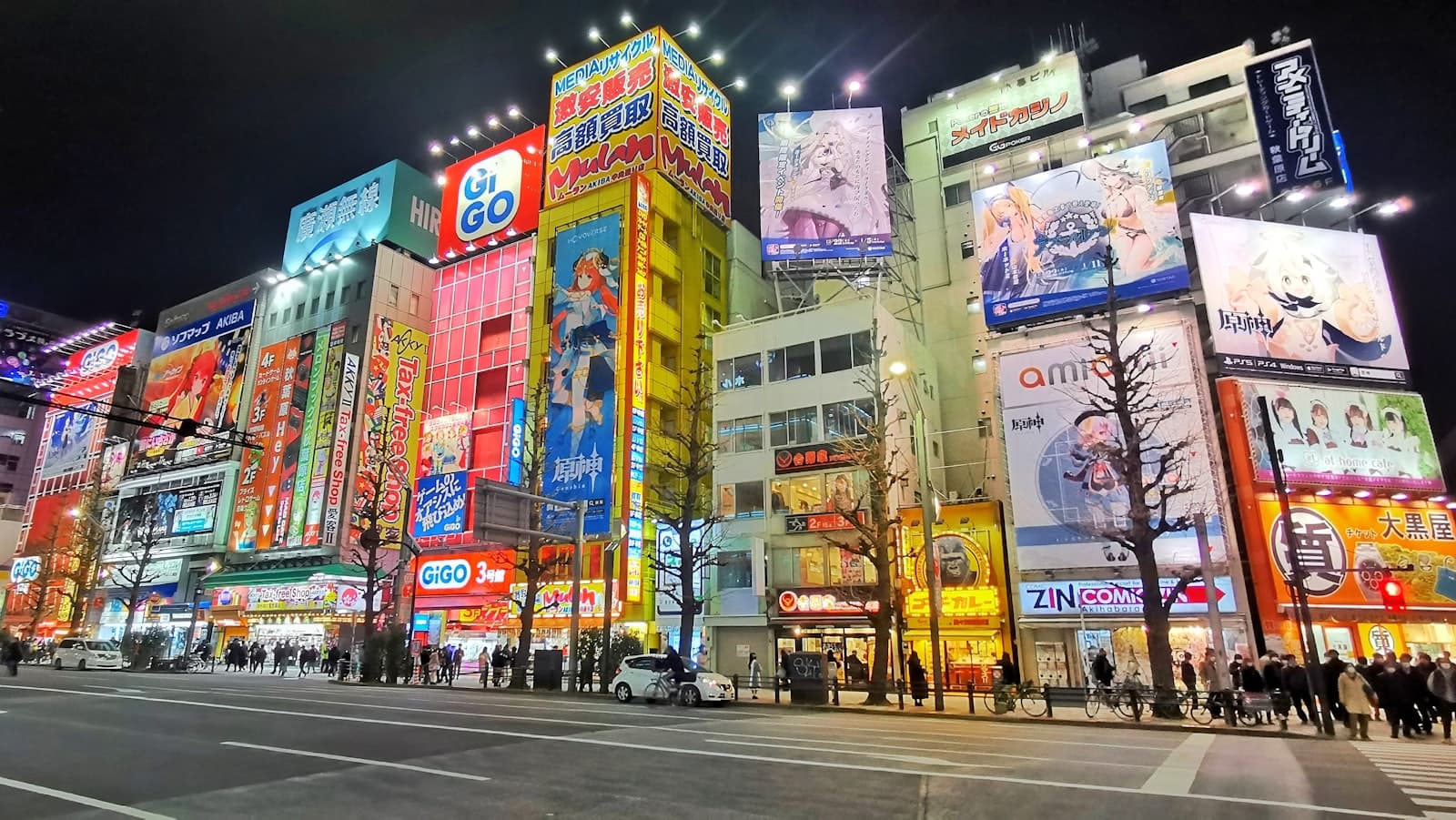
Akihabara, often abbreviated to Akiba, is a Tokyo neighborhood globally recognized as the energetic center of Japanese otaku culture. This district, part of the Chiyoda ward, presents an electric fusion of towering buildings emblazoned with anime characters, a symphony of electronic jingles, and a tangible sense of pop culture excitement. From its post-World War II beginnings as a black market for radio parts, Akihabara transformed into Japan's electronics capital. Today, it stands as a pilgrimage site for devotees of anime, manga, gaming, and idol culture, drawing visitors from across the globe.
A walk through Akihabara offers a complete sensory experience, with neon lights illuminating storefronts and a constant hum of activity. Beyond the main thoroughfares, smaller shops and winding side streets reveal a trove of collectibles, rare discoveries, and singular experiences for those inclined to explore. This journey focuses on the street-level landmarks that define Akihabara's singular identity, providing a look into the district's evolution and its enduring appeal to pop culture enthusiasts.
Akihabara's evolution into the 'Electric Town' commenced in the aftermath of World War II, when the area surrounding Akihabara Station became an open-air market for radio parts and vacuum tubes. This era witnessed soldiers, students, and hobbyists converging to purchase electronic components, solidifying Akihabara's identity as a focal point for electronics.
By the 1970s and 80s, Akihabara had grown into Japan's electronics capital, the primary destination for computers, components, and home appliances. A significant structure from this period is the Akihabara Radio Kaikan. The original eight-story building, erected in November 1962, was the district's first high-rise and a central location for electronics shops. The 7th floor of Radio Kaikan, in particular, was considered the 'epicenter' of the Japanese personal computer industry in the late 1970s.
The advent of the internet in the 1990s altered consumer habits, lessening the need for physical electronics stores. However, Akihabara's underlying hobbyist culture adapted. The same enthusiasts who constructed PCs were also deeply immersed in anime, manga, and figure collecting. By the early 2000s, Akihabara had fully embraced this cultural shift, transforming into the global capital of otaku culture. The original Radio Kaikan building was demolished in 2011 due to structural concerns and replaced by a new building in 2014, which now primarily houses stores selling otaku merchandise.
Today, Akihabara continues to change, with its streets and multi-story buildings serving as expansive canvases for anime and manga, and its shops catering to a diverse array of pop culture interests.
Begin your exploration at the Akihabara Electric Town Gate, one of the primary exits from Akihabara Station, which immediately immerses you in the district's lively atmosphere. From here, step onto Chuo-dori, Akihabara's main street, a spectacle of neon lights and colorful storefronts.
Along Chuo-dori, you will encounter significant stores like Mandarake Complex, an eight-floor sanctuary for anime and manga enthusiasts, offering everything from comics and DVDs to figurines and retro toys. Just a short walk from the Electric Town Exit, the multi-story Radio Kaikan stands prominently, containing over 30 specialty stores dedicated to hobbies, anime, manga, games, and figures.
Further along, you will discover animate Akihabara, one of Japan's largest anime and manga chain stores, spanning multiple floors with merchandise ranging from manga and figures to character goods and cosplay items. For retro gaming devotees, Super Potato Akihabara is an essential stop. This store, located a brief walk from Akihabara Station, is a trove of vintage games, consoles, and memorabilia, even featuring a retro arcade on its fifth floor.
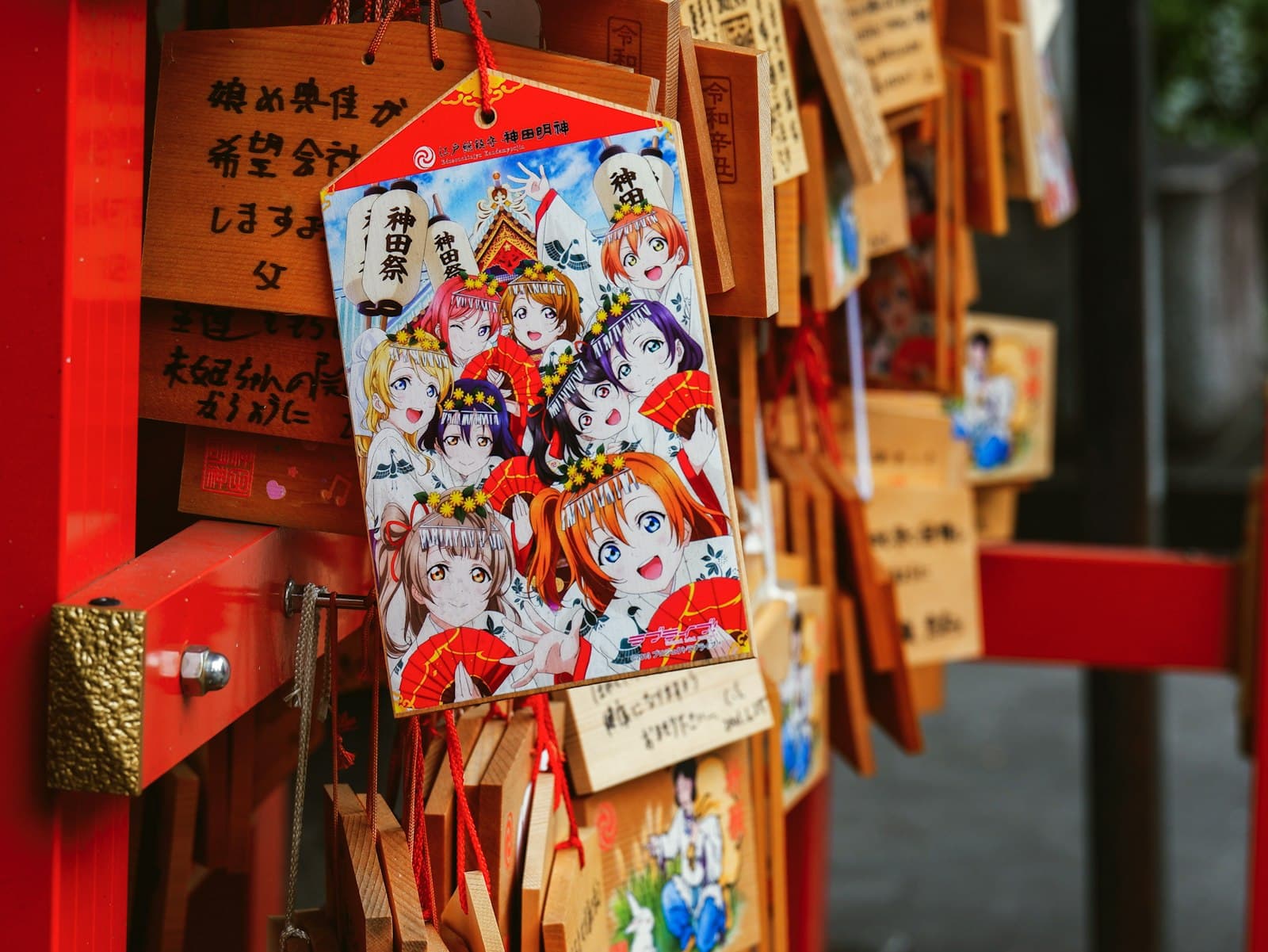
While the Gundam Café in Akihabara closed in 2022, its former site remains a point of interest for fans, a nod to the enduring popularity of the franchise. Venture slightly beyond the immediate activity to Kanda Myojin Shrine, an ancient shrine that has been embraced by anime fans due to its appearance in popular series like Love Live!. You will often observe ema (prayer plaques) adorned with manga illustrations here.
Finally, locate the AKB48 Theater on the 8th floor of the Don Quijote Akihabara Building. This is the home base for the popular idol group AKB48, where they hold daily performances. Throughout your walk, observe the emblematic crossings and facades—the towering buildings themselves act as dynamic canvases for advertising and artistic expression, displaying the latest anime and game releases.
Akihabara maintains its energy throughout the year, but for a truly immersive street-level experience, consider visiting on a Sunday afternoon. During this time, Chuo-dori, the main boulevard, transforms into a 'pedestrian paradise' (Hokousha Tengoku), closed to vehicle traffic from 13:00 to 18:00 (until 17:00 from October through March). This allows for a leisurely walk down the middle of the road, absorbing the atmosphere. Weekday afternoons are ideal for browsing shops more comfortably, as weekends can be quite crowded. Spring (March to May) and autumn (September to November) offer mild and pleasant weather for walking.
Akihabara is readily accessible via Akihabara Station, served by multiple JR lines (Yamanote, Keihin-Tohoku, Sobu), the Tokyo Metro Hibiya Line, and the Tsukuba Express. The Electric Town Gate is your primary exit for direct access to the main attractions. Wear comfortable shoes, as you will be doing a considerable amount of walking and exploring multi-story buildings. Many major stores provide tax-free shopping for foreign tourists on purchases over 5,000 yen, so remember to bring your passport. While English signage is present in larger stores, some smaller, more specialized shops may have limited English. Do not hesitate to explore side streets and upper floors for singular discoveries; some of Akihabara's finest treasures are not immediately apparent from the main road.
Akihabara: Anime & Manga in Korean, in Chinese or in Hebrew — and 29 more languages, every stop narrated by a native voice. The widest language range of any self-guided audio tour.
Available in: