Trullo Sovrano
Esta estrutura não é apenas um trullo; seu tamanho imponente e forma única sugerem uma narrativa envolvente de uma era passada.
História completa desbloqueada no tour
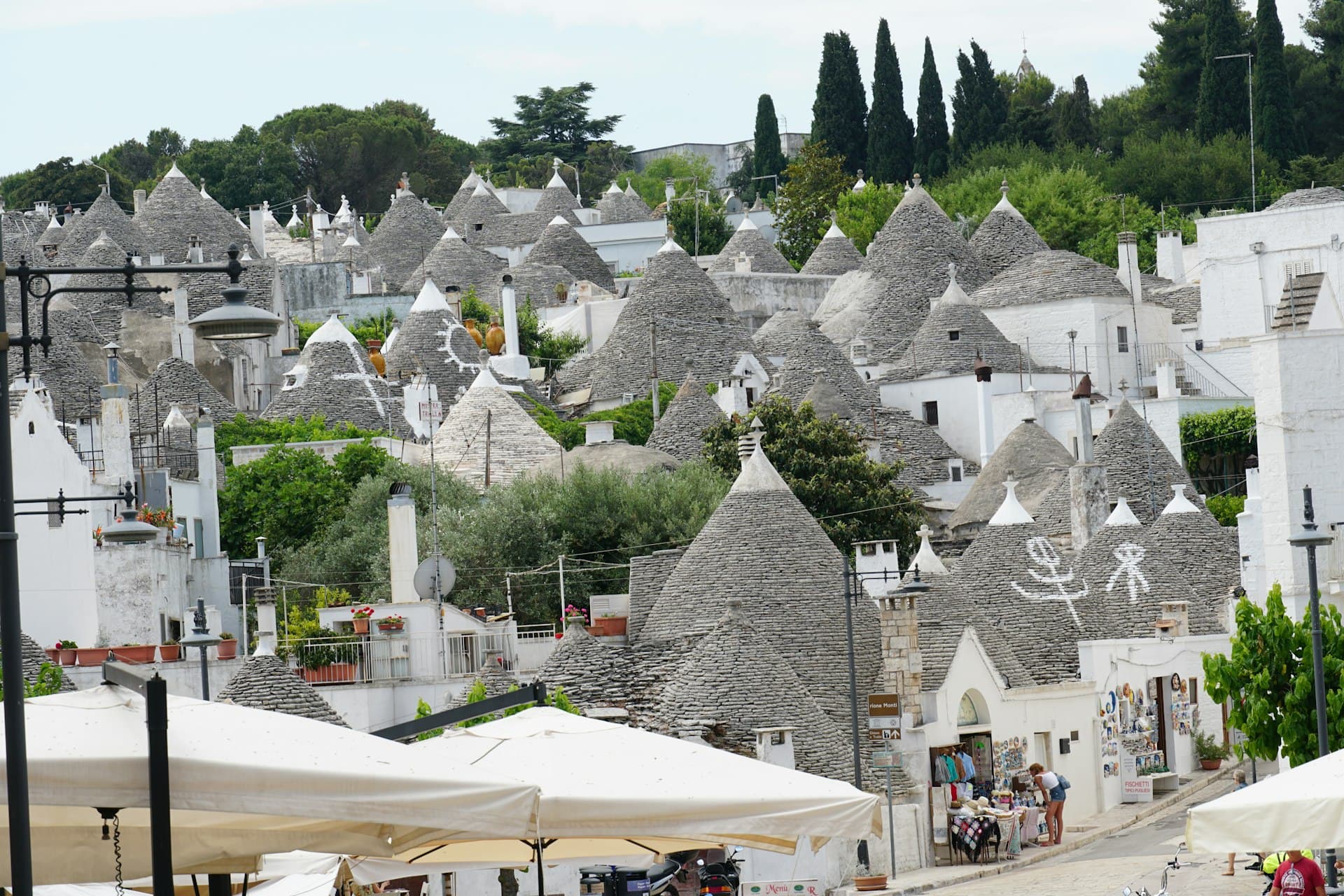 Photo: Sheila C / Unsplash
Tour de áudio autoguiado por Alberobello — rota GPS a pé, reprodução offline, narração envolvente em 32 idiomas.
“Passeie por uma paisagem de conto de fadas de cones caiados e pedras antigas.”
Não os postais. As histórias que nem os locais conhecem — sussurradas ao seu ouvido, exatamente onde aconteceram.
Esta estrutura não é apenas um trullo; seu tamanho imponente e forma única sugerem uma narrativa envolvente de uma era passada.
Dois cones se erguem juntos, compartilhando uma fundação, uma estrutura que narra um drama de afeto, traição e um arranjo doméstico incomum.
Observe atentamente os telhados cônicos e você discernirá símbolos enigmáticos gravados em branco. Eles são muito mais do que mera ornamentação.
Descubra cada segredo de Alberobello
Cada endereço, cada revelação na íntegra — no seu ouvido, exatamente onde aconteceu.
Você escolhe as suas paragens. Você caminha. A voz revela o que os outros perdem.


A Lume inclui um guia de realidade aumentada. Levante o telemóvel: a câmara mostra a rua à sua frente, com uma seta luminosa sobreposta à imagem real que aponta sempre para a sua próxima paragem — sem mapa para decifrar, sem voltas erradas. Como tudo na Lume, funciona totalmente offline.
Alberobello, uma pequena cidade na região da Puglia, na Itália, é um lugar onde os ecos do tempo e um espírito caprichoso se entrelaçam. Seus característicos trulli — cabanas de pedra seca caiadas de branco coroadas com telhados cônicos — esculpem uma paisagem como nenhuma outra no mundo. Este legado arquitetônico singular rendeu a Alberobello sua designação de Patrimônio Mundial da UNESCO em 1996.
Passear pelas ruas estreitas e sinuosas de Alberobello é como entrar em uma fábula querida. Mais de 1.500 trulli estão reunidos aqui; alguns continuam a servir como residências, enquanto outros foram reinventados como lojas de artesanato, restaurantes convidativos e acomodações únicas. A cidade oferece uma janela cativante para um método de construção tradicional que perdurou por séculos, refletindo a engenhosidade de seus antigos habitantes.
A narrativa de Alberobello e seus trulli está profundamente enraizada no século XIV. A área era outrora uma floresta extensa, e os Condes de Conversano, proprietários da terra, incentivaram os camponeses a se estabelecerem e cultivá-la. Para contornar os impostos cobrados pelo Vice-rei espanhol do Reino de Nápoles sobre novos assentamentos, os Condes impuseram uma peculiar estipulação de construção: as casas deveriam ser construídas sem argamassa, usando apenas pedra seca.
Essa exigência significava que as moradias podiam ser facilmente desmontadas se os coletores de impostos inspecionassem as proximidades, apresentando-as como estruturas temporárias em vez de residências permanentes. O abundante calcário no Vale de Itria tornou este método de construção em pedra seca prático. A forma circular, coroada com um telhado abobadado ou cônico autoportante, provou ser a configuração mais simples e econômica para essas construções de pedra.
Por séculos, o povo de Alberobello viveu sob o domínio feudal, suas casas sujeitas aos caprichos dos senhores locais. No entanto, no final do século XVIII, um movimento pela autonomia começou a ganhar força. Em 1797, o Rei Fernando IV de Bourbon proclamou Alberobello uma cidade real, libertando-a da servidão feudal. Este momento crucial permitiu a construção de estruturas permanentes, com a Casa D'Amore, construída em 1797, sendo a primeira casa a incorporar argamassa.
Embora os trulli possam ser encontrados em todo o Vale de Itria, Alberobello detém a maior concentração desses exemplos bem preservados. Em 1996, os trulli de Alberobello foram designados Patrimônio Mundial da UNESCO, reconhecidos como exemplos notáveis de construção em pedra seca em falsa abóbada e um testemunho de uma técnica de construção pré-histórica ainda empregada na região. Hoje, a cidade é dividida em dois distritos principais de trulli: Rione Monti e Rione Aia Piccola.
O principal encanto de Alberobello são, sem dúvida, seus trulli. Comece sua exploração no Rione Monti, o maior e mais celebrado distrito, lar de aproximadamente 1.000 trulli. Aqui, você encontrará muitos trulli reinventados como lojas de souvenirs, cafés convidativos e restaurantes locais, criando um ambiente animado. Não deixe de visitar a Igreja Trullo de Santo Antônio de Pádua, uma igreja distinta em forma de trullo construída em 1927.
Para uma experiência residencial mais serena, atravesse para o Rione Aia Piccola. Este distrito contém cerca de 400 trulli e oferece um vislumbre mais autêntico da vida cotidiana, com menos estabelecimentos comerciais e multidões. Aqui, você pode explorar o Trullo Sovrano, o único trullo de dois andares de Alberobello, que agora serve como museu exibindo móveis do início do século XX. O Museo del Territorio (Casa Pezzolla), um complexo de 15 trulli interconectados, oferece mais insights sobre o patrimônio arquitetônico da região.
Para vistas panorâmicas da paisagem repleta de trulli, dirija-se ao mirante Belvedere Santa Lucia. Considere participar de um tour guiado a pé para descobrir narrativas mais profundas e o folclore local em torno dos trulli.
As estações intermediárias, de abril a junho e de setembro a outubro, oferecem um momento ideal para conhecer Alberobello. Durante esses meses, as temperaturas são agradáveis (cerca de 19-24°C), o número de visitantes é mais gerenciável e os preços das acomodações são justos. A luz ao amanhecer e ao entardecer é particularmente requintada para fotografia. O verão (julho-agosto) traz calor intenso (até 33°C) e multidões, exigindo passeios matinais. O inverno (dezembro-fevereiro) é mais frio, com poucos visitantes e custos de acomodação mais baixos, revelando um caráter diferente e mais calmo.
Alberobello é uma cidade compacta, melhor percorrida a pé. Muitos dos principais pontos turísticos estão a uma curta distância a pé. Se você estiver dirigindo, encontrar estacionamento pode ser desafiador, especialmente durante a alta temporada, então uma chegada antecipada é sugerida. Zonas de estacionamento pagas (marcadas com linhas azuis) e alguns espaços gratuitos com linhas brancas estão disponíveis perto das áreas de trulli. Um carro alugado geralmente oferece a maior flexibilidade para chegar a Alberobello e explorar a região mais ampla da Puglia, embora serviços de trem e ônibus a conectem a cidades maiores como Bari.
Embora Alberobello possa ser explorada como uma viagem de um dia, uma pernoite em um trullo oferece uma experiência singular e permite que você saboreie a cidade nas manhãs e noites mais tranquilas, longe dos visitantes diurnos. A maioria dos estabelecimentos aceita cartões de crédito, mas ter algum dinheiro para pequenas compras é sempre prático.
Alberobello — coreano, chinês, hebraico e mais 29 idiomas, cada parada narrada por uma voz nativa. A maior variedade de idiomas entre os passeios de áudio autoguiados.
Disponível em: