Hôtel de Ville d'Alicante
Au-delà de sa façade administrative, l'Hôtel de Ville d'Alicante recèle un secret artistique surprenant.
L'histoire complète se débloque dans le tour
 Photo: Dean Milenkovic / Unsplash
Visite audio autoguidée de Alicante — parcours GPS à pied, lecture hors ligne, narration en 32 langues.
“Là où les échos anciens rencontrent la brise méditerranéenne.”
Pas les cartes postales. Les histoires que même les habitants ignorent — soufflées à l'oreille, là où elles se sont passées.
Au-delà de sa façade administrative, l'Hôtel de Ville d'Alicante recèle un secret artistique surprenant.
On dit que la cathédrale baroque de la ville dissimule plus que de simples artefacts religieux dans ses profondeurs.
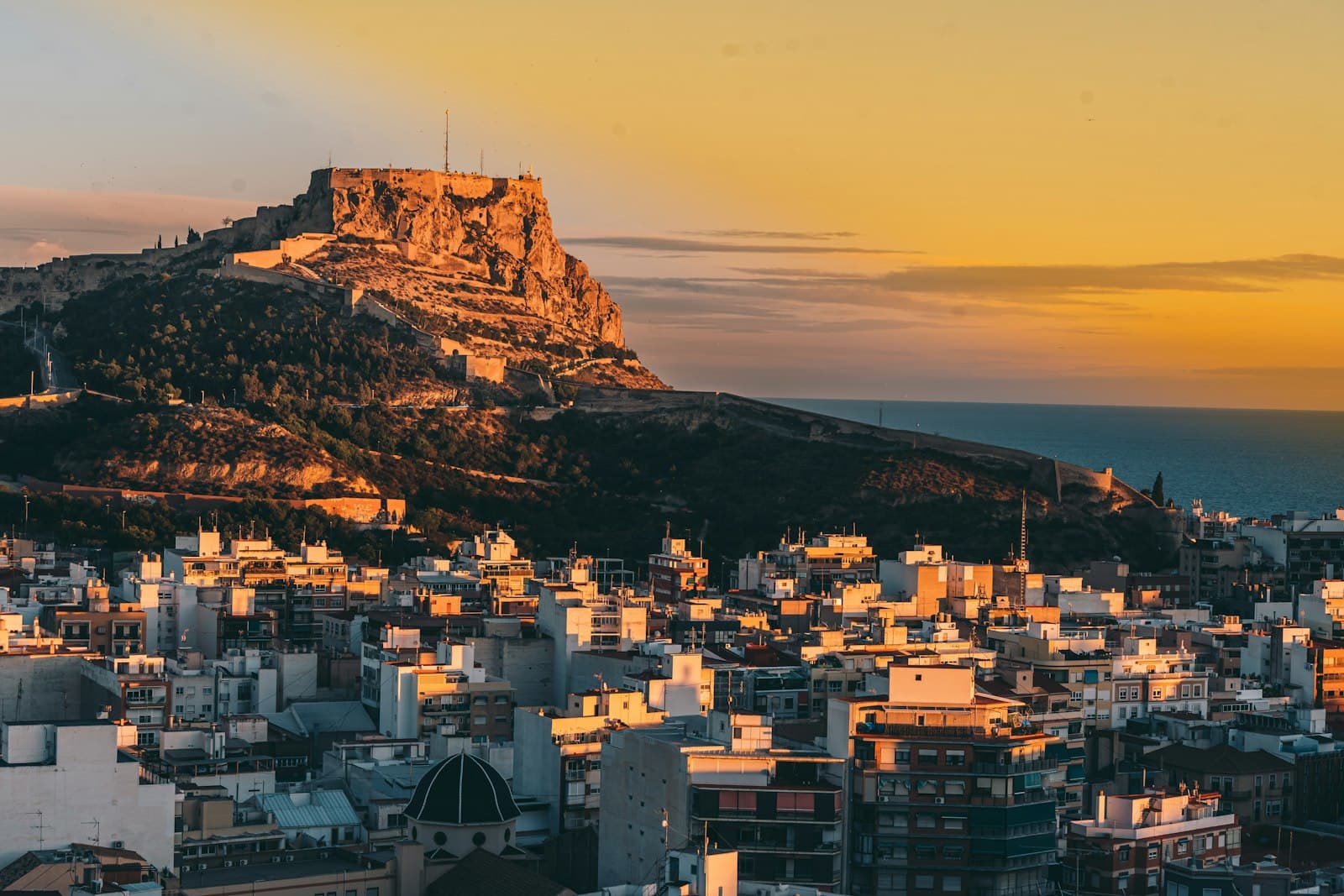
Observez attentivement le profil du Mont Benacantil, et vous pourriez discerner un visage sombre, lié à une légende locale.
Découvrez tous les secrets de Alicante
Chaque adresse, chaque révélation en entier — dans ton oreille, là où elle s'est passée.
Tu choisis tes lieux. Tu marches. La voix te révèle ce que les autres ignorent.
Votre visite audioguidée de Alicante vous attend — choisissez vos lieux, votre langue, et lancez-vous dès votre arrivée.
AcheterLume intègre un guide en réalité augmentée. Levez votre téléphone : sa caméra montre la rue devant vous, avec une flèche lumineuse posée sur l'image réelle qui pointe toujours vers votre prochain arrêt — aucune carte à déchiffrer, aucun mauvais virage. Comme tout dans Lume, ça fonctionne entièrement hors-ligne.
Alicante, ou Alacant en valencien, est une ville portuaire méditerranéenne, capitale de sa province et un centre urbain important sur la Costa Blanca, au sud-est de l'Espagne. C'est la deuxième plus grande ville de la Communauté valencienne et la dixième d'Espagne, avec une population dépassant les 358 000 habitants en 2024. Cette ville est réputée pour son climat doux, ses vastes plages et un mélange captivant de sites historiques et de vitalité moderne, servant de point d'entrée principal pour le tourisme dans la région.
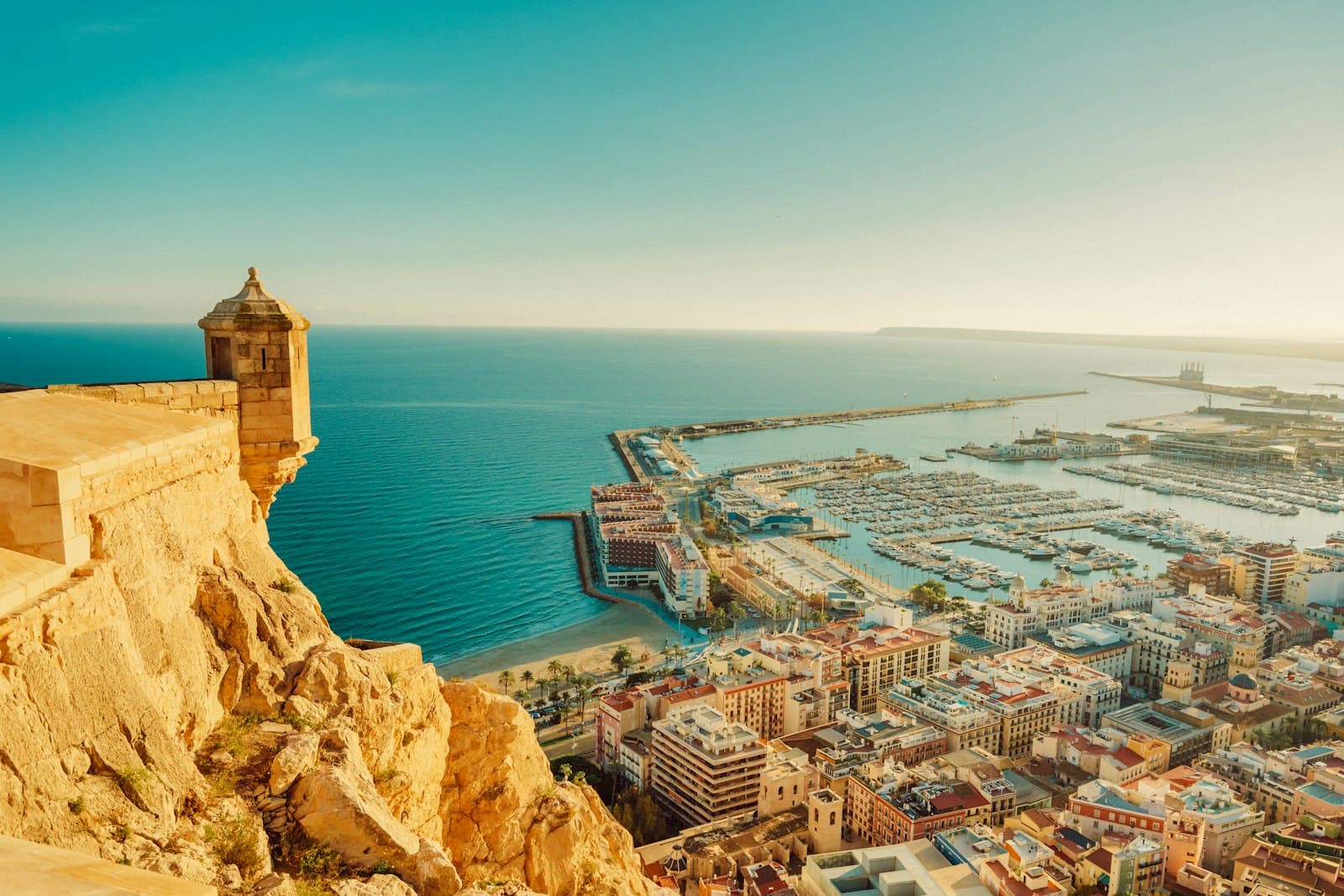
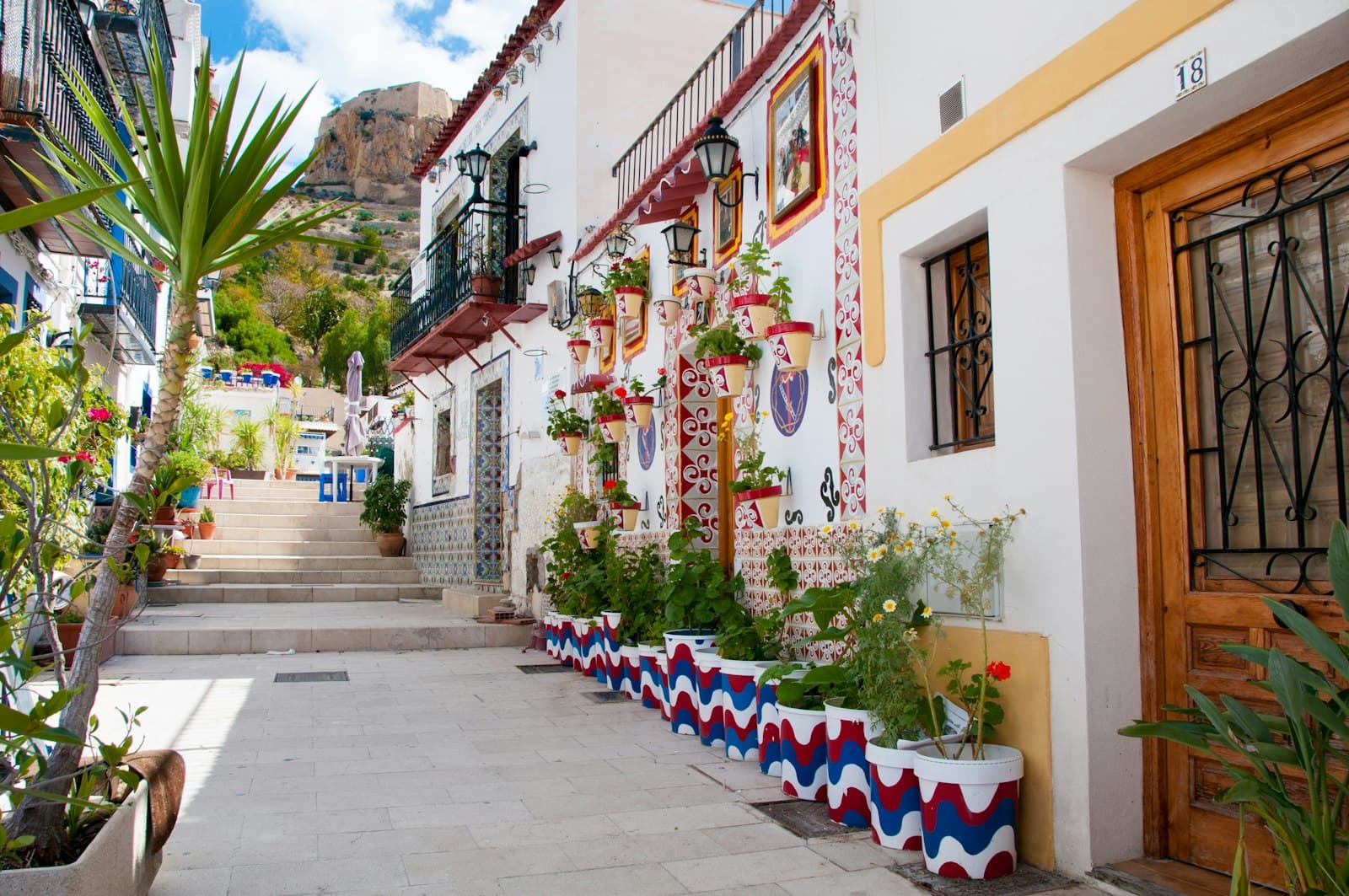
La ville offre un mélange d'expériences captivant, de l'exploration de sa forteresse médiévale, le château de Santa Bárbara, à la promenade le long de l'Explanada de España. L'attrait d'Alicante s'étend à sa vieille ville historique, connue sous le nom de Barrio de Santa Cruz, avec ses rues étroites et colorées. Au-delà des attractions immédiates de la ville, la province environnante présente des paysages diversifiés, des palmeraies d'Elche au lac rose de Torrevieja.
La situation stratégique d'Alicante sur la côte méditerranéenne a façonné son identité pendant des milliers d'années, attirant diverses civilisations et laissant un profond héritage culturel et architectural. C'est une ville qui invite à l'exploration, que l'on recherche la détente sur ses sables dorés, une plongée dans son passé, ou un avant-goût de sa gastronomie réputée et de son esprit festif.
L'histoire d'Alicante remonte à des milliers d'années, avec des preuves de tribus de chasseurs-cueilleurs s'installant sur les pentes du Mont Benacantil entre 5000 et 3000 av. J.-C. Vers 1000 av. J.-C., des commerçants grecs et phéniciens sont arrivés, les Grecs nommant la région Akra Leuka, signifiant « Pic Blanc » ou « Montagne Blanche ». Au 3e siècle av. J.-C., les Carthaginois, dirigés par Hamilcar Barca, y établirent une colonie fortifiée. Les Romains conquirent ensuite la ville, la renommant Lucentum, ou « Cité de la Lumière », et y régnèrent pendant environ 700 ans, en faisant un port clé en Hispanie.
Au 8e siècle, les Maures d'Afrique du Nord conquirent Alicante, la renommant Al-Laqant. Sous la domination maure, la ville prospéra en tant que centre de commerce, d'agriculture et de savoir. Les Maures commencèrent également la construction du château de Santa Bárbara sur le Mont Benacantil, une forteresse qui domine toujours le paysage urbain de la ville. En 1246, Alphonse X de Castille reconquit la ville pour la couronne castillane, et en 1308, elle fut incorporée au Royaume de Valence.
Au cours du 15e siècle, Alicante connut un âge d'or en tant que grand centre commercial méditerranéen, exportant des produits comme le riz, le vin, l'huile d'olive, les oranges et la laine. Cependant, sa position côtière stratégique en fit également une cible de conflits. En 1691, l'Armada française bombarda la ville pendant sept jours, et pendant la Guerre de Succession d'Espagne (1701-1714), le château fut bombardé par les troupes britanniques. La ville servit également de capitale provisoire du Royaume de Valence pendant la Guerre d'Indépendance au début du 19e siècle.
Alicante connut une période de déclin aux 18e et 19e siècles, son économie étant soutenue par des industries comme le cuir, l'agriculture et la pêche. Une reprise commença à la fin du 19e siècle avec l'augmentation du commerce international et la croissance du port, en particulier pendant la neutralité de l'Espagne lors de la Première Guerre mondiale. La Guerre Civile Espagnole (1936-1939) eut un impact significatif sur Alicante, car ce fut la dernière ville fidèle au gouvernement républicain à être occupée par les troupes de Franco. À partir de la fin des années 1950 et du début des années 1960, le tourisme commença à s'épanouir, transformant Alicante en une destination de vacances populaire grâce à son climat et ses plages. Aujourd'hui, Alicante continue de prospérer en tant que centre touristique majeur, mêlant son passé profond à une atmosphère moderne.
Commencez votre exploration au Château de Santa Bárbara, une forteresse médiévale au sommet du Mont Benacantil offrant des vues imprenables sur la ville et la baie. Vous pouvez l'atteindre par une promenade pittoresque ou un ascenseur. Descendez dans El Barrio de Santa Cruz, la vieille ville historique d'Alicante, un labyrinthe de rues étroites fleuries et de maisons colorées qui mènent au château.
Promenez-vous le long de l'Explanada de España, une promenade distinctive en bord de mer pavée de 6,6 millions de carreaux de marbre créant un motif de vagues, bordée de palmiers, de stands d'artisans et de cafés. À proximité, détendez-vous sur la Plage du Postiguet, une étendue de sable aux eaux claires directement adjacente au centre-ville et au château.
Plongez dans la vie locale au Mercado Central, un marché moderniste animé avec plus de 300 étals vendant des produits frais, des fruits de mer et des spécialités locales. Pour les amateurs d'art, le Museo de Arte Contemporáneo de Alicante (MACA) abrite une importante collection d'art espagnol du 20e siècle, y compris des œuvres de Dalí et Picasso. Ne manquez pas la Concathédrale Saint-Nicolas de Bari, une cathédrale baroque du 17e siècle dédiée au saint patron de la ville.
Alicante jouit d'un climat méditerranéen avec des étés chauds et des hivers doux. La période la plus agréable pour les activités par temps chaud et moins de foule est pendant les saisons intermédiaires : mai, juin et septembre. Pendant ces mois, les températures diurnes varient de 22 à 29 °C, et la mer est agréablement baignable. Juillet et août sont la haute saison, avec des températures dépassant souvent 31 °C, des plages bondées et des prix plus élevés. Octobre offre des températures agréables pour l'exploration, bien que ce soit le mois le plus pluvieux. L'hiver, de novembre à avril, est plus économique avec des températures douces, idéal pour l'exploration culturelle.
L'aéroport d'Alicante-Elche Miguel Hernández (ALC) est la principale porte d'entrée, situé à environ 9 kilomètres au sud-ouest de la ville. Il est bien relié au centre-ville par le bus C6 de l'aéroport, qui circule 24h/24 et 7j/7 toutes les 20 minutes et coûte 4,50 €. Des taxis et des locations de voitures sont également disponibles à l'aéroport.
À Alicante, les transports en commun sont efficaces, comprenant des bus et des tramways. Le TRAM Metropolitano de Alicante compte plusieurs lignes reliant le centre-ville (la station Luceros est un hub central) aux villes voisines comme Benidorm et la plage de San Juan. Les bus couvrent les itinéraires non desservis par le tramway. Envisagez d'acheter une carte Bonobús pour des tarifs réduits si vous prévoyez d'utiliser fréquemment les transports en commun. Alicante est également une ville très agréable à parcourir à pied, en particulier la vieille ville et l'Explanada de España.
Bien que l'espagnol soit la langue officielle, l'anglais est largement parlé dans les zones touristiques. Apprendre quelques phrases de base en espagnol peut améliorer votre expérience. Les heures de repas espagnoles sont plus tardives que dans de nombreux autres pays, le dîner étant souvent servi tard le soir.
Alicante en coréen, en chinois ou en hébreu — et dans 29 autres langues, chaque étape narrée par une voix native. La plus large gamme de langues de tous les audioguides autoguidés.
Disponible en :