El río Todd
Alice Springs alberga una carrera anual de botes única, la Regata Henley-on-Todd, que a menudo tiene un resultado sorprendente.
La historia completa se desbloquea en el tour
 Bahnfrend / CC BY-SA 4.0, via Wikimedia Commons
Tour de audio autoguiado de Alice Springs — ruta GPS a pie, reproducción offline, narración en 32 idiomas.
“Donde las historias ancestrales se encuentran con el vasto corazón rojo de Australia.”
No las postales. Las historias que ni los locales conocen — al oído, justo donde ocurrieron.
Alice Springs alberga una carrera anual de botes única, la Regata Henley-on-Todd, que a menudo tiene un resultado sorprendente.
El nombre de la ciudad, Alice Springs, encierra una doble ironía que alude a su pasado pionero.
Durante la Segunda Guerra Mundial, esta remota ciudad desértica se transformó en un bullicioso centro militar, atrayendo a un sorprendente número de visitantes influyentes.
Descubre todos los secretos de Alice Springs
Cada dirección, cada revelación al completo — a tu oído, justo donde ocurrió.
Eliges tus paradas. Caminas. La voz te revela lo que los demás ignoran.


Tu tour de audioguía por Alice Springs te espera — elige tus lugares, tu idioma y empieza al llegar.
ComprarLume incluye una guía de realidad aumentada. Levanta el móvil y su cámara muestra la calle que tienes delante, con una flecha luminosa sobre la imagen real que siempre apunta a tu próxima parada — sin mapas que descifrar, sin giros equivocados. Como todo en Lume, funciona completamente sin conexión.
Alice Springs, conocida cariñosamente como 'The Alice', es una ciudad en el Territorio del Norte de Australia, situada aproximadamente en el centro geográfico del continente. Se encuentra justo al sur del Trópico de Capricornio, a orillas del generalmente seco río Todd, en el lado norte de la Cordillera MacDonnell. Este remoto entorno desértico, a menudo llamado el Centro Rojo, se caracteriza por sus llamativas arenas rojas, dunas de spinifex y barrancos rocosos. Con una población de aproximadamente 34.783 habitantes en junio de 2025, Alice Springs es el tercer asentamiento más grande del Territorio del Norte.
La ciudad es una mezcla de influencias europeas y aborígenes, sirviendo como un importante centro para el arte y la cultura aborigen. Los custodios tradicionales de Alice Springs y las montañas MacDonnell circundantes son el pueblo Arrernte, que ha habitado este desierto de Australia Central durante decenas de miles de años. Sus historias del Tiempo del Sueño describen el paisaje, incluida la Cordillera MacDonnell, como creado por seres ancestrales con forma de oruga.
Alice Springs ofrece un estilo de vida desértico único, inspirando eventos como la Copa de Camellos de Alice Springs y la Regata Henley-on-Todd. Es un lugar donde la herencia antigua y un espíritu aventurero convergen, convirtiéndolo en un destino distintivo para explorar el interior de Australia.
## Historia Aborigen Temprana La región de Alice Springs, conocida como Mparntwe en el idioma Arrernte, ha sido el hogar del pueblo aborigen Arrernte durante al menos 30.000 años. Su profunda conexión con la tierra está tejida en historias de la creación, que explican cómo el paisaje, incluida la Cordillera MacDonnell, fue moldeado por seres ancestrales con forma de oruga. El propio idioma Arrernte tiene cinco dialectos diferentes, lo que refleja el tapiz cultural de la zona. Importantes sitios tradicionales, como Emily Gap y Anzac Hill, tienen importancia dentro de sus narrativas culturales.
## Asentamiento Europeo y la Línea Telegráfica El asentamiento europeo en la zona comenzó en 1871 con el establecimiento de una estación para la Línea Telegráfica Overland de Australia. Esta ambiciosa hazaña de ingeniería, completada en 1872, abarcó 3.200 kilómetros, conectando Darwin con Adelaida y, en última instancia, con el resto del mundo. La Alice Springs original era un pozo de agua cerca de esta estación telegráfica, nombrada en honor a Alice, Lady Todd, esposa de Sir Charles Todd, el Superintendente de Correos y Telégrafos. La ciudad misma fue inicialmente topografiada en 1889 y declarada en 1890 bajo el nombre de Stuart, en honor al explorador John McDouall Stuart. No fue hasta 1933 que la ciudad fue proclamada oficialmente Alice Springs.
## Fiebre del Oro y Transformación en Tiempos de Guerra Un crecimiento significativo de la población europea en Alice Springs no ocurrió hasta el descubrimiento de oro aluvial en Arltunga, a unos 100 kilómetros al este, en 1887. Las caravanas de camellos, ya vitales para el transporte de suministros desde Oodnadatta, enfrentaron una mayor demanda para transportar agua y provisiones a los áridos campos de oro. La llegada de la línea ferroviaria desde Oodnadatta en 1929 conectó aún más el centro con Adelaida, reemplazando las caravanas de camellos por trenes de vapor. La Segunda Guerra Mundial trajo cambios dramáticos a Alice Springs. De un asentamiento aislado de menos de 500 personas, se convirtió rápidamente en una base militar crucial de preparación y depósito para el largo viaje a Darwin. La ciudad sirvió como capital civil del Territorio del Norte durante la guerra después de que Darwin fuera bombardeada, con operaciones militares tomando el control del centro ferroviario. El número de soldados estacionados en Alice Springs alcanzó un máximo de alrededor de 8.000, y casi 200.000 efectivos pasaron por allí, incluido el general estadounidense Douglas MacArthur. Este período dejó muchas estructuras, incluido el históricamente catalogado Teatro Totem, creado originalmente para el entretenimiento militar.
## Desarrollos Modernos Después de la guerra, la población de Alice Springs disminuyó a medida que los campamentos militares y los evacuados se marcharon. Sin embargo, la ciudad obtuvo un considerable reconocimiento por su papel en la guerra. En 1971, Alice Springs se convirtió en Municipio, celebrando su primera elección de Consejo Municipal. Hoy en día, el turismo es una industria importante, con Alice Springs sirviendo como puerta de entrada a las maravillas naturales del Centro Rojo. La línea ferroviaria transcontinental Ghan, aunque destinada a conectar Darwin desde el principio, no se completó por completo hasta febrero de 2004, cubriendo un viaje de 2979 km en 54 horas. La ciudad continúa evolucionando, con un fuerte énfasis en preservar y mostrar su herencia aborigen única y su pasado pionero.
Comience su exploración de Alice Springs con una visita a la Reserva Histórica de la Estación Telegráfica de Alice Springs, el sitio original del asentamiento europeo y un monumento bellamente restaurado a los pioneros de la línea telegráfica terrestre. A poca distancia en coche al norte de la ciudad, también marca el pozo de agua por el que Alice Springs recibió su nombre.
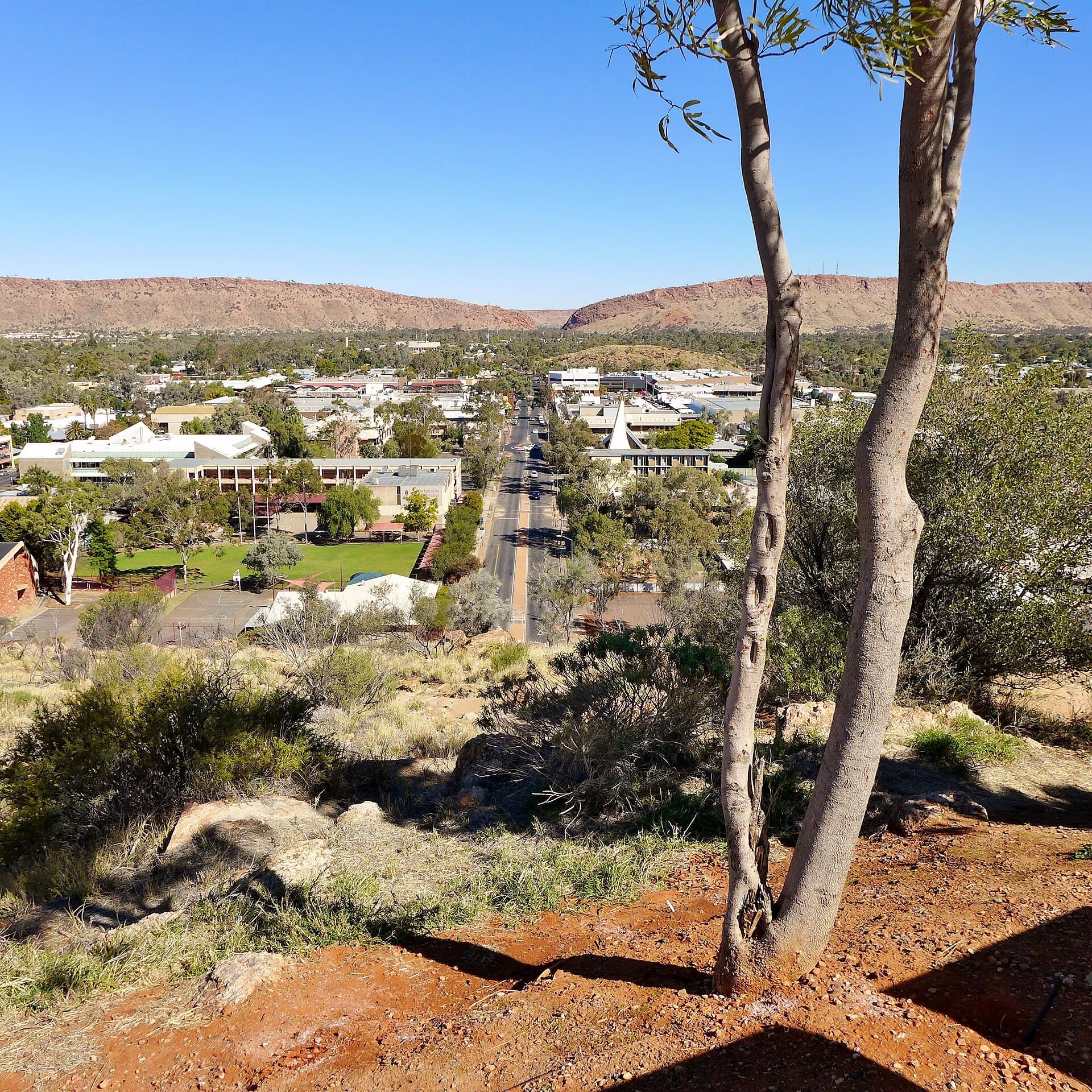
Para disfrutar de vistas panorámicas de la ciudad y la Cordillera MacDonnell, ascienda a Anzac Hill, especialmente al amanecer o al atardecer. El Parque del Desierto de Alice Springs ofrece una experiencia inmersiva de la flora y fauna nativas del desierto central de Australia, incluyendo oportunidades para ver criaturas nocturnas y aprender sobre las habilidades de supervivencia Arrernte.
Sumérjase en la cultura aborigen en el Recinto Cultural Araluen, que alberga cuatro museos y el Centro de Artes Araluen. Cuenta con una extensa colección de obras de arte aborígenes y australianas, incluyendo piezas del renombrado artista Albert Namatjira. La Instalación Turística del Royal Flying Doctor Service ofrece una visión de este icónico servicio médico del interior, con exhibiciones interactivas y una réplica de una aeronave.
Para una experiencia local única, visite el Jardín Botánico Olive Pink, el único jardín botánico de zona árida de Australia, que ofrece senderos para caminar y diversas especies de plantas y aves. No pierda la oportunidad de conocer joeys y canguros rescatados en The Kangaroo Sanctuary, que ofrece visitas públicas.
La mejor época para visitar Alice Springs es durante los meses más frescos de otoño (marzo a mayo) y primavera (septiembre a noviembre). Estas estaciones ofrecen temperaturas suaves, que oscilan entre 12 y 27 °C (54 y 81 °F) en otoño y 13 y 31 °C (57 y 87 °F) en primavera, lo que las hace ideales para actividades al aire libre. El invierno (junio a agosto) también es popular, con cielos despejados y temperaturas diurnas agradables entre 3 y 20 °C (37 y 68 °F), aunque las noches pueden bajar de cero. Los veranos (diciembre a febrero) son muy calurosos, con máximas promedio a mediados de los 30 °C y picos ocasionales por encima de los 40 °C (104 °F), y también son el período más húmedo.
Alice Springs está aproximadamente a 1.500 kilómetros tanto de Darwin como de Adelaida, lo que la convierte en un destino remoto pero accesible. El Aeropuerto de Alice Springs (ASP) ofrece vuelos a las principales capitales australianas y centros regionales. Para aquellos que buscan un viaje escénico, el ferrocarril Ghan ofrece una forma única de viajar a Alice Springs desde Adelaida o Darwin. También hay servicios de autobús disponibles para viajar de forma asequible al Territorio del Norte.
Dentro de Alice Springs, el centro de la ciudad ofrece una variedad de tiendas, cafeterías y restaurantes. Es recomendable llevar mucha agua, especialmente durante los meses más cálidos, y empacar ropa adecuada para diferentes temperaturas, ya que los climas desérticos pueden tener noches frescas incluso en verano. Siempre consulte las condiciones climáticas locales antes de emprender actividades al aire libre. La zona horaria local es la Hora Estándar de Australia Central (UTC +9:30), sin horario de verano. Alice Springs también tiene estrictas restricciones de alcohol, de las que los visitantes deben ser conscientes antes de dirigirse al monte.
Alice Springs en coreano, en chino o en hebreo — y 29 idiomas más, cada parada narrada por una voz nativa. La mayor variedad de idiomas de cualquier audioguía autoguiada.
Disponible en: