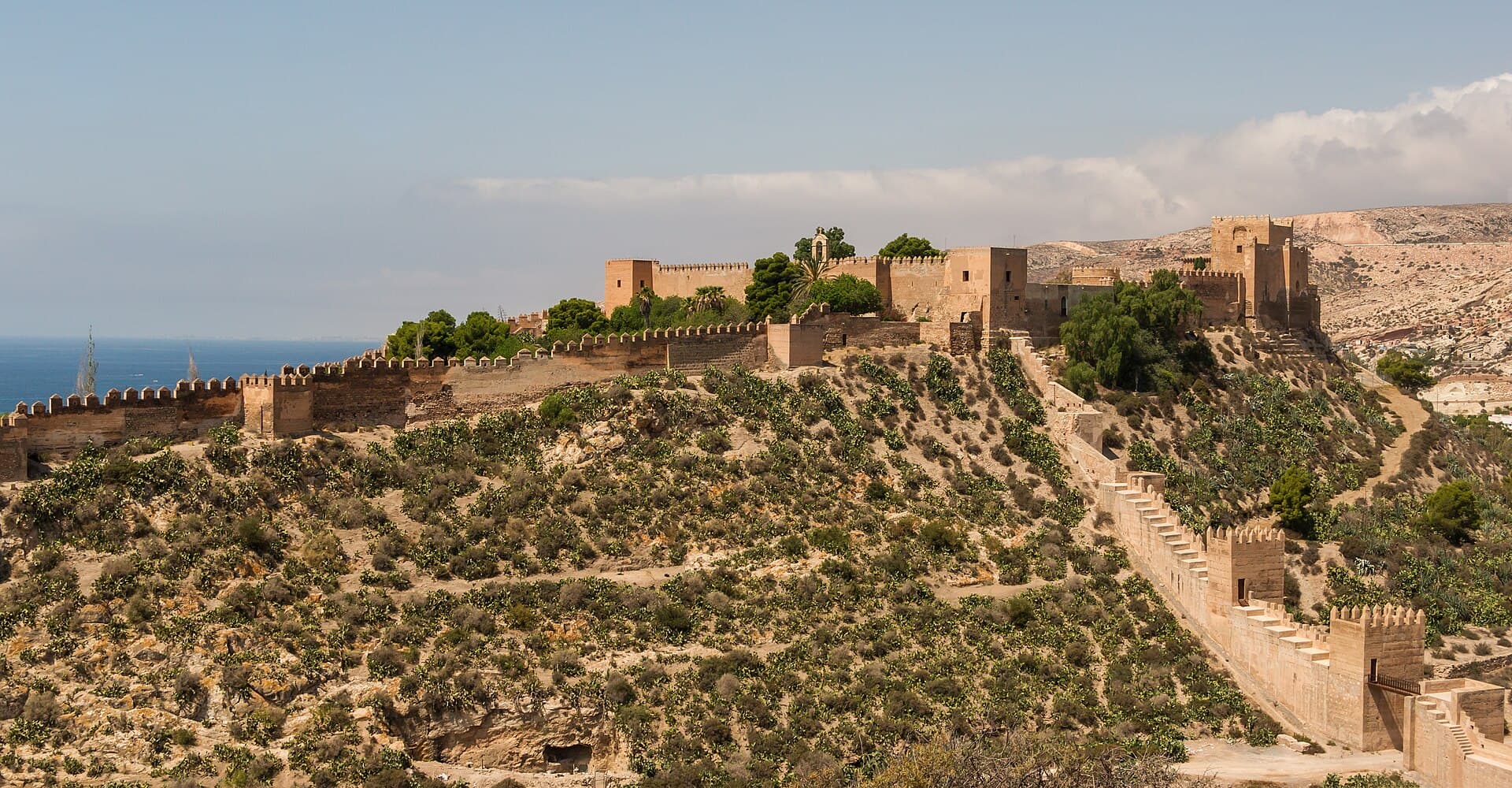
Almería, SpainJebulon / CC0, via Wikimedia Commons
ES

Almería

Where Europe's only desert meets the Mediterranean Sea.

The secrets of Almería

Almería, as no one tells it.

Not the postcards. The stories even locals don't know — whispered in your ear, right where they happened.

3 secrets below. Many more wait inside the tour.
Alcazaba of Almería

Most visitors are drawn to Almería's Alcazaba, a sprawling Moorish fortress. But few realize its true scale compared to another famous Andalusian landmark.

Full story unlocks in the tour
Tabernas Desert

This arid landscape looks straight out of a classic Western film. That's because it often was.

Full story unlocks in the tour
Almería's Tapas Bars

In many parts of Spain, tapas are a small plate you order. In Almería, the tradition is a little different—and much more generous.

Full story unlocks in the tour
The full tour

Discover every secret of Almería

Every address, every reveal in full — in your ear, right where it happened.

Get the key to Almería

You pick your stops. You walk. The voice reveals what the others miss.

Choose your time

How long do you have in Almería?

No tours available yet. Check back soon — we're preparing them.

About Almería

The story of Almería

Almería, a city on Spain's southeastern coast, offers a singular blend of ancient eras, sun-baked landscapes, and Mediterranean allure. Here, the desert meets the sea, forging an environment unlike any other in Europe. This city serves as the capital of its namesake province in Andalusia, stretching along the coastline of the Gulf of Almería.

With a lineage reaching back to its founding in 955 by Caliph Abd al-Rahman III, Almería blossomed during the Islamic era, evolving into a crucial port and a cosmopolitan center in the 11th and 12th centuries. Today, it is recognized for its abundant sunshine, diverse natural expanses including the Cabo de Gata-Níjar Natural Park, and a tranquil rhythm that often remains undiscovered by mainstream tourism.

History

From Roman Port to Moorish Metropolis

The lands around Almería bear witness to habitation since prehistoric times, with traces of early occupation during the Bronze Age, followed by Phoenicians and Carthaginians. The Romans established a significant port here, known as Portus Magnus, a vital hub for trade.

The city of Almería itself was formally established in 955 by Caliph Abd al-Rahman III, who commanded the construction of the Alcazaba fortress to safeguard the coast and serve as a naval base for the Caliphate. Under Moorish dominion, Almería experienced a golden age, becoming a primary port of the Caliphate of Córdoba and a nexus for Mediterranean commerce. The city was celebrated for its silk production, with thousands of looms crafting exquisite fabrics; it also played a role in shipbuilding and the slave trade.

Shifting Powers and Natural Disasters

Following the dissolution of the Caliphate of Córdoba in the early 11th century, Almería became the capital of an independent taifa (kingdom), continuing its economic flourishing. However, this period of magnificence was interrupted in 1147 when Christian forces led by Alfonso VII seized the city. Control returned to Muslim Almohad rulers within a decade, and later the city became part of the Nasrid Emirate of Granada.

In 1489, the Catholic Monarchs gained control of Almería, incorporating it into the Kingdom of Castile. The 16th century brought a succession of misfortunes, including at least four earthquakes, with a particularly destructive one in 1522 that largely leveled the city. Barbary pirate incursions were also frequent along the coast until the early 18th century, leading to a decline in population and a movement inland.

Modern Resurgence and Cinematic Fame

The 19th century observed an economic revival in Almería with the expansion of the mining industry and grape exports. The iconic Cable Inglés, a monumental iron loading platform for ore, was commissioned in 1904. During the Spanish Civil War, Almería held strategic importance and endured bombings, prompting the construction of extensive underground air-raid shelters that remain accessible today.

The mid-20th century marked a new chapter for the province as its desert expanses began to draw filmmakers. The Tabernas Desert became a favored location for Westerns, earning the region the moniker "European Hollywood." Today, Almería continues to thrive with tourism, a considerable agricultural industry, and its enduring connection to the world of cinema.

What to see

Begin your exploration at the Alcazaba of Almería, a formidable 10th-century Moorish fortress offering sweeping views of the city and the Mediterranean. Wander through its fortified sections, gardens, and the remnants of the Andalusian palace. Descend into the city center to discover the Almería Cathedral, a distinctive 16th-century structure that marries Gothic and Renaissance styles with a fortified exterior, crafted to withstand pirate attacks.

For a glimpse into a somber period, visit the Civil War Shelters, a network of underground tunnels constructed to shield citizens from bombings during the Spanish Civil War. Above ground, the Cable Inglés stands as a striking iron landmark, a former mineral loading platform that now serves as an architectural icon, particularly evocative at sunset.

Beyond the city, the Tabernas Desert is a sight to behold, presenting Europe's only true desert landscape and the chance to explore old Western movie sets like Oasys MiniHollywood. To the east, the Cabo de Gata-Níjar Natural Park reveals a dramatic volcanic coastline with untouched beaches and walking paths.

When to visit

Almería enjoys a hot desert climate with over 3,000 hours of sunshine across 320 days per year, making it one of Europe's sunniest cities. It is also the driest city on the continent.

For beach activities and warm weather, late June to early September is ideal, with August being the warmest month. If you prefer to avoid intense heat and enjoy sightseeing or active excursions, the optimal times to visit are May, June, September, and October. Winters are mild, with daytime temperatures typically around 17-18°C, making it a pleasant destination throughout the year.

Practical

Almería has its own international airport (LEI), with direct flights from some European cities. Alternatively, you can fly into Murcia (RMU) or Alicante (ALC) airports, both about a two-hour drive away, and then take a bus, hire a car, or arrange a transfer. The city is also accessible by train and bus from other parts of Spain.

While public transport and taxis are available within the city, renting a car is highly recommended for exploring the surrounding province, including the Cabo de Gata-Níjar Natural Park and the Tabernas Desert. Parking in the city center can be limited, so consider private car parks if your accommodation doesn't offer it. Remember to pack high-factor sunscreen, sunglasses, and a hat due to the intense sun. Spanish mealtimes are typically later, with lunch around 2 PM to 4 PM and dinner after 9 PM.

Good to know
Is Almería a safe city for tourists?
Yes, Almería is generally considered a very safe destination. It's always wise to be mindful of your belongings in crowded areas, as you would in any tourist location.
What is Almería known for?
Almería is known for being the driest city in Europe with a unique desert climate, its historic Alcazaba fortress, the cinematic landscapes of the Tabernas Desert, and its generous tapas culture where a free tapa often accompanies a drink.
Can you swim in the sea in Almería?
Yes, Almería has a long coastline with many beaches, including Zapillo Beach within the city itself. The water temperature is comfortable for swimming from July to September.
What language is spoken in Almería?
The official language spoken in Almería, like the rest of Spain, is Spanish.
Is Almería expensive to visit?
Almería is generally considered more affordable than some other major Andalusian cities like Malaga, Granada, and Seville, making it a good option for budget-conscious travelers.
Are there good hiking opportunities near Almería?
Yes, the Cabo de Gata-Níjar Natural Park offers numerous hiking trails through its volcanic landscapes and along its unspoiled coastline.
Almería
From€9.00
No booking · activate anytime · 12h to walk it
Get the key to Almería