Kemere-Brücke
Diese Brücke aus der Römerzeit ist nicht nur ein Übergang; sie soll eine weitaus faszinierendere Geschichte als bloßen Transit bergen.
Die ganze Geschichte wird in der Tour freigeschaltet
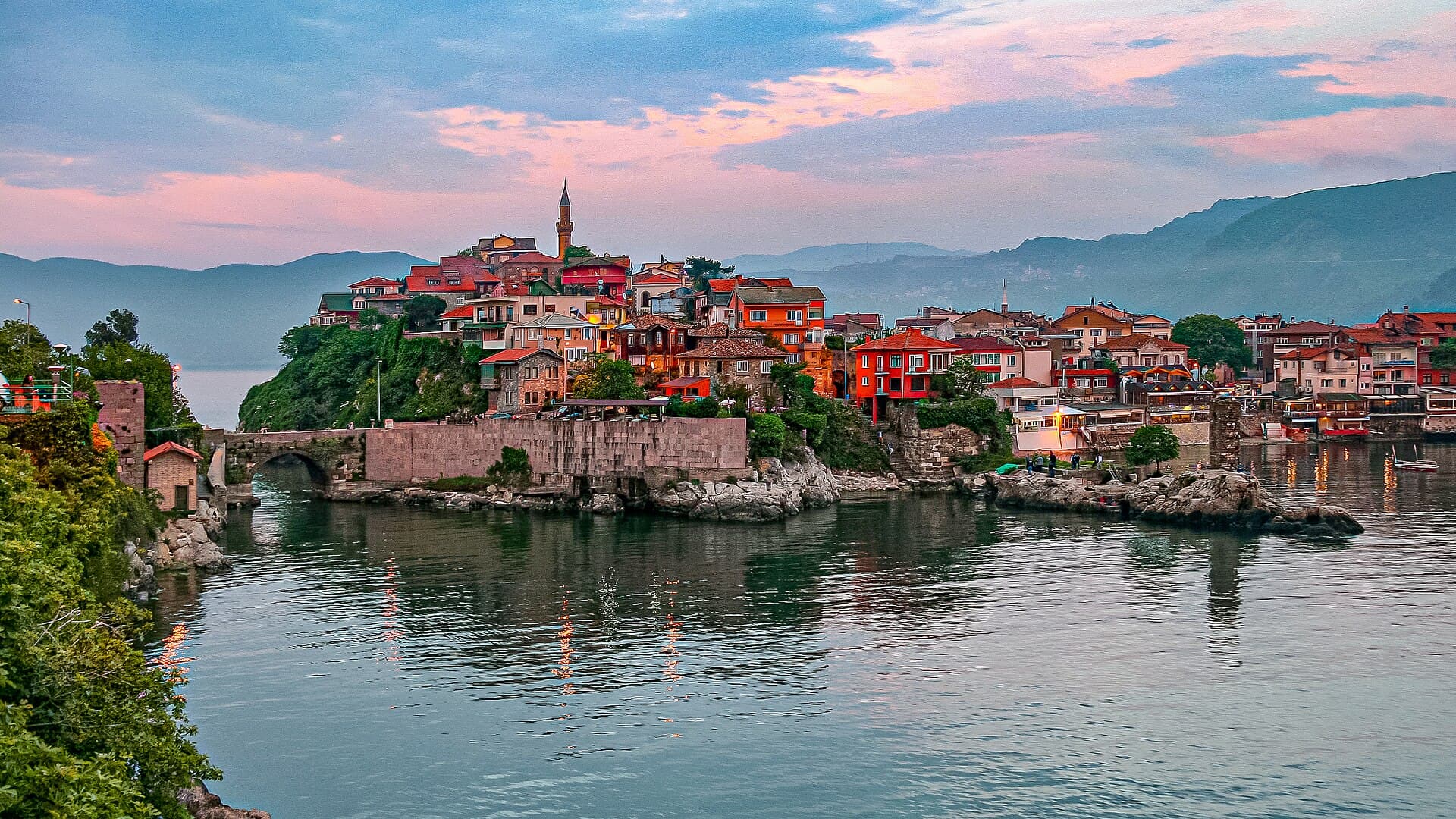 Jorge Franganillo / CC BY 2.0, via Wikimedia Commons
Selbstgeführte Audio-Walking-Tour durch Amasra — GPS-Route, Offline-Wiedergabe, erzählerische Narration in 32 Sprachen.
“Wo alte Steine die Umarmung des Schwarzen Meeres treffen.”
Nicht die Postkarten. Die Geschichten, die selbst Einheimische nicht kennen – dir ins Ohr geflüstert, genau dort, wo sie geschahen.
Diese Brücke aus der Römerzeit ist nicht nur ein Übergang; sie soll eine weitaus faszinierendere Geschichte als bloßen Transit bergen.
Über seine antiken Artefakte hinaus hat das Amasra Museum eine überraschende Verbindung zur zeitgenössischen Kunst.
Dieser antike Leuchtturm und Aussichtspunkt verbirgt ein königliches Geheimnis bezüglich seines angrenzenden Schwimmbeckens.
Entdecke jedes Geheimnis von Amasra
Jede Adresse, jede Enthüllung vollständig – in deinem Ohr, genau dort, wo es geschah.
Du wählst deine Stationen. Du gehst. Die Stimme enthüllt, was andere übersehen.


Deine selbstgeführte Audio-Tour durch Amasra ist bereit – wähle deine Sehenswürdigkeiten, deine Sprache und starte, sobald du ankommst.
KaufenLume enthält einen integrierten Augmented-Reality-Guide. Halten Sie Ihr Handy hoch: Die Kamera zeigt die Straße vor Ihnen, mit einem leuchtenden Pfeil über dem echten Bild, der immer auf Ihren nächsten Stopp zeigt — keine Karte zum Rätseln, keine falschen Abzweigungen. Wie alles bei Lume funktioniert es komplett offline.
Amasra, eine faszinierende Stadt an der türkischen Schwarzmeerküste, bietet eine einzigartige Mischung aus antiker Geschichte, natürlicher Pracht und lokalem Charakter. Amasra liegt auf einer malerischen Halbinsel mit zwei geschützten Buchten und wird oft als "Auge der Welt" bezeichnet, ein Titel, der angeblich von Sultan Mehmed II. dem Eroberer verliehen wurde. Seine engen Gassen schlängeln sich durch eine Landschaft, in der historische Ruinen nahtlos mit dem ruhigen Rhythmus des Küstenlebens verschmelzen. Mit einer ständigen Bevölkerung von etwa 6.000 Einwohnern, die im Sommer mit Besuchern aus Istanbul und Ankara anwächst, bietet Amasra eine friedliche Flucht vor kommerzielleren Küstenstädten.
Die charakteristischen weiß getünchten Häuser und die einzigartige lokale Architektur der Stadt stehen inmitten jahrhundertealter Bauwerke und schaffen ein städtisches Gefüge, das die Vorstellungen vom traditionellen türkischen Design herausfordert. Die Anziehungskraft von Amasra liegt in seinen ruhigen Zwillingsbuchten, stillen Buchten und dem allgegenwärtigen Duft von frischem Fisch. Es ist ein Ort, an dem Geschichte, Meeresbrise und Sonnenuntergangslicht zu einer einzigen, bleibenden Erinnerung verschmelzen.
Aufgeteilt in einen Festland- und einen Inselteil, die durch die elegante römische Bogenbrücke Kemere verbunden sind, lädt Amasra zur gemächlichen Erkundung ein. Vom Spaziergang durch seine alten Befestigungsanlagen bis zum Genuss seiner berühmten lokalen Küche verspricht die Stadt ein erfrischendes Erlebnis für diejenigen, die sowohl Entspannung als auch eine Reise durch die Zeit suchen.
Die Geschichte von Amasra reicht tief in die Antike zurück, archäologische Funde deuten auf menschliche Besiedlung zwischen 5000 und 8500 v. Chr. hin. Der älteste bekannte Name der Stadt war Sesamus, eine von Miletus gegründete Kolonie, die in Homers Ilias als Heimat der Paphlagonier um das 12. Jahrhundert v. Chr. erwähnt wird. Um 300 v. Chr. kam es zu einem entscheidenden Moment mit der persischen Prinzessin Amastris, Herrscherin von Herakleia. Sie vereinigte Sesamus mit drei benachbarten ionischen Kolonien – Kromna, Cytorus und Tios – zu einer einzigen Polis und nannte sie zu ihren Ehren Amastris. Ihre Herrschaft legte den Grundstein für den wirtschaftlichen Wohlstand und die städtische Struktur der Stadt, und sie war eine der ersten Königinnen, die Münzen unter ihrem eigenen Namen prägte.
Im Jahr 70 v. Chr. eroberte der römische General Lucullus Amasra und gliederte es in die Römische Republik ein. Im frühen 2. Jahrhundert n. Chr. lobte Gouverneur Plinius der Jüngere die Schönheit von Amasra und verbesserte seine Infrastruktur, sogar die Überdeckung eines "unanständigen, pestilenzartigen, offenen Abwasserkanals", der durch die Stadt führte. Amasra wurde zu einem administrativen und kommerziellen Zentrum, das zur Zeit Kaiser Trajans als Metropolis bekannt war. Die Stadt blieb auch in der byzantinischen Ära von Bedeutung, ihre Akropolis wurde in eine Festung umgewandelt und im 9. Jahrhundert eine Kirche gebaut. Sie diente als wichtiger Hafen und Militärbasis, obwohl sie in den 830er Jahren von den Rus' geplündert wurde.
Im späten 13. oder frühen 14. Jahrhundert geriet Amasra unter die Kontrolle der Genuesen, die den Schwarzmeerhandel dominieren wollten. Sie verstärkten die Befestigungsanlagen der Stadt erheblich und ergänzten die bestehenden byzantinischen Mauern. Die genuesische Herrschaft endete jedoch 1460, als Sultan Mehmed II. der Eroberer Amasra friedlich an das Osmanische Reich annektierte. Als er die Stadt sah, nannte Mehmed II. sie berühmt "Çeşm-i Cihan" ("Auge der Welt") und befahl ihre kampflose Übergabe. Die byzantinische Kirche wurde in die Fatih-Moschee umgewandelt, ein beeindruckendes Beispiel für architektonische Anpassung. Amasra florierte weiterhin als wichtiger Hafen und trug zum maritimen Handel und zur Verteidigung des Osmanischen Reiches bei.
Im 19. Jahrhundert entwickelte sich Amasra zu einem Zentrum für traditionelles Handwerk, insbesondere Holzschnitzerei, und für den Kohlebergbau in der Region. Nach einer kurzen russischen Besetzung im frühen 19. Jahrhundert wurde es 1923 offiziell Teil der neu ausgerufenen Republik Türkei. Im Jahr 2013 wurde die Burg von Amasra als Teil der genuesischen Handelsroute in die vorläufige Liste des UNESCO-Welterbes aufgenommen. Heute ist Amasra ein beliebtes Touristenziel, das für seine historischen Stätten, seine natürliche Schönheit und seine ruhige Atmosphäre gefeiert wird.
Beginnen Sie Ihre Erkundung in der Burg von Amasra, einer historischen Festung römischen Ursprungs, die von den Byzantinern verstärkt und von den Genuesen weiter befestigt wurde. Ihre Mauern bieten einen weiten Blick auf die Zwillingsbuchten und das Schwarze Meer. Innerhalb der Burg finden Sie die Fatih-Moschee, ursprünglich eine byzantinische Kirche aus dem 9. Jahrhundert, die nach der osmanischen Eroberung umgewandelt wurde und Schichten der Geschichte in ihrer Architektur zeigt.
Überqueren Sie die Kemere-Brücke, eine elegante römische Bogenbrücke, die das Festland mit der Insel Boztepe verbindet, einem Wahrzeichen der Stadt. Erkunden Sie den Büyük Liman Strand und den Küçük Liman Strand, die ruhiges Wasser zum Schwimmen und Entspannen bieten, insbesondere Küçük Liman mit Blick auf die Burg und die Brücke.
Besuchen Sie das Amasra-Museum, um in die Vergangenheit der Region einzutauchen, mit Artefakten aus hellenistischer, römischer, byzantinischer, genuesischer und osmanischer Zeit. Verpassen Sie nicht den Çekiciler Basar, wo lokale Handwerker ihre traditionellen Holzhandwerke präsentieren, ein Erbe, das über Generationen weitergegeben wurde. Erwägen Sie eine Bootstour um die Halbinsel und die nahe gelegene Kanincheninsel (Tavşan Adası) für andere Perspektiven der Küste und die Möglichkeit, Delfine zu beobachten.
Die ideale Zeit für einen Besuch in Amasra für warme Wetteraktivitäten, insbesondere Schwimmen und Bootstouren, ist von Ende Juni bis Anfang September. In diesen Monaten können die Temperaturen etwa 27 °C erreichen und das Wasser ist einladend. Juli ist besonders klar, mit einem Himmel, der zu 93 % klar oder teilweise bewölkt ist. Für ein ruhigeres Erlebnis mit angenehmem Wetter und weniger Menschenmassen sollten Sie die Übergangszeiten von April bis Juni oder Oktober bis Anfang Dezember in Betracht ziehen. Während Juli und August am belebtesten sind, bietet September eine gute Balance zwischen angenehmem Klima und reduzierten Menschenmassen.
Amasra ist eine kompakte und gut zu Fuß erkundbare Stadt, die es einfach macht, ihr historisches Zentrum zu Fuß zu erkunden. Für längere Strecken oder Fahrten zu benachbarten Siedlungen stehen lokale Sammelbusse, bekannt als Dolmuşes, zur Verfügung. Taxis sind ebenfalls eine Option; es ist ratsam, den Fahrpreis im Voraus zu bestätigen oder sicherzustellen, dass das Taxameter benutzt wird. Während ein Mietwagen für die Erkundung der weiteren Provinz Bartın praktisch ist, ist er für die Navigation in Amasra selbst nicht unbedingt erforderlich. Der nächstgelegene Flughafen befindet sich in Zonguldak, etwa 60 Kilometer entfernt, mit Taxis oder Bussen nach Amasra. Größere internationale Flughäfen sind Ankara Esenboğa (ESB), etwa 187 km entfernt, oder Istanbul Sabiha Gökçen (SAW). Öffentliche Toiletten sind verfügbar, auch in der Nähe des Amasra-Strandes, obwohl einige Hocktoiletten sein können und eine kleine Gebühr erfordern. Die meisten Geschäfte arbeiten mit Bargeld, daher wird empfohlen, kleine Scheine mitzuführen.
Amasra — Koreanisch, Chinesisch, Hebräisch und 29 weitere Sprachen, jede Station von einer muttersprachlichen Stimme erzählt. Die größte Sprachauswahl aller selbstgeführten Audiotouren.
Verfügbar auf: