Bridge House
Dieses winzige Haus, dramatisch über dem Stock Beck gelegen, hat eine kuriose Entstehungsgeschichte, die Einheimische einer cleveren Steuervermeidung zuschreiben.
Die ganze Geschichte wird in der Tour freigeschaltet
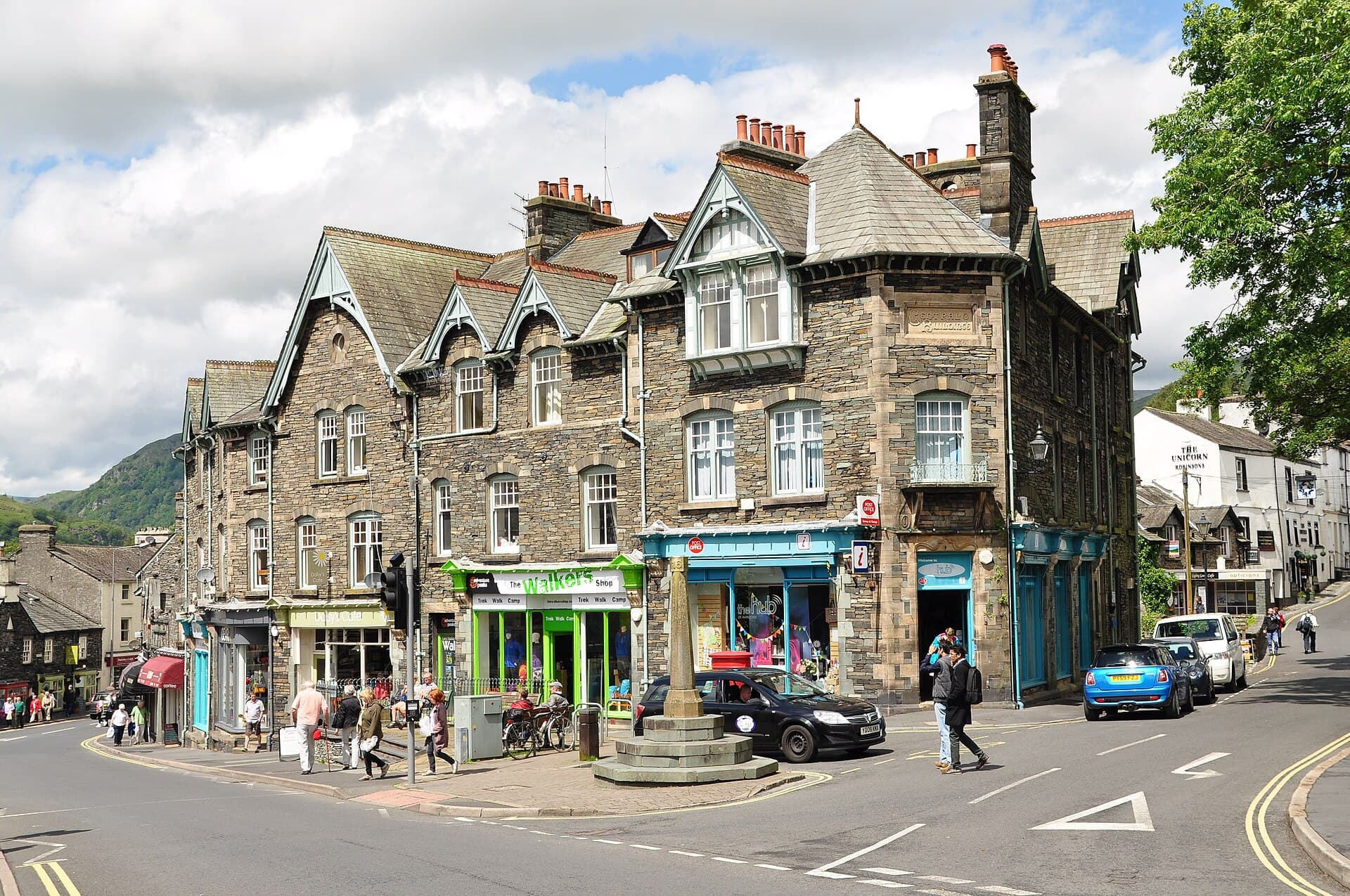 Nilfanion / CC BY-SA 4.0, via Wikimedia Commons
Selbstgeführte Audio-Walking-Tour durch Ambleside — GPS-Route, Offline-Wiedergabe, erzählerische Narration in 32 Sprachen.
“Wo alte Steine auf rauschende Wasser treffen und die Geschichte durch die Fells atmet.”
Nicht die Postkarten. Die Geschichten, die selbst Einheimische nicht kennen – dir ins Ohr geflüstert, genau dort, wo sie geschahen.
Dieses winzige Haus, dramatisch über dem Stock Beck gelegen, hat eine kuriose Entstehungsgeschichte, die Einheimische einer cleveren Steuervermeidung zuschreiben.
In den Mauern der St. Mary's Church im neugotischen Stil zeigt ein lebendiges, 26 Fuß langes Wandgemälde eine jahrhundertealte lokale Tradition.
Der beeindruckende 70 Fuß hohe Wasserfall von Ambleside birgt ein Geheimnis über die industrielle Vergangenheit der Stadt, lange bevor sie ein beliebtes Reiseziel wurde.
Entdecke jedes Geheimnis von Ambleside
Jede Adresse, jede Enthüllung vollständig – in deinem Ohr, genau dort, wo es geschah.
Du wählst deine Stationen. Du gehst. Die Stimme enthüllt, was andere übersehen.


Deine selbstgeführte Audio-Tour durch Ambleside ist bereit – wähle deine Sehenswürdigkeiten, deine Sprache und starte, sobald du ankommst.
KaufenLume enthält einen integrierten Augmented-Reality-Guide. Halten Sie Ihr Handy hoch: Die Kamera zeigt die Straße vor Ihnen, mit einem leuchtenden Pfeil über dem echten Bild, der immer auf Ihren nächsten Stopp zeigt — keine Karte zum Rätseln, keine falschen Abzweigungen. Wie alles bei Lume funktioniert es komplett offline.
Ambleside, eine malerische Stadt am Nordufer des Lake Windermere im englischen Lake District, bietet eine Mischung aus natürlicher Pracht, historischer Faszination und Outdoor-Aktivitäten. Umgeben von sanft abfallenden Hügeln und ruhigen Seen, ist es ein Tor zu einigen der beliebtesten Wanderwege und Wasseraktivitäten des Lake District auf dem Lake Windermere. Mit einer Bevölkerung von rund 2.596 im Jahr 2020 behält Ambleside seinen reizvollen, begehbaren Charakter mit ehrwürdigen Gebäuden, lokalen Geschäften, Cafés und Restaurants.
Der Reiz der Stadt geht über ihre wunderschönen Landschaften hinaus und umfasst ein tiefes kulturelles Erbe, das sich in ihren alten Steinstrukturen, historischen Gasthöfen und literarischen Verbindungen widerspiegelt. Ambleside ist eine ideale Basis für Abenteurer und Gelegenheitsbesucher gleichermaßen und bietet ein typisches Lake District-Erlebnis. Von der Erkundung römischer Ruinen bis zur Bewunderung eines winzigen Hauses, das über einer Brücke gebaut wurde, lädt Ambleside Besucher ein, in seine einzigartige Erzählung einzutauchen.
## Von der römischen Garnison zur Marktgemeinde Die Geschichte von Ambleside reicht bis in die Römerzeit zurück. Die Fundamente von Galava, einem römischen Fort aus dem 2. Jahrhundert, liegen nur einen kurzen Spaziergang vom Stadtzentrum entfernt in der Nähe des Borrans Park. Dieses Steinfestungswerk, das wahrscheinlich während der Herrschaft von Kaiser Hadrian erbaut wurde, war strategisch wichtig, sorgte für Ordnung, unterstützte die römische Verwaltung und schützte Kommunikationswege im bergigen Lake District. Es war durch Straßen mit anderen Forts verbunden, darunter eine, die die anspruchsvollen Bergpässe Wrynose und Hardknott überquerte. Vor diesem Steinfestungswerk beherbergte ein kleineres Holzfort während der römischen Eroberung Nordbritanniens im späten 1. Jahrhundert eine Garnison von 200 Mann.
Nach dem Abzug der Römer wurde die 'alte' Stadt Ambleside, die auf einem Hügel um die St. Anne's Church erbaut wurde, teilweise aus Steinen des verlassenen römischen Forts errichtet. Die Gegend hat auch Wikingerverbindungen, wobei der Name 'Ambleside' vermutlich von einem Wikinger namens Hamel stammt. Um 1000 n. Chr. erlebte die Region beträchtlichen Wohlstand, wobei die Landwirtschaft eine wichtige Komponente war, und das Gebiet geriet unter die Kontrolle der Furness Abbey. Es kam zu groß angelegten industriellen Expansionen, zusammen mit der Einführung robuster Herdwick-Schafe auf den Fells. Die Stadt erhielt 1650 die Erlaubnis, ihren eigenen Markt abzuhalten, und etablierte sich als Handelszentrum für Landwirtschaft und den Wollhandel. Alte Packpferdewege, wie der zwischen Ambleside und Grasmere, waren vor dem Aufkommen von Pferdekutschen im 18. Jahrhundert entscheidend für den Handel.
Ambleside war nicht nur ländlich; es war stark industrialisiert und befasste sich mit der Holzkohleproduktion für die Eisenerzschmelze und dem Holz für Textilspindeln. Wasserkraft wurde früh eingesetzt, und später entwickelte sich die Werkzeugmaschinenherstellung. Steinbrüche und Bergbau waren ebenfalls lokale Industrien, wobei der Steinabbau bis heute andauert. Die Ankunft der Eisenbahn in Windermere im Jahr 1847 trug maßgeblich zur Expansion von Ambleside und zum wachsenden Tourismus bei. Im Laufe seiner Geschichte inspirierte Ambleside bemerkenswerte Persönlichkeiten, darunter den Dichter William Wordsworth, der in der Nähe in Rydal lebte, und die Schriftstellerin Harriet Martineau.
Ambleside bietet eine Vielzahl von Attraktionen, von historischen Wahrzeichen bis hin zu Naturwundern. Ein fesselnder Anblick ist das Bridge House, ein winziges Gebäude aus dem 17. Jahrhundert, das über den Stock Beck gebaut wurde und heute vom National Trust verwaltet wird. Besucher können seine beiden spärlich eingerichteten Räume besichtigen, um einen Einblick in seine früheren Nutzungen zu erhalten, darunter ein Kontor, ein Teehaus und sogar ein Zuhause für eine Familie von acht Personen. Nur einen kurzen Spaziergang vom Stadtzentrum entfernt liegt der beeindruckende Stock Ghyll Force, ein 70 Fuß hoher Wasserfall, der durch Wälder stürzt. Verschiedene Aussichtspunkte entlang des Weges bieten unterschiedliche Perspektiven auf die Fälle.
Für eine Reise in die Vergangenheit erkunden Sie die Galava Roman Fort Ruins in der Nähe des Borrans Park, wo Informationstafeln darstellen, wie das Fort aus dem 2. Jahrhundert ausgesehen haben mag. Die St. Mary's Church, ein denkmalgeschütztes Gebäude (Grade II*), das in den 1850er Jahren von George Gilbert Scott entworfen wurde, verfügt über einen markanten Steinturm und ein 26 Fuß langes Wandgemälde, das die traditionelle Rushbearing-Zeremonie darstellt. Jenseits der Stadt bietet der Lake Windermere am Waterhead Pier Möglichkeiten für Bootsfahrten, Rudern oder Kajakfahren. Für Literaturbegeisterte ist Rydal Mount, das Haus von William Wordsworth für fast 40 Jahre, nur eine kurze Autofahrt entfernt und bietet einen Einblick in sein Leben und die von ihm entworfenen Gärten.
Ambleside ist das ganze Jahr über reizvoll, wobei jede Jahreszeit ein anderes Erlebnis bietet. Die beste Zeit für Aktivitäten bei warmem Wetter ist vom späten Frühling bis zum frühen Herbst, insbesondere von Anfang Juli bis Ende August, wenn das Wetter mild ist und die Outdoor-Aktivitäten in vollem Gange sind. Der Sommer ist die geschäftigste Jahreszeit, mit vielen geöffneten Veranstaltungen und Attraktionen, obwohl es voll werden kann. Frühling und Herbst bieten ruhigere, ebenso malerische Besuche mit Wildblumen im Frühling und bunten Blättern im Herbst. Der Winter bietet eine magische Atmosphäre mit schneebedeckten Fells und gemütlichen Pubs, obwohl einige Wanderwege herausfordernd sein können.
Ambleside ist eine gut begehbare Stadt, die leicht zu Fuß erkundet werden kann. Für die Fortbewegung im weiteren Lake District empfiehlt sich die Nutzung der offenen Buslinien zu nahegelegenen Dörfern wie Bowness oder Grasmere. Parkplätze in Ambleside können begrenzt sein, insbesondere während der Hauptsaison. Es gibt gebührenpflichtige Parkplätze, darunter Rydal Road Car Park und Lake Road Car Park. Es wird empfohlen, früh anzukommen, besonders an Wochenenden und Feiertagen. Alternativ verbindet ein Park-and-Ride-Service von Braithwaite Fold in der Nähe von Bowness-on-Windermere Ambleside mit dem Bus. Die Stadt bietet eine Vielzahl von Unterkünften, von traditionellen Gasthöfen bis hin zu Bed & Breakfasts. Viele lokale Geschäfte richten sich an Outdoor-Enthusiasten und bieten Ausrüstung für Wanderungen und andere Aktivitäten an.
Ambleside — Koreanisch, Chinesisch, Hebräisch und 29 weitere Sprachen, jede Station von einer muttersprachlichen Stimme erzählt. Die größte Sprachauswahl aller selbstgeführten Audiotouren.
Verfügbar auf: