The Archives (30 Boltwood Walk)
Amherst eröffnete 2022 eine neue Einrichtung, aber ihr Eingang könnte Ihnen entgehen.
Die ganze Geschichte wird in der Tour freigeschaltet
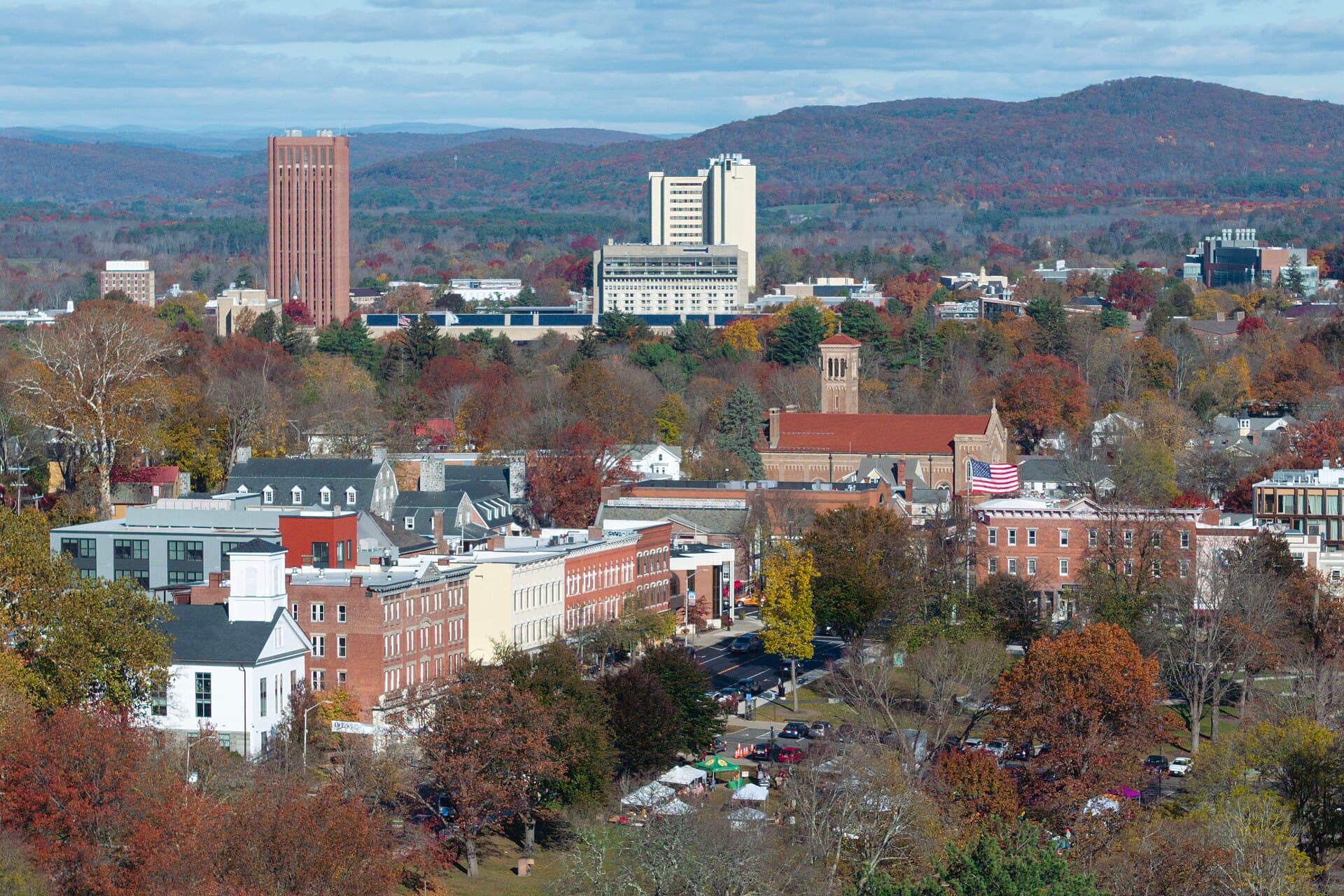 Quintin Soloviev / CC BY 4.0, via Wikimedia Commons
Selbstgeführte Audio-Walking-Tour durch Amherst — GPS-Route, Offline-Wiedergabe, erzählerische Narration in 32 Sprachen.
“Wo literarische Giganten wandelten und Neugier ein Zuhause findet.”
Nicht die Postkarten. Die Geschichten, die selbst Einheimische nicht kennen – dir ins Ohr geflüstert, genau dort, wo sie geschahen.
Amherst eröffnete 2022 eine neue Einrichtung, aber ihr Eingang könnte Ihnen entgehen.
Über seine Bücherregale hinaus bietet die Jones Library eine ungewöhnliche Sammlung für diejenigen, die ein neues Hobby suchen.
Der Amherst Common birgt ein Geheimnis aus dem 19. Jahrhundert, das buchstäblich das Erscheinungsbild der Stadt geprägt hat.
Entdecke jedes Geheimnis von Amherst
Jede Adresse, jede Enthüllung vollständig – in deinem Ohr, genau dort, wo es geschah.
Du wählst deine Stationen. Du gehst. Die Stimme enthüllt, was andere übersehen.
Deine selbstgeführte Audio-Tour durch Amherst ist bereit – wähle deine Sehenswürdigkeiten, deine Sprache und starte, sobald du ankommst.
KaufenLume enthält einen integrierten Augmented-Reality-Guide. Halten Sie Ihr Handy hoch: Die Kamera zeigt die Straße vor Ihnen, mit einem leuchtenden Pfeil über dem echten Bild, der immer auf Ihren nächsten Stopp zeigt — keine Karte zum Rätseln, keine falschen Abzweigungen. Wie alles bei Lume funktioniert es komplett offline.
Amherst, Massachusetts, ist eine Stadt im Connecticut River Valley, bekannt für ihre intellektuelle Energie und ihr kulturelles Erbe. Sie beherbergt drei bedeutende Bildungseinrichtungen – Amherst College, Hampshire College und die University of Massachusetts Amherst – und ist Teil des Five College Consortium, das eine lebendige akademische Atmosphäre pflegt.
Mit rund 39.000 Einwohnern verbindet Amherst das Flair einer New England College-Stadt mit vielfältigen kulturellen Angeboten. Das Engagement der Stadt für Landwirtschaft und Bildung spiegelt sich sogar in ihrem offiziellen Siegel wider. Besucher können durch eine fußgängerfreundliche Innenstadt schlendern, umgeben von sanften Hügeln, Bauernhöfen und Wäldern.
## Von Nonotuck-Land zu kolonialer Besiedlung Vor der europäischen Besiedlung wurde das Land, das heute Amherst ist, von den Nonotuck-Völkern bewohnt, darunter die Familien Chichwallop, Awanuske, Umpanchela und Quanquan. Sie praktizierten nachhaltige landwirtschaftliche Methoden und behielten nach der Vermittlung früher Landverträge das Recht, in bestimmten Gebieten zu fischen, zu jagen, Brennholz zu sammeln und anzubauen.
Europäische Besucher kamen bereits 1665 in die Gegend, und permanente englische Siedlungen wurden bis 1727 gegründet. Die Stadt war ursprünglich Teil von Hadley, erhielt 1734 den Status eines Bezirks und wurde 1759 offiziell eine Gemeinde. Gouverneur Jeffery Amherst, ein britischer Kommandant während des Franzosen- und Indianerkriegs, gab der neu gegründeten Stadt seinen Namen.
## Landwirtschaftliche Wurzeln und Bildungswachstum Die Landwirtschaft blieb im späten 18. und frühen 19. Jahrhundert ein zentraler Bestandteil der Identität von Amherst. Landwirtschaftliche Gesellschaften der Stadt, wie die Hampshire, Hampden and Franklin Agricultural Society, spielten eine bedeutende Rolle und veranstalteten große jährliche Vieh- und Rinderschauen auf dem Common. Dieser Fokus auf die Landwirtschaft förderte auch das Interesse an landwirtschaftlicher Bildung, was 1863 zur Gründung des Massachusetts Agricultural College (heute University of Massachusetts Amherst) führte.
Bildung ist ein prägendes Merkmal von Amherst. Das Amherst College wurde 1821 mit dem Ziel gegründet, „bedürftigen jungen Männern mit vielversprechenden Talenten“ Bildung zu vermitteln. Diese Institution war die drittälteste ihrer Art in Massachusetts und wurde 1975 koedukativ. Das Hampshire College, gegründet 1965, diversifizierte die Bildungslandschaft der Stadt weiter und bot einen alternativen Ansatz für Geisteswissenschaften.
## Ein Zentrum für Literatur und Kultur Das literarische Erbe von Amherst ist tief in seiner Geschichte verwurzelt, insbesondere als Heimat der Dichterin Emily Dickinson. Ihr Elternhaus, The Homestead, und das Haus ihres Bruders, The Evergreens, bilden heute das Emily Dickinson Museum. Die Stadt hat auch Verbindungen zu anderen literarischen Persönlichkeiten, darunter Robert Frost, dessen Verbindung im Jones Library gewürdigt wird.
Im 21. Jahrhundert entwickelt sich Amherst weiter, wobei die University of Massachusetts Amherst 2003 zur Forschungsuniversität und zum Flaggschiff-Campus des UMass-Systems ernannt wurde. Die Stadt bewahrt ihre Mischung aus akademischer Strenge, kulturellem Reichtum und natürlicher Schönheit und macht sie zu einem unverwechselbaren Reiseziel in Neuengland.
Beginnen Sie Ihre Erkundung im Emily Dickinson Museum, das The Homestead, wo die Dichterin geboren wurde und den Großteil ihrer Werke schrieb, und The Evergreens, das ehemalige Haus ihres Bruders, umfasst. Sie können an Führungen teilnehmen, um mehr über Dickinsons Leben und Amherst im 19. Jahrhundert zu erfahren.
Für Kunstliebhaber ist das Eric Carle Museum of Picture Book Art ein einzigartiges Ziel, das sich der Kunst von Bilderbüchern widmet. Gegründet von Eric und Barbara Carle, zeigt es wechselnde Ausstellungen nationaler und internationaler Bilderbuchkünstler sowie ein Kunstatelier für Besucher jeden Alters.
Die akademischen Einrichtungen von Amherst bieten kulturelle Attraktionen wie das Mead Art Museum am Amherst College, das eine Sammlung von Artefakten aus Tausenden von Jahren, von antiken Objekten bis zur modernen Fotografie, beherbergt. Das Beneski Museum of Natural History, ebenfalls am Amherst College, zeigt fossile Skelette, Mineralien, Kristalle und Dinosaurierspuren.
Für Outdoor-Aktivitäten bietet der Norwottuck Rail Trail einen 11 Meilen langen asphaltierten Weg zum Spazierengehen, Laufen oder Radfahren mit Zugang vom Amherst College. Der Puffer's Pond ist ein lokaler Favorit zum Schwimmen, Picknicken und Genießen des ruhigen Wassers. Der nahegelegene Mount Holyoke Range State Park bietet Wanderwege mit weiten Ausblicken auf das Connecticut River Valley.
Vergessen Sie nicht die Jones Library, eine öffentliche Bibliothek mit umfangreichen Sammlungen, Sonderausstellungen zu Emily Dickinson und Robert Frost sowie einer Vielzahl von Gemeinschaftsprogrammen.
Die beliebteste Zeit für einen Besuch in Amherst ist der Herbst, insbesondere Mitte Oktober, wegen des spektakulären Herbstlaubs. Diese Jahreszeit bringt auch landwirtschaftliche Aktivitäten wie Apfelpflücken und Bauernmärkte mit sich. Für Aktivitäten bei warmem Wetter ist die beste Zeit Mitte Juni bis Mitte September, wenn die durchschnittlichen Tagestemperaturen angenehm sind. Juli ist der heißeste Monat mit durchschnittlichen Höchstwerten um 28 °C, während Januar der kälteste ist mit durchschnittlichen Tiefstwerten um -8 °C.
Amherst liegt im Hampshire County, Massachusetts, im Connecticut River Valley. Die Route 9 ist die Hauptstraße, die in die Stadt und aus ihr herausführt, und kann während der Vorlesungszeiten der Colleges stark befahren sein. Die Route 116 ist eine zentrale Verkehrsader, die durch Amherst führt und am UMass, Amherst College, Hampshire College und dem Haupteinkaufsviertel vorbeiführt.
Die Stadt hat eine Ratsverwaltung und gilt nach dem Recht von Massachusetts als Stadt, obwohl sie in ihrem offiziellen Namen „The Town of“ beibehält. Amherst hat verschiedene Dorfzentren, darunter Amherst Center, North Amherst und South Amherst, jedes mit seinem eigenen Charakter. Das Stadtzentrum ist fußgängerfreundlich gestaltet, mit breiteren Gehwegen und Außenbereichen zum Essen. Die Jones Library dient der Gemeinde mit ihrem Hauptgebäude und zwei Zweigstellen in North und South Amherst.
Amherst — Koreanisch, Chinesisch, Hebräisch und 29 weitere Sprachen, jede Station von einer muttersprachlichen Stimme erzählt. Die größte Sprachauswahl aller selbstgeführten Audiotouren.
Verfügbar auf: