The Golden Temple's community kitchen serves tens of thousands daily, without distinction of background. But what becomes of the vast quantity of dishes once everyone has eaten?
Shubhashish / CC BY-SA 4.0, via Wikimedia CommonsAmritsar
“A city where profound spirituality converges with the pulse of street life.”
Amritsar, as no one tells it.
Not the postcards. The stories even locals don't know — whispered in your ear, right where they happened.
You might observe bright, thin sheets of what appears to be fruit leather drying in the sun. This is not merely a local snack; it is a flavor that has even reached the highest echelons of power.
This storied eatery has offered substantial Punjabi fare for over a century. Yet, its establishment in Amritsar is a narrative of resilience born from a significant historical event.
Discover every secret of Amritsar
Every address, every reveal in full — in your ear, right where it happened.
You pick your stops. You walk. The voice reveals what the others miss.
How long do you have in Amritsar?
No tours available yet. Check back soon — we're preparing them.
The story of Amritsar
Amritsar, a lively city at the core of Punjab, India, is a place where every turn reveals a narrative, and every aroma carries a hint of deep-seated traditions and lively culture. It stands as the spiritual and cultural heart of Sikhism, drawing pilgrims and travelers from around the globe. The city's name, 'Amritsar,' itself derives from 'Amrit Sarovar,' meaning 'Pool of Nectar,' referencing the sacred tank encircling the magnificent Golden Temple.
Beyond its profound spiritual importance, Amritsar presents a captivating blend of experiences. From the solemnity of historical memorials to the spirited activity of its bazaars and the compelling appeal of its culinary landscape, the city engages all senses. It is a destination that invites you to linger, absorb its distinctive atmosphere, and uncover the enduring customs and gracious hospitality of Punjab.
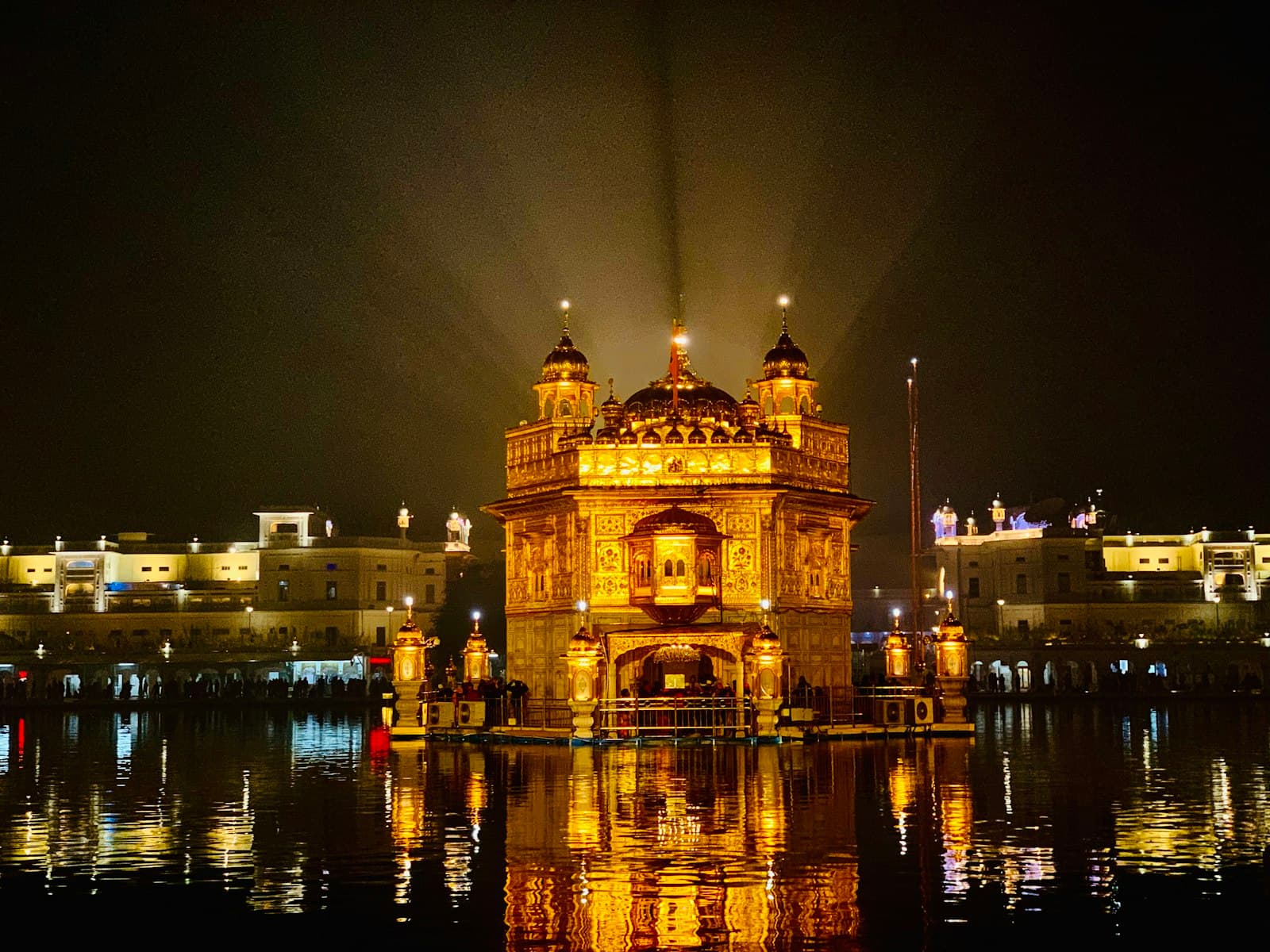
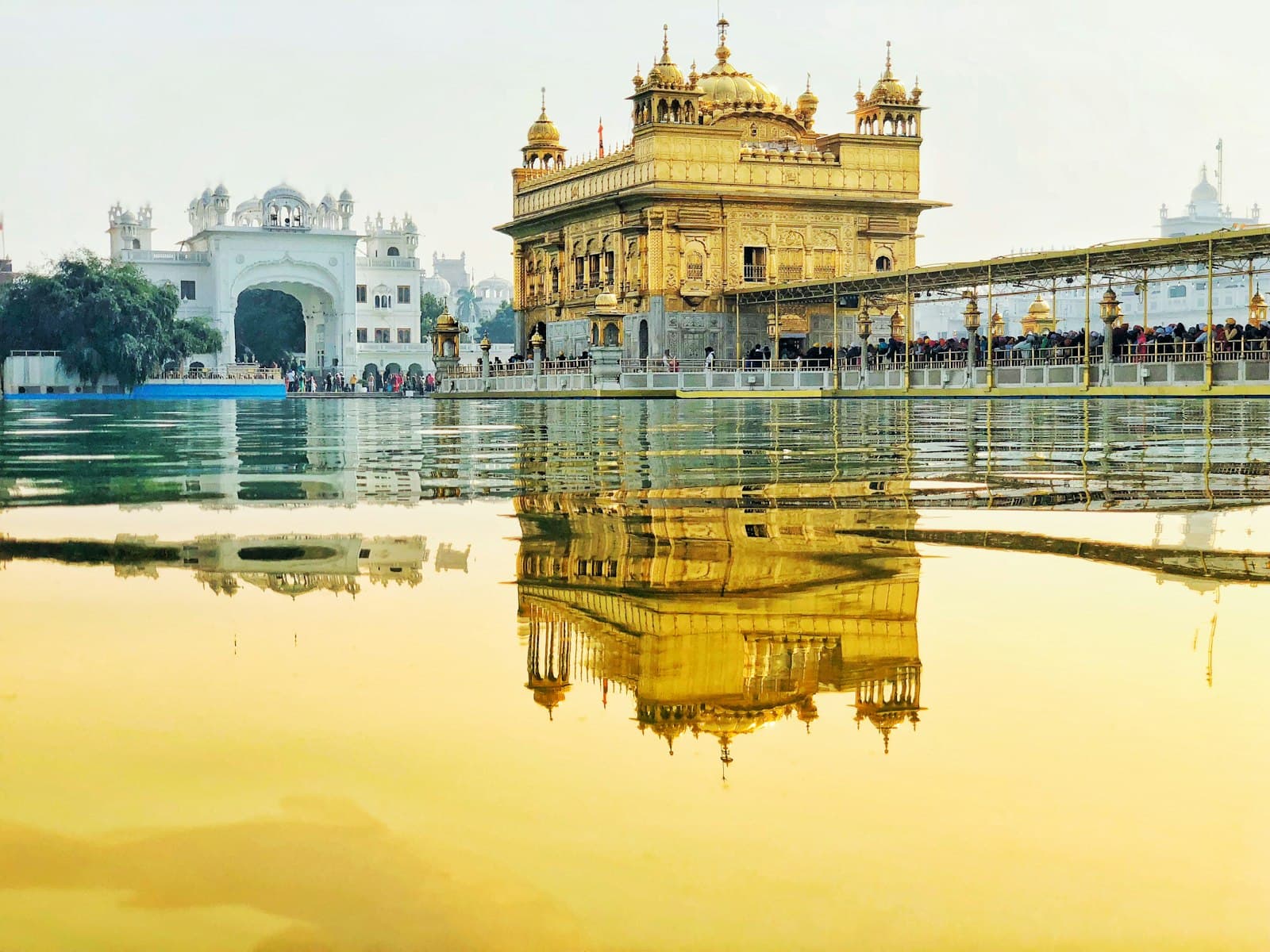
## The Sacred Origins Amritsar was established in 1577 by Sri Guru Ram Das Ji, the fourth Guru of the Sikhs. He initiated the excavation of the 'Amrit Sarovar,' the sacred pool that lends the city its name. To foster a flourishing community, Guru Ram Das Ji invited 52 traders from neighboring regions to settle around the pool, creating the city's initial 32 shops in an area still known as Batisi Hatta. His successor, Guru Arjan Dev Ji, the fifth Sikh Guru, completed the construction of the Harmandir Sahib (now known as the Golden Temple) within the sarovar in 1604. This act solidified Amritsar's position as the spiritual core of Sikhism, with the temple designed to welcome people of all faiths through its four entrances, symbolizing equality.
## Periods of Conflict and Resilience The 17th and 18th centuries saw numerous trials for the Sikh community, with the Harmandir Sahib enduring multiple assaults and desecrations. Despite these adversities, devoted Sikhs consistently rebuilt and restored their sacred shrine, demonstrating unwavering faith and resilience. During this period, Guru Hargobind Ji established the Akal Takht, a seat of temporal authority, adjacent to the Harmandir Sahib, signifying the balance between spiritual and worldly power.
## The Sikh Empire and British Rule Maharaja Ranjit Singh, the founder of the Sikh Empire, unified all Sikh 'Misls' (confederacies) under his command and took full control of Amritsar by 1802. It was during his reign that the Harmandir Sahib received its iconic gold plating in the early 19th century, earning it the popular name 'Golden Temple.' He also fortified Gobindgarh Fort and constructed a substantial wall with 12 gates around the city, of which only the Ram Bagh Gate remains today. In 1849, Amritsar was incorporated into British India. The British era brought the construction of structures like the Town Hall, the railway station, and the Saragarhi Gurdwara Memorial, alongside the redesignation of Ram Bagh Garden as Company Bagh. The Jallianwala Bagh massacre in 1919, where British forces opened fire on peaceful protestors, became a pivotal moment in India's struggle for independence.
## Post-Independence After India gained independence in 1947, Amritsar continued to develop, becoming a significant commercial, cultural, and transportation center in Punjab. The city remains a testament to its profound past, spiritual devotion, and the enduring spirit of its people.
The soul of Amritsar is the Golden Temple (Sri Harmandir Sahib), the holiest shrine in Sikhism. Its gleaming gold-covered structure, set amidst the serene Amrit Sarovar, offers a deeply spiritual and visually captivating experience, particularly at dawn and dusk. Within the complex, explore the Akal Takht, a significant seat of Sikh authority, and observe the remarkable Langar, the community kitchen that provides free meals to all visitors.
Only a short walk from the Golden Temple is Jallianwala Bagh, a public garden and memorial that commemorates the tragic event of 1919. The bullet-scarred walls and the Martyrs' Well serve as poignant reminders of this pivotal moment in Indian history.
For a deeper understanding of the region's past, the Partition Museum offers a moving and insightful look at the human narratives and experiences of the 1947 partition of India. Another historical landmark is Gobindgarh Fort, an 18th-century military fort that has been transformed into a museum and theme park, exhibiting Punjab's heritage through various displays and live performances.
No visit to Amritsar is complete without experiencing the Wagah Border Ceremony, a ceremonial daily retreat held at the India-Pakistan border, about an hour's drive from the city. The atmosphere is electric with patriotic fervor and synchronized drills by the border guards.
The ideal time to visit Amritsar is during the cooler, drier months from October to March. Temperatures during this period generally range from a comfortable 10°C to 25°C, making it suitable for sightseeing and outdoor activities. December and January are the coldest months, with nighttime temperatures potentially dropping to 4°C, and fog can be common, sometimes delaying travel. The summer months, from April to July, are characterized by intense heat, with temperatures often reaching 40°C or higher, making daytime exploration challenging. The monsoon season, from July to September, brings moderate rainfall and increased humidity, which can be less convenient for sightseeing, though it offers lush green surroundings and fewer crowds.
Amritsar benefits from excellent connections by air, road, and rail. Sri Guru Ram Dass Jee International Airport (ATQ) is approximately 11 kilometers from the city center. Within the city, auto-rickshaws and cycle-rickshaws are common and efficient modes of transport, particularly through the narrow pathways of the old city.
When visiting religious sites like the Golden Temple, modest attire is essential: shoulders and legs must be covered, and a head covering is required for all visitors as a sign of respect. Complimentary head coverings are available at the entrance if needed. Shoes and socks must be removed and feet washed before entering the Golden Temple complex.
Amritsar is generally considered a safe city for tourists, including solo and female travelers, especially around popular attractions like the Golden Temple, which maintains 24/7 security. However, standard precautions apply: be mindful of your belongings in crowded areas and utilize trusted transportation at night.
- What is the Golden Temple?
- The Golden Temple, officially known as Sri Harmandir Sahib or Sri Darbar Sahib, is the holiest gurdwara (house of worship) in Sikhism and its most important pilgrimage site. It is recognized for its gold-covered sanctum and is open to people of all faiths.
- Do I need a visa to visit Amritsar, India?
- Most foreign nationals require a visa to enter India. It is advisable to verify the specific visa requirements for your nationality with the Indian embassy or consulate in your country before planning your trip.
- What currency is used in Amritsar?
- The currency used in Amritsar, and throughout India, is the Indian Rupee (INR). It is helpful to carry smaller denominations for local markets and street food vendors.
- What is Amritsar known for besides the Golden Temple?
- Beyond the Golden Temple, Amritsar is known for the Jallianwala Bagh memorial, the patriotic Wagah Border Ceremony, the Partition Museum, and its delightful Punjabi cuisine, including Amritsari Kulcha and Lassi.
- Is Amritsar safe for solo female travelers?
- Amritsar is generally considered safe for solo female travelers, especially in well-lit and busy areas like the Golden Temple precinct. However, it is always wise to take standard precautions, such as using reputable transport at night and being aware of your surroundings.
- What local dishes should I try in Amritsar?
- Amritsar is a culinary delight. Dishes to try include Amritsari Kulcha (stuffed bread served with chickpea curry), creamy Lassi (yogurt drink), Sarson da Saag with Makki di Roti (mustard greens with cornmeal flatbread), and various street foods like Jalebi and Aam Papad.