Cachoeiras de Pithara
Andros, ao contrário de seus vizinhos Cíclades áridos, revela cachoeiras inesperadas. O caminho para Pithara, no entanto, guarda um segredo surpreendente, quase tropical.
História completa desbloqueada no tour
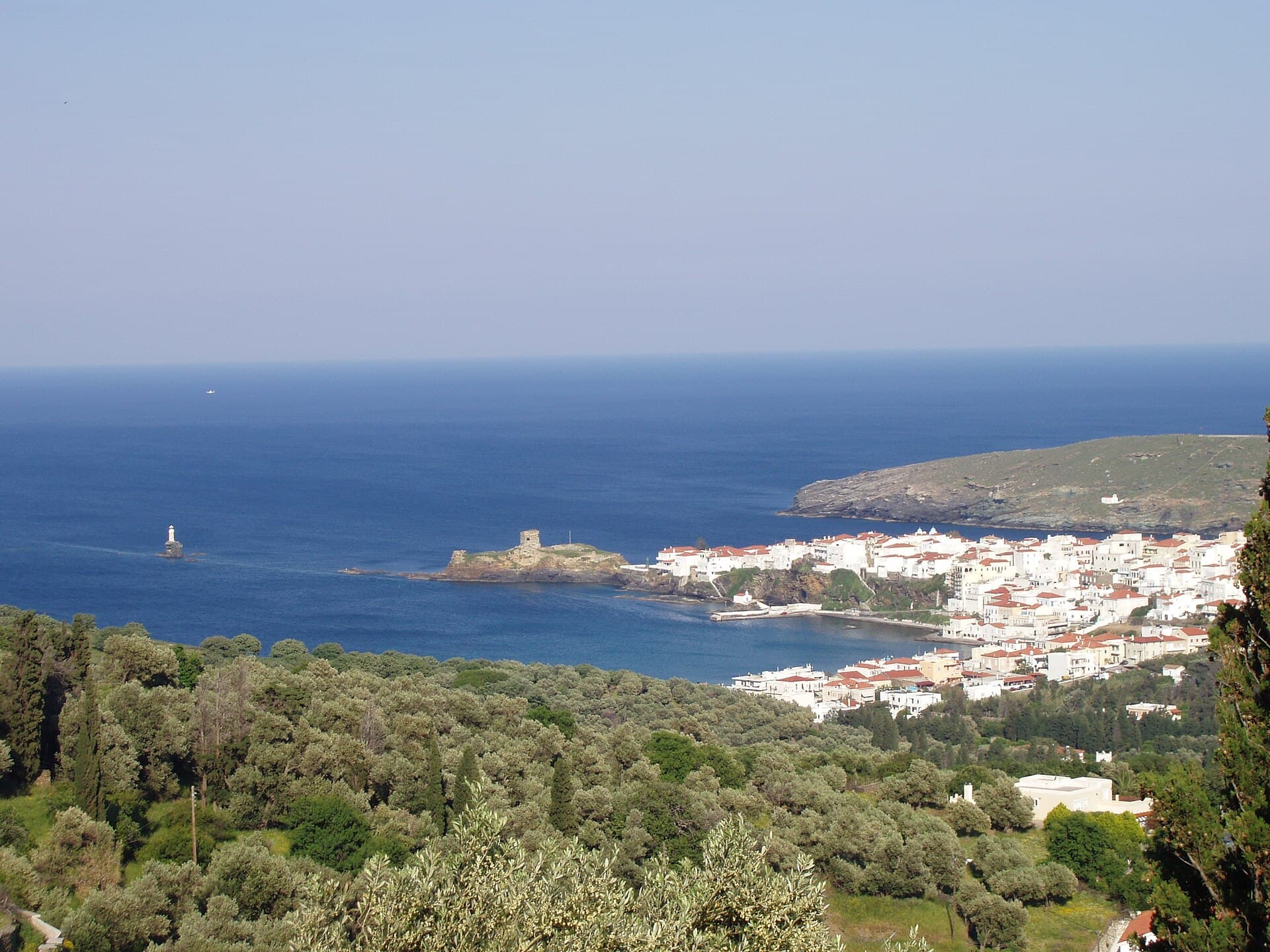 Vassilis Kyrtatas / Public domain, via Wikimedia Commons
Tour de áudio autoguiado por Andros — rota GPS a pé, reprodução offline, narração envolvente em 32 idiomas.
“Andros: Onde vales esmeralda encontram o azul do Egeu, e o dinheiro antigo sussurra sobre o mar.”
Não os postais. As histórias que nem os locais conhecem — sussurradas ao seu ouvido, exatamente onde aconteceram.
Andros, ao contrário de seus vizinhos Cíclades áridos, revela cachoeiras inesperadas. O caminho para Pithara, no entanto, guarda um segredo surpreendente, quase tropical.
A capital de Andros, Chora, se destaca de outras cidades Cíclades com sua arquitetura grandiosa. Estas não são apenas casas bonitas; elas narram um passado poderoso e discreto.
Esta impressionante praia apresenta uma formação rochosa solitária com um nome que se traduz como 'O Salto da Velha Senhora'. A lenda por trás dela é tão dramática quanto a própria paisagem.
Descubra cada segredo de Andros
Cada endereço, cada revelação na íntegra — no seu ouvido, exatamente onde aconteceu.
Você escolhe as suas paragens. Você caminha. A voz revela o que os outros perdem.


O seu tour áudio autoguiado de Andros está pronto — escolha os seus pontos de interesse, selecione o seu idioma e comece no momento em que chegar.
ComprarA Lume inclui um guia de realidade aumentada. Levante o telemóvel: a câmara mostra a rua à sua frente, com uma seta luminosa sobreposta à imagem real que aponta sempre para a sua próxima paragem — sem mapa para decifrar, sem voltas erradas. Como tudo na Lume, funciona totalmente offline.
Andros, a ilha mais ao norte e a segunda maior das Cíclades, oferece uma experiência grega distinta, muitas vezes sentida como um segredo bem guardado entre os atenienses. Ao contrário da paisagem tipicamente seca e rochosa das Cíclades, Andros é notavelmente verde, caracterizada por vales exuberantes, nascentes e até cachoeiras. Este cenário verdejante, combinado com sua profunda história marítima, moldou uma ilha com um caráter único, menos dependente do turismo de massa e mais de um charme tranquilo e autêntico.
A ilha apresenta uma dualidade cativante: o lado oeste mais árido, com praias de areia e os portos de Gavrio e Batsi, e o lado leste fértil e verde, onde a capital, Chora, é encontrada em meio a florestas de pinheiros e ciprestes. Andros convida à exploração além do circuito típico de 'island hopping', com sua extensa rede de trilhas de caminhada, vilarejos tradicionais e uma profundidade cultural que fala de séculos de prosperidade marítima. É um lugar onde você pode descobrir ruínas antigas, nadar em enseadas isoladas e desfrutar da culinária local, tudo isso enquanto experimenta um ritmo de vida mais lento.
A história de Andros remonta ao período Neolítico, com evidências de assentamento humano datando do 4º milênio a.C. em locais como Strofila, considerada o maior assentamento Neolítico preservado no Egeu. Os nomes antigos da ilha, como Hydroussa (significando 'com águas abundantes'), refletem sua exuberância distintiva. A mitologia sugere que a ilha recebeu o nome de Andros, um neto de Apolo, que se tornou seu primeiro colono. Os primeiros habitantes incluíram Pelasgos, Carianos, Fenícios, Cretense e Jônios.
Durante o período Clássico, Paleopolis serviu como capital de Andros, uma era próspera evidenciada por ricas moedas e achados arqueológicos, incluindo a réplica helenística do Hermes de Andros. No século VII a.C., Andros desempenhou um papel na colonização, fundando cidades como Akanthos, Sani e Stagira (local de nascimento de Aristóteles) em Chalkidiki. A ilha caiu sob domínio persa durante as Guerras Persas, mais tarde caindo sob domínio ateniense e, em seguida, macedônio e romano.
Sob o domínio bizantino, especialmente nos séculos XI e XII, Andros floresceu como um centro intelectual e desenvolveu uma significativa indústria da seda, exportando tecidos finos para o Ocidente. Paleopolis viu um declínio, com os residentes se voltando para a agricultura no interior da ilha. Após um período de domínio veneziano, Andros caiu sob o domínio otomano em 1566, desfrutando de um status privilegiado que fomentou a prosperidade econômica e o comércio marítimo. Em 1813, Andros possuía uma frota de 40 navios e cerca de 400 marinheiros.
Andros desempenhou um papel notável na Revolução Grega, com Theophilos Kairis hasteando a bandeira da revolução em 1821. A poderosa indústria naval da ilha continuou a prosperar, com armadores investindo cedo na navegação a vapor. Em 1939, Andros ocupava o segundo lugar em registros de navios, atrás apenas de Pireu, um testemunho de seu legado marítimo duradouro. Essa história de riqueza e autossuficiência permitiu que Andros mantivesse seu caráter autêntico, com um foco em turismo sustentável e voltado para a natureza emergindo mais recentemente.
Comece sua exploração em Chora, a capital da ilha, distinguida por suas mansões neoclássicas, ruas pavimentadas com mármore e a icônica Praça do Marinheiro Desconhecido, oferecendo vistas do mar e das ruínas de um castelo veneziano do século XIII. Visite o Farol de Tourlitis, dramaticamente erguido do mar, e a Igreja de Panagia Thalassini. Chora também abriga o Museu de Arte Contemporânea, o Museu Arqueológico e o Museu Marítimo, exibindo a profunda herança cultural e marítima da ilha.
Além de Chora, descubra as maravilhas naturais da ilha. Procure as Cachoeiras de Pithara, perto de Apikia, um oásis verde surpreendente. Explore a Caverna Foros na vila de Aladinos, acessível por uma ponte arqueada do século XVII e que requer um tour guiado. Andros é um paraíso para caminhantes, com mais de 300 km de antigas trilhas de caminhada, muitas das quais bem conservadas e certificadas, conectando vilarejos, sítios antigos e praias. Considere um passeio de barco para chegar a praias isoladas como Achla, que são frequentemente mais fáceis de acessar por mar. Não perca os charmosos vilarejos de Menites, conhecidos por suas nascentes e plátanos, e Stenies, com suas impressionantes mansões neoclássicas, outrora lar de prósperos armadores.
As melhores épocas para visitar Andros são durante a primavera (abril a junho) e o outono (setembro a outubro). Durante essas temporadas intermediárias, o clima é agradavelmente ameno, as flores silvestres desabrocham e as paisagens da ilha são particularmente verdejantes. As multidões são mínimas, tornando-a ideal para caminhadas e exploração sem a correria do pico do verão. Julho e agosto são os meses mais quentes, perfeitos para nadar e curtir cenas de praia animadas, embora os locais populares possam estar mais movimentados com famílias gregas. O inverno (novembro a março) oferece solidão, mas muitas instalações turísticas podem estar fechadas.
Andros é acessível apenas por balsa. A rota mais comum é de Rafina, o porto menor de Atenas, com viagens durando aproximadamente duas horas. Balsas também conectam Andros a outras ilhas Cíclades como Tinos e Syros. Embora ônibus públicos conectem as principais cidades como Gavrio, Batsi e Chora, alugar um carro é altamente recomendado para explorar as diversas paisagens da ilha e alcançar áreas mais isoladas e pontos de partida de trilhas. Esteja ciente de que algumas estradas para praias podem ser de terra e íngremes, tornando um aluguel de 4x4 benéfico.
As opções de acomodação variam, sem grandes redes de hotéis, oferecendo uma experiência mais autêntica. Muitas tavernas fora das principais áreas turísticas oferecem melhores preços e culinária mais tradicional. Os costumes de gorjetas são semelhantes ao resto da Grécia. Vale a pena notar que, devido a um sistema de esgoto mais antigo, é prática comum em muitas ilhas gregas, incluindo Andros, não jogar papel higiênico na privada.
Andros — coreano, chinês, hebraico e mais 29 idiomas, cada parada narrada por uma voz nativa. A maior variedade de idiomas entre os passeios de áudio autoguiados.
Disponível em: