Santa Catalina Arch
The well-known arch once served a purpose beyond its visual appeal.
Full story unlocks in the tour
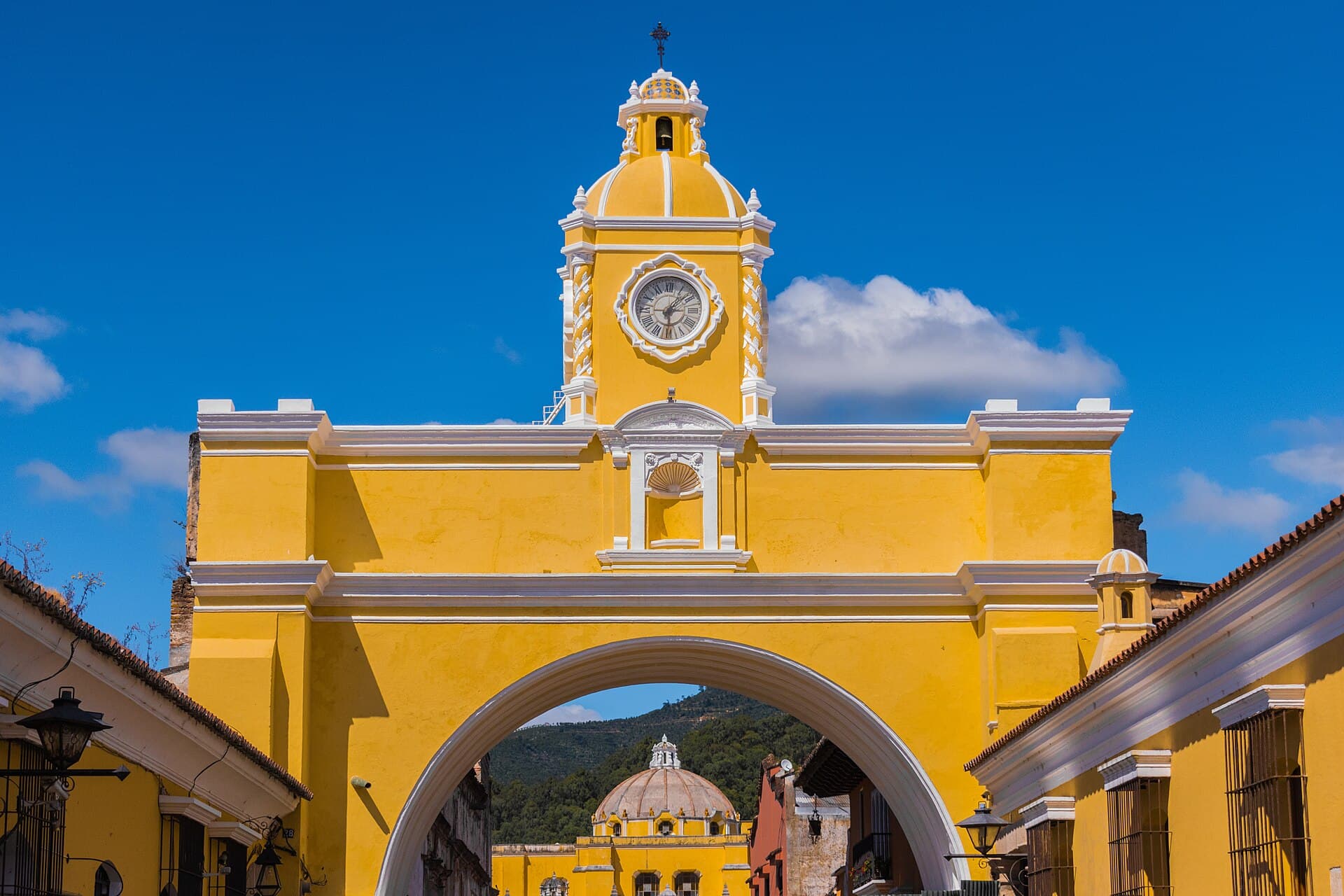 Juan Francisco / CC BY-SA 2.0, via Wikimedia Commons
“Where ancient stones meet the breath of volcanoes.”
Not the postcards. The stories even locals don't know — whispered in your ear, right where they happened.
The well-known arch once served a purpose beyond its visual appeal.
Discreetly located, one of Antigua's most distinctive bars operates without a printed menu.
Beneath the active main square, old stories suggest concealed items.
Discover every secret of Antigua
Every address, every reveal in full — in your ear, right where it happened.
You pick your stops. You walk. The voice reveals what the others miss.
No tours available yet. Check back soon — we're preparing them.
Antigua, Guatemala, is a city where history breathes through every stone path and colonial facade. Surrounded by the grand volcanoes of Agua, Fuego, and Acatenango, this UNESCO World Heritage site offers a compelling blend of natural splendor and architectural scope. Its lively atmosphere, rich cultural fabric, and the constant drama of its volcanic surroundings create a destination that stays in one's thoughts.
Once the capital of the Kingdom of Guatemala, Antigua's enduring allure comes from its beautifully maintained Spanish Baroque architecture and the narratives etched into its resilient structures. From busy marketplaces to tranquil convent ruins, the city provides a passage through time, inviting visitors to explore its many layers of history, savor its culinary offerings, and immerse themselves in its unique fusion of Spanish and Mayan heritage.
## The Conception of a Capital Antigua's beginnings trace to the early 16th century when Spanish conqueror Pedro de Alvarado founded the first capital of Guatemala in 1524. This initial settlement, near the K'aqchiquel Maya kingdom of Iximché, was brief, destroyed by an Indigenous uprising and fire. A second attempt in the Almolonga Valley met a similar outcome in 1541, buried by a powerful volcanic mudflow from Volcán de Agua.
## Santiago de los Caballeros: A Flourishing Center The city was re-established in 1543 in the Panchoy Valley, named Santiago de los Caballeros de Guatemala. This location, among three volcanoes, became the political, economic, and religious core of Central America, its influence extending from Chiapas, Mexico, to Costa Rica. The city thrived, characterized by a grid plan of streets and plazas, and a surge of Baroque architecture in the 1600s, making it one of the most beautiful cities in the New World.
## The Earthquakes and the "Old Guatemala" Despite its prosperity, Santiago de los Caballeros was constructed in a seismic zone and repeatedly challenged by natural disasters. Earthquakes in 1717, 1751, and most devastatingly, the Santa Marta earthquakes of 1773, reduced much of the city to rubble. By 1776, the Spanish Crown ordered the capital moved to a new, safer location, which is now Guatemala City. The largely deserted city was then referred to as Antigua Guatemala, meaning "Old Guatemala."
## Revival and World Heritage For decades, Antigua remained a city of striking ruins. However, in the late 19th and 20th centuries, artists, intellectuals, and travelers were drawn to its romantic appeal. In 1979, UNESCO acknowledged its importance, designating Antigua a World Heritage Site, preserving its legacy as a living museum of Spanish Baroque architecture and a cultural treasure. Today, Antigua is a lively city, honoring its past while embracing modernity, a testament to its enduring strength.
Begin your journey at Parque Central, the core of Antigua, where you can observe daily life and discover cafes, markets, and historic structures like the Royal Palace of the Captains General and San José Cathedral. A short walk leads to the well-known Santa Catalina Arch, a bright yellow landmark that perfectly frames Volcán de Agua on a clear day. For expansive city views, ascend to Cerro de la Cruz, offering a broad perspective of Antigua's red rooftops and the surrounding volcanoes.
Antigua is dotted with impressive remnants, many of which are open for exploration. Be sure to visit the Convento Capuchinas and La Recolección, providing glimpses into the city's past grandeur. The Iglesia de La Merced, with its distinct yellow facade, allows visitors to walk on its rooftop for a unique view of the city and the Santa Catalina Arch. For a deeper understanding of history and art, Hotel Casa Santo Domingo is built within the remnants of a former convent, housing several museums and art exhibits. Beyond the city, consider a day trip to Pacaya Volcano for a hike across dried lava fields and steam vents, or an overnight trek to Acatenango Volcano for unparalleled views of erupting Fuego.
The ideal time to visit Antigua is during the dry season, which extends from November to April. During these months, expect sunny days and clear skies, perfect for exploring the city and undertaking volcano hikes. While temperatures remain agreeable year-round, ranging from 22ºC to 25ºC (71ºF to 77ºF), evenings can be cooler, so packing layers is advisable. The rainy season, from May to October, brings afternoon showers, but mornings are often bright, and the landscapes appear verdant. Consider visiting in January or February for fewer crowds, or during Semana Santa (Holy Week) in March or April for colorful religious celebrations, though anticipate higher prices and larger gatherings.
Antigua is a city easily explored on foot, with its grid layout and stone paths making navigation simple. For longer distances, Uber and local taxis are readily available and generally secure. The local currency is the Guatemalan quetzal (Q), and while some tourist-focused establishments might accept US dollars (in perfect condition), it is best to use quetzales. Spanish is the official language, though many individuals in the tourism industry also speak English, and various Mayan languages are spoken by locals. Wi-Fi is widely accessible in accommodations. Antigua is generally considered secure for visitors, but it is always wise to exercise caution, especially after dark; remain in well-lit areas and consider a taxi if traveling alone at night.
When preparing your luggage, remember that while days are warm, evenings can be cool due to the city's elevation, so layers are essential. Comfortable walking shoes are a necessity for navigating the stone paths.