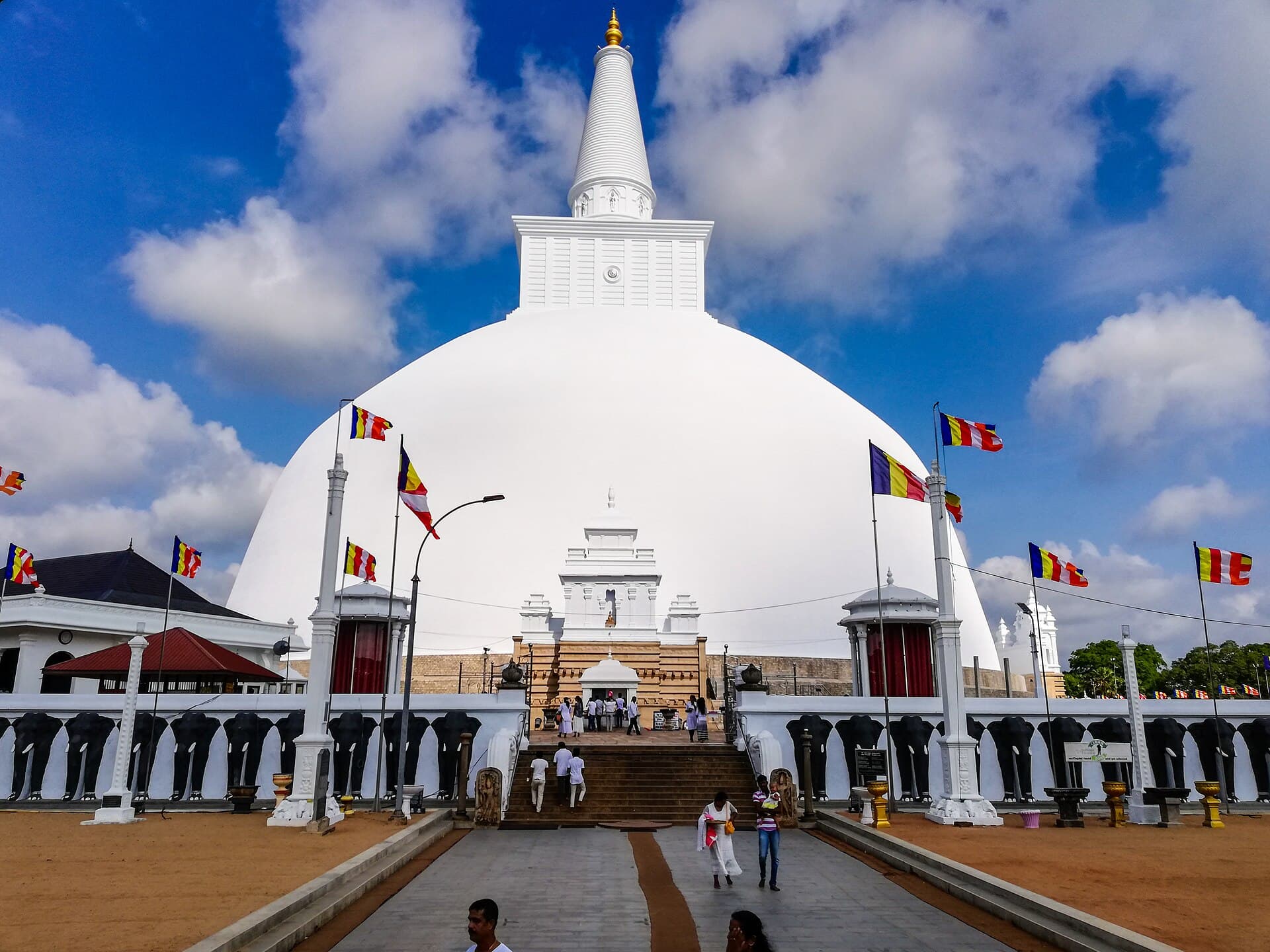
Anuradhapura, Sri LankaThisaru Tharuka / CC BY-SA 4.0, via Wikimedia Commons
LK

Anuradhapura

Where ancient stones recount eras of kings and spiritual awakening.

The secrets of Anuradhapura

Anuradhapura, as no one tells it.

Not the postcards. The stories even locals don't know — whispered in your ear, right where they happened.

3 secrets below. Many more wait inside the tour.
Kuttam Pokuna (Twin Ponds)

These ancient bathing pools, designed for monks, exemplify sophisticated hydraulic engineering, yet they held a discovery beyond their intricate water system.

Full story unlocks in the tour
Jaya Sri Maha Bodhi

This revered fig tree is considered the oldest historically documented tree globally, but its journey to Sri Lanka was a significant undertaking, not a simple relocation.

Full story unlocks in the tour
Abhayagiri Vihara

Once a sprawling monastic complex that rivaled the king's authority, the Abhayagiri stupa is believed to mark a location of profound spiritual resonance.

Full story unlocks in the tour
The full tour

Discover every secret of Anuradhapura

Every address, every reveal in full — in your ear, right where it happened.

Get the key to Anuradhapura

You pick your stops. You walk. The voice reveals what the others miss.

Choose your time

How long do you have in Anuradhapura?

No tours available yet. Check back soon — we're preparing them.

About Anuradhapura

The story of Anuradhapura

Anuradhapura, a UNESCO World Heritage Site in Sri Lanka's North Central Province, is a city where the echoes of the past are profoundly felt. It served as the island's first ancient capital, flourishing for over 1,300 years from the 4th century BCE until the 11th century CE. This expansive archaeological park, spanning over 40 square kilometers, offers a deep immersion into the heart of ancient Sinhalese civilization and the enduring legacy of Buddhism.

The city's terrain is punctuated by colossal stupas, intricate sculptures, ancient palaces, and tranquil monasteries, many of which remain active places of worship today. Exploring Anuradhapura is an experience that transports visitors to a period when monarchs reigned, and spiritual devotion shaped an entire society. The sheer scale and historical depth of these remnants make it one of South Asia's most evocative destinations.

History

The Origins of Sinhalese Civilization

Anuradhapura's beginnings trace back to the 5th century BCE when it was founded and later meticulously planned by King Pandukabhaya in 377 BCE, becoming Sri Lanka's inaugural capital city. For over a millennium, 113 successive kings and four queens governed from Anuradhapura, presiding over a period of significant cultural and architectural advancement. The city developed sophisticated infrastructure, including elaborate irrigation systems, housing, and public works.

The Arrival and Flourishing of Buddhism

In the 3rd century BCE, a pivotal transformation occurred with the introduction of Buddhism to Sri Lanka during the reign of King Devanampiya Tissa. This new faith profoundly influenced Anuradhapura's culture, laws, and governance. The city evolved into a major center of Theravada Buddhism, attracting thousands of monks and pilgrims. The revered Jaya Sri Maha Bodhi, a sapling from the tree under which the Buddha attained enlightenment, was planted here around 245 BCE, further solidifying Anuradhapura's spiritual importance.

Architectural Grandeur and Engineering Feats

The Anuradhapura period witnessed the construction of monumental stupas, some of the largest brick structures in the ancient world, rivaled only by the Egyptian pyramids in sheer mass. Kings like Dutthagamani (161–137 BCE) were instrumental in unifying the country and establishing Buddhism, building impressive structures such as the Ruwanwelisaya and Lovamahapaya. The city's advanced hydraulic engineering is evident in the numerous reservoirs and bathing ponds, like the Kuttam Pokuna, which facilitated daily life and religious practices.

Decline and Rediscovery

Anuradhapura endured numerous invasions from South India throughout its existence. The city was sacked in 993 CE by Chola Emperor Rajaraja I of India, leading to its abandonment and the relocation of the capital to Polonnaruwa. For nearly a thousand years, the once-flourishing metropolis lay deserted, gradually reabsorbed by the jungle. It was not until the British rediscovered it in 1870 that repopulation and restoration efforts commenced, culminating in its designation as a UNESCO World Heritage Site in 1980. Today, Anuradhapura stands as a testament to a glorious past, a living museum that continues to draw pilgrims and history enthusiasts alike.

What to see

Anuradhapura's ancient city is an expansive landscape of spiritual and architectural marvels. The Jaya Sri Maha Bodhi is a sacred fig tree, believed to be the oldest historically documented tree in the world, grown from a cutting of the original Bodhi tree in India. Nearby, the Ruwanwelisaya Stupa is a massive white dome, one of the largest stupas in Anuradhapura, once adorned with thousands of elephant sculptures at its base. The Jetavanarama Stupa was formerly the tallest brick structure globally, second only to Egypt's Great Pyramids in sheer mass. The Abhayagiri Vihara complex, with its imposing stupa, was once a powerful monastery that housed thousands of monks. Do not overlook the Kuttam Pokuna (Twin Ponds), an impressive example of ancient hydraulic engineering, believed to have served as bathing pools for monks. The Thuparamaya Stupa holds the distinction of being the first stupa constructed in Sri Lanka after the arrival of Buddhism, said to enshrine the Buddha's collarbone relic. For a deeper understanding of the ancient city, the Anuradhapura Archaeological Museum displays various artifacts, carvings, and daily essentials from ancient Sri Lanka. A short drive away, Mihintale is a significant pilgrimage site, believed to be the birthplace of Buddhism in Sri Lanka, offering expansive views after a climb of 1,840 steps.

When to visit

Anuradhapura experiences warm temperatures throughout the year. The most comfortable time for a visit is during the dry season, from December to April, when mornings are clearer and drier. The shoulder seasons of February to April and October to November also offer pleasant weather with fewer visitors, though occasional rainfall may occur. May to September is generally warm and sunny with minimal rainfall, making it suitable for exploration, but it can also be the busiest period. To avoid the intense midday heat, plan your sightseeing for the early morning (around 6 am) or late afternoon (after 4 pm).

Practical

The ancient city of Anuradhapura is expansive, covering approximately 40 square kilometers, making walking the entire site impractical due to the heat and distances. The most recommended ways to explore are by bicycle (many guesthouses offer rentals for 500-1000 LKR per day) or by tuk-tuk with a driver (a half or full-day tour typically costs 2,000-5,000 LKR). Some hotels also provide private car tours.

Entry to the main archaeological complex for foreign adults costs around $25-$35 USD. This ticket covers many major sites, but some, like the Jaya Sri Maha Bodhi and Isurumuniya, require separate, smaller fees. Ticket counters typically operate from 7:30 am to 5:30 pm.

Dress modestly at all sacred sites: shoulders and knees must be covered. It is advisable to wear shoes that are easy to remove, as you will need to take them off before entering temples and stupas. Bringing socks is highly recommended to protect your feet from the scorching hot stone pavements, especially during midday. Carry plenty of water, a hat, and sunscreen to combat the intense heat. Monkeys are present and can be bold, so avoid eating near them or carrying food in open bags.

Good to know
What is the entry fee for Anuradhapura?
The entrance fee for foreign adults to the main archaeological complex is typically between $25-$35 USD. Some individual sites like the Jaya Sri Maha Bodhi and Isurumuniya may require separate, smaller tickets.
What is the dress code for visiting Anuradhapura?
When visiting sacred sites in Anuradhapura, both men and women must dress modestly, ensuring shoulders and knees are covered. It is also customary to remove shoes and hats before entering religious premises.
How do I get around Anuradhapura's ancient city?
The ancient city is sprawling, so walking is not feasible. The best ways to get around are by hiring a tuk-tuk with a driver for a half or full-day tour, or by renting a bicycle.
What are the opening hours for the sites in Anuradhapura?
The archaeological zones generally operate during daylight hours, with checkpoints active roughly 6 am–6 pm. Many stupas and living shrines are places of daily worship and remain accessible earlier or later for devotees. Ticket counters are typically open from 7:30 am to 5:30 pm.
Is it necessary to hire a guide in Anuradhapura?
While not strictly necessary, hiring a licensed guide or joining a pre-booked tour (either cycling or by private driver/tuk-tuk) is highly recommended. Anuradhapura is vast, and a guide can help you grasp its spiritual and historical depth.
What should I bring for a visit to Anuradhapura?
Bring plenty of water, a hat, and sunscreen to protect against the intense heat. Wear light, breathable clothing, and bring socks to protect your feet from the hot stone pavements when shoes are removed at religious sites.
Anuradhapura
From€9.00
No booking · activate anytime · 12h to walk it
Get the key to Anuradhapura