Imagine a natural land bridge, not built by human hands, separating two vast lakes with strikingly different colors.
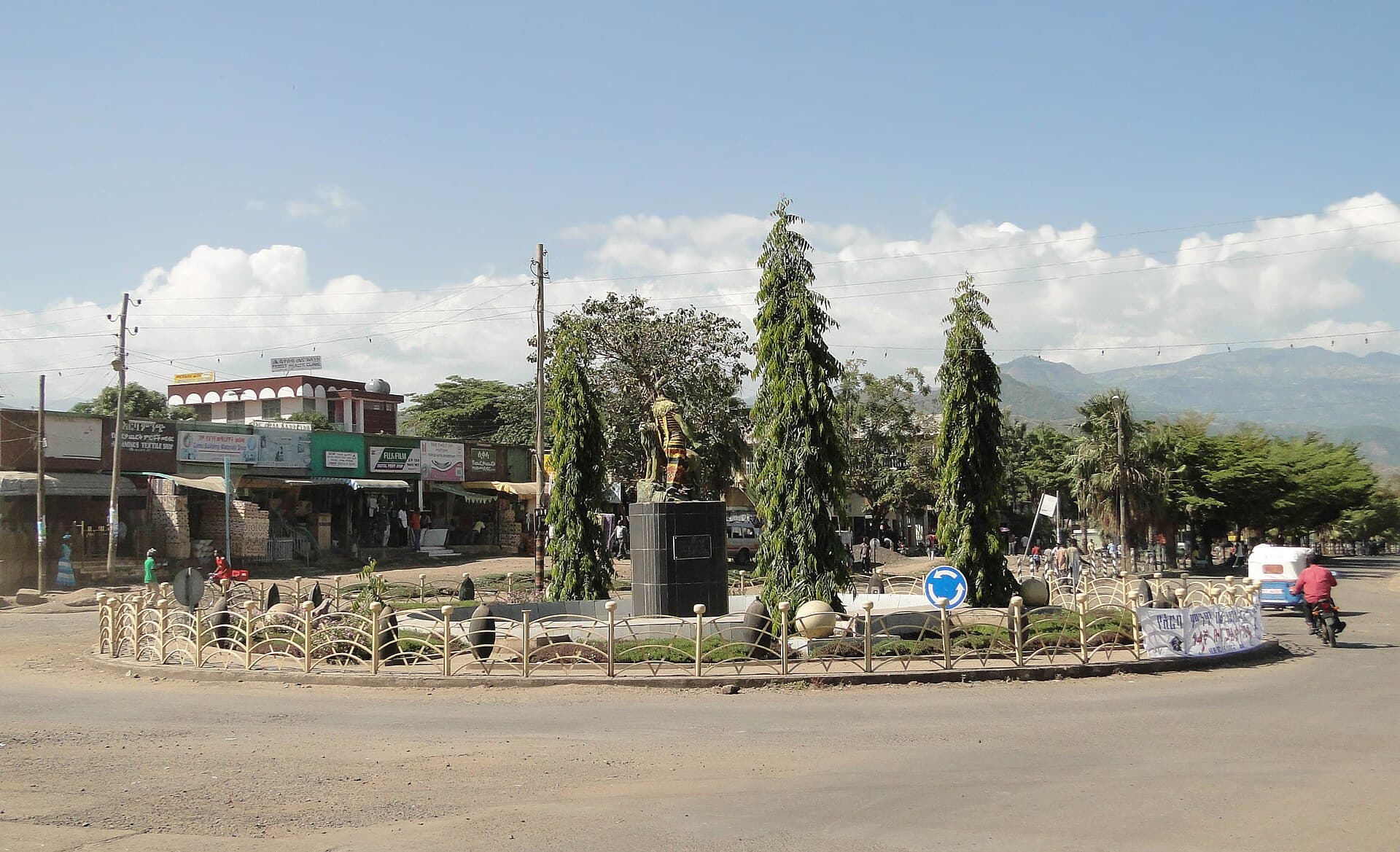
Bernard Gagnon / CC BY-SA 3.0, via Wikimedia CommonsArba Minch
“Where two lakes meet, and forty springs murmur ancient stories.”
Arba Minch, as no one tells it.
Not the postcards. The stories even locals don't know — whispered in your ear, right where they happened.
The city's very name, Arba Minch, translates to a surprising number of springs, but the reality is even more abundant.
In the highlands above Arba Minch, a community builds houses that can grow taller as needed, and even be moved.
Discover every secret of Arba Minch
Every address, every reveal in full — in your ear, right where it happened.
You pick your stops. You walk. The voice reveals what the others miss.
How long do you have in Arba Minch?
No tours available yet. Check back soon — we're preparing them.
The story of Arba Minch
Arba Minch, meaning 'Forty Springs' in Amharic, is a captivating city in southern Ethiopia. It rests at an elevation of 1285 meters above sea level, a vital hub in the Gamo Zone of the South Ethiopia Regional State, approximately 500 kilometers south of Addis Ababa. The city's identity is intrinsically linked to its abundant natural springs, which nourish a verdant groundwater forest and contribute to the region's fertile landscape.
Arba Minch is uniquely situated between two of Ethiopia's largest Rift Valley lakes, Lake Abaya and Lake Chamo. These twin lakes are separated by a narrow, mountainous land formation known as the 'Bridge of God,' offering expansive views that define the city's scenic allure. Beyond its natural splendor, Arba Minch acts as a gateway to diverse cultural experiences and wildlife adventures, making it a significant destination for eco-tourism in Ethiopia.
The Genesis of Forty Springs
Unlike many ancient settlements in Ethiopia, Arba Minch is a comparatively young city, with its origins tracing back to the early 1960s. The strategic decision to establish Arba Minch as a modern town was made by Fitawrari Aemeroselasie Abebe, then governor of the Gamo-Gofa province. He moved the administrative center from the mountain settlement of Chencha to the lowlands, near the plentiful springs, a site locally known as 'Ganta Garo,' meaning a land of abundance in the Gamo Ganta dere language.
Early Development and Growth
In 1962, Arba Minch officially became the administrative center of the Gamo-Gofa province. Its rapid development was fueled by its unique geographical position and the promise of recreational areas. Infrastructure improvements, such as new roads linking the town to Soddo, made Arba Minch a day's journey from the capital, Addis Ababa, and a telephone line was established in 1967. The city's layout historically comprised two distinct parts: the administrative Shecha on the highlands and the commercial-residential Sikela in the lowlands, connected by a paved road.
Industrialization and Eco-Tourism
The establishment of Nechisar National Park in 1974, bordering the city limits, solidified Arba Minch's status as a capital of eco-tourism. The city's development became intertwined with the park and the two lakes, adapting its urban infrastructure to cater to travelers seeking safaris and boat excursions. A significant shift towards industrialization occurred with the opening of a large textile factory in 1992, which not only created jobs but also stimulated cotton cultivation in the surrounding areas.
Educational Hub and Modern Expansion
Arba Minch's transformation into an educational center began with the opening of the Water Technology Institute in 1986, the region's first major educational institution. This was followed by the establishment of Arba Minch University in 2004, known for its research in hydrology and sustainable development. In recent years, Arba Minch has experienced accelerated urban expansion, driven by national urbanization strategies, with investments in infrastructure to improve living conditions and generate employment. Today, Arba Minch is recognized as one of southern Ethiopia's most dynamic and fast-growing towns, balancing traditional life with modern development.
Arba Minch offers a blend of natural wonders and cultural encounters. A boat trip on Lake Chamo is a rewarding experience, allowing you to witness the 'crocodile market' where numerous Nile crocodiles gather on sandbanks, alongside hippos and diverse bird species. The forty springs, the city's namesake, are a series of crystal-clear springs at the base of the Rift Valley escarpment, feeding a lush groundwater forest where you can spot monkeys and various birdlife.
Nechisar National Park, spanning the 'Bridge of God' between Lake Abaya and Lake Chamo, offers diverse habitats from savannah to riparian forest. It is home to zebras, gazelles, and a variety of bird species, making it ideal for nature trails and wildlife viewing. A visit to Dorze Village, located in the highlands, provides a glimpse into the unique culture of the Dorze people, known for their towering beehive-shaped bamboo houses and intricate weaving skills. You can experience a traditional coffee ceremony and learn about their way of life.
Beyond these, consider exploring the local markets for traditional crafts and Ethiopian cuisine. The Konso Cultural Landscape, a UNESCO World Heritage Site with its ancient terraced farming and unique 'waga' funerary sculptures, is also accessible from Arba Minch.
The best time to visit Arba Minch for warm-weather activities and general outdoor tourism is from mid-June to early October and from early November to late January, with a peak in the first week of September. The dry season, from October to March, offers pleasant temperatures and clearer skies, making it ideal for cultural sites and wildlife viewing. While the wet season runs from April to October, with higher precipitation from April to May and again in October, rains are often short-lived and typically occur in the afternoon or evening, so they are unlikely to disrupt your plans significantly. Temperatures generally remain comfortable throughout the year, ranging from 18°C to 22°C on average, with February and March being the warmest months.
Arba Minch is approximately 500 kilometers south of Addis Ababa. The most convenient way to reach the city is by air, with regular domestic flights to Arba Minch Airport (AMH), which is close to residential areas. Alternatively, bus services connect Arba Minch with other key southern hubs like Hawassa and Jinka, offering a scenic journey through the Great Rift Valley. For getting around within the city, 'Bajajs' (three-wheeled auto-rickshaws) are a swift and affordable option; always agree on the fare beforehand as meters are not used. Horse-drawn carts also provide a more traditional, leisurely mode of transport for longer distances.
While generally considered a safe city, petty crime like pickpocketing can occur, so remain vigilant and secure valuables. It is advisable to carry sufficient Ethiopian Birr, as bank cards are primarily accepted only in major hotels. When visiting local communities or religious sites, dress modestly and ask permission before taking photographs.
- What does 'Arba Minch' mean?
- 'Arba Minch' translates to 'Forty Springs' in Amharic, referring to the numerous natural springs in the area.
- What are the main attractions in Arba Minch?
- Key attractions include Nechisar National Park, boat trips on Lake Chamo to see crocodiles and hippos at the 'crocodile market,' the Forty Springs themselves, and cultural visits to Dorze Village.
- How do I get to Arba Minch?
- You can fly directly to Arba Minch Airport (AMH) from Addis Ababa, or travel by bus from other southern cities like Hawassa or Jinka.
- Is Arba Minch safe for tourists?
- Arba Minch is generally considered to have a moderate safety level, with friendly locals. It is advisable to be aware of your surroundings and secure valuables, particularly at night, as petty crime can occur.
- What is the 'Bridge of God'?
- The 'Bridge of God' is a natural land bridge that separates Lake Abaya and Lake Chamo within Nechisar National Park, offering spectacular views.
- What is the local currency and should I carry cash?
- The official currency is the Ethiopian Birr. It is highly recommended to carry a sufficient amount of cash, as bank cards are primarily accepted only in major hotels.