Mosteiro de Santa Catalina
Por séculos, esta 'cidade dentro de uma cidade' existiu como um mundo vibrante e autônomo. O que aconteceu quando o exterior finalmente olhou para dentro?
História completa desbloqueada no tour
 Hans Brian Brandsberg Berg / CC BY 2.0, via Wikimedia Commons
Tour de áudio autoguiado por Arequipa — rota GPS a pé, reprodução offline, narração envolvente em 32 idiomas.
“A Cidade Branca, esculpida por vulcões e moldada por um espírito independente.”
Não os postais. As histórias que nem os locais conhecem — sussurradas ao seu ouvido, exatamente onde aconteceram.
Por séculos, esta 'cidade dentro de uma cidade' existiu como um mundo vibrante e autônomo. O que aconteceu quando o exterior finalmente olhou para dentro?
Esta grandiosa catedral guarda um segredo de uma terra distante, delicadamente equilibrado.
O vulcão icônico de Arequipa é mais do que um cenário pitoresco; ele guarda um segredo antigo e arrepiante.
Descubra cada segredo de Arequipa
Cada endereço, cada revelação na íntegra — no seu ouvido, exatamente onde aconteceu.
Você escolhe as suas paragens. Você caminha. A voz revela o que os outros perdem.


O seu tour áudio autoguiado de Arequipa está pronto — escolha os seus pontos de interesse, selecione o seu idioma e comece no momento em que chegar.
ComprarA Lume inclui um guia de realidade aumentada. Levante o telemóvel: a câmara mostra a rua à sua frente, com uma seta luminosa sobreposta à imagem real que aponta sempre para a sua próxima paragem — sem mapa para decifrar, sem voltas erradas. Como tudo na Lume, funciona totalmente offline.
Arequipa, frequentemente chamada de "Cidade Branca" (Ciudad Blanca), é a segunda maior área urbana do Peru, situada em um cenário dramático de três vulcões: o ativo El Misti e os extintos Chachani e Pichu Pichu. Sua arquitetura colonial distinta, feita de uma pedra vulcânica branca chamada sillar, confere à cidade uma aparência luminosa, especialmente sob o sol abundante que recebe quase o ano todo. Essa mistura única de grandeza natural e elegância arquitetônica rendeu ao seu centro histórico o status de Patrimônio Mundial da UNESCO.
Além de seus visuais marcantes, Arequipa oferece uma profunda teia cultural, uma cena culinária celebrada e um ritmo mais relaxado do que alguns dos outros grandes destinos do Peru. Serve como porta de entrada para aventuras nas paisagens andinas circundantes, incluindo o Cânion do Colca, um dos cânions mais profundos do mundo. Seja atraído pela história, gastronomia ou exploração ao ar livre, Arequipa proporciona uma experiência peruana única e gratificante.
A região de Arequipa tem uma história que remonta a 7000 a.C., com evidências de presença humana encontradas em pinturas rupestres antigas. Antes da chegada dos espanhóis, culturas indígenas como os Collaguas e Cabanas desenvolveram agricultura em terraços sofisticada em áreas como o Vale do Colca. A lendária tradução do nome de Arequipa data do quarto Inca, Mayta Capac, que, a pedido de seus soldados para permanecerem no fértil vale do Rio Chili, respondeu em quíchua: "Ari, quepay" – "Sim, permaneçam."
A cidade moderna de Arequipa foi oficialmente fundada pelos espanhóis em 15 de agosto de 1540, por Garcí Manuel de Carbajal, um emissário de Francisco Pizarro. Inicialmente, foi nomeada "Villa Hermosa de Nuestra Señora de la Asunta de Arequipa" e, um ano depois, por decreto real de Carlos V, tornou-se a "Cidade de Arequipa". Ao contrário de outras cidades peruanas, Arequipa manteve uma forte lealdade à Coroa Espanhola durante todo o período vice-real, ganhando o título de "Mais Fiel" em 1805. Essa lealdade foi reforçada por uma população predominantemente espanhola e uma estrutura social dominada por espanhóis.
O desenvolvimento colonial viu o uso generalizado do sillar, uma pedra vulcânica branca ou creme proveniente de pedreiras próximas, na construção de igrejas, mansões e outros edifícios significativos. Esse material não apenas definiu a estética de Arequipa, levando ao seu apelido de "Cidade Branca", mas também proporcionou propriedades térmicas, mantendo os edifícios frescos durante o dia e quentes à noite. O estilo arquitetônico da cidade, uma fusão do Barroco espanhol e do artesanato indígena, até gerou sua própria escola de arte, a "Escola de Arequipa". Arequipa tem uma longa história de atividade sísmica, com terremotos significativos em 1600, 1868 e 2001, que levaram a um estilo de construção robusto e espesso e a uma ornamentação profundamente gravada e luxuosa conhecida como churrigueresco.
Durante a era republicana, Arequipa desempenhou um papel crucial no cenário político e cultural do Peru, muitas vezes agindo como um contrapeso ao poder centralizador de Lima e defendendo os interesses econômicos do sul do Peru. Foi até declarada capital do Peru brevemente em 1882 durante a guerra com o Chile. Hoje, Arequipa continua sendo um importante centro econômico e industrial, particularmente conhecida pelo comércio de lã de camelídeos.
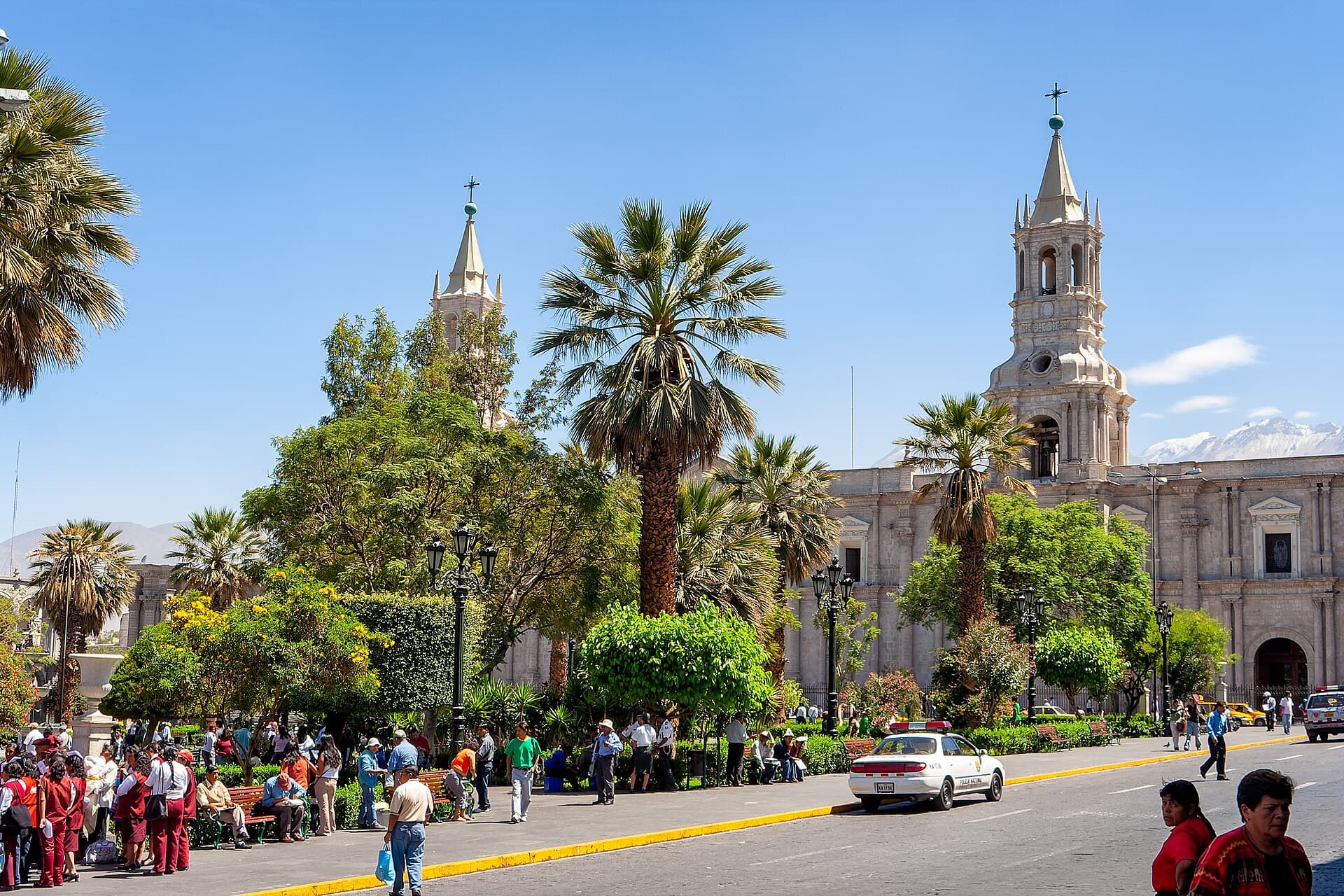
O centro histórico de Arequipa, Patrimônio Mundial da UNESCO, convida à exploração a pé. A Plaza de Armas é o coração da cidade, emoldurada por edifícios coloniais feitos de pedra sillar branca e apresentando uma fonte de bronze com o mensageiro Inca, Tuturuttu. A Basílica Catedral de Arequipa, reconstruída várias vezes devido a terremotos, abrange todo o comprimento da praça.
A uma curta caminhada fica o Mosteiro de Santa Catalina, um convento expansivo do século XVI que parece uma cidade dentro de uma cidade, com paredes azuis e laranjas vibrantes, ruas estreitas e pátios. Para vistas panorâmicas da cidade com os vulcões ao fundo, vá ao Mirador de Yanahuara, onde elegantes arcos de sillar são inscritos com prosa e poesia.
O Museo Santuarios Andinos abriga Juanita, a Donzela de Gelo Inca, uma múmia notavelmente preservada, acreditada como uma oferenda sacrificial ao Monte Ampato há mais de 500 anos. Para entender a arquitetura única da cidade, faça um passeio pela Ruta del Sillar até as pedreiras de Añashuayco, onde você pode ver como a pedra vulcânica ainda é extraída e esculpida à mão. Para provar a vida local, passeie pelo Mercado de San Camilo, um movimentado mercado de alimentos que oferece produtos frescos e lanches locais.
Arequipa desfruta de um clima agradável com cerca de 300 dias de sol anualmente. A melhor época para visitar é durante a estação seca, de abril a novembro. Durante esses meses, espere céus ensolarados, temperaturas amenas durante o dia, com média de 20-23°C (68-73°F), e noites frescas. Este período também oferece vistas claras dos vulcões circundantes e é ideal para visitar o Cânion do Colca, pois os avistamentos de condores são mais frequentes. A estação chuvosa, de dezembro a março, traz mais nuvens e chuvas ocasionais à tarde, com fevereiro apresentando chuvas mais fortes.
Arequipa é a segunda maior cidade do Peru e um importante centro de transporte na região sul. É bem conectada por ônibus e avião. Voos domésticos estão disponíveis a partir de Lima, e ônibus noturnos confortáveis conectam Arequipa a cidades como Lima (16-18 horas), Cusco (10 horas) e Puno (5 horas). A Cruz del Sur é uma empresa de ônibus altamente recomendada por seu serviço de qualidade.
A cidade está situada a uma altitude de aproximadamente 2.335 metros (7.660 pés) acima do nível do mar. Embora o mal da altitude seja possível, geralmente é mais leve do que em cidades mais altas, e Arequipa pode ser um bom lugar para aclimatação antes de seguir para altitudes maiores. Arequipa é considerada uma das cidades mais seguras do Peru, mas é sempre prudente usar o bom senso, especialmente à noite, e optar por serviços de táxi confiáveis ou aplicativos de transporte. Você encontrará uma variedade de acomodações, de hotéis boutique a albergues, e inúmeros restaurantes que oferecem a renomada culinária de Arequipa.
Arequipa — coreano, chinês, hebraico e mais 29 idiomas, cada parada narrada por uma voz nativa. A maior variedade de idiomas entre os passeios de áudio autoguiados.
Disponível em: