Beneath the ancient earth of Ashkelon, archaeologists made a discovery that completely changed what was understood about the Philistines.
דוידי ורדי / CC BY 2.5, via Wikimedia CommonsAshkelon
“Ashkelon: Where ancient echoes meet the Mediterranean breeze.”
Ashkelon, as no one tells it.
Not the postcards. The stories even locals don't know — whispered in your ear, right where they happened.
During excavations of a Byzantine bath house, a surprising and poignant discovery was made, hinting at a darker side of ancient city life.
Lady Hester Stanhope, a pioneering figure in archaeology, conducted the first modern excavation in Palestine right here in Ashkelon, but her most significant find met an unexpected end.
Discover every secret of Ashkelon
Every address, every reveal in full — in your ear, right where it happened.
You pick your stops. You walk. The voice reveals what the others miss.
How long do you have in Ashkelon?
No tours available yet. Check back soon — we're preparing them.
The story of Ashkelon
Ashkelon, a coastal city in southwestern Israel, offers a compelling blend of deep history and modern Mediterranean character. Its strategic location on the Via Maris, an ancient trade route connecting Egypt with Syria and Mesopotamia, has made it a coveted site for millennia. Today, visitors can explore a city where layers of civilization—Canaanite, Philistine, Roman, Byzantine, Muslim, and Crusader—are visibly woven into the urban fabric and preserved within its expansive National Park.
The city's modern iteration, re-established in 1953, has grown into a lively hub with a population exceeding 150,000. Beyond its archaeological significance, Ashkelon offers inviting beaches, an active marina, and a relaxed atmosphere that encourages both historical exploration and seaside leisure. From walking along ancient ramparts to enjoying contemporary dining, Ashkelon provides a unique window into Israel's diverse heritage.
Ashkelon's history stretches back approximately 8,000 years to the Neolithic period, making it one of the oldest continuously inhabited cities in the world. By 2000 BCE, it was a thriving Canaanite seaport, protected by impressive fortifications, including one of the world's oldest arched city gates, dating to around 1850 BCE.
### Philistine Stronghold Around the 12th century BCE, Ashkelon became one of the five principal cities of the Philistines, a powerful group of "Sea Peoples" who settled on the southern coast of Palestine. It was a significant center for the Philistines, even featuring in biblical narratives, such as the story of Samson. The city's prominence continued until its destruction by the Babylonian King Nebuchadnezzar in 604 BCE, marking the end of Philistine civilization.
### Hellenistic and Roman Flourishing Following Babylonian rule, Ashkelon experienced a renaissance under the Greeks and Romans. Alexander the Great conquered it in 332 BCE, and it later became a free city in 104 BCE. Herod the Great, believed to have been born in Ashkelon, significantly enhanced the city with public buildings, contributing to its flourishing as a major trade center, particularly known for wine production.
### Crusader and Mamluk Eras The city transitioned into a Christian center during the Byzantine period before being captured by the Muslims in 636 CE. The Crusaders seized Ashkelon in 1153, transforming it into a crucial port and stronghold. However, its strategic importance also made it a target. Saladin destroyed its walls in 1191 to prevent its use by Richard the Lionheart, and the city changed hands several times before Mamluk Sultan Baybars ordered its complete destruction in 1270 CE. The site lay in ruins for centuries until the mid-20th century.
### Modern Rebirth Modern Ashkelon was re-established after the 1948–49 Arab-Israeli War, initially as Migdal Gad and later Migdal Ashkelon, settled by Jewish immigrants. The modern city was planned and built near the sea starting in 1950, to the west of the original Arab settlement of Al-Majdal. It was granted local council status in 1953 and has since grown significantly, fueled in part by immigration.
The Ashkelon National Park is the undisputed highlight, encompassing the ruins of the ancient city. Here, you can walk along the impressive 12th-century Crusader city walls and the older Canaanite earth ramparts. The park is home to the world's oldest known arched gateway, a mud-brick structure dating back to 1850 BCE. Within the park, explore the partially restored Roman Basilica with its Roman-era sculptures and columns, and discover the remains of Byzantine and Crusader churches.
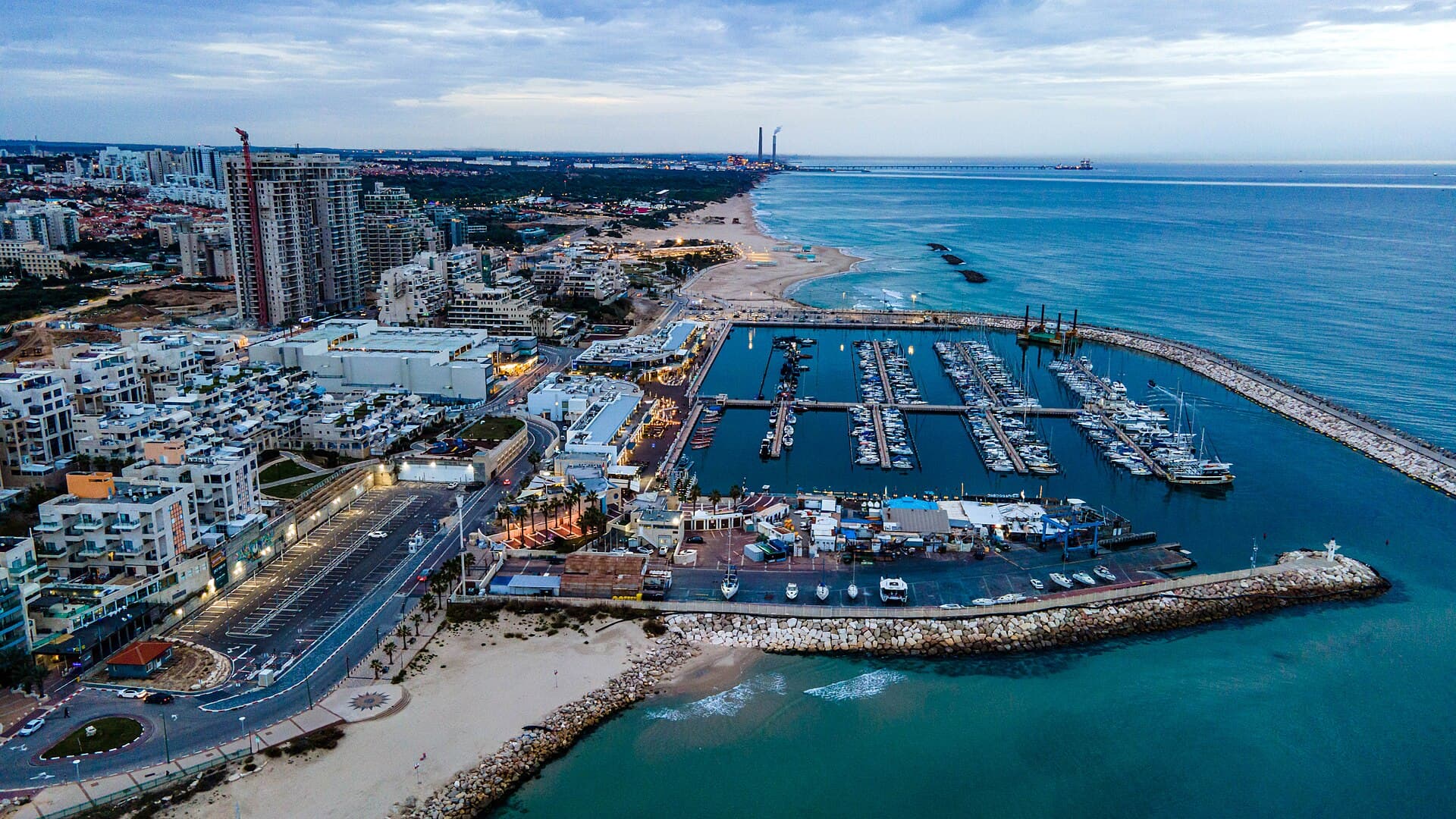
For a different pace, the Ashkelon Marina offers a modern waterfront experience with restaurants, cafes, boutique shops, and opportunities for sailing and water sports. It's a popular spot for a leisurely stroll and enjoying fresh seafood. Nearby, Ashkelon Beach provides a sandy expanse for swimming and sunbathing.
Beyond the National Park, the Ashkelon Khan and Museum houses archaeological finds, including a replica of Ashkelon's Canaanite silver calf. The Outdoor Museum near the municipal cultural center displays Roman burial coffins with intricate carvings. In the Barne'a neighborhood, you can find the remains of a 4th-century Byzantine church with marble slab flooring and glass mosaic walls.
The ideal times to visit Ashkelon are during the spring (March to May) and fall (September to November). During these months, the weather is pleasantly mild, with average temperatures ranging from 20°C to 27°C, perfect for exploring archaeological sites and enjoying the beaches. Summer (June to August) brings warm, sunny days, making it ideal for beach activities, though temperatures can be quite warm. Winter (December to February) offers cooler temperatures and fewer crowds, which can be good for historical excursions, but also brings the most rainfall.
Ashkelon is easily accessible, located about 50 km south of Tel Aviv, approximately a 45-minute drive. Public transportation, including buses and trains, connects Ashkelon to other major Israeli cities. Within the city, public transport is available, with a day pass costing around 20-30 shekels. Taxis are also readily available.
Accommodation options in Ashkelon range from luxury hotels with sea views to family guesthouses and apartments, with average hotel costs per night ranging from 200 to 800 shekels. Dining experiences include local restaurants specializing in Israeli cuisine and experimental eateries blending traditional and modern flavors. Expect breakfast to cost 30-100 shekels and main dishes in restaurants to be 80-300 shekels. The Ashkelon Marina offers a wide choice of restaurants, bars, and cafes.
- What is Ashkelon known for historically?
- Ashkelon is historically significant as a major Canaanite seaport, one of the five principal Philistine cities, and a flourishing center during the Hellenistic and Roman periods. It also played a key role during the Crusades.
- Are there beaches in Ashkelon?
- Yes, Ashkelon has inviting beaches along the Mediterranean coast, such as Ashkelon Beach and Delilah Beach, which are popular for swimming, sunbathing, and water activities.
- What can I see at Ashkelon National Park?
- Ashkelon National Park features ancient city walls, the world's oldest arched gate, a Roman basilica, Roman-era sculptures, and remains of Byzantine and Crusader structures, all set against a backdrop of Mediterranean scenery.
- Is Ashkelon a good destination for families?
- Yes, Ashkelon is considered a family-friendly destination with parks, playgrounds, and inviting beaches that make it suitable for family vacations.
- What kind of food can I expect in Ashkelon?
- Ashkelon offers a variety of dining experiences, from local restaurants serving traditional Israeli cuisine to experimental restaurants that blend traditional flavors with modern cooking techniques.
- Is the Ashkelon Marina open to visitors?
- Yes, Ashkelon Marina is a modern hub with restaurants, bars, cafes, and shops, open to visitors for leisure, sailing, and water sports. Border control services for yachts are available 24/7.