Некрополь
В древнем кладбище Ассоса хранился удивительный секрет его саркофагов.
Полная история открывается в туре
 Sonnyhill / CC BY-SA 4.0, via Wikimedia Commons
Самостоятельная аудиопрогулка по Ассос — GPS-маршрут, офлайн-воспроизведение, увлекательное повествование на 32 языках.
“Где древняя философия встречается с эгейским спокойствием.”
Не открытки. Истории, которые не знают даже местные жители — шепотом в вашем ухе, прямо там, где они произошли.
В древнем кладбище Ассоса хранился удивительный секрет его саркофагов.
Порт Ассоса был не просто местом для рыбацких лодок.
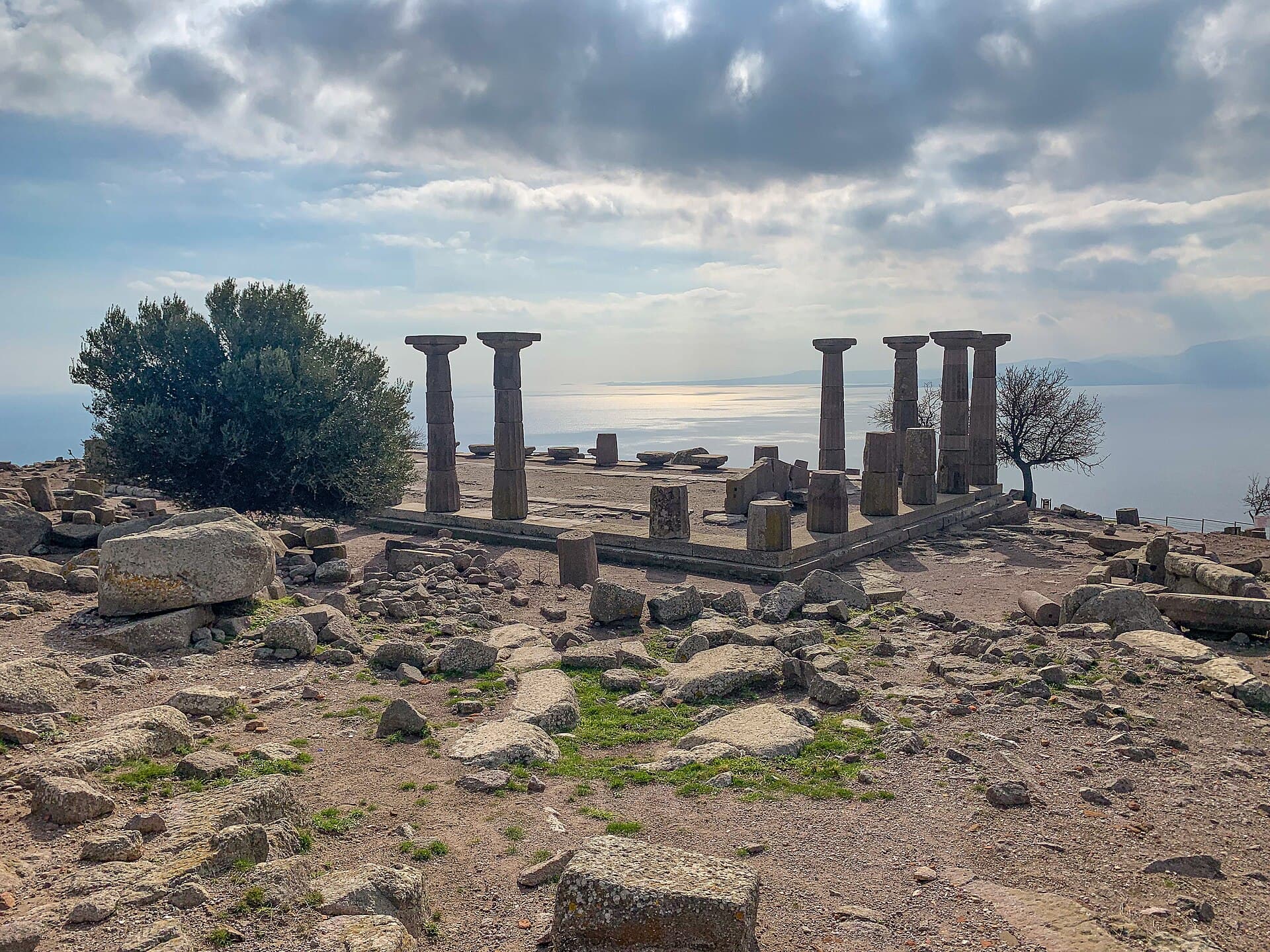
Храм Афины обладает уникальным архитектурным отличием в Анатолии.
Откройте для себя каждый секрет Ассос
Каждый адрес, каждое полное раскрытие — в вашем ухе, прямо там, где это произошло.
Вы выбираете остановки. Вы гуляете. Голос раскрывает то, что упускают другие.


В Lume встроен гид дополненной реальности. Поднимите телефон: камера показывает улицу перед вами, а поверх реального изображения светится стрелка, всегда указывающая на вашу следующую остановку — не нужно разбираться с картой и сворачивать не туда. Как и всё в Lume, это работает полностью офлайн.
Ассос, официально известный как Бехрамкале, — это древнегреческий город на побережье Эгейского моря в Турции, в районе Айваджык провинции Чанаккале. Расположенный на вулканическом холме, он предлагает сочетание глубокой исторической значимости и природной красоты с обширными видами на Эгейское море и остров Лесбос. Город разделен на руины древнего города на вершине холма, поздне средневековую деревню Бехрамкале и небольшой живописный порт внизу, часто называемый Искеле или Ассос Лиман.
Этот музей под открытым небом приглашает посетителей пройти сквозь тысячелетия истории, от основания эолийскими колонистами около 1000-900 гг. до н.э. до его значения как значительного римского и османского поселения. Ассос славится своими хорошо сохранившимися руинами, включая Храм Афины, древний театр и впечатляющие городские стены. Помимо археологических сокровищ, Ассос предлагает спокойный отдых с каменными домами, узкими улочками и расслабленной эгейской атмосферой, что делает его излюбленным местом для тех, кто ищет как погружения в историю, так и прибрежного спокойствия.
В 2017 году Ассос был внесен в предварительный список объектов Всемирного наследия ЮНЕСКО, что свидетельствует о его выдающейся исторической значимости.
## От эолийского поселения до философского центра Ассос был основан между 1000 и 900 гг. до н.э. эолийскими колонистами с Лесбоса. Поселенцы построили дорический Храм Афины на доминирующей скале около 530 г. до н.э. Этот храм, построенный из местного андезитового камня, является единственным архаическим дорическим храмом в Анатолии. С этого стратегического места Храм Афины был виден издалека с моря, служа защитным символом города.
Ассос достиг своего наивысшего расцвета под властью Гермия Атарнейского, ученика Платона, в IV веке до н.э. Гермий активно привлекал философов в город, и одним из самых известных, откликнувшихся на этот призыв, был Аристотель. Аристотель прожил в Ассосе три года (348-345 гг. до н.э.), где основал академию и сделал новаторские наблюдения в области зоологии и биологии. Он также женился на племяннице Гермия, Пифии, во время своего пребывания в Ассосе. Период Аристотеля в Ассосе закончился, когда прибыли персы и замучили Гермия до смерти, что вынудило Аристотеля бежать в Македонию.
## Римская и византийская эпохи Александр Македонский освободил Ассос от персидского владычества в 334 г. до н.э. Между 241 и 133 гг. до н.э. город процветал под властью царей Пергама, прежде чем был поглощен расширяющейся Римской империей. Ассос также имеет значение в христианской истории, поскольку Святой Павел посетил город во время своего третьего миссионерского путешествия (53-57 гг. н.э.), путешествуя пешком из Трои в Ассос. Расцвет города пришел в упадок после римского периода, оставаясь небольшим поселением на протяжении всей византийской эпохи. В византийские времена он был известен как Махрамион, что, вероятно, способствовало его современному официальному названию Бехрамкале.
## Османское влияние и современное открытие Ассос стал османским владением во время правления султана Мурада I в XIV веке. Мечеть Хюдавендигар османской эпохи, построенная с использованием древней кладки, стоит недалеко от разрушенного храма на вершине холма, рядом с горбатым мостом XIV века. Место было заново открыто и впервые раскопано в 1880-83 гг. 25-летним американцем Фрэнсисом Бэконом, причем некоторые находки позже были отправлены в музеи Бостона и Берлина. Более недавние раскопки начались в 1981 году и продолжаются по сей день, фокусируясь на таких областях, как Западный некрополь и Храм Афины. Сегодня Ассос является действующим археологическим памятником и популярным туристическим направлением.
Древний город Ассос предлагает путешествие во времени, с его ключевыми достопримечательностями, расположенными на вершине холма и спускающимися к порту. Начните свое исследование с Храма Афины, венчающего акрополь на высоте 238 метров над уровнем моря. Этот дорический храм, датируемый 530 г. до н.э., предлагает обширные виды на Эгейское море, остров Лесбос и окружающий ландшафт, особенно впечатляющие на закате. Шесть из его первоначальных 38 колонн все еще стоят.
Под акрополем исследуйте Древний театр, хорошо сохранившееся сооружение III века до н.э., встроенное в склон холма, которое когда-то вмещало 5000 зрителей и принимало гладиаторские бои. Городские стены и главные ворота, датируемые IV веком до н.э., являются одними из самых впечатляющих особенностей Ассоса, с удивительно хорошо сохранившимися участками и башнями высотой 14 метров. Некрополь, расположенный за главными воротами, включает саркофаги и надгробия с VI века до н.э. по II век н.э.
Спуститесь к порту Ассоса (Искеле), живописному месту с каменными домами, ресторанами морепродуктов и чистой бирюзовой водой. Этот древний порт, когда-то жизненно важный для торговли, теперь является расслабляющим местом для обеда и наслаждения морем. Современная деревня Бехрамкале с ее узкими улочками и традиционными каменными домами предлагает взглянуть на местную жизнь и ремесленные лавки. Не пропустите мечеть Хюдавендигар XIV века и османский мост, оба построенные с использованием древней кладки.
Для оптимальной погоды и меньшего количества туристов идеально подходят переходные сезоны с конца апреля по конец июня и с начала сентября по середину октября. В эти периоды температура приятно умеренная, колеблется от 13-23°C (55-73°F) в мае и 13-21°C (55-70°F) в октябре, что идеально подходит для изучения руин и пеших прогулок. Июль и август приносят пик туристического сезона с температурами около 30°C (86°F) и большим количеством туристов. Для пляжного отдыха температура воды наилучшая с июня по октябрь. Посещение в будние дни поможет избежать наплыва местных туристов в выходные.
Ассос, также известный как Бехрамкале, расположен в районе Айваджык провинции Чанаккале. До него можно добраться на машине, примерно в 5 часах езды от Стамбула или в 3,5 часах от Измира. Общественный транспорт обычно включает автобус до Айваджыка, затем миниавтобус или такси на последние 19 километров до Ассоса. По деревне и древним местам лучше всего передвигаться пешком, поэтому удобная обувь необходима для передвижения по каменным тропам и неровной местности. Хотя поездка на машине удобна для передвижения по окрестностям, местные такси доступны для коротких расстояний. Мобильная связь может быть нестабильной из-за естественного рельефа и каменной архитектуры, что делает это место идеальным для цифрового детокса. Вход в Древний город Ассос и Храм Афины возможен с Muzekart.
Ассос: корейский, китайский, иврит и ещё 29 языков — каждую остановку озвучивает носитель языка. Самый широкий выбор языков среди аудиоэкскурсий без гида.
Доступные языки: