Estadio Panatenaico
Este estadio ostenta una distinción única entre todos los recintos deportivos del mundo.
La historia completa se desbloquea en el tour
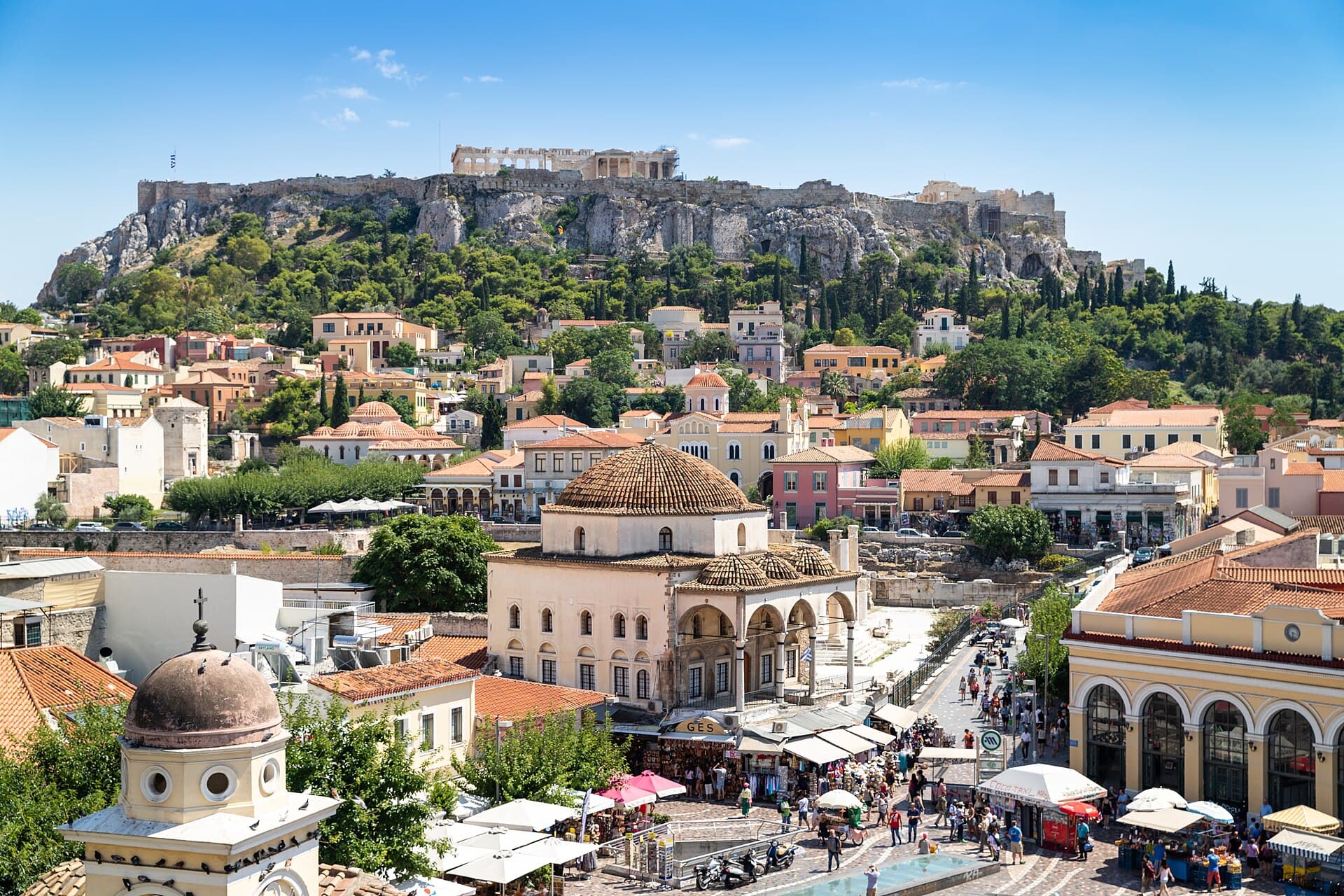 dronepicr / CC BY 2.0, via Wikimedia Commons
Tour de audio autoguiado de Atenas — ruta GPS a pie, reproducción offline, narración en 32 idiomas.
“Donde los ecos de la antigüedad se encuentran con el pulso de la vida contemporánea, una ciudad en constante redescubrimiento.”
No las postales. Las historias que ni los locales conocen — al oído, justo donde ocurrieron.
Este estadio ostenta una distinción única entre todos los recintos deportivos del mundo.
Para una ciudad de su edad y profunda significación, Atenas parece sorprendentemente de poca altura, sin las estructuras imponentes que se ven en otras grandes capitales.
For a city of its age and profound significance, Athens appears surprisingly low-slung, without the towering structures seen in other major capitals.
Descubre todos los secretos de Atenas
Cada dirección, cada revelación al completo — a tu oído, justo donde ocurrió.
Eliges tus paradas. Caminas. La voz te revela lo que los demás ignoran.

Tu tour de audioguía por Atenas te espera — elige tus lugares, tu idioma y empieza al llegar.
ComprarLume incluye una guía de realidad aumentada. Levanta el móvil y su cámara muestra la calle que tienes delante, con una flecha luminosa sobre la imagen real que siempre apunta a tu próxima parada — sin mapas que descifrar, sin giros equivocados. Como todo en Lume, funciona completamente sin conexión.
Atenas, la capital más antigua de Europa, ofrece una fascinante fusión de profundidad histórica y energía urbana moderna. Con orígenes que se remontan al 3000 a.C., y una ocupación continua durante más de 5.000 años, la ciudad ha sido testigo de milenios de civilización que moldearon profundamente la cultura occidental. Desde la imponente Acrópolis, Patrimonio de la Humanidad por la UNESCO, hasta los animados barrios contemporáneos, Atenas invita a una exploración exhaustiva.
Más allá de sus renombradas ruinas antiguas, Atenas prospera con una dinámica vida callejera, una floreciente cultura de cafés y un panorama culinario que abarca desde tabernas tradicionales hasta restaurantes innovadores. La ciudad, hogar de aproximadamente 3,8 millones de personas, representa alrededor del 40% de la población total de Grecia. Es un lugar donde uno puede seguir los pasos de antiguos filósofos, explorar mercados coloridos y luego disfrutar de una cena tardía como un local, a menudo después de las 9 PM.
Atenas no revela todas sus narrativas a la vez; es una ciudad que recompensa generosamente a quienes se quedan y profundizan. Lo que inicialmente podría parecer una extensa urbe se transforma rápidamente en una cautivadora superposición de períodos históricos y una dinámica existencia diaria. Ya sea atraído por su pasado antiguo o su ritmo contemporáneo, Atenas ofrece un viaje memorable a través del tiempo y la cultura.
La historia de Atenas se desarrolla como una narrativa continua que abarca más de 5.000 años, lo que la convierte en una de las ciudades continuamente habitadas más antiguas del mundo. Los asentamientos aquí datan de la era neolítica tardía, alrededor del 4500 al 4000 a.C. Los orígenes mitológicos de la ciudad relatan un concurso divino entre Atenea y Poseidón por el patrocinio, con el regalo de un olivo por parte de Atenea asegurándole el honor y el nombre de la ciudad.
Alrededor del 500 a.C., Atenas se convirtió en la cuna de la democracia, implementando un sistema donde los ciudadanos elegibles podían votar directamente sobre las leyes. Este concepto innovador, derivado de las palabras griegas demos (pueblo) y kratos (poder), estableció las bases para los sistemas democráticos modernos. La ciudad también floreció como un centro para la filosofía griega antigua, con prominentes escuelas de pensamiento y ciencia prosperando dentro de sus límites. Figuras como Platón y Sócrates alguna vez participaron en discursos en el Ágora Antigua, la plaza central de la antigua Atenas.
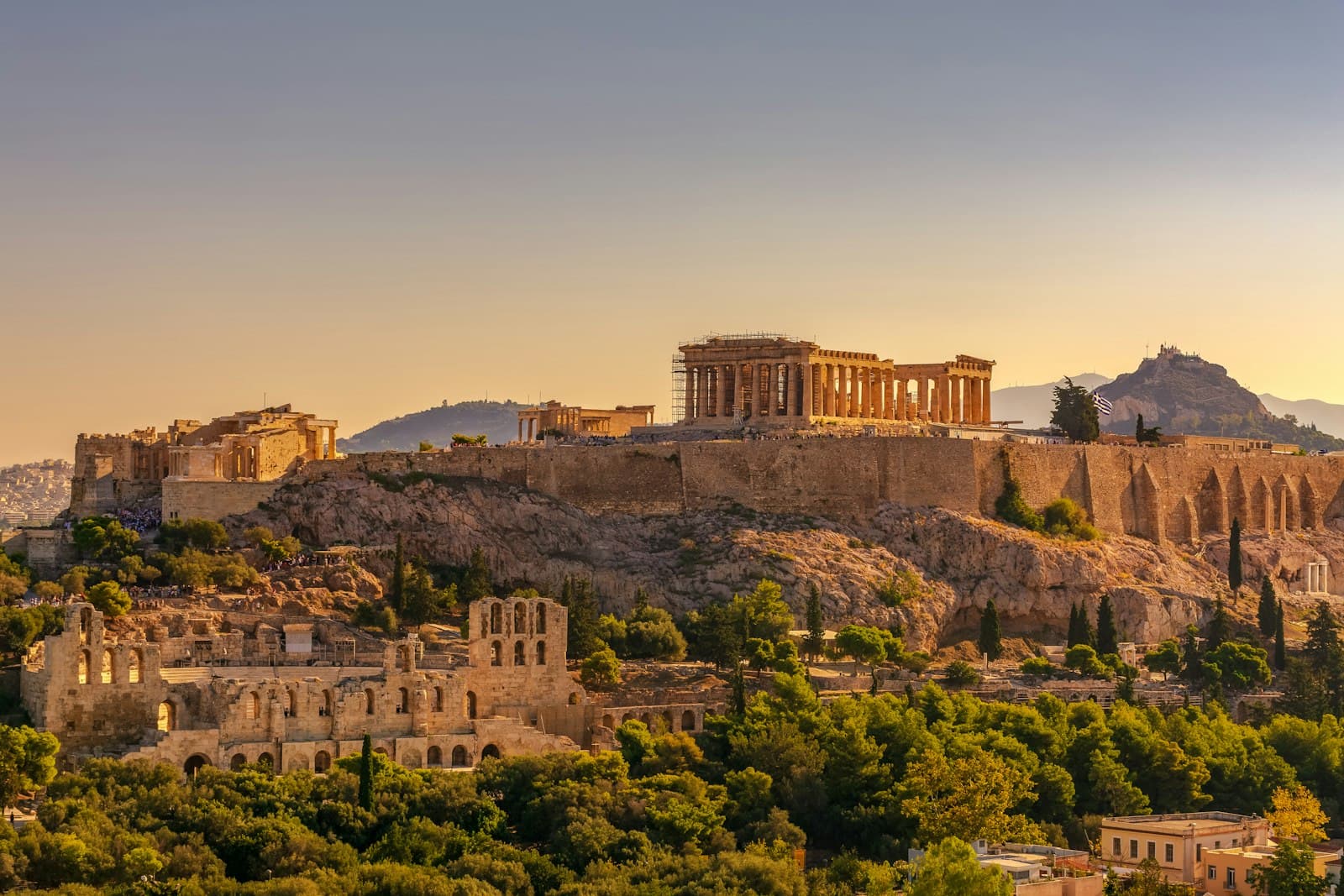
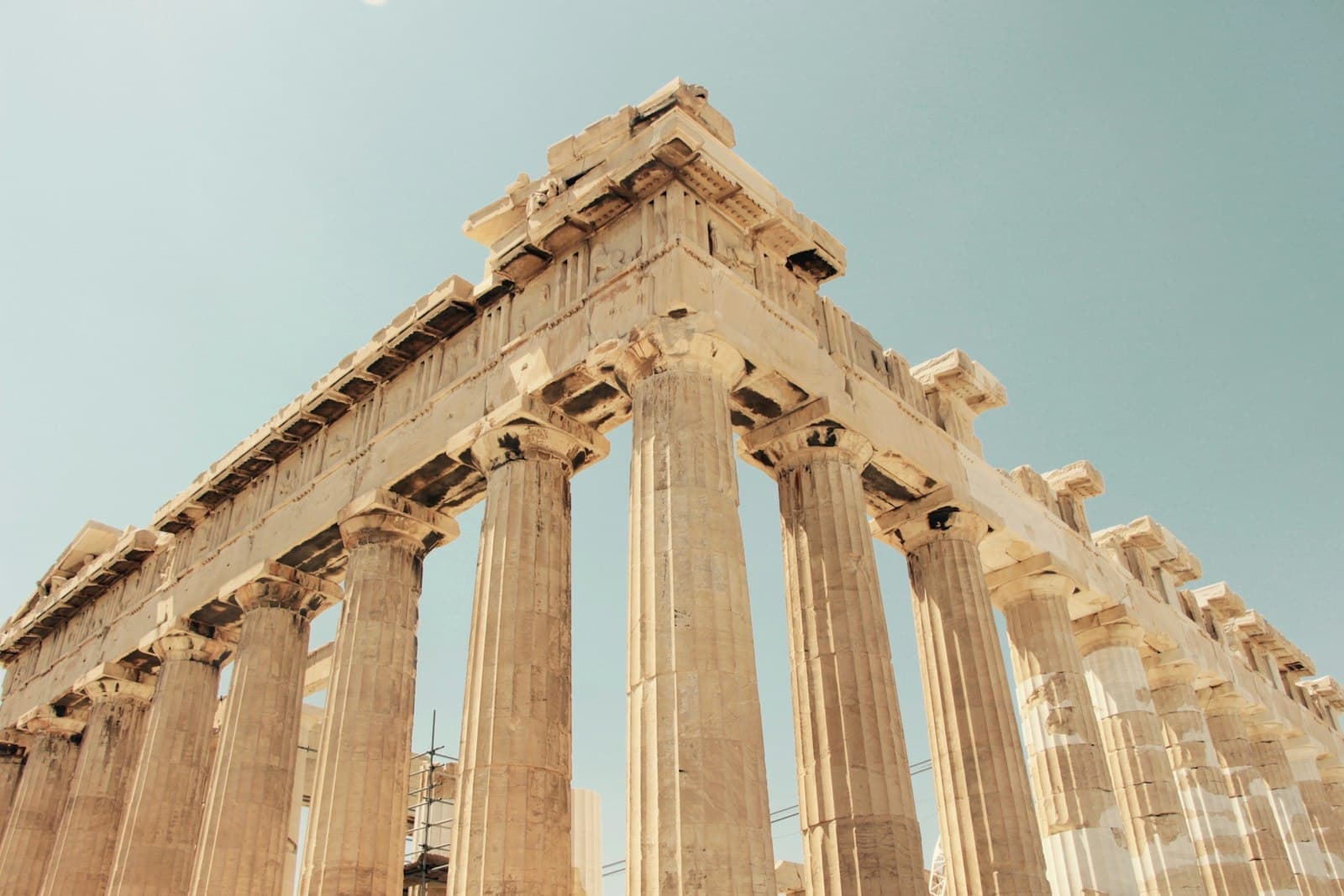
La Acrópolis, con su icónico Partenón construido en el 448 a.C. para la diosa Atenea, se erige como un testimonio de la Edad de Oro de Atenas. Este período también vio el florecimiento del teatro griego, con las primeras obras representadas en Atenas. Después de siglos bajo diversas administraciones, incluidas la romana, bizantina y otomana, Atenas fue seleccionada como la capital de la recién independizada Grecia en 1834. En ese momento, era un modesto pueblo de solo 4.000-7.000 habitantes. La ciudad experimentó una transformación significativa, con arquitectos europeos diseñando un nuevo plan urbano neoclásico mientras preservaban cuidadosamente sus ruinas antiguas.
Atenas desempeñó un papel central en el resurgimiento de los Juegos Olímpicos, albergando los primeros Juegos Olímpicos modernos en 1896 en el Estadio Panatenaico. Este estadio completamente de mármol, originalmente una pista de carreras del 330 a.C., fue reconstruido en el siglo II d.C. y luego excavado y restaurado para los juegos modernos. La ciudad también albergó los Juegos Olímpicos nuevamente en 2004.
Hoy, Atenas continúa su evolución, con evidencia arqueológica de presencia humana que se remonta a los milenios XI y VII a.C. bajo su superficie contemporánea. Es una ciudad que ha experimentado casi todas las formas de gobierno y ostenta la distinción de ser la primera Capital Europea de la Cultura en 1985. Esta historia profunda y estratificada es palpable en toda Atenas, donde las maravillas antiguas se entrelazan con gracia con la vida cotidiana.
Un viaje a Atenas generalmente comienza con la Acrópolis, hogar del Partenón, el Erecteion y el Templo de Atenea Niké. Asigne 2-3 horas para una visita exhaustiva para apreciar la arquitectura y las amplias vistas. Directamente frente a la Acrópolis se encuentra la Colina del Areópago, una formación rocosa que ofrece vistas de la antigua ciudadela.
Debajo de la Acrópolis, explore el Ágora Antigua, el corazón de la vida pública ateniense antigua, donde puede pasear entre las ruinas y visitar el Templo de Hefesto, notablemente conservado. Cerca, el Ágora Romana presenta la Torre de los Vientos, considerada la estación meteorológica más antigua del mundo.
Pasee por Plaka, el barrio más venerable de Atenas, con sus calles serpenteantes y edificios neoclásicos. Dentro de Plaka, descubra Anafiotika, un pequeño pueblo que evoca una isla griega con sus casas encaladas. Para un punto de vista diferente, ascienda la Colina Licabeto, la elevación más alta de Atenas, para disfrutar de amplias vistas del amanecer o el atardecer de toda la ciudad y el mar Egeo.
No pase por alto el Estadio Panatenaico, el recinto completamente de mármol de los primeros Juegos Olímpicos modernos en 1896. Otros sitios notables incluyen el Museo Arqueológico Nacional, que contiene una vasta colección de antigüedades, y el cambio de guardia en la Plaza Syntagma. Para probar la vida local, explore el Mercado Central (Varvakios Agora) por la mañana, un animado centro de productos frescos, carnes y mariscos.
Las épocas más agradables para visitar Atenas son durante la primavera (abril a principios de junio) y el otoño (septiembre a mediados de octubre). Durante estas temporadas intermedias, las temperaturas son suaves (17°C a 25°C), lo que hace que sea cómodo para caminar y explorar. Las multitudes también son más ligeras que en los meses pico de verano, y los precios del alojamiento pueden ser más favorables. La primavera trae flores silvestres en flor y un ambiente animado, mientras que el otoño ofrece una luz dorada y un ritmo relajado.
El verano (julio y agosto) puede ser intensamente caluroso, con temperaturas que a menudo superan los 35°C, y las atracciones están concurridas. Si visita en verano, planifique actividades al aire libre para las primeras horas de la mañana o las noches. El invierno (diciembre a febrero) es la temporada baja, ofreciendo menos multitudes y precios más bajos, aunque puede haber algo de lluvia o incluso nieve rara vez.
Atenas es una ciudad muy transitable, particularmente en áreas centrales como Plaka, Monastiraki y las cercanías de la Acrópolis. Para distancias más largas, el Metro de Atenas es rápido, limpio y eficiente, conectando puntos de referencia clave, barrios, el aeropuerto y el puerto del Pireo. Los trenes operan de 5:30 AM a medianoche, con horarios extendidos los fines de semana, y la señalización está en inglés. Un billete sencillo de 90 minutos cuesta 1,20 €, y un pase diario cuesta 4,10 €. El pase turístico de 3 días, incluido el transporte al aeropuerto, cuesta 20 €. El pago sin contacto es ampliamente aceptado en el transporte público.
Los taxis son relativamente asequibles en comparación con otras ciudades europeas. Puede parar un taxi o usar aplicaciones como Free Now o Uber (que opera como Uber Taxi, reservando taxis amarillos con licencia). Se aplica una tarifa plana para traslados del aeropuerto al centro de la ciudad (35 €-45 €). Tenga cuidado con los carteristas en zonas concurridas y en el transporte público. El número de emergencia general en Grecia es el 112. Los lugareños generalmente hablan inglés, pero algunas frases griegas como 'yia sas' (hola) y 'efharisto' (gracias) son apreciadas.
Atenas en coreano, en chino o en hebreo — y 29 idiomas más, cada parada narrada por una voz nativa. La mayor variedad de idiomas de cualquier audioguía autoguiada.
Disponible en: