Bibi Ka Maqbara
Dit mausoleum wordt vaak de 'Taj van de Deccan' genoemd, maar een verrassende beperking vormde de uiteindelijke vorm.
Volledig verhaal ontgrendeld in de tour
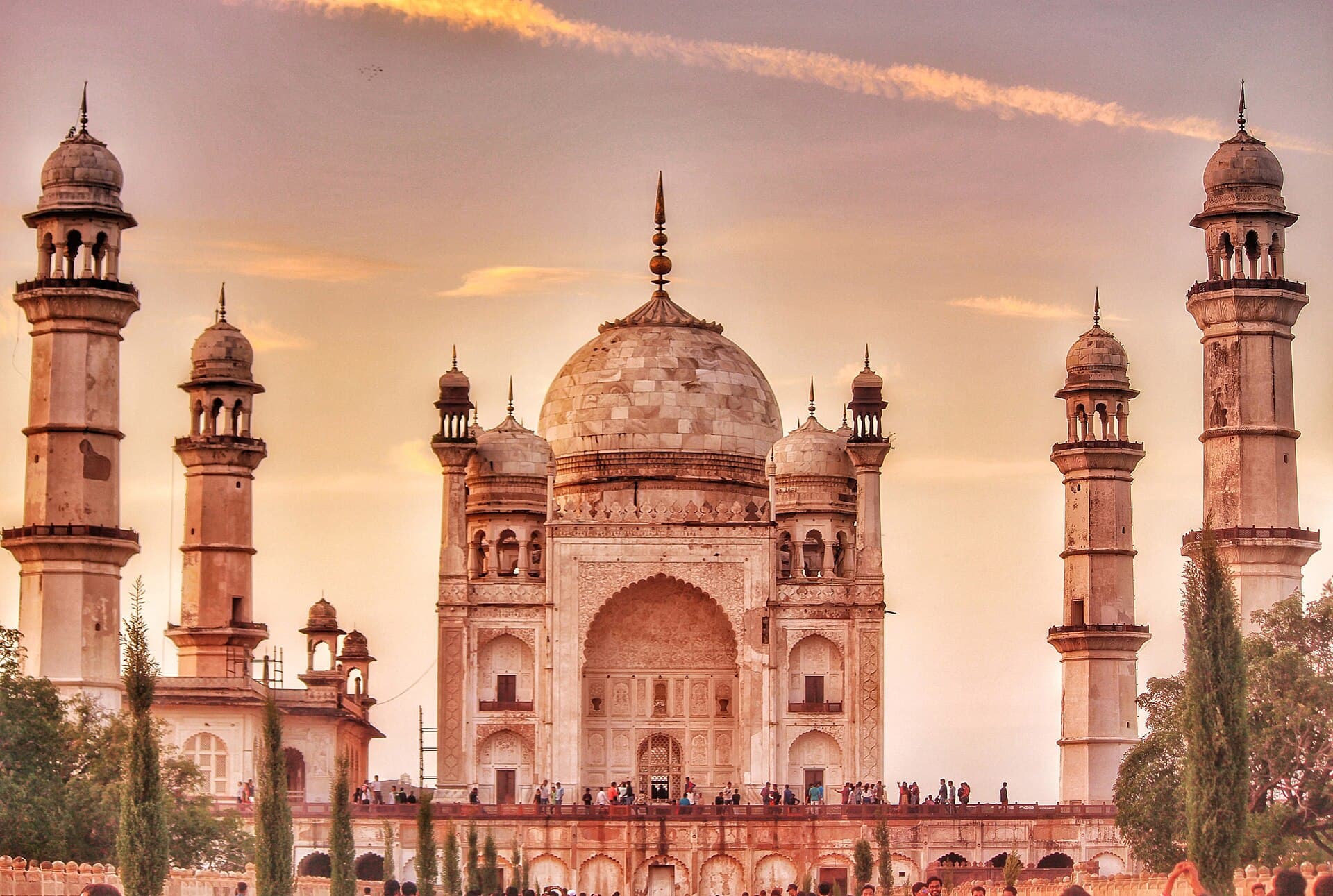 Pranaysahu26 / CC BY-SA 4.0, via Wikimedia Commons
Zelfgeleide audiowandeling door Aurangabad — GPS-route, offline afspelen, meeslepende vertelling in 32 talen.
“Waar oude in rotsen uitgehouwen wonderen de Mughal-grootsheid ontmoeten.”
Niet de ansichtkaarten. De verhalen die zelfs locals niet kennen — gefluisterd in je oor, precies waar ze gebeurden.
Dit mausoleum wordt vaak de 'Taj van de Deccan' genoemd, maar een verrassende beperking vormde de uiteindelijke vorm.
Dit imposante heuvelfort beschikt over een onderscheidend verdedigingsmechanisme, ontworpen om indringers te desoriënteren en te vangen in plaats van hen slechts te belemmeren.
Onder de 34 rotsholtes onderscheidt één tempel zich niet alleen door zijn omvang, maar ook door de gedurfde methode van zijn creatie.
Ontdek elk geheim van Aurangabad
Elk adres, elke onthulling volledig — in je oor, precies waar het gebeurde.
Jij kiest je stops. Jij wandelt. De stem onthult wat de anderen missen.


Je zelfgeleide audiotour van Aurangabad is klaar — kies je bezienswaardigheden, kies je taal en start zodra je aankomt.
KopenLume heeft een ingebouwde augmented-reality-gids. Houd je telefoon omhoog: de camera toont de straat voor je, met een oplichtende pijl over het echte beeld die altijd naar je volgende stop wijst — geen kaart om uit te puzzelen, geen verkeerde afslagen. Zoals alles in Lume werkt het volledig offline.
Aurangabad, officieel bekend als Chhatrapati Sambhajinagar, is een stad in Maharashtra, India, die dient als toegangspoort tot enkele van 's werelds meest buitengewone oude rotsholtes. Hoewel de stad zelf de erfenis van de Mughal-invloed draagt, ligt de ware aantrekkingskracht net buiten haar moderne puls, waar de UNESCO Werelderfgoedsites van Ajanta en Ellora grotten tot verkenning uitnodigen. Ooit een belangrijk knooppunt op de oude 'Zijderoute', is Aurangabad gevormd door verschillende dynastieën, die een ingewikkeld verhaal van architectonische wonderen hebben achtergelaten.
Naast de monumentale grotten biedt Aurangabad, ook bekend als de 'Stad van Poorten' vanwege zijn talrijke historische ingangen, een glimp van een vervlogen tijdperk met structuren zoals de Bibi Ka Maqbara en het formidabele Daulatabad Fort. De mix van oude spiritualiteit, keizerlijke grandeur en lokale cultuur maakt het een boeiende bestemming voor wie het gelaagde verleden van India wil ontdekken.
De oorsprong van Aurangabad kan worden teruggevoerd tot 1610, toen Malik Ambar, de premier van het Sultanaat van Ahmadnagar, een nieuwe stad stichtte op de locatie van een dorp genaamd Khadki. Hij maakte het zijn hoofdstad en noemde het aanvankelijk Fatehnagar. In deze periode ontwikkelde de stad zich als een administratief centrum, strategisch gelegen in de Deccan-regio.
In 1633 kwam de stad onder Mughal-heerschappij na de verovering van de Nizam Shahi-dynastie. Een belangrijk keerpunt kwam in 1653, toen de Mughal-prins Aurangzeb, die later keizer zou worden, voor de tweede keer werd aangesteld als onderkoning van de Deccan. Hij benoemde Fatehnagar tot zijn hoofdstad en hernoemde het Aurangabad, wat 'Gebouwd door de Troon' betekent. Dit markeerde een periode van snelle expansie en stedelijke ontwikkeling, aangezien Aurangzeb de stad gebruikte als een primair militair buitenpost om het Deccan-plateau te controleren. Ter bescherming tegen Maratha-invallen werd in 1682 een muur met 54 poorten rond de stad gebouwd.
Na het overlijden van Aurangzeb in 1707 nam de Mughal-invloed af en werd de stad in 1724 de eerste hoofdstad van de Asaf Jahi-dynastie van Hyderabad, voordat de hoofdstad in 1763 verhuisde naar Hyderabad. Na de onafhankelijkheid van India werd Aurangabad in 1948 onderdeel van de Staat Hyderabad, vervolgens in 1956 van de Staat Bombay, en sloot zich uiteindelijk in 1960 aan bij Maharashtra. In recente jaren is de stad officieel hernoemd tot Chhatrapati Sambhajinagar, ter ere van Sambhaji Bhosale, de tweede heerser van het Maratha-rijk.
De omgeving van Aurangabad is een schat aan historische en architectonische wonderen. De Ajanta grotten, een UNESCO Werelderfgoedsite op ongeveer 99 kilometer van de stad, omvatten dertig door rotsen uitgehouwen boeddhistische grotten die dateren uit de 2e eeuw voor Christus. Deze grotten worden geprezen om hun ingewikkelde muurschilderingen en gravures die Jataka-verhalen en het leven van de Boeddha uitbeelden.
Dichter bij de stad, ongeveer 29 kilometer verderop, liggen de Ellora grotten, een andere UNESCO Werelderfgoedsite. Dit complex bevat 34 grotten met hindoeïstische, boeddhistische en jaïnistische rotshotels en kloosters, die religieuze harmonie illustreren van 600-1000 n.Chr. Het hoogtepunt is de monolithische Kailasa Tempel (Grot 16), gewijd aan Heer Shiva, een buitengewoon voorbeeld van rotshouwwerk. In de buurt ligt de Grishneshwar Tempel, een van de twaalf Jyotirlingas van India, een belangrijke pelgrimsoord voor toegewijden van Heer Shiva.
Binnen Aurangabad zelf is de Bibi Ka Maqbara een 17e-eeuws mausoleum, in opdracht van Prins Azam Shah, zoon van keizer Aurangzeb, voor zijn moeder Dilras Banu Begum. Vaak de 'Taj van de Deccan' genoemd vanwege de gelijkenis met de Taj Mahal, is het een belangrijk voorbeeld van Mughal-architectuur. Het imposante Daulatabad Fort, oorspronkelijk Devagiri genoemd, is een formidabele 12e-eeuwse citadel gebouwd op een conische heuvel. Zijn unieke verdedigingsmechanismen en strategische ligging maakten het door de geschiedenis heen een gewilde vesting. De minder bekende Aurangabad grotten, uit zachte steen gehouwen tijdens de 6e en 7e eeuw, bieden verder inzicht in oude boeddhistische en tantrische hindoeïstische praktijken.
De meest gunstige tijd om Aurangabad te bezoeken is tijdens de wintermaanden, van oktober tot maart. Gedurende deze periode is het weer aangenaam en comfortabel, met temperaturen variërend van 10°C tot 30°C, wat ideaal is voor het verkennen van de historische bezienswaardigheden en buitenactiviteiten. Het Ellora Festival, dat kunst en cultuur presenteert, wordt ook in november gevierd.
Vermijd de zomermaanden (april tot juni), aangezien de temperaturen boven de 40°C kunnen oplopen, wat sightseeing uitdagend maakt. Hoewel het moessonseizoen (juli tot september) voor weelderige landschappen zorgt, kan hevige regenval reisplannen verstoren en paden glad maken, vooral bij de forten en grotten.
Aurangabad is goed verbonden per vliegtuig, spoor en weg. De stad heeft een binnenlandse luchthaven (Aurangabad Airport, IXU) met regelmatige vluchten naar grote Indiase steden zoals Mumbai, Delhi, Hyderabad en Bangalore. Het Aurangabad treinstation is een belangrijk spoorwegknooppunt dat verbindingen biedt met verschillende delen van het land. Frequente bussen en een netwerk van snelwegen verbinden Aurangabad ook met nabijgelegen steden en grote steden in Maharashtra.
Reizen binnen de stad wordt vergemakkelijkt door taxi's en lokale bussen. Voor een bezoek aan de Ajanta en Ellora grotten is het raadzaam om voor elk een volledige dag te plannen, aangezien ze zich in tegengestelde richtingen van Aurangabad bevinden en enkele uren nodig hebben om te verkennen. Ajanta grotten zijn gesloten op maandag en Ellora grotten op dinsdag. Toegangsprijzen voor beide grotten zijn ongeveer 40 roepies voor Indiase burgers en 600 roepies voor buitenlandse bezoekers, met gratis toegang voor kinderen onder de 15 jaar.
Aurangabad biedt een reeks accommodatiemogelijkheden, van vijfsterrenhotels tot meer budgetvriendelijke opties. De stad staat ook bekend om zijn lokale keuken, waaronder Maharashtrische gerechten zoals Naan Qalia en Pitla Bhakri, evenals Mughlai-opties. Winkelen voor lokale handambachten, Paithani zijden sari's en Himroo sjaals is populair in markten zoals Gul Mandi en Connaught Shopping Market.
Aurangabad — Koreaans, Chinees, Hebreeuws en nog 29 talen, elke stop verteld door een moedertaalspreker. Het grootste taalaanbod van alle zelfgeleide audiotours.
Beschikbaar in: