Die Mauern von Ávila
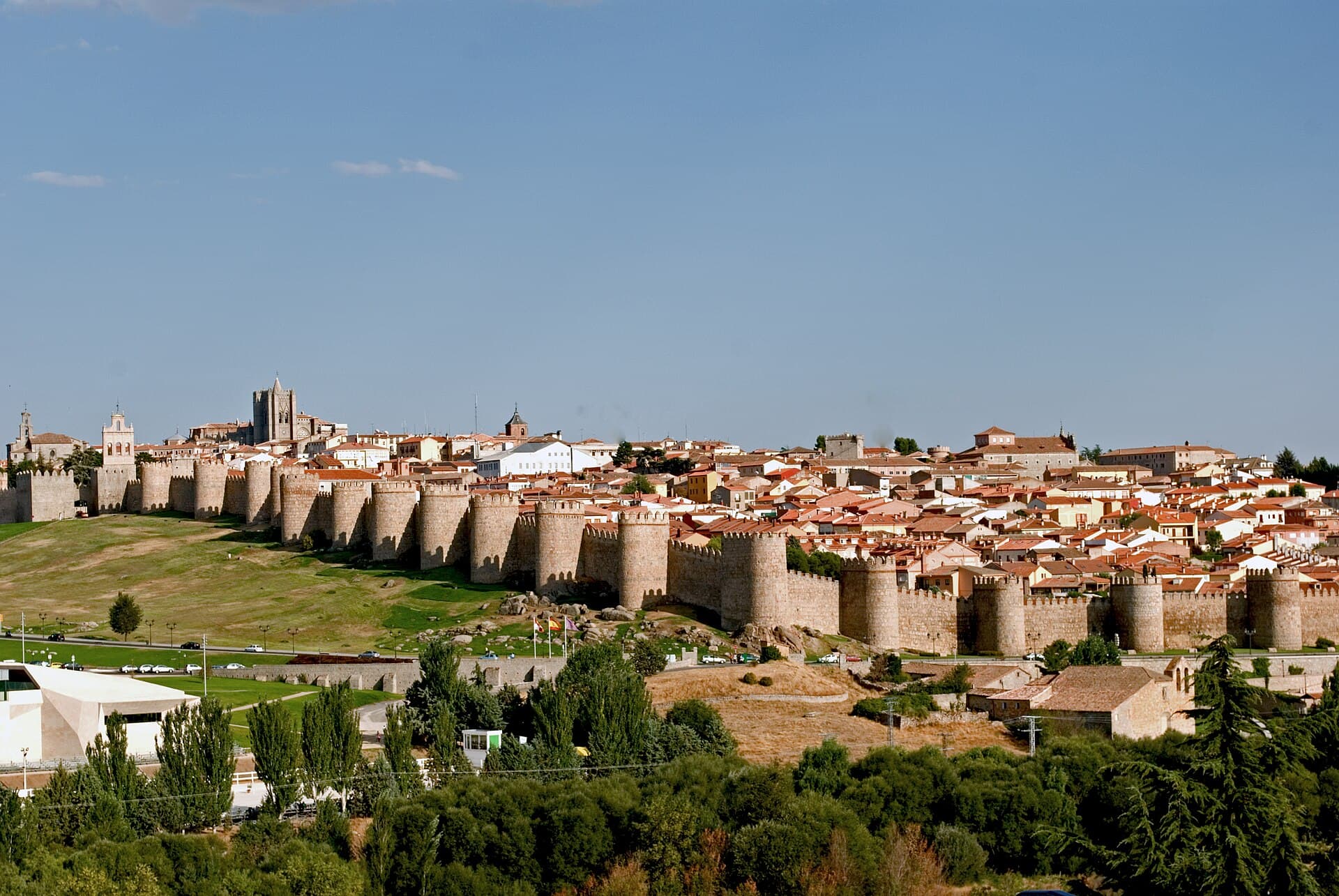
Die robusten Mauern von Ávila, ein UNESCO-Weltkulturerbe, standen im 19. Jahrhundert fast vor einer ganz anderen Bestimmung.
Die ganze Geschichte wird in der Tour freigeschaltet
 Anual / CC BY 3.0, via Wikimedia Commons
Selbstgeführte Audio-Walking-Tour durch Ávila — GPS-Route, Offline-Wiedergabe, erzählerische Narration in 32 Sprachen.
“Ávila: Alter Granit umgibt eine Stadt tiefer Kontemplation.”
Nicht die Postkarten. Die Geschichten, die selbst Einheimische nicht kennen – dir ins Ohr geflüstert, genau dort, wo sie geschahen.
Die robusten Mauern von Ávila, ein UNESCO-Weltkulturerbe, standen im 19. Jahrhundert fast vor einer ganz anderen Bestimmung.
Die Kathedrale von Ávila dient nicht nur als Gotteshaus; sie wurde auch mit einem überraschenden doppelten Zweck konzipiert.
Über seine spirituelle Bedeutung hinaus bewahrt das Kloster Santa Teresa eine eher ungewöhnliche Sammlung von Reliquien, die mit der Heiligen verbunden sind.
Entdecke jedes Geheimnis von Ávila
Jede Adresse, jede Enthüllung vollständig – in deinem Ohr, genau dort, wo es geschah.
Du wählst deine Stationen. Du gehst. Die Stimme enthüllt, was andere übersehen.


Deine selbstgeführte Audio-Tour durch Ávila ist bereit – wähle deine Sehenswürdigkeiten, deine Sprache und starte, sobald du ankommst.
KaufenLume enthält einen integrierten Augmented-Reality-Guide. Halten Sie Ihr Handy hoch: Die Kamera zeigt die Straße vor Ihnen, mit einem leuchtenden Pfeil über dem echten Bild, der immer auf Ihren nächsten Stopp zeigt — keine Karte zum Rätseln, keine falschen Abzweigungen. Wie alles bei Lume funktioniert es komplett offline.
Ávila, oft bekannt als die "Stadt der Steine und Heiligen", erhebt sich dramatisch aus einer felsigen Anhöhe in der spanischen Region Kastilien und León. Es ist ein Ort, an dem Geschichte nicht nur bewahrt, sondern lebendig ist, vor allem dank seiner erstaunlich intakten mittelalterlichen Mauern. Diese ehrfurchtgebietenden Festungsanlagen, ein UNESCO-Weltkulturerbe, umgeben die Altstadt vollständig und erzeugen sofort das Gefühl, Jahrhunderte zurückzureisen.
Jenseits der imposanten Befestigungsanlagen ist Ávila tief mit der Heiligen Teresa von Ávila verbunden, einer prominenten Mystikerin und Schriftstellerin des 16. Jahrhunderts, deren bleibendes Erbe in das Gewebe der Stadt eingewoben ist. Ihr Einfluss zeigt sich in zahlreichen Klöstern, Kirchen und sogar in der berühmtesten Süßspeise der Stadt, den yemas de Santa Teresa. Als Spaniens höchstgelegene Provinzhauptstadt, über 1.100 Meter über dem Meeresspiegel gelegen, bietet Ávila eine unverwechselbare Atmosphäre – ruhig und kontemplativ, aber voller Erzählungen aus seiner vielschichtigen Vergangenheit.
## Von Vettones zu Westgoten Ávilas Geschichte beginnt lange vor den mittelalterlichen Mauern, die sie heute prägen. In vorrömischer Zeit, um das 5. Jahrhundert v. Chr., wurde die Gegend von den Vettones bewohnt, die sie Obila nannten, was "Hoher Berg" bedeutet. Sie errichteten starke Festungen, und Spuren ihrer Anwesenheit sind noch heute in den Steinfiguren von Wildschweinen aus der Bronzezeit, den sogenannten verraco, zu finden, die in der Nähe entdeckt wurden.
Mit der römischen Eroberung wurde die Stadt als Abila oder Abela bekannt und behielt einen charakteristischen römischen rechteckigen Stadtplan mit zwei Hauptstraßen, die sich an einem zentralen Forum kreuzten. Ávila war auch eine der ersten Städte Hispaniens, die das Christentum annahmen. Nach dem Fall des Weströmischen Reiches wurde sie zu einer westgotischen Hochburg und einem wichtigen Bischofssitz im Königreich Toledo.
## Mittelalterliche Reconquista und Befestigung Das 8. Jahrhundert brachte die muslimische Invasion, und Ávila wurde 714 zerstört. Die Stadt erlebte dann eine Periode des Konflikts, gefangen zwischen den christlichen Königreichen Nordiberiens und den Mauren. Im 11. Jahrhundert begann Alfons VI. von León mit dem Wiederaufbau von Ávila, um Spanien in den Einflussbereich des europäischen Christentums zu integrieren. Um 1090 begannen die sagenumwobenen Mauern von Ávila Gestalt anzunehmen, in Auftrag gegeben von Raimund von Burgund, dem Schwiegersohn König Alfons VI. Diese ehrfurchtgebietenden Befestigungsanlagen aus braunem Granit sollten die spanischen Gebiete vor den Mauren schützen. Wiederbevölkerungsbemühungen zogen verschiedene Gemeinschaften an, darunter Juden und Mozaraber (Christen, die ihre Religion unter islamischer Herrschaft beibehielten), was die Bevölkerung Ávilas bereicherte.
## Goldenes Zeitalter und darüber hinaus Im Mittelalter entstanden viele bedeutende Wahrzeichen von Ávila, darunter die erste gotische Kathedrale Spaniens, die einzigartig in die Stadtverteidigung integriert war. Die Stadt florierte, und bis zum Ende des 13. Jahrhunderts beherbergte sie eine der größten jüdischen Gemeinden Kastiliens, bis zu ihrer Vertreibung im Jahr 1492. Die Renaissance brachte weitere architektonische Entwicklungen mit zahlreichen Palästen adliger Familien. In dieser Ära wurde Ávila tief mit der Heiligen Teresa von Ávila verbunden, die hier geboren wurde und einen Großteil ihres Lebens verbrachte und das Kloster Santa Teresa gründete. Ihre tiefgründigen spirituellen Schriften und Reformen hinterließen einen unauslöschlichen Eindruck in der Stadt. 1985 wurde die Altstadt von Ávila mit ihren beeindruckenden Mauern und Kirchen außerhalb der Mauern zum UNESCO-Weltkulturerbe erklärt, was ihre architektonische Integrität und die lesbaren Schichten ihrer Geschichte würdigt.
Der Hauptfokus von Ávila sind die mittelalterlichen Mauern (Murallas de Ávila). Mit 2,5 Kilometern Länge, 88 halbkreisförmigen Türmen und neun Toren gehören sie zu den am besten erhaltenen mittelalterlichen Festungsanlagen Europas. Ein Spaziergang entlang der Zinnen bietet weite Ausblicke auf die Stadt und die umliegende Landschaft. Zugangspunkte sind die Puerta del Alcázar und die Casa de las Carnicerías.
Innerhalb der Mauern steht die Kathedrale von Ávila als erste gotische Kathedrale Spaniens, die einzigartig befestigt ist und deren Apsis Teil der Stadtmauer bildet. Ihr Inneres zeigt eine eindrucksvolle Kombination aus romanischen und gotischen Stilen.
Eine Erkundung des Erbes der Heiligen Teresa ist unerlässlich. Das Kloster Santa Teresa, erbaut an ihrem Geburtsort, bietet Einblicke in ihr Leben, einschließlich des erhaltenen Raumes, in dem sie geboren wurde. In der Nähe bietet das Mystik-Interpretationszentrum tiefere Einblicke in die christliche Mystik.
Außerhalb der Mauern ist die Basilika San Vicente ein Meisterwerk romanischer Architektur und gilt als das zweitwichtigste religiöse Bauwerk der Stadt. Für einen ikonischen Blick auf die ummauerte Stadt besuchen Sie den Aussichtspunkt Los Cuatro Postes (Die Vier Säulen), besonders in der Dämmerung, wenn die Mauern beleuchtet sind.
Weitere bemerkenswerte Sehenswürdigkeiten sind das Real Monasterio de Santo Tomás, ein gotisches Kloster, das als Sommerresidenz der Katholischen Könige diente, und das Museo de Ávila, das die Geschichte der Stadt von prähistorischer Zeit an nachzeichnet.
Ávila hat zu jeder Jahreszeit etwas zu bieten, aber Frühling (April–Juni) und Herbst (September–Oktober) werden oft als optimal angesehen. In diesen Monaten ist das Wetter mild, ideal für Spaziergänge auf den Stadtmauern und Erkundungen der Altstadt ohne die intensive Sommerhitze oder die winterliche Kälte. Der Sommer (Juli–August) kann tagsüber warm sein, bietet aber kühle Abende, und die Stadt veranstaltet Theateraufführungen auf den Mauern. Die Winter sind kalt mit häufigem Frost, aber die Mauern können unter einer Schneedecke besonders eindrucksvoll wirken.
Ávila ist leicht erreichbar und eignet sich daher gut für einen Tagesausflug oder eine Übernachtung. Von Madrid aus erreichen Sie Ávila mit dem Zug (1,5 bis 2 Stunden) vom Bahnhof Chamartín oder mit dem Bus (ca. 1,5 Stunden) von Estación Sur oder Moncloa. Die Zug- und Busbahnhöfe sind etwa 15 bis 45 Gehminuten vom Stadtzentrum entfernt.
In Ávila ist das kompakte Stadtzentrum vollständig zu Fuß erkundbar. Lokale Busse verkehren von 7 bis 23 Uhr, wobei die Linie 1 die Stadtmauern umrundet. Taxis sind ebenfalls verfügbar. Erwägen Sie die ÁvilaCard für den Eintritt zu mehreren Monumenten, einschließlich der Mauern und der Kathedrale. Es ist ratsam, die Öffnungszeiten der Attraktionen zu überprüfen, da diese je nach Saison und an Feiertagen variieren können.
Ávila ist im Allgemeinen eine sichere Stadt mit niedriger Kriminalitätsrate, obwohl Standardvorkehrungen gegen Taschendiebstahl in belebten Touristengebieten immer ratsam sind. Spanisch (Kastilisch) ist die Hauptsprache, aber das Personal an wichtigen Touristenorten spricht in der Regel Englisch.
Ávila — Koreanisch, Chinesisch, Hebräisch und 29 weitere Sprachen, jede Station von einer muttersprachlichen Stimme erzählt. Die größte Sprachauswahl aller selbstgeführten Audiotouren.
Verfügbar auf: