This medieval bridge once faced a rival, a newer, grander structure. But a poet's prophecy, etched in verse, foretold a surprising fate.
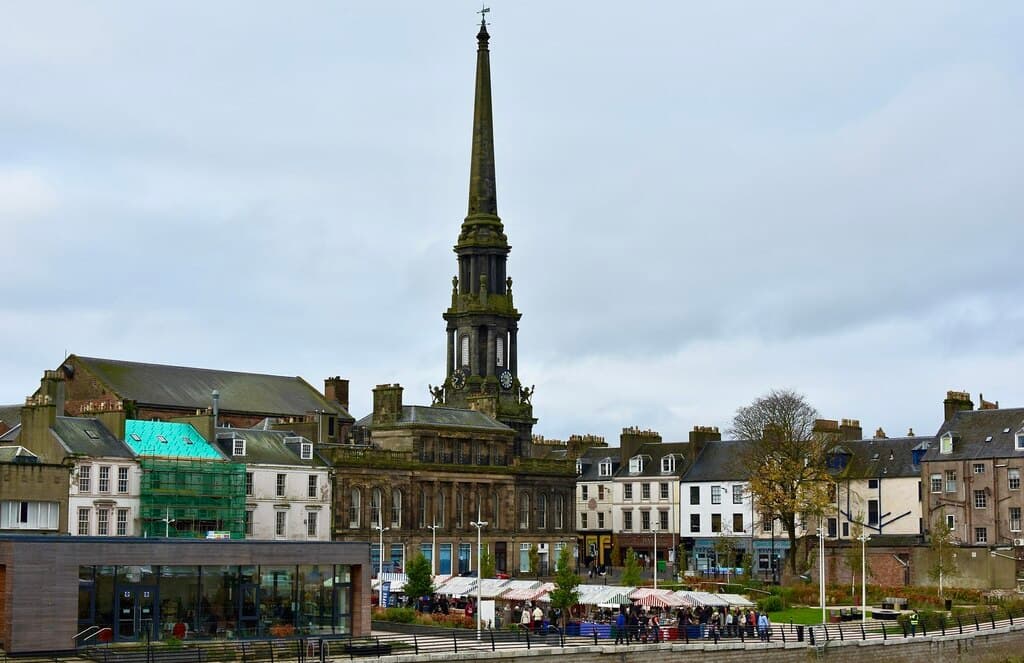
Mark S / CC BY-SA 2.0, via Wikimedia CommonsAyr
“Where Robert Burns's spirit still lingers by the sea.”
Ayr, as no one tells it.
Not the postcards. The stories even locals don't know — whispered in your ear, right where they happened.
A pub in Ayr holds a unique distinction, one that sets it apart from almost every other building in town.
The Wallace Tower stands tall in Ayr, a monument to a Scottish hero. But its connection to that hero is more complex than it appears.
Discover every secret of Ayr
Every address, every reveal in full — in your ear, right where it happened.
You pick your stops. You walk. The voice reveals what the others miss.
How long do you have in Ayr?
No tours available yet. Check back soon — we're preparing them.
The story of Ayr
Ayr, a coastal town in southwest Scotland, offers a stirring landscape where the River Ayr meets the Firth of Clyde. This burgh, with its sandy shores and wide skies, invites contemplation and exploration. It is a place deeply interwoven with the legacy of Robert Burns, Scotland's national poet, whose early life and inspirations are palpable in the very air and stone. The town presents a gentle rhythm, where the echoes of history meet the daily life of a seaside community.
Walking through Ayr, one encounters a blend of architectural periods, from venerable bridges to Victorian structures, each telling a piece of the town's unfolding story. The sea breeze carries the scent of salt and the distant cries of gulls, creating an atmosphere of quiet grandeur. Ayr serves as a gateway to the wider Ayrshire region, a landscape of rolling hills, ancient castles, and a profound connection to Scottish heritage.
Early Foundations and Royal Connections
Ayr's origins stretch back to the 13th century, when King William the Lion established it as a Royal Burgh in 1205. This designation granted the town significant trading privileges, allowing it to flourish as a port and market center. The River Ayr, a natural artery, facilitated commerce and communication, connecting the inland areas with the wider world via the Firth of Clyde. Evidence of early settlements suggests human activity in the area long before its formal recognition, drawn by the fertile lands and strategic coastal position.
The Age of Conflict and Resilience
Throughout the Wars of Scottish Independence, Ayr played a significant, if sometimes turbulent, role. William Wallace, a pivotal figure in Scottish history, is strongly associated with the region, though the specific details of his time in Ayr are often debated and intertwined with local legend. The town endured periods of occupation and conflict, demonstrating a steadfast resilience. Its strategic location meant it was frequently a point of contention, shaping its defenses and the character of its people. The Old Bridge, or Auld Brig, stands as a silent witness to many of these historical currents, its stones having seen centuries of passage and change.
Robert Burns and the Enlightenment
The late 18th century brought a new kind of prominence to Ayr, largely due to its association with Robert Burns. Born in Alloway, just south of Ayr, Burns spent his formative years in the region, drawing inspiration from its landscapes, people, and folklore. His poetry frequently references local landmarks and characters, imbuing them with an enduring literary significance. Ayr itself, as a regional center, would have been a place of intellectual exchange and social gathering, influencing the young poet's perspective. This period, marked by the Scottish Enlightenment, saw a flourishing of arts and letters, with Ayr playing its part in this cultural awakening.
Victorian Expansion and Modern Development
The Victorian era brought significant development and transformation to Ayr. The arrival of the railway in the mid-19th century connected the town more closely with Glasgow and other industrial centers, further cementing its role as a popular seaside resort. Grand hotels and promenades were constructed, catering to visitors seeking the restorative qualities of the sea air. Industry also expanded, though Ayr maintained its character as a market town and a port. In the 20th century, Ayr continued to evolve, adapting to changing economic landscapes while preserving its architectural heritage and its identity as a welcoming coastal community.
Begin your exploration at the Auld Brig, a medieval stone bridge that has spanned the River Ayr for centuries, a silent witness to the town's unfolding story. Nearby, the Tam O'Shanter Inn, a venerable public house, offers a glimpse into Ayr's past, its thatched roof a rare sight. Wander along the sandy expanse of Ayr Beach, where the Firth of Clyde stretches out before you, offering views towards the Isle of Arran on clear days. The Esplanade, a pleasant promenade, runs alongside, inviting leisurely strolls.
Visit the Robert Burns Birthplace Museum in nearby Alloway, a comprehensive site that includes the humble cottage where the poet was born, the historic Alloway Auld Kirk, and the iconic Brig o' Doon, all central to his narrative 'Tam o' Shanter.' In Ayr itself, the Wallace Tower stands as a Neo-Gothic monument, a striking landmark in the town center. For those interested in local governance and architecture, the Ayr Town Hall presents an imposing facade. The Loudoun Hall, one of Scotland's oldest surviving townhouses, offers another window into the past, showcasing medieval architecture. Consider a visit to Ayr Racecourse, a historic venue for horse racing, adding a lively dimension to the town's character.
The milder months, from late spring through early autumn (May to September), offer the most agreeable weather for exploring Ayr. During this period, the days are longer, and the temperatures are more comfortable for coastal walks and outdoor excursions. The town and surrounding areas are particularly verdant in spring, while summer provides opportunities for enjoying the beach and local events. Visiting outside of peak season can offer a quieter experience with fewer crowds.
Ayr is readily accessible by train from Glasgow, with frequent services making it an easy day trip or longer stay. For those driving, the A77 provides direct road links. The town center is largely walkable, with many attractions within easy reach. Local bus services connect various parts of Ayr and surrounding villages. Accommodation options range from guesthouses and B&Bs to larger hotels. Dining establishments offer a variety of Scottish fare, including fresh seafood, reflecting the town's coastal position. Be prepared for changeable Scottish weather, even in summer, by packing layers and waterproof outerwear.
- What is Ayr known for?
- Ayr is primarily known for its deep connection to Robert Burns, Scotland's national poet, and its history as a Royal Burgh and a seaside resort along the Firth of Clyde.
- Is Ayr a good base for exploring Ayrshire?
- Yes, Ayr serves as an excellent base for exploring the wider Ayrshire region, with easy access to other historic sites, golf courses, and coastal towns.
- Are there good walking opportunities in Ayr?
- Absolutely. Ayr offers pleasant walks along its sandy beach, the Esplanade, and paths along the River Ayr. The nearby countryside also provides numerous trails.
- What kind of food can I expect in Ayr?
- You can expect traditional Scottish cuisine, including locally sourced seafood, hearty pub fare, and various international options. Many establishments feature fresh, regional ingredients.
- Is Ayr suitable for families?
- Yes, Ayr is suitable for families, offering a beach, parks, and the Robert Burns Birthplace Museum, which provides engaging exhibits for different age groups.
- What is the significance of the Auld Brig?
- The Auld Brig is a historic medieval bridge over the River Ayr, known for its enduring structure and its mention in Robert Burns's poem 'The Brigs o' Ayr.'