Şeytan Sofrası (Devil's Table)
This sweeping viewpoint offers spectacular sunsets, but its name hints at a more mischievous origin.
Full story unlocks in the tour
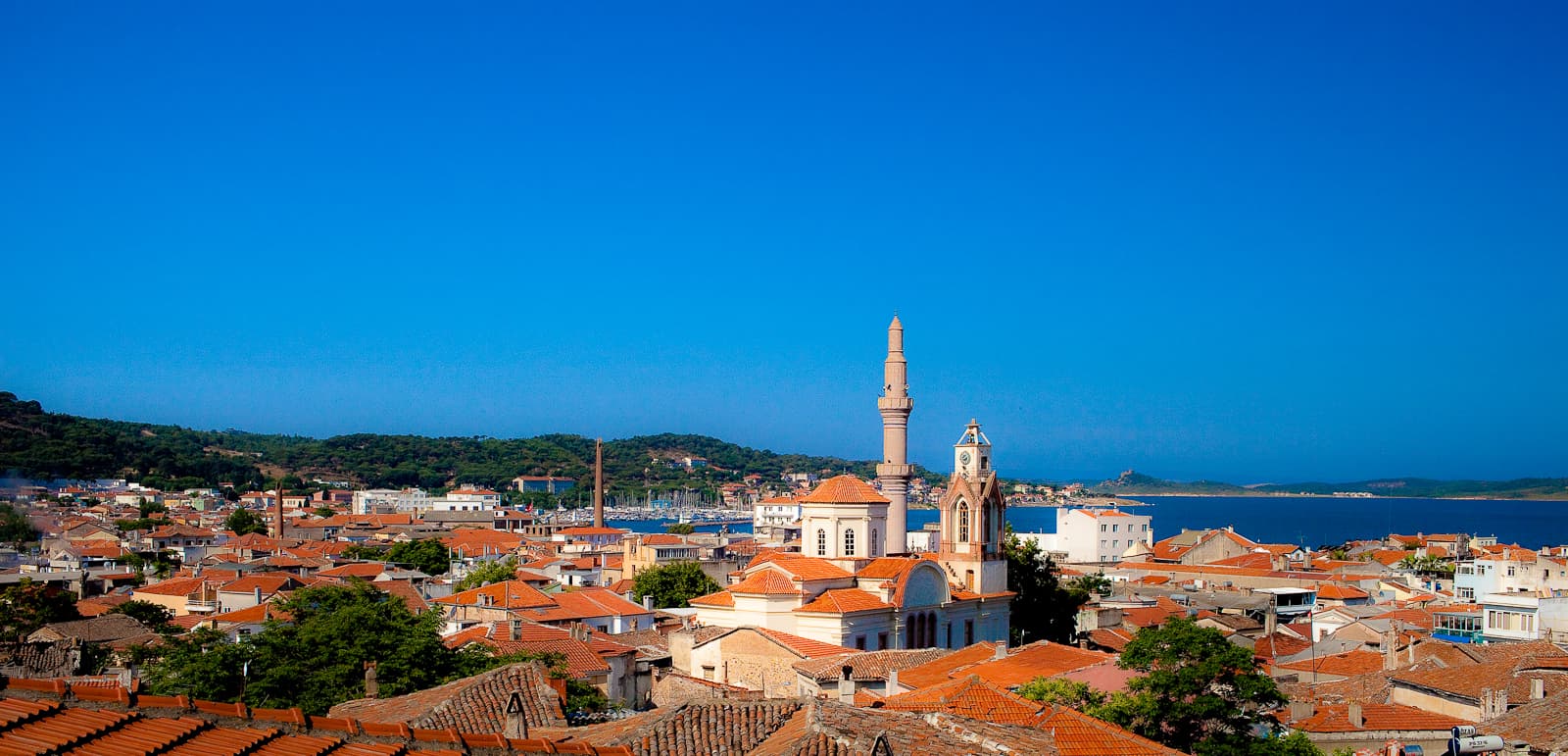 Esther Lee / CC BY 2.0, via Wikimedia Commons
“Where Aegean breezes carry whispers of olive groves and ancient stones.”
Not the postcards. The stories even locals don't know — whispered in your ear, right where they happened.
This sweeping viewpoint offers spectacular sunsets, but its name hints at a more mischievous origin.
The town's name, now synonymous with olives, actually has roots in a fruit that's largely absent from its modern landscape.
A historic coffeehouse in Ayvalık's old quarters holds a surprising past beyond its aromatic brews.
Discover every secret of Ayvalık
Every address, every reveal in full — in your ear, right where it happened.
You pick your stops. You walk. The voice reveals what the others miss.
No tours available yet. Check back soon — we're preparing them.
Ayvalık, a coastal town on Turkey's Aegean coast, offers a tranquil atmosphere distinct from many other popular Turkish holiday destinations. It is part of Balıkesir province and is known for its culture, cuisine, and fresh sea air. The town is situated on a peninsula, surrounded by an archipelago of 22 islands, with Cunda Island being the largest and most prominent. Ayvalık's allure lies in its preserved historical details, where visitors can easily feel at ease amidst its unpretentious character.
The town's architecture reflects a profound past, with stone houses, narrow lanes, and buildings crafted from distinctive 'sarımsak' (garlic) stone. Ayvalık is also renowned as the 'olive oil capital' of Turkey, with over 2.5 million olive trees, some centuries old, contributing to its distinctive olive and olive oil production. The 'Ayvalık Industrial Landscape,' encompassing its olive oil mills and related facilities, is even on UNESCO's Tentative World Heritage List.
## Tracing Ayvalık's Ancient Roots Ayvalık's history stretches back to approximately 1500 BC, with settlements by various societies, including the Mysia people who migrated from the Balkans. Over centuries, the region was under the dominion of Hittites, Phrygians, Lydians, Persians, the Pergamum Kingdom, and Romans. In antiquity, the Ayvalık Islands were known as Hekatonisa, a name derived from Apollon, also called Hekatos, the chief god of the ancient city of Nesos (modern-day Cunda Island).
## Ottoman Era and Greek Influence During the Ottoman Empire, Ayvalık developed as a significant center for Greek commercial, literary, and intellectual life, with a population predominantly composed of Greek Orthodox Christians. From the early 1800s, Ayvalık rapidly grew into an industrial and commercial hub, driven by its olive and olive oil trade. Some accounts suggest that from 1770, Ayvalık operated as an autonomous region under the Ottoman Empire, where Ottoman Greeks resided, and only government officials were Turkish. This period saw the construction of numerous grand churches and impressive stone mansions, many built with the local 'sarımsak' stone.
## The Population Exchange and Modern Ayvalık The early 20th century brought significant changes to Ayvalık. After World War I, the town was occupied by the Greek Army in 1919 but was reclaimed by Turkish forces in 1922 during the Turkish War of Independence. The 1923 population exchange between Greece and Turkey, stipulated by the Treaty of Lausanne, profoundly altered Ayvalık's demographics. Most of its Greek inhabitants moved to Greece, while Turks from Crete, Macedonia, and Lesbos settled in their homes. This exchange led to many churches being converted into mosques, with frescoes whitewashed and minarets added. Despite these transformations, the cultural heritage of both Greek and Turkish influences remains evident, creating a unique fusion that can still be felt in the town's architecture and atmosphere.
Begin your exploration in Ayvalık's town center, wandering through its narrow lanes lined with old Greek houses, many of which are now charming cafes and shops. The Macaron neighborhood, with its colorful houses and bougainvillea-draped balconies, offers a particularly nostalgic atmosphere. Don't miss the Saatli Mosque, a former church converted into a mosque, notable for its clock tower. The Taksiyarhis Monument Museum, originally a neoclassical church, is another architectural highlight.
Cunda Island, also known as Alibey Island, is easily accessible by road (crossing Türkiye's first bridge over the sea) or by boat. On Cunda, visit the Rahmi M. Koç Museum, housed in a restored 19th-century church, and the Sevim and Necdet Kent Library, located in a former church and windmill. For expansive views, head to Şeytan Sofrası (Devil's Table) or Cennet Hill, especially at sunset, offering panoramic vistas of the Ayvalık Islands and Lesbos. For beachgoers, Sarımsaklı Beach is popular for its clear, shallow waters and dry sand, while Badavut Beach offers a quieter experience.
Ayvalık experiences a Mediterranean climate with hot, dry summers and mild, rainy winters. The most favorable weather occurs from May to October, with temperatures ranging from 22°C to 29°C (71°F to 84°F). For swimming and beach activities, the summer months of June, July, August, and September are ideal, though they are also the busiest. For a quieter experience with milder temperatures, consider visiting in spring (April-May) or autumn (September-November), when the olive harvest begins. Ayvalık is generally enjoyable year-round, offering a peaceful, authentic experience in the quieter winter months.
Ayvalık is approximately 45 minutes from Edremit Koca Seyit Airport, with daily flights connecting to Ankara and Istanbul. From the airport, you can reach Ayvalık by shuttle or public transportation. Driving from Istanbul takes about five hours, from Ankara about eight hours, and from İzmir around two and a half hours. Ferries also connect Ayvalık to Lesbos, Greece, year-round, with a journey lasting 45 minutes to 1.5 hours.
Within Ayvalık, minibuses (dolmuş) are a convenient way to get around the town center and to Cunda Island, especially since the narrow streets can be challenging for cars. Renting a car is recommended if you plan to explore nearby areas and more secluded beaches. Accommodation options range from larger resorts and boutique hotels in Ayvalık to charming smaller hotels and guesthouses on Cunda Island. The official currency is the Turkish Lira, and currency exchange services are available in town.