Templo de Baco
Examine los intrincados grabados dentro del Templo de Baco.
La historia completa se desbloquea en el tour
 Ralph Ellis / CC BY-SA 4.0, via Wikimedia Commons
Tour de audio autoguiado de Baalbek — ruta GPS a pie, reproducción offline, narración en 32 idiomas.
“Donde se alzan colosales templos romanos, un testimonio de imperios perdurables y devoción ancestral.”
No las postales. Las historias que ni los locales conocen — al oído, justo donde ocurrieron.
Examine los intrincados grabados dentro del Templo de Baco.
La base del Templo de Júpiter incorpora piedras de inmensa escala.
Las seis columnas en pie del Templo de Júpiter son más que meros vestigios antiguos.
Descubre todos los secretos de Baalbek
Cada dirección, cada revelación al completo — a tu oído, justo donde ocurrió.
Eliges tus paradas. Caminas. La voz te revela lo que los demás ignoran.


Tu tour de audioguía por Baalbek te espera — elige tus lugares, tu idioma y empieza al llegar.
ComprarLume incluye una guía de realidad aumentada. Levanta el móvil y su cámara muestra la calle que tienes delante, con una flecha luminosa sobre la imagen real que siempre apunta a tu próxima parada — sin mapas que descifrar, sin giros equivocados. Como todo en Lume, funciona completamente sin conexión.
Baalbek, una antigua ciudad en el valle de la Bekaa en Líbano, alberga algunas de las ruinas romanas más impresionantes y mejor conservadas del mundo. Este sitio Patrimonio de la Humanidad por la UNESCO, una vez conocido como Heliópolis, o la 'Ciudad del Sol', durante las épocas griega y romana, exhibe una notable fusión de culturas fenicia, griega y romana. La magnitud de sus templos monumentales, dedicados a Júpiter, Baco y Venus, ofrece un vistazo convincente a la habilidad arquitectónica y el fervor religioso del Imperio Romano.
Más allá de estas estructuras imponentes, la historia de Baalbek se remonta al menos 11.000 años, con evidencia de habitación continua durante 8.000 a 9.000 años. Originalmente un asentamiento fenicio dedicado a la deidad solar Baal, la ubicación evolucionó hasta convertirse en un importante destino de peregrinación. Hoy, los visitantes pueden pasear por estas ruinas colosales, imaginando la bulliciosa ciudad antigua y admirando el legado perdurable de su pasado.
## Del culto fenicio a la grandeza romana Los orígenes de Baalbek se extienden al menos 11.000 años, con una habitación continua en la cima de Tell Baalbek durante 8.000 a 9.000 años. Los fenicios establecieron un sitio sagrado aquí, dedicando un templo a Baal-Hadad, el dios de la tormenta, y a su consorte Atargatis, convirtiéndolo en un importante destino de peregrinación. El nombre 'Baalbek' en sí mismo refleja esta identidad temprana, con 'Baal' refiriéndose al dios del cielo cananeo y fenicio y 'bek' probablemente significando valle.
Tras la conquista de Alejandro Magno en el 334 a. C., la ciudad fue rebautizada como Heliópolis, o 'Ciudad del Sol', una designación que mantuvo durante la época romana. Formó parte de los reinos Diadochi de Egipto y Siria antes de caer bajo el dominio ptolemaico y luego seléucida. Baalbek realmente floreció bajo el gobierno romano, convirtiéndose en una colonia romana en el 47 a. C. bajo Julio César. Durante los dos siglos siguientes, los romanos transformaron Baalbek en un centro religioso monumental, construyendo los vastos templos de Júpiter, Baco y Venus para el 150 d. C.
## Transformaciones y redescubrimiento Con el ascenso del cristianismo en el siglo IV, Baalbek sufrió alteraciones significativas. El Templo de Júpiter fue desmantelado y se construyó una basílica en su lugar, mientras que el Templo de Venus y el Templo de Baco se convirtieron en iglesias. Las imágenes de los dioses romanos en todo el complejo también fueron destruidas. En el 637 d. C., Baalbek quedó bajo dominación árabe después de que el ejército musulmán ocupara la ciudad. El sitio fue posteriormente convertido en una fortaleza en el siglo VII. A lo largo de los siglos siguientes, Baalbek experimentó períodos de destrucción por terremotos y varias conquistas, incluida la de los mongoles en 1260. Las ruinas de Baalbek atrajeron por primera vez la atención europea en el siglo XVI, lo que llevó a un esfuerzo de excavación y reconstrucción alemán entre 1898 y 1903.
Hoy, Baalbek es reconocido como un sitio Patrimonio de la Humanidad por la UNESCO, un testimonio de su excepcional valor universal y su contribución a la comprensión de las civilizaciones antiguas.
El principal atractivo de Baalbek es el complejo arqueológico, declarado Patrimonio de la Humanidad por la UNESCO. El Templo de Baco está notablemente conservado, con elaboradas tallas de uvas, vides y figuras mitológicas. A menudo se le considera uno de los templos romanos mejor conservados a nivel mundial. El Templo de Júpiter, aunque en gran parte en ruinas, aún llama la atención con sus seis inmensas columnas en pie, cada una de 20 metros de altura y 2,3 metros de diámetro, que alguna vez formaron parte del templo más grande del Imperio Romano. La base de este templo incluye las enormes 'Tres Piedras' (Trilithon), cada una de más de 19 metros de largo y un peso de alrededor de 800-1000 toneladas, lo que demuestra una increíble ingeniería antigua.
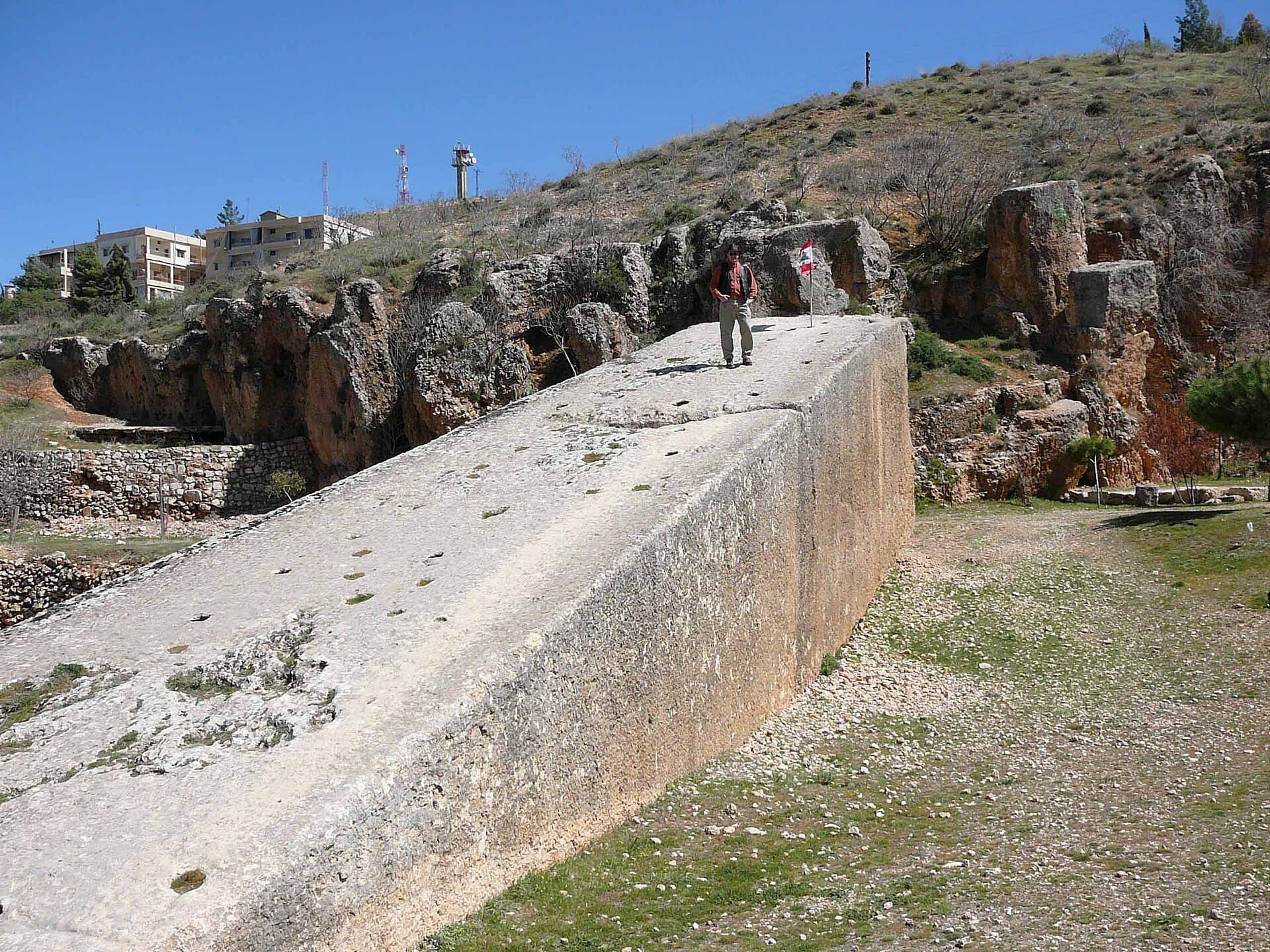
Los visitantes también pueden explorar el Templo de Venus, más pequeño y circular, que posteriormente se integró en una iglesia bizantina. La entrada ceremonial, conocida como propíleos, y el patio hexagonal ofrecen una mayor comprensión del diseño arquitectónico romano. A poca distancia de las ruinas principales se encuentra la antigua cantera romana, Hajar al-Hibla, donde se puede ver la 'Piedra de la Mujer Embarazada', un enorme bloque de piedra inacabado que pesa aproximadamente 1.650 toneladas. Para una comprensión más profunda de la historia del sitio, el Museo Arqueológico de Baalbek, ubicado dentro del complejo, exhibe artefactos desenterrados durante las excavaciones.
El momento ideal para visitar Baalbek es durante la primavera (abril-mayo) y el otoño (septiembre-octubre), cuando las temperaturas son agradables y hay menos multitudes. Las máximas diurnas suelen oscilar entre 19 y 29 °C con cielos despejados y baja humedad. La primavera ofrece flores silvestres, mientras que el otoño trae la cosecha de uva en el valle de la Bekaa. Los veranos (julio-agosto) pueden ser cálidos, con máximas promedio de alrededor de 32 °C, aunque también es cuando tiene lugar el Festival Internacional de Baalbek, con conciertos dentro de los templos. Los inviernos (diciembre-marzo) son fríos y húmedos, con posibilidad de nieve. El sitio arqueológico generalmente está abierto de 9 AM a 6 PM en verano y hasta las 4 PM en invierno.
Baalbek se encuentra aproximadamente a 85 kilómetros al noreste de Beirut. Puede llegar en taxi o coche privado, o en autobuses públicos desde la intersección Cola de Beirut. También hay excursiones de un día organizadas desde Beirut, que a menudo incluyen transporte y guía. La tarifa de entrada para visitantes extranjeros es de alrededor de 15.000 libras libanesas, o unos 10 USD. Las libras libanesas y los dólares estadounidenses son ampliamente aceptados.
Vístase con modestia por respeto a las costumbres locales, cubriendo hombros y rodillas. Los zapatos cómodos son esenciales para caminar por el terreno irregular del sitio arqueológico. Si bien la situación de seguridad en Líbano puede ser delicada, Baalbek en sí misma generalmente se ha considerado segura para los turistas, aunque siempre es aconsejable consultar las advertencias de viaje actuales. Se recomienda ir con un guía o tour local para facilitar la navegación y la comunicación.
Baalbek en coreano, en chino o en hebreo — y 29 idiomas más, cada parada narrada por una voz nativa. La mayor variedad de idiomas de cualquier audioguía autoguiada.
Disponible en: