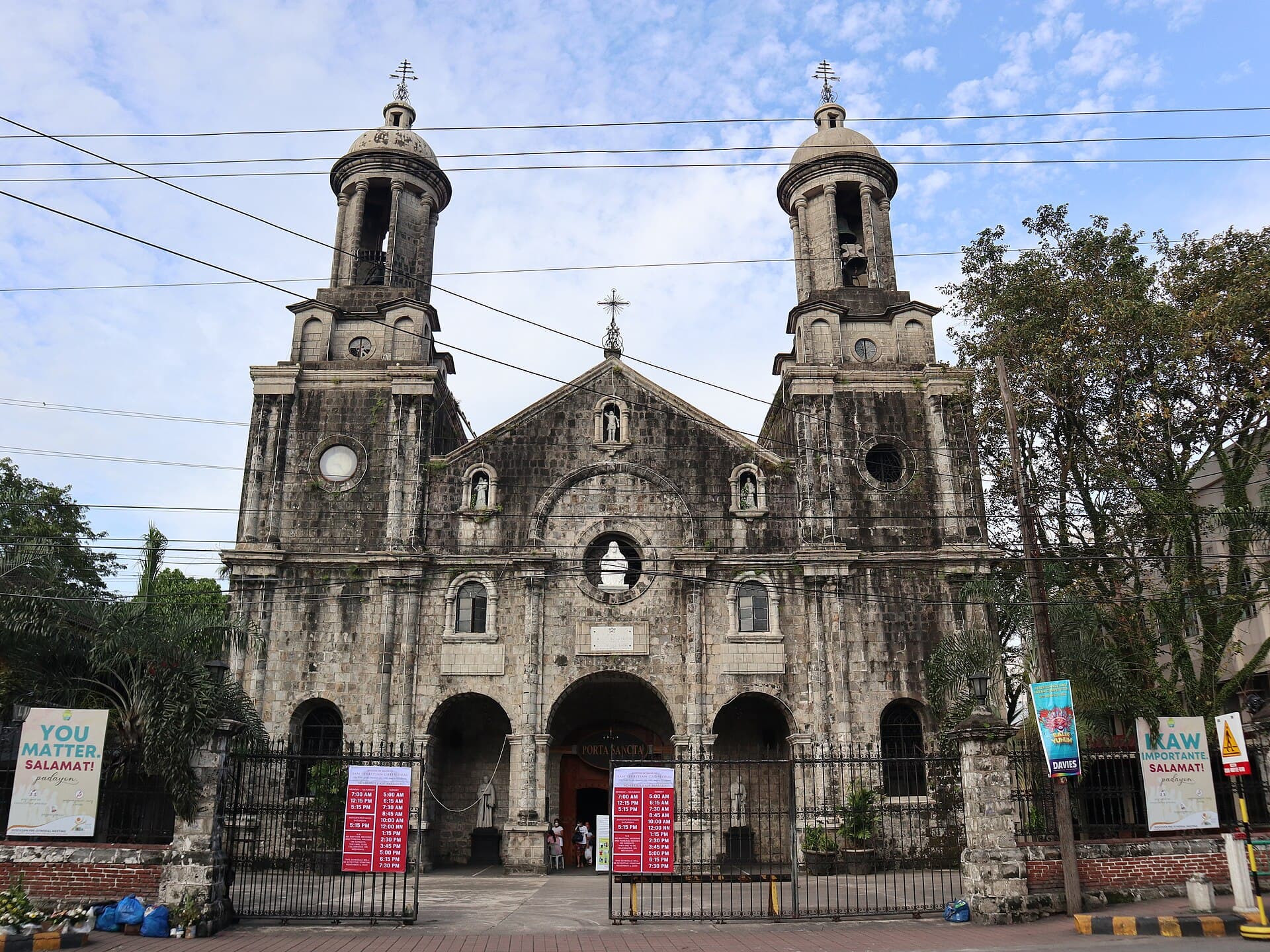
Bacolod, PhilippinesPatrickroque01 / CC BY-SA 4.0, via Wikimedia Commons
PH

Bacolod

Where resilience wears a smile, and every flavor tells a story.

The secrets of Bacolod

Bacolod, as no one tells it.

Not the postcards. The stories even locals don't know — whispered in your ear, right where they happened.

3 secrets below. Many more wait inside the tour.
The Ruins, Talisay City

This grand Italianate mansion wasn't always a skeletal beauty. Its dramatic transformation speaks volumes about a love story and a wartime decision.

Full story unlocks in the tour
Manokan Country

The aroma of grilled chicken here is legendary, but the origin of Bacolod's iconic Chicken Inasal isn't just about a recipe; it's about a street and a community.

Full story unlocks in the tour
MassKara Festival

The city's 'smile' is famous, but the MassKara Festival's colorful masks and joyous street dancing emerged from a period of profound sorrow.

Full story unlocks in the tour
The full tour

Discover every secret of Bacolod

Every address, every reveal in full — in your ear, right where it happened.

Get the key to Bacolod

You pick your stops. You walk. The voice reveals what the others miss.

Choose your time

How long do you have in Bacolod?

No tours available yet. Check back soon — we're preparing them.

About Bacolod

The story of Bacolod

Bacolod, officially known as the City of Bacolod, is a highly urbanized city on the northwestern coast of Negros Island in the Philippines. Often called the 'City of Smiles,' Bacolod is known for the infectious optimism of its people and the lively MassKara Festival. While it serves as the capital of Negros Occidental, locals often refer to the entire province as 'Bacolod,' highlighting its significance as a gateway to the wider 'Sugarland.' The city's appeal lies in its harmonious blend of indigenous Visayan customs and colonial influences, evident in its architecture, cuisine, and warm hospitality.

Beyond its celebrated festival, Bacolod is a culinary destination, recognized for its distinct chicken inasal and an array of delectable sweets. Its story is deeply intertwined with the sugar industry, which shaped its economy and left a legacy of grand ancestral homes. With a population of over 600,000, Bacolod is the most populous city in the Negros Island Region, offering a dynamic urban experience while retaining a connection to its enduring heritage and natural surroundings.

History

## From Stonehill to Sugar Capital Bacolod's story begins around 1770 as a small coastal settlement, its name derived from the Hiligaynon word 'bakolod,' meaning 'stone hill.' The original settlement was strategically located on hilly terrain in what is now the Granada district, providing protection against frequent pirate raids. However, by 1787, as the threat subsided, the community relocated closer to the shoreline, facilitating its growth as an important port.

### The Sugar Boom and Spanish Influence The mid-19th century marked a pivotal period with the rapid development of the sugar industry. Sugarcane cultivation transformed the region into the 'Sugar Bowl of the Philippines,' attracting significant investment and creating a class of wealthy landowners known as 'hacienderos.' This economic boom brought prosperity and Spanish settlers, leaving a lasting imprint on the city's architecture and culture. Bacolod's political status was further strengthened in 1894 when it was designated the capital of Negros Occidental province.

### Revolution and War During the Philippine Revolution, Bacolod became a focal point. On November 5, 1898, local forces, armed with rudimentary weapons, successfully captured the convent where Spanish forces surrendered. This led to the establishment of the short-lived Cantonal Republic of Negros, with Bacolod as its capital. However, American forces occupied the city in March 1899. Bacolod was officially elevated to a chartered city on June 18, 1938, a status formally inaugurated on October 19, 1938, with Commonwealth President Manuel L. Quezon's visit. World War II brought another period of occupation by Japanese forces from May 21, 1942, until its liberation by American forces on May 29, 1945.

### Resilience and Modernity The city faced significant economic hardship in the 1980s when the global price of sugar plummeted. This crisis, coupled with the MV Don Juan ferry tragedy, led to the creation of the MassKara Festival in 1980, a lively celebration designed to uplift spirits and bring smiles back to the faces of the Negrenses. Today, Bacolod is a dynamic metropolis that balances its enduring historical legacy with a modern economy, where tourism and other service sectors play an increasingly important role alongside its continuing sugar industry.

What to see

Begin your exploration at the San Sebastian Cathedral, a late 19th-century Romanesque-Gothic church constructed with coral stones from Guimaras and hardwood from Palawan. Directly across from it is the Bacolod Public Plaza, a lively gathering spot with well-manicured gardens and an old bandstand, reflecting Spanish influence. For a glimpse into the province's sugar history, visit the Capitol Park and Lagoon, where the Provincial Capitol Building, once a Japanese headquarters during WWII, stands. The Negros Museum, housed in the former Provincial Agricultural Building, offers exhibits on sugar plantation life and indigenous culture.

A short trip to nearby Talisay City reveals The Ruins, the majestic skeletal remains of a mansion built by a sugar baron for his beloved wife, a poignant testament to wartime history. In Silay City, often called the 'Paris of Negros,' you can embark on a heritage walk to see well-preserved ancestral houses like the Balay Negrense and the Bernardino Jalandoni Museum, offering insights into the opulent lifestyles of wealthy sugar barons. For a taste of nature, Mambukal Mountain Resort, at the foot of Mount Kanlaon, offers hot springs and a flying fox sanctuary. And, of course, no visit is complete without a stop at Manokan Country to savor authentic Bacolod chicken inasal.

When to visit

Bacolod experiences a tropical monsoon climate with distinct wet and dry seasons. The dry season, from January to the last week of April, is generally considered the best time to visit, offering pleasant, sunny weather ideal for sightseeing and outdoor activities. April is typically the warmest month, while December and January are the coolest. If you wish to experience the world-renowned MassKara Festival, plan your visit for October, when the city comes alive with colorful masks and street dancing.

Practical

Bacolod is accessible by air via the Bacolod–Silay International Airport (BCD), located approximately 15 kilometers northeast of Bacolod City in Silay. Shuttle vans are a popular and budget-friendly option for transfers between the airport and major points in Bacolod, such as SM City. Within the city, jeepneys and tricycles are common modes of local transportation, with taxis and ride-sharing services also available for longer distances. The primary language spoken is Hiligaynon (Ilonggo), but English is widely understood and spoken, especially in urban areas, making communication relatively easy for visitors. The local currency is the Philippine Peso (PHP).

Good to know
What is Bacolod known for?
Bacolod is most known for its MassKara Festival, a lively annual event featuring smiling masks and street dancing, earning it the nickname 'City of Smiles.' It's also recognized for its culinary heritage, particularly *chicken inasal* and various sweet delicacies.
What language is spoken in Bacolod?
The primary language spoken in Bacolod is Hiligaynon, also known as Ilonggo. Many residents also understand and speak Cebuano, Tagalog (Filipino), and English, especially in urban areas.
How do I get to Bacolod?
You can fly into Bacolod–Silay International Airport (BCD), which is about 15 kilometers from the city center. Shuttle vans, taxis, and ride-sharing services are available for transfers. Land and sea travel are also options from other islands in the Visayas.
What are the local foods to try in Bacolod?
A visit to Bacolod is incomplete without trying *chicken inasal*, a flavorful grilled chicken dish. Other local specialties include *cansi* (beef soup), *piaya* (a flatbread with muscovado sugar filling), and *napoleones* (a custard-filled pastry).
When is the MassKara Festival held?
The MassKara Festival is typically held annually in October, with the main festivities often occurring on the weekend nearest to October 19th, Bacolod's Charter Day anniversary.
Is Bacolod a walkable city?
Many of Bacolod's key attractions, particularly in the city center like the San Sebastian Cathedral and Bacolod Public Plaza, are easily explored on foot. For longer distances or trips to nearby areas, jeepneys, tricycles, and taxis are readily available.
Bacolod
From€9.00
No booking · activate anytime · 12h to walk it
Get the key to Bacolod