Meranplatz
Bad Aussee é conhecida como a capital do traje tradicional da Áustria, mas há uma peça em particular que ocupa um lugar especial nos corações locais.
História completa desbloqueada no tour
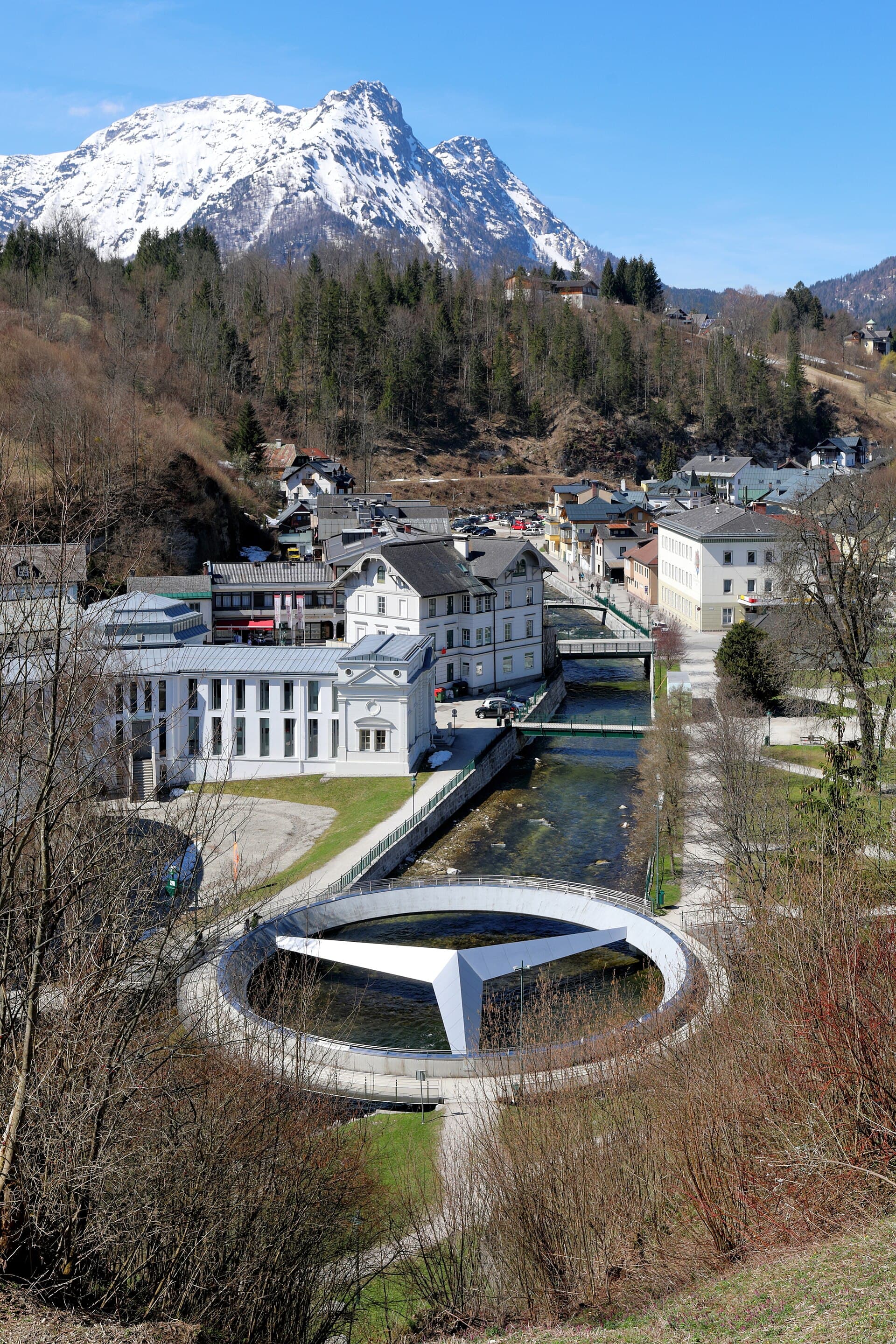 C.Stadler/Bwag / CC BY-SA 4.0, via Wikimedia Commons
Tour de áudio autoguiado por Bad Aussee — rota GPS a pé, reprodução offline, narração envolvente em 32 idiomas.
“Onde a tradição alpina encontra o coração selvagem do Salzkammergut.”
Não os postais. As histórias que nem os locais conhecem — sussurradas ao seu ouvido, exatamente onde aconteceram.
Bad Aussee é conhecida como a capital do traje tradicional da Áustria, mas há uma peça em particular que ocupa um lugar especial nos corações locais.
No coração do calmo Kurpark de Bad Aussee, em meio aos canteiros de flores e à atmosfera pacífica, encontra-se um marco de pedra com uma reivindicação peculiar.
O Lago Toplitzsee, a uma curta distância de Bad Aussee, é um corpo d'água tranquilo com um passado sombrio que alimentou décadas de especulação.
Descubra cada segredo de Bad Aussee
Cada endereço, cada revelação na íntegra — no seu ouvido, exatamente onde aconteceu.
Você escolhe as suas paragens. Você caminha. A voz revela o que os outros perdem.


O seu tour áudio autoguiado de Bad Aussee está pronto — escolha os seus pontos de interesse, selecione o seu idioma e comece no momento em que chegar.
ComprarA Lume inclui um guia de realidade aumentada. Levante o telemóvel: a câmara mostra a rua à sua frente, com uma seta luminosa sobreposta à imagem real que aponta sempre para a sua próxima paragem — sem mapa para decifrar, sem voltas erradas. Como tudo na Lume, funciona totalmente offline.
Bad Aussee, uma cidade mercantil e spa na região de Salzkammergut da Estíria, na Áustria, é um lugar onde o ritmo da tradição bate forte contra um cenário alpino dramático. Situada na confluência das três nascentes do rio Traun, a cidade é cercada por lagos, montanhas e florestas, com os picos do Totes Gebirge e do maciço de Dachstein visíveis à distância. Serve como centro econômico e cultural para a parte estíria da região dos lagos de Salzkammergut e, há mais de 150 anos, é um resort de saúde, com ênfase em fontes de água salgada e doce.
A uma altitude de 650 metros (2.133 pés) acima do nível do mar, Bad Aussee atrai visitantes com sua extensa rede de trilhas de caminhada claramente marcadas. A cidade também é reconhecida como a capital do traje tradicional da Áustria, com muitos habitantes usando regularmente trajes tradicionais. Essa profunda conexão com a cultura é evidente em seus festivais animados e costumes locais que refletem um patrimônio secular.
Bad Aussee oferece uma gama diversificada de atividades ao longo do ano, desde explorar lagos serenos como Altaussee e Grundlsee até desfrutar de tratamentos de bem-estar em spas locais. Sua mistura de beleza natural, riqueza cultural e oportunidades para relaxamento e aventura a tornam um destino atraente em todas as estações.
A história de Bad Aussee está profundamente entrelaçada com os abundantes depósitos de sal da região, que são extraídos desde a Idade do Ferro. Artefatos pré-históricos descobertos na caverna Salzofenhöhle indicam presença humana primitiva. A cidade começou a florescer na Idade Média, com salinas operando no final do século XIII, levando Bad Aussee a ser designada cidade mercantil em 1295.
Edifícios históricos importantes refletem esse longo passado. A Stadtpfarrkirche St. Paul (igreja paroquial), de estilo românico e gótico tardio, data do século XIII e abriga uma Madona gótica de 1420. A Spitalkirche (igreja hospitalar) na praça Meranplatz foi erguida antes de 1395 e apresenta altares e afrescos góticos. O Kammerhof, construído antes de 1200, serviu como administração de sal para a região até 1926 e agora funciona como museu regional.
Bad Aussee tem uma conexão especial com o Arquiduque Johann da Casa de Habsburgo, uma figura que impactou significativamente a Estíria e o Salzkammergut. Em 1827, ele se casou com Anna Plochl, filha de um correio local, uma união que causou considerável alvoroço devido ao seu status de plebeia. Uma estátua do Arquiduque fica no Kurpark, comemorando sua influência e seu carinho pela região.
Ao longo dos séculos, o povo do Salzkammergut, incluindo Bad Aussee, tem sido conhecido por seu forte orgulho local e, às vezes, por um espírito desafiador. Relatos históricos mencionam resistência contra a monarquia e até mesmo instâncias de celebrações movidas para os telhados quando festividades de rua eram proibidas. Essa veia independente moldou a identidade cultural duradoura da cidade.
Embora a mineração de sal permanecesse importante, Bad Aussee gradualmente evoluiu para um resort de saúde e verão, um desenvolvimento que ganhou impulso relativamente recentemente em comparação com outras cidades spa. A ênfase da cidade mudou para sua alta altitude, inúmeras trilhas de caminhada e as propriedades terapêuticas de suas fontes de água salgada e doce. Hoje, Bad Aussee é um resort de saúde reconhecido, oferecendo banhos de salmoura medicinais e terapia Kneipp Cure, uma abordagem holística que combina tratamentos com água fria, dietas e exercícios ao ar livre. Em 2010, Bad Aussee recebeu o título de "Cidade Alpina do Ano", reconhecendo seu compromisso com o desenvolvimento sustentável no Arco Alpino.
Comece sua exploração no Kurpark, um espaço verde sereno que também marca o centro geográfico da Áustria. Aqui, você encontrará uma estátua do Arquiduque Johann, uma figura amada na história local.
Mergulhe na herança local no Museu Kammerhof, instalado em um edifício do século XIV que outrora serviu como administração de sal. O museu oferece insights sobre tradições locais, o comércio de sal e uma coleção de fósseis regionais.
Para vistas panorâmicas, suba até o Tressensteinwarte (Torre de Observação), que oferece uma ampla perspectiva das montanhas circundantes. Outra estrada cênica é a Loser Panoramastraße, que proporciona vistas grandiosas das montanhas Dachstein e Totes Gebirge.
Explore a beleza natural dos lagos da região. Altaussee é considerada um dos corpos d'água mais bonitos da Estíria. Você também pode pegar um barco tradicional de madeira, uma Plätte, através do Lago Toplitzsee e, em seguida, caminhar até o Lago Kammersee. Bad Aussee também tem um Jardim Alpino e Trilha das Libélulas, exibindo flora regional única.
Para um gostinho do artesanato local, visite as lojas e oficinas de trajes tradicionais, pois Bad Aussee é conhecida como a capital do traje tradicional da Áustria. Você pode encontrar o autêntico Dirndl Ausseer e outros itens feitos à mão.
Bad Aussee oferece experiências únicas ao longo do ano. O evento mais celebrado é o Narzissenfest (Festival dos Narcisos), o maior festival de flores da Áustria, realizado anualmente no final de maio ou início de junho, quando os campos de narcisos florescem. Este festival de vários dias apresenta desfiles de elaboradas figuras de narcisos em carros alegóricos e barcos, música, dança e trajes tradicionais.
Para atividades de clima quente, como caminhadas e exploração dos lagos, a melhor época para visitar é de início de julho a final de agosto, quando as temperaturas são amenas. O verão também traz oportunidades para passeios tranquilos ao longo do rio Traun e passeios pelas montanhas. O inverno transforma Bad Aussee em um destino para esportes de inverno, com áreas de esqui próximas como Tauplitz e Loser oferecendo esqui, snowboard, esqui cross-country e caminhadas com raquetes de neve. O Carnaval de Aussee (Fasching) é outro destaque cultural, com desfiles tradicionais com figuras únicas como os Flinserln e Trommelweiber.
Bad Aussee está localizada no distrito de Liezen, na Estíria, a aproximadamente 80 km a sudeste de Salzburgo. A cidade é bem equipada com infraestrutura, incluindo instituições educacionais e hospitais. Transporte público e serviços de shuttle estão disponíveis. Para quem viaja de carro, o estacionamento geralmente está disponível, com grandes estacionamentos frequentemente fornecidos para grandes eventos como o Narzissenfest.
As opções de acomodação variam de hotéis de bem-estar com instalações de spa a charmosas pousadas. A culinária local enfatiza especialidades regionais, incluindo bolinhos fartos, peixes de água doce dos lagos cristalinos, iguarias defumadas e doces tradicionais como o pão de mel Ausseer. Mercados semanais oferecem produtos locais frescos e bens artesanais. Muitas lojas no centro da cidade oferecem trajes tradicionais, artesanato e outros produtos locais.
Bad Aussee — coreano, chinês, hebraico e mais 29 idiomas, cada parada narrada por uma voz nativa. A maior variedade de idiomas entre os passeios de áudio autoguiados.
Disponível em: