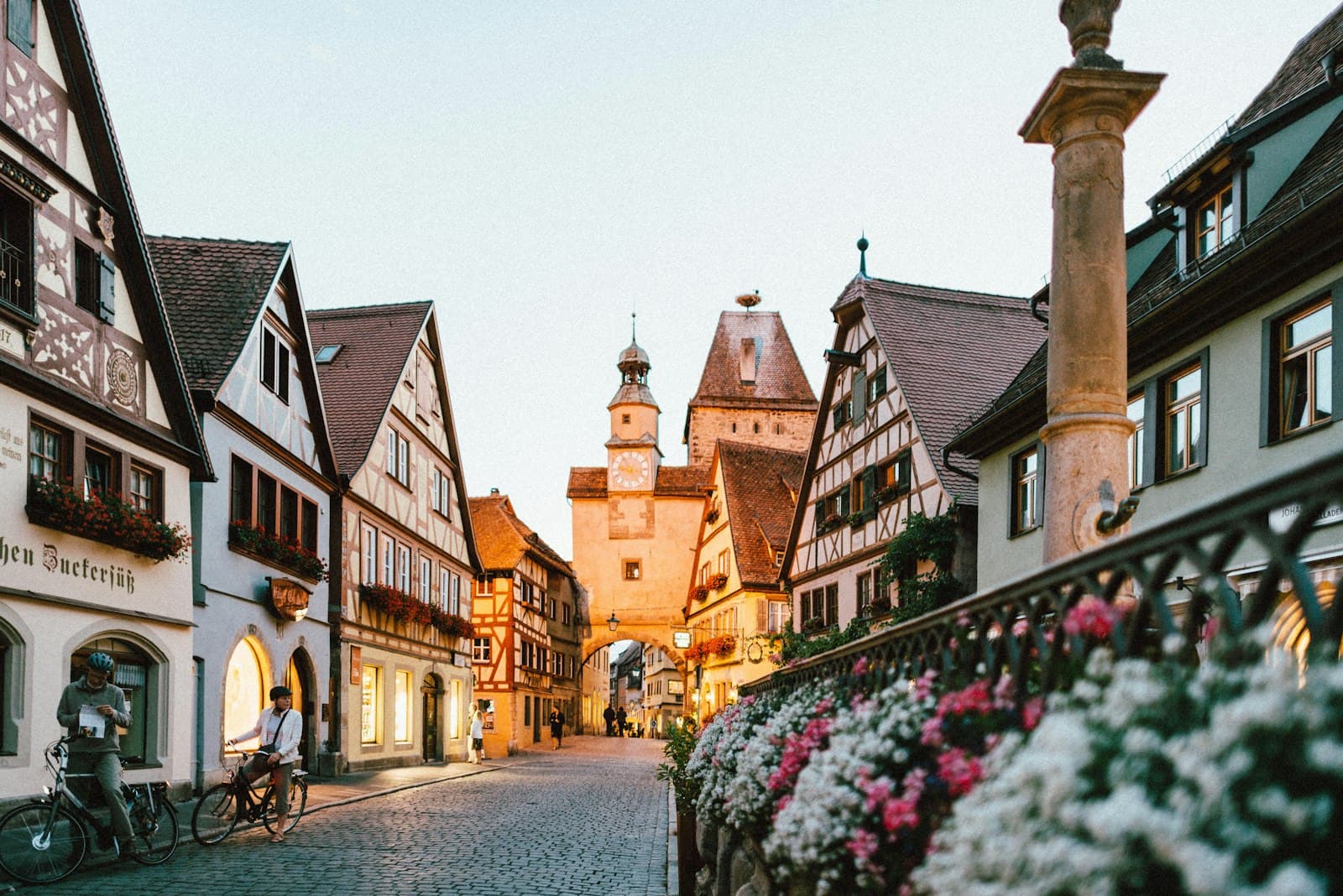
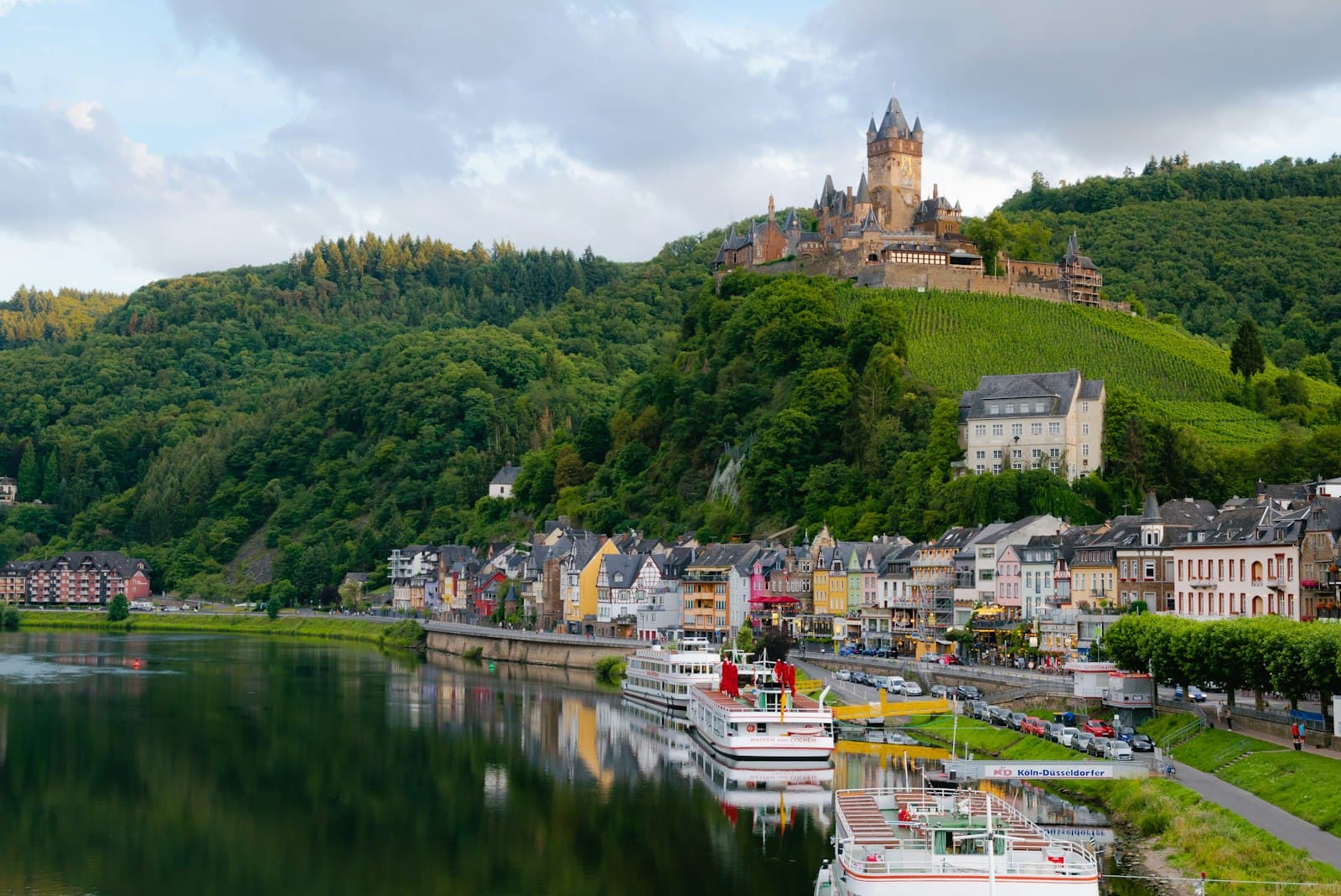
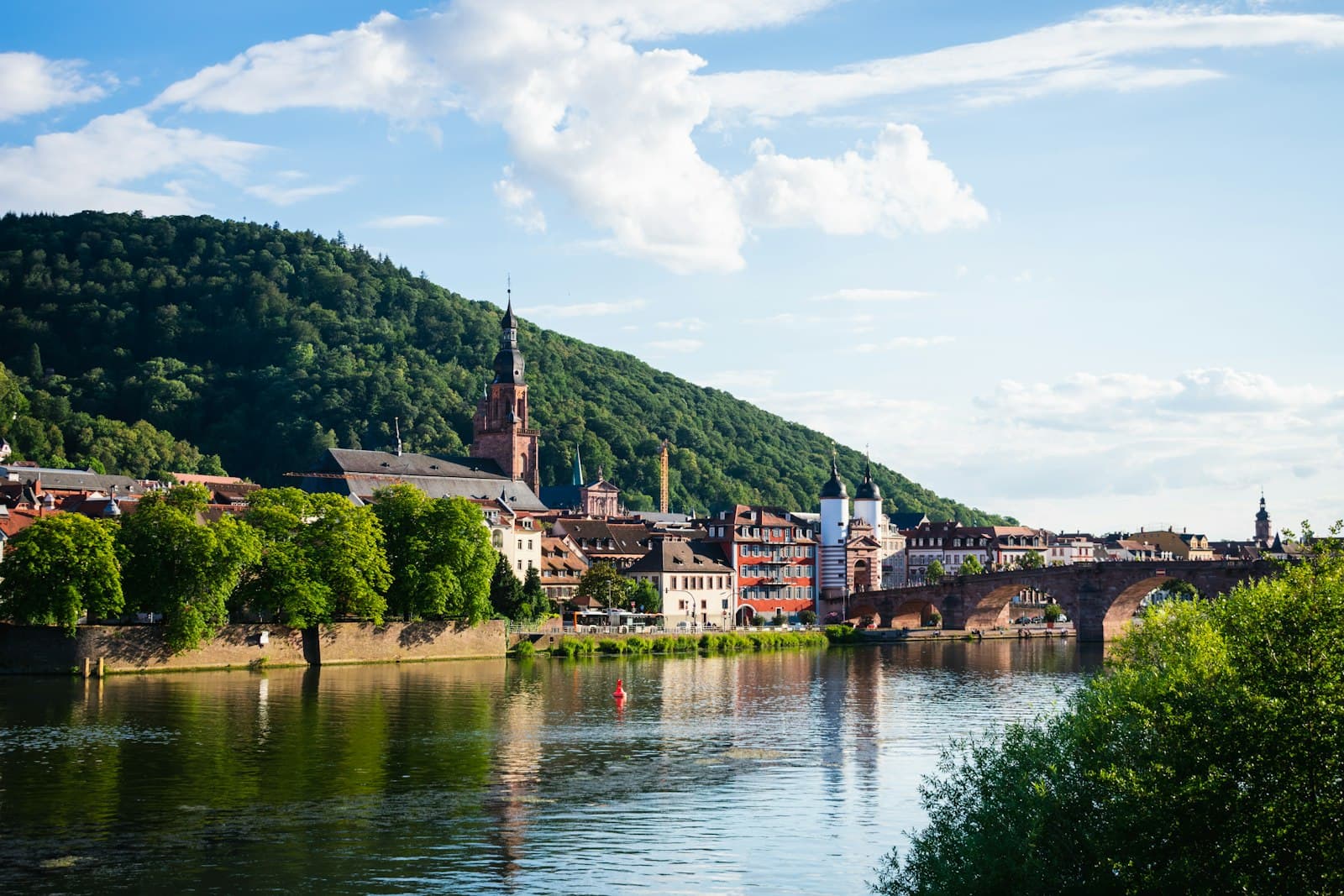
Baden-Baden, GermanyA.Savin / CC BY-SA 3.0, via Wikimedia Commons
DE

Baden-Baden

Where Belle Époque splendor meets Black Forest serenity.

The secrets of Baden-Baden

Baden-Baden, as no one tells it.

Not the postcards. The stories even locals don't know — whispered in your ear, right where they happened.

3 secrets below. Many more wait inside the tour.
Friedrichsbad

Mark Twain once described a visit to this historic bathhouse as losing track of time and the world. But there's a unique social custom that might surprise a modern visitor.

Full story unlocks in the tour
Casino Baden-Baden

Marlene Dietrich described it as the world's most beautiful casino, and it inspired a famous Russian novelist. However, gaining entry to the classic gaming rooms requires a specific ensemble.

Full story unlocks in the tour
Trinkhalle (Pump Room)

This grand arcade, adorned with murals, was once a central spot for visitors to 'take the waters.' While you can still sample the thermal water today, its original purpose had a specific, perhaps unexpected, focus.

Full story unlocks in the tour
The full tour

Discover every secret of Baden-Baden

Every address, every reveal in full — in your ear, right where it happened.

Get the key to Baden-Baden

You pick your stops. You walk. The voice reveals what the others miss.

Choose your time

How long do you have in Baden-Baden?

No tours available yet. Check back soon — we're preparing them.

About Baden-Baden

The story of Baden-Baden

Baden-Baden, a city in southwestern Germany, lies at the edge of the Black Forest, a region known for its dense woodlands and rolling mountains. This destination, celebrated for its thermal baths and graceful architecture, has drawn visitors for over 2,000 years, with its name itself meaning 'bathing' in German. In 2021, Baden-Baden was recognized as a UNESCO World Heritage Site as part of the 'Great Spa Towns of Europe,' acknowledging its significant role in European spa culture from the 18th to 20th centuries.

The city offers a blend of repose, culture, and natural beauty. Visitors can explore its old town with narrow lanes and elegant boutiques, visit world-class museums, or venture into the surrounding Black Forest for hiking. Baden-Baden's unique character stems from its thermal springs, which supply mineral-rich water to its celebrated bathhouses, making it an ideal destination for wellness enthusiasts.

History

## Roman Origins and Medieval Significance Baden-Baden's story begins with the Romans, who discovered and utilized its thermal springs around 2,000 years ago. The Roman emperor Caracalla visited the area in the 210s CE to alleviate his arthritic aches, leading to the construction of Roman baths for the garrison stationed in Strasbourg. Remains of these ancient soldiers' baths, complete with sophisticated heating and water technology, can still be seen beneath the Friedrichsbad.

After the Roman era, the town, then known as Aquae, fell into disrepair. It re-emerged in 1112 as the seat of the Margraviate of Baden. The Hohenbaden Castle, or Old Castle, served as the residence for the local margraves from the 11th to the 14th century, and notably featured one of Europe's first medieval sewage systems. The town suffered significant damage during the Thirty Years' War and was largely destroyed by fire in 1689 by French forces during the War of the Palatinate Succession.

## The Golden Age as 'Summer Capital of Europe' Baden-Baden's resurgence as a spa town began in the late 18th century. By the 19th century, it had transformed into a fashionable resort, earning the moniker 'Summer Capital of Europe.' During this period, its population could quadruple during the tourist season, attracting European nobility, artists, and intellectuals, including Queen Victoria, Wilhelm I, Hector Berlioz, and Fyodor Dostoevsky. The Kurhaus, with its opulent casino, became a central hub for social and cultural events. The Friedrichsbad, a monumental bathhouse combining Roman and Irish bathing traditions, was constructed between 1869 and 1877, becoming a symbol of modern spa luxury.

## Modern Era and World Heritage Status Despite challenges like the Franco-Prussian War and a temporary ban on gambling, Baden-Baden adapted by re-emphasizing its bathing traditions. While parts of the city were damaged during World War II, it later served as the headquarters for French occupation forces in Germany. In recent decades, Baden-Baden has continued to evolve, opening Germany's largest opera and concert hall, the Festspielhaus, in 1998. Its enduring history and preserved spa culture were formally recognized in 2021 with its inscription as a UNESCO World Heritage Site.

What to see

Begin your exploration in Baden-Baden's Old Town, where narrow streets, elegant boutiques, and historic façades create a charming atmosphere. Wander around Florentinerberg and Sophienstraße to discover cafés, small galleries, and classic patisseries. A visit to the thermal baths is essential; choose between the modern Caracalla Therme, offering extensive indoor and outdoor pools, saunas, and steam baths, or the historic Friedrichsbad, known for its traditional Roman-Irish bathing ritual.

Stroll along the Lichtentaler Allee, a historic park stretching for several kilometers along the River Oos, lined with old trees, flower beds, and elegant bridges. Highlights along the avenue include the Frieder Burda Museum, showcasing modern art, and the Gönneranlage rose garden. Do not miss the Trinkhalle (Pump Room), a neoclassical building with 16 Corinthian columns and 14 murals depicting local myths and legends. For panoramic views, take the Merkurbergbahn funicular up Merkur Mountain. The Casino Baden-Baden, described by Marlene Dietrich as 'the most elegant in the world,' is also worth a visit, either for gambling or a morning tour of its opulent Belle Époque interiors.

When to visit

Baden-Baden offers a mild climate, making it a suitable destination year-round. Spring and autumn are ideal for walking and sightseeing, with comfortable temperatures. Summer, from June to September, is considered the peak season for warm-weather activities, with average highs around 75°F (24°C), and is excellent for nature outings and open-air festivals. Winter provides an opportunity to enjoy the thermal waters and Christmas markets.

Practical

Baden-Baden is accessible by train, with direct ICE connections to Baden-Baden station, followed by regular bus services into the city center. If driving, the city is easily reached via the A5 motorway. Most attractions are within walking distance, and public transport is reliable. The city offers a range of accommodations, including luxury hotels like Brenners Park Hotel. While exploring, consider sampling the local wines from the Baden region, known for its Pinot Noir. The local food market, located on the second floor of the Wagener shopping center, is a good spot for a quick bite. Keep in mind that for classic games at the Casino Baden-Baden, a smart dress code, including a jacket for men, is enforced.

Good to know
What are the main thermal baths in Baden-Baden?
Baden-Baden features two prominent thermal baths: the modern Caracalla Therme, with various indoor and outdoor pools, saunas, and steam baths, and the historic Friedrichsbad, offering a traditional Roman-Irish bathing experience.
Is Baden-Baden a UNESCO World Heritage site?
Yes, Baden-Baden was inscribed as a UNESCO World Heritage Site in 2021 as part of the 'Great Spa Towns of Europe,' recognizing its historical significance as a spa destination.
What is the dress code for the Casino Baden-Baden?
For classic games, men are required to wear a jacket, and a tie is recommended. Jackets can be rented at the reception. For slot machines, smart casual attire is acceptable.
What kind of water comes from Baden-Baden's thermal springs?
Baden-Baden's 12 thermal springs provide artesian sodium fluoride-chloride-sodium weakly alkaline thermal water, with temperatures ranging from 32°C to 68.8°C. It is rich in minerals like sodium, chloride, and fluoride, known for their healing properties.
What is there to do besides spa treatments?
Beyond the spas, visitors can explore the historic Old Town, stroll along Lichtentaler Allee, visit museums like the Frieder Burda Museum or the Fabergé Museum, hike in the Black Forest, ride the Merkurbergbahn funicular, and visit the Casino Baden-Baden.
When is the best time to visit Baden-Baden?
Baden-Baden has a mild climate year-round. Spring and autumn are good for sightseeing, while summer (June to September) is ideal for warm-weather activities. Winter is suitable for enjoying the thermal baths and Christmas markets.
Baden-Baden
From€9.00
No booking · activate anytime · 12h to walk it
Get the key to Baden-Baden