Templo Ananda
La leyenda dice que el arquitecto de esta maravilla arquitectónica tuvo un final bastante permanente.
La historia completa se desbloquea en el tour
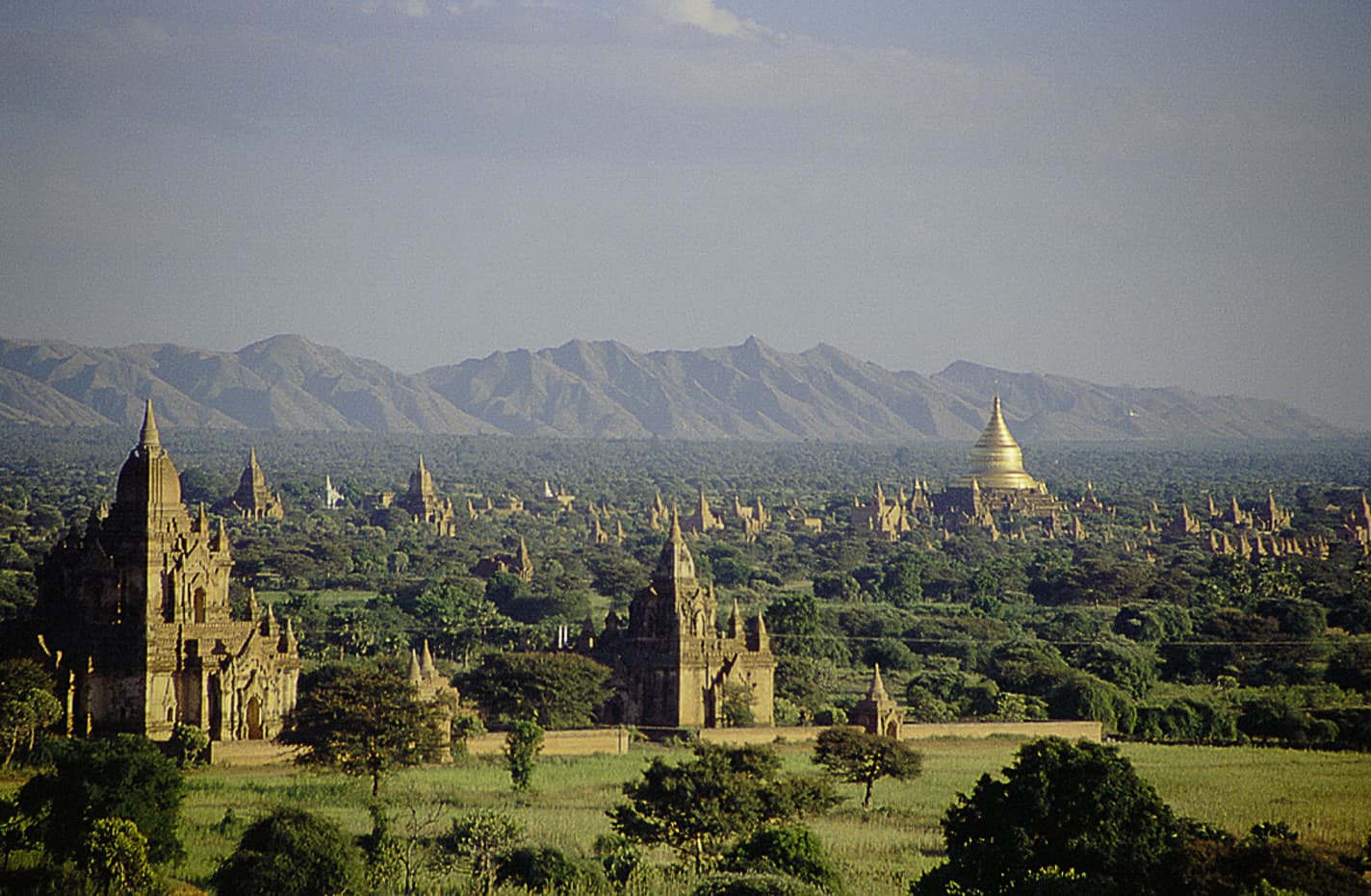 Corto Maltese 1999 / CC BY 2.0, via Wikimedia Commons
Tour de audio autoguiado de Bagan — ruta GPS a pie, reproducción offline, narración en 32 idiomas.
“Donde las antiguas agujas perforan la niebla matutina y la historia susurra con el viento.”
No las postales. Las historias que ni los locales conocen — al oído, justo donde ocurrieron.
La leyenda dice que el arquitecto de esta maravilla arquitectónica tuvo un final bastante permanente.
Los icónicos vuelos en globo al amanecer ofrecen una perspectiva que no se puede obtener desde el suelo, pero hay una razón por la que no encontrará vuelos al atardecer.
Los colores distintivos de la laca tradicional de Bagan cuentan una historia, pero algunos tonos podrían revelar un atajo moderno.
Descubre todos los secretos de Bagan
Cada dirección, cada revelación al completo — a tu oído, justo donde ocurrió.
Eliges tus paradas. Caminas. La voz te revela lo que los demás ignoran.

Tu tour de audioguía por Bagan te espera — elige tus lugares, tu idioma y empieza al llegar.
ComprarLume incluye una guía de realidad aumentada. Levanta el móvil y su cámara muestra la calle que tienes delante, con una flecha luminosa sobre la imagen real que siempre apunta a tu próxima parada — sin mapas que descifrar, sin giros equivocados. Como todo en Lume, funciona completamente sin conexión.
Bagan, anteriormente conocida como Pagan, es una antigua ciudad en la Región de Mandalay de Myanmar, distinguida por su extensa llanura salpicada de miles de antiguos templos, pagodas y monasterios budistas. Floreciendo entre los siglos IX y XIII, sirvió como capital del Reino de Pagan, el primer reino en unificar las regiones que más tarde formarían el Myanmar moderno. Hoy en día, más de 2.200 de estas estructuras permanecen, creando un paisaje que es tanto un sitio arqueológico significativo como un centro cultural vivo y palpitante donde la vida local continúa en medio de los monumentos históricos.
La magnitud y la devoción espiritual evidentes en la arquitectura de Bagan le han valido el estatus de Patrimonio de la Humanidad por la UNESCO. Los viajeros pueden explorar una diversa gama de templos, desde grandes monumentos bien conservados hasta estupas más pequeñas y apartadas, cada una ofreciendo un vistazo a un pasado profundo. La forma más icónica de experimentar la extensión de Bagan es presenciando el amanecer o el atardecer sobre las llanuras, un espectáculo a menudo realzado por la vista de globos aerostáticos que flotan silenciosamente sobre las antiguas agujas.
## El Ascenso del Reino de Pagan La historia registrada de Bagan realmente comienza con el Rey Anawrahta, quien ascendió al trono en el 1044 d.C. A menudo se le atribuye ser el fundador del Primer Imperio de Myanmar, unificando tribus y estados dispares a lo largo de la llanura del río Irrawaddy. El reinado de Anawrahta marcó un cambio fundamental, ya que introdujo y promovió el budismo Theravada como religión estatal, reemplazando cultos animistas anteriores y prácticas Mahayana. Esta transformación religiosa fue fundamental para dar forma a la identidad cultural y espiritual de Myanmar.
## Una Edad de Oro de Construcción de Templos Bajo Anawrahta y sus sucesores, Bagan entró en una edad de oro de actividad arquitectónica y artística. En 1057, Anawrahta conquistó la ciudad Mon de Thaton, un importante centro de civilización india, trayendo de vuelta a Bagan escrituras Theravada, monjes budistas y hábiles artesanos. Esta afluencia de cultura Mon, con sus fuertes influencias indias, enriqueció enormemente la civilización de Bagan, proporcionando una tradición artística y literaria, y un sistema de escritura. La riqueza generada por el comercio y las mejoras agrícolas, incluidos extensos sistemas de irrigación a lo largo del río Zawgyi, financió la construcción de miles de templos, pagodas y monasterios. Durante el apogeo del reino entre los siglos XI y XIII, se construyeron más de 10.000 estructuras budistas en las llanuras de Bagan.
## Estilos Arquitectónicos y Declive Los templos de Bagan exhiben diversos estilos arquitectónicos, categorizados ampliamente en templos sólidos estilo estupa y templos huecos estilo 'gu'. Muchos fueron adornados con Budas dorados, intrincados frescos que representan historias Jataka (relatos de las encarnaciones previas de Buda), esculturas y relieves de terracota vidriada. Ejemplos notables incluyen el Templo Ananda, de influencia Mon, y el enigmático Templo Dhammayangyi. El Reino de Pagan finalmente declinó hacia finales del siglo XIII, pero las miles de estructuras supervivientes son un poderoso testimonio de su pasada grandeza y profunda devoción espiritual.
Explorar Bagan a menudo comienza en Old Bagan, la ciudad amurallada que alberga una alta concentración de monumentos. Los templos clave para visitar incluyen el Templo Ananda, una obra maestra de la arquitectura Mon conocida por sus cuatro imágenes de Buda de pie y sus expresiones cambiantes según la distancia de observación. Otro sitio significativo es el Templo Dhammayangyi, el templo más grande de Bagan, reconocido por su arquitectura distintiva. Para tallas y frescos intrincados, el Templo Sulamani es una parada gratificante. La Pagoda Shwesandaw es un lugar popular para vistas panorámicas, particularmente al amanecer o al atardecer, aunque puede estar bastante concurrida. Para una experiencia más tranquila, considere encontrar una estupa menos visitada cerca para disfrutar de vistas similares.
Más allá de los templos principales, considere visitar pueblos locales como Myinkaba, conocido por su artesanía tradicional de laca. Aquí, puede observar a los artesanos creando intrincadas piezas de bambú y resina de laca. Una visita al mercado de Nyaung U ofrece un vistazo a la vida local y una oportunidad para encontrar recuerdos distintivos. Para una perspectiva diferente de las llanuras salpicadas de templos, un paseo en globo aerostático al amanecer ofrece una experiencia inigualable, aunque costosa.
El momento ideal para visitar Bagan es durante la estación seca, de noviembre a febrero. Las temperaturas durante estos meses son más frescas, promediando alrededor de 25-32°C, y hay mínimas precipitaciones, lo que lo hace cómodo para explorar los templos. Este período también coincide con la temporada de globos aerostáticos, que va de mediados de noviembre a febrero. Aunque octubre y marzo se consideran temporadas intermedias con menos multitudes y precios potencialmente mejores, las temperaturas comienzan a subir en marzo. Evite visitar de marzo a mayo, ya que son los meses más calurosos, con temperaturas que a menudo alcanzan los 40°C o más. La temporada de lluvias, de junio a octubre, trae mayor humedad y precipitaciones, lo que puede interrumpir los planes de viaje.
Se requiere una tarifa de zona arqueológica de aproximadamente 25.000 Kyat (alrededor de 15-20 USD) para ingresar a la Zona Arqueológica de Bagan, válida por cinco días. Este pase a menudo se verifica en los templos principales y se puede comprar en el Aeropuerto de Nyaung U o en los puntos de entrada principales. Es aconsejable llevar efectivo, ya que es posible que no se acepten tarjetas de crédito para esta tarifa.
Moverse por Bagan se hace mejor en e-bike, que ofrece flexibilidad y le permite explorar templos fuera de lo común. Los alquileres suelen costar entre 8.000 y 15.000 Kyats por un día completo. Las bicicletas también son una opción, aunque los caminos arenosos y el calor pueden ser un desafío. Hay carros de caballos disponibles, pero considere el bienestar de los animales. Al visitar templos, vístase con modestia, cubriendo sus hombros y rodillas, y prepárese para quitarse los zapatos y calcetines antes de entrar, por lo que se recomienda calzado fácil de quitar y poner. Lleve mucha agua, especialmente durante los meses más calurosos, y repelente de mosquitos.
Actualmente, los viajes a Myanmar, incluido Bagan, están sujetos a conflictos civiles e inestabilidad política. Si bien el circuito turístico principal sigue siendo accesible, es crucial mantenerse informado sobre las condiciones actuales, evitar las regiones fronterizas y registrar su viaje en su embajada.
Bagan en coreano, en chino o en hebreo — y 29 idiomas más, cada parada narrada por una voz nativa. La mayor variedad de idiomas de cualquier audioguía autoguiada.
Disponible en: