Loakan Road
Un tramo particular de carretera en Baguio es conocido por una viajera etérea que busca pasaje.
La historia completa se desbloquea en el tour
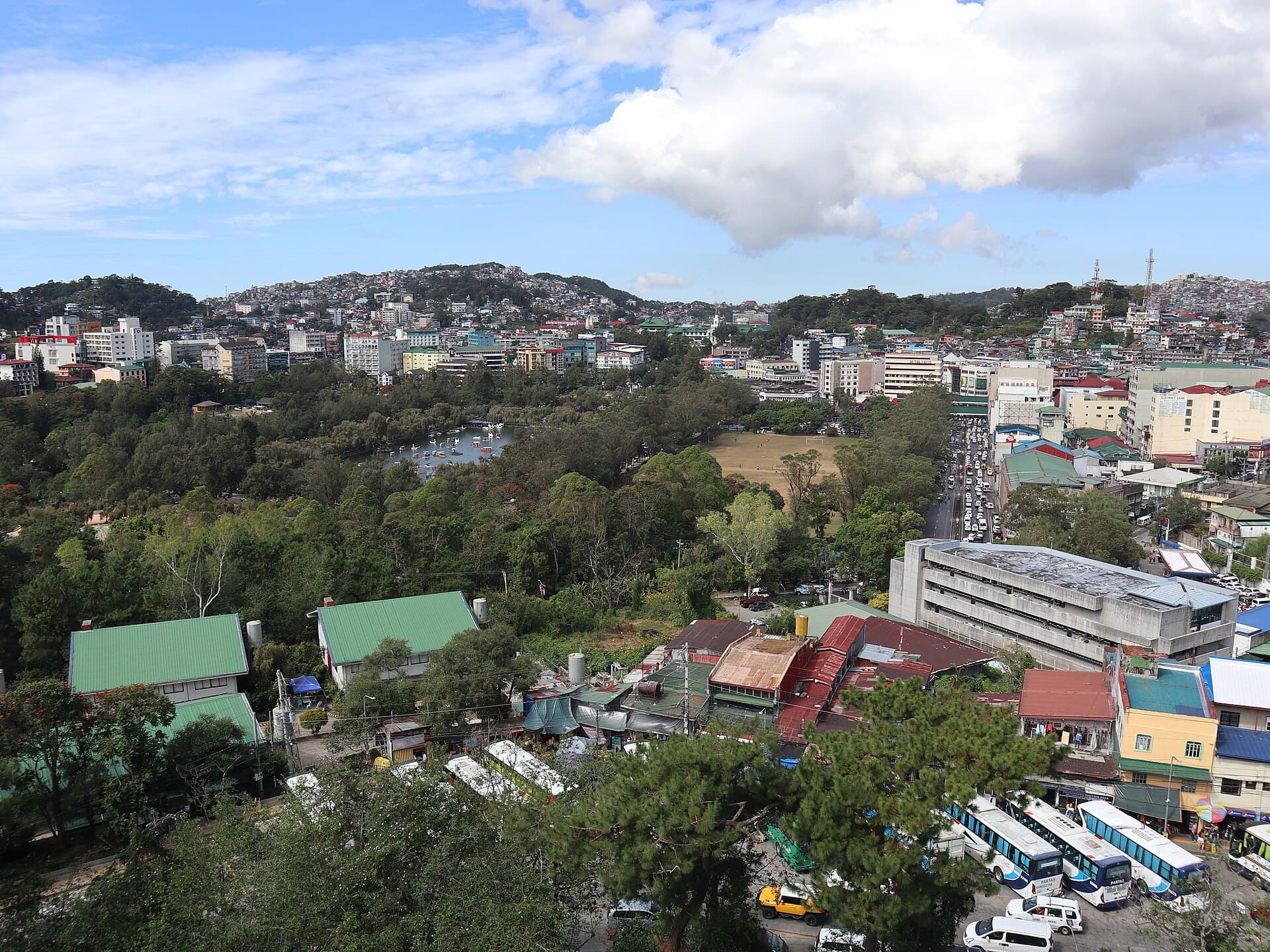 Patrickroque01 / CC BY-SA 4.0, via Wikimedia Commons
Tour de audio autoguiado de Baguio — ruta GPS a pie, reproducción offline, narración en 32 idiomas.
“Donde el aire de la montaña susurra secretos y los pinos se alzan como antiguos guardianes.”
No las postales. Las historias que ni los locales conocen — al oído, justo donde ocurrieron.
Un tramo particular de carretera en Baguio es conocido por una viajera etérea que busca pasaje.
Se dice que esta gran mansión de estilo victoriano, con su elegante fachada, alberga más que solo recuerdos; algunos creen que sus antiguos ocupantes aún perduran, quizás incluso acompañando a los visitantes a casa.
Una vez un retiro sereno, luego un hotel de lujo, esta estructura en la cima de una colina ahora se erige como un monumento sombrío a un pasado violento, con ecos de sus antiguos habitantes que aún se dice que flotan por sus pasillos desiertos.
Descubre todos los secretos de Baguio
Cada dirección, cada revelación al completo — a tu oído, justo donde ocurrió.
Eliges tus paradas. Caminas. La voz te revela lo que los demás ignoran.


Tu tour de audioguía por Baguio te espera — elige tus lugares, tu idioma y empieza al llegar.
ComprarLume incluye una guía de realidad aumentada. Levanta el móvil y su cámara muestra la calle que tienes delante, con una flecha luminosa sobre la imagen real que siempre apunta a tu próxima parada — sin mapas que descifrar, sin giros equivocados. Como todo en Lume, funciona completamente sin conexión.
Baguio, a menudo referida como la "Capital de Verano de Filipinas" y la "Ciudad de los Pinos", ofrece un fresco respiro del calor tropical de las tierras bajas. Situada a una elevación aproximada de 1.500 metros (4.900 pies) sobre el nivel del mar en las montañas de la Cordillera, el clima de la ciudad propicia el crecimiento de plantas musgosas, orquídeas y, por supuesto, pinos. Este entorno singular proporciona un escape refrescante, atrayendo tanto a visitantes locales como internacionales en busca de aire fresco y extensiones verdes.
Más allá de su clima vigorizante, Baguio es un centro vibrante de cultura, educación y comercio en el norte de Luzón. Ha sido reconocida como Ciudad Creativa de la UNESCO, cultivando una floreciente escena artística evidente en lugares como el Valle de los Colores y la Aldea de Artistas Ili Likha. Desde festivales animados hasta un variado panorama culinario, Baguio presenta una ecléctica gama de experiencias para cada viajero.
Antes de la llegada de los colonizadores, el área ahora conocida como Baguio era llamada Kafagway por el pueblo indígena Ibaloi. El nombre "Baguio" en sí mismo se deriva de la palabra Ibaloi bagiw, que significa "musgo", una planta que históricamente fue abundante en la región. Si bien los españoles hicieron intentos de explorar y desarrollar estos territorios montañosos, fueron los estadounidenses quienes realmente moldearon el futuro de Baguio a principios del siglo XX.
En 1900, la administración estadounidense estableció Baguio como una estación de montaña, un refugio del intenso calor y la humedad de las tierras bajas filipinas. El célebre arquitecto estadounidense Daniel Burnham fue encargado de diseñar el plan maestro de la ciudad, transformando Kafagway en una ciudad turística bien organizada y verde. En 1903, la Comisión Filipina declaró oficialmente a Baguio la "Capital de Verano" de Filipinas, una designación que aún conserva. La ciudad obtuvo el estatus de ciudad con carta en 1909.
La importancia estratégica de Baguio creció, atrayendo instituciones gubernamentales, incluida la residencia de verano del presidente y la Corte Suprema. La construcción de la carretera Kennon mejoró aún más su accesibilidad, conectando la ciudad con las tierras bajas. Sin embargo, este período de crecimiento fue interrumpido por la Segunda Guerra Mundial. El 8 de diciembre de 1941, bombarderos japoneses atacaron Camp John Hay, una instalación estadounidense, y la ciudad fue ocupada por fuerzas japonesas más tarde ese mes. Camp John Hay fue utilizado como base militar por el Ejército Imperial Japonés. La guerra concluyó en la región con la rendición del General Yamashita en la residencia del Embajador estadounidense en Camp John Hay el 3 de septiembre de 1945. Después de la guerra y la independencia de Filipinas en 1946, Baguio reanudó su papel como capital de verano y se embarcó en un camino de rehabilitación y desarrollo continuo. La ciudad también experimentó un auge minero a mediados de la década de 1930, contribuyendo a su crecimiento industrial. En 1990, un potente terremoto de magnitud 7.8 causó daños significativos a la infraestructura de Baguio, pero la ciudad fue reconstruida con ayuda nacional e internacional.
Baguio ofrece una diversa gama de atracciones, mezclando la belleza natural con sitios históricos y culturales. Burnham Park, un espacio verde central, cuenta con una laguna para paseos en bote, alquiler de bicicletas y varios puestos de comida y souvenirs. Para vistas panorámicas de la ciudad y las tierras altas, Mines View Park es un punto de observación popular, especialmente durante el amanecer o el atardecer.
Los entusiastas del arte y la cultura pueden explorar el Museo BenCab, que exhibe las obras del Artista Nacional Benedicto Cabrera y otros artistas filipinos, junto con hermosos jardines y una cafetería. La Aldea de Artistas Ili Likha es otro centro creativo, que presenta arte local y diversas ofertas culinarias. Para explorar la cultura indígena, Tam-Awan Village exhibe auténticas cabañas de Kalinga y Sagada, ofreciendo una visión de las tradiciones de la Cordillera.
Los hitos históricos incluyen Camp John Hay, una antigua base militar estadounidense ahora un área recreativa con edificios históricos como la Casa Bell. El Jardín Botánico de Baguio ofrece un escape tranquilo con sus diversas áreas temáticas y orquideario. Para una experiencia de compra única, el Mercado Nocturno de Baguio en Harrison Road ofrece una amplia variedad de comida callejera y hallazgos a buen precio. Además, la cercana Granja de Fresas La Trinidad permite a los visitantes recolectar sus propias fresas cuando están en temporada.
El clima fresco distintivo de Baguio, con un promedio entre 14°C y 24°C durante todo el año, lo convierte en un destino favorito para escapar del calor de las tierras bajas. La estación seca, de noviembre a abril, ofrece cielos más claros y temperaturas constantemente frescas, lo que la hace ideal para actividades al aire libre. Este período incluye la temporada alta de turismo de diciembre a febrero, coincidiendo con las vacaciones de Navidad y el animado Festival de las Flores Panagbenga en febrero. Anticipe mayores multitudes y precios de alojamiento más altos durante estos meses. La estación húmeda, de mayo a octubre, trae fuertes lluvias, particularmente de julio a septiembre. Aunque más tranquila con precios de hotel más bajos, la lluvia persistente puede afectar los planes al aire libre.
Viajar a Baguio desde Manila generalmente implica un viaje en autobús de 5 a 6 horas. Varias líneas de autobús, incluidas Victory Liner y Genesis, ofrecen servicios frecuentes. Dentro de Baguio, los principales medios de transporte son los jeepneys y los taxis. Los jeepneys son una forma económica de navegar por rutas establecidas, con tarifas que suelen oscilar entre 15 y 25 pesos. Los taxis son abundantes, tienen taxímetro y generalmente se consideran fiables, con una tarifa inicial de alrededor de 50 pesos. Las aplicaciones de transporte como Grab también están disponibles. Para aquellos que viajan con equipaje o en grupos, los taxis pueden ser una opción conveniente y rentable. Es aconsejable reservar alojamiento con antelación, especialmente durante las temporadas altas y festivos, ya que la ciudad puede llenarse mucho. Lleve siempre ropa de abrigo, incluso durante los meses más cálidos, ya que las temperaturas pueden bajar significativamente por la noche y a primera hora de la mañana.
Baguio en coreano, en chino o en hebreo — y 29 idiomas más, cada parada narrada por una voz nativa. La mayor variedad de idiomas de cualquier audioguía autoguiada.
Disponible en: