Kviknes Hotel
This grand hotel, a beacon on the Sognefjord, safeguards a private collection that narrates a story beyond its elegant facade.
Full story unlocks in the tour
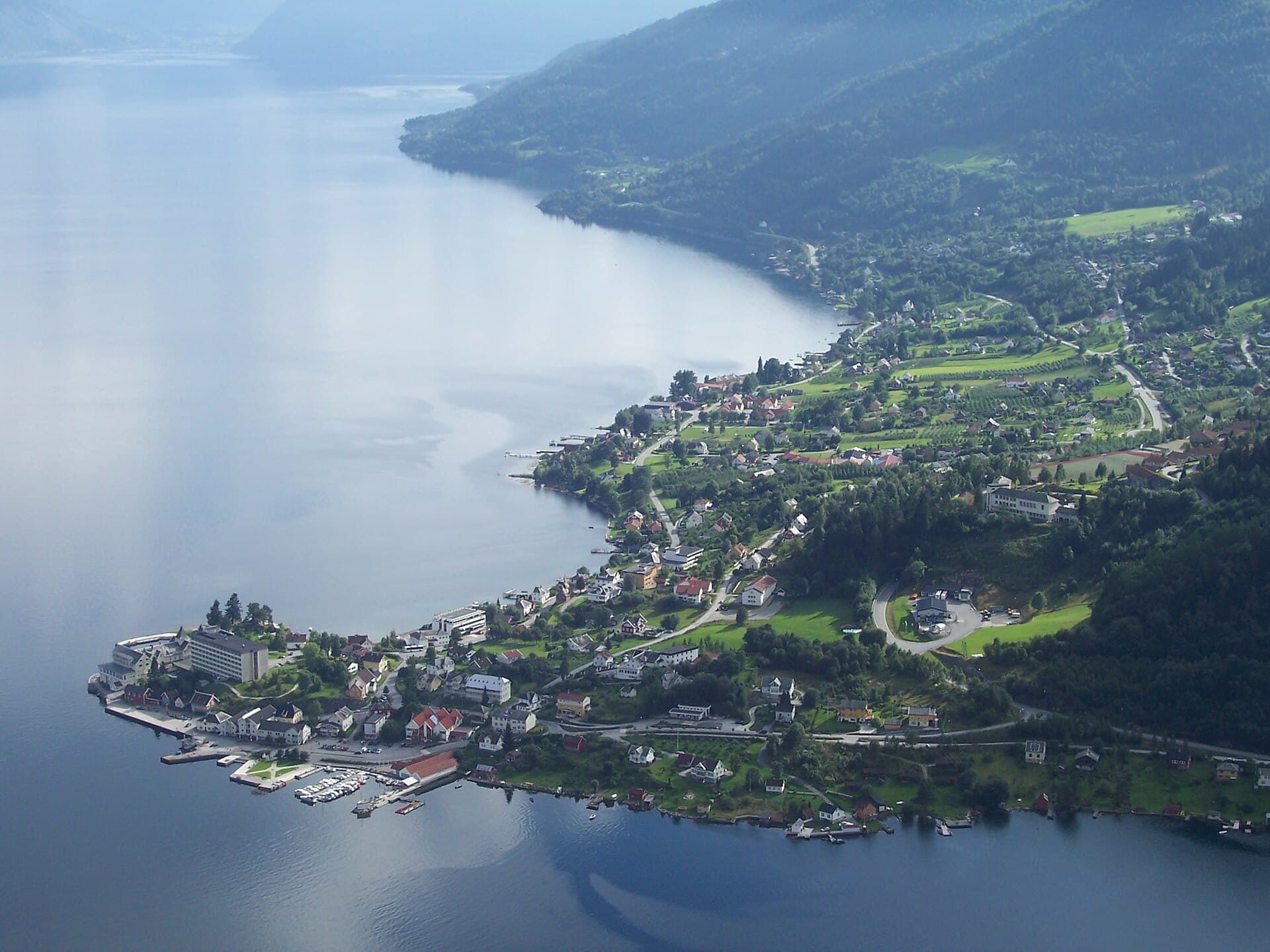 Andrew Bowden from London, United Kingdon / CC BY-SA 2.0, via Wikimedia Commons
Self-guided audio walking tour of Balestrand — GPS route, offline playback, story-driven narration in 32 languages.
“Where the Sognefjord breathes ancient sagas and artistic dreams.”
Not the postcards. The stories even locals don't know — whispered in your ear, right where they happened.
This grand hotel, a beacon on the Sognefjord, safeguards a private collection that narrates a story beyond its elegant facade.
The distinctive wooden church in Balestrand carries a surprisingly English genesis.
A monumental statue of a legendary Viking king stands sentinel over ancient burial grounds, a gift from an unexpected admirer.
Discover every secret of Balestrand
Every address, every reveal in full — in your ear, right where it happened.
You pick your stops. You walk. The voice reveals what the others miss.

Your self-guided audio tour of Balestrand is ready — pick your landmarks, choose your language, and start the moment you arrive.
BuyLume has a built-in augmented-reality guide. Hold your phone up and its camera shows the street ahead of you, with a glowing arrow laid over the real view that always points to your next stop — no map to puzzle over, no wrong turns. Like everything in Lume, it works fully offline.
Balestrand is a picturesque village settled on the northern shore of the Sognefjord, Norway's longest and deepest fjord. Known for its dramatic landscapes where towering mountains meet the gleaming fjord, Balestrand has captivated artists, writers, and travelers for generations. Its peaceful atmosphere, historic architecture, and deep connection to Norwegian culture offer a singular and authentic fjord experience.
The village itself is compact and easily explored on foot, with its orderly harbor area, historic hotels, and distinctive 'dragon-style' villas. Balestrand serves as an ideal foundation for exploring the wider Sognefjord region, providing opportunities for both repose and adventure. Whether you are drawn to its artistic heritage, Viking legends, or simply the natural grandeur, Balestrand provides a memorable escape into the core of fjord country.
Balestrand's allure lies in its blend of natural splendor and cultural depth, making it a worthwhile detour from more bustling fjord destinations. It is a place where history feels alive, and the scenery inspires a sense of wonder, inviting you to linger and uncover its many layers.
Balestrand's history extends back to the Viking Age, with evidence of early settlements and burial mounds found near the harbor. Local legend speaks of King Bele, a Viking chieftain, whose burial mound is still visible today, crowned by a statue presented by German Emperor Wilhelm II. While the historical accuracy of King Bele is debated, the sagas associated with him certainly brought Balestrand to prominence in later years.
The village truly began to thrive as a tourist destination in the mid-19th century. In 1858, the introduction of steamer service made Balestrand more accessible, marking its entry onto the 'Grand Tour' map of the Romantic Age. A wave of romantic nationalism across Europe fueled fascination with Norway's Viking sagas and sublime landscapes, drawing an increasing number of visitors.
By the late 19th century, Balestrand had become an important center for the Norwegian Romantic Movement and a favored spot for European artists. Captivated by the unique light and dramatic scenery, many artists constructed elaborate summer homes in the village, contributing to the distinctive 'dragon style' architecture seen today. This architectural style, blending Swiss chalet influences with Viking motifs, became a signature of Balestrand.
The Kvikne family played a pivotal role in Balestrand's development as a tourist resort, opening a guesthouse in 1877 that would eventually become the magnificent Kviknes Hotel. The hotel, with its imposing wooden facade, became a symbol of fjord travel. German Emperor Wilhelm II was a particularly notable guest, making annual summer visits with his naval convoy until World War I, further solidifying Balestrand's international reputation. Today, Balestrand continues to honor its deep past, with cultural attractions like the Norwegian Museum of Travel and Tourism, which tells the story of how Norway became a world-renowned travel destination.
Begin your exploration with a walk along Balestrand's inviting harbor, where you will find the tourist information office, local galleries, and the Sognefjord Aquarium, offering a glimpse into the fjord's marine life. Do not overlook the Norwegian Museum of Travel and Tourism, an architecturally striking building integrated into the mountainside, which chronicles Norway's tourism history.
Walk along King Bele's Way to St. Olaf's Church, an Anglican church built in 1897 in a distinctive wooden stave church style, known locally as the 'English Church.' Nearby, you will encounter the Viking Age burial mounds and the imposing statue of King Bele, a gift from Kaiser Wilhelm II. As you wander through the village, admire the numerous 'dragon style' villas, unique wooden houses reflecting Balestrand's artistic past.
For a taste of local flavors, visit Ciderhuset, set in an apple orchard, where you can enjoy award-winning cider and fruit wine. Consider a fjord sightseeing tour by fast boat to truly appreciate the dramatic landscapes and waterfalls like Kvinnafossen. For those seeking more active pursuits, numerous hiking trails offer spectacular views of the fjord and surrounding mountains, such as the trails to Raudmelen or Keipen.
The best time to visit Balestrand for warm-weather activities and to fully experience its outdoor offerings is from late June to mid-August. During these months, the average daily high temperature is above 60°F (15°C), with July being the warmest month. The skies are clearest in June, providing optimal conditions for sightseeing and hiking. While Balestrand is beautiful in autumn with its changing foliage, many activities, sights, hotels, and restaurants tend to close from mid-September through mid-May.
Most travelers arrive in Balestrand by express boat from Bergen or Flåm, offering a scenic journey along the Sognefjord. While there is no direct train access, the closest train station is in Flåm. If driving, Balestrand is accessible via Route 55 from Sogndal or Route 13 from the south, with ferry connections. Driving provides flexibility, but roads can be narrow and winding.
Balestrand is a small village, easily navigable on foot. The tourist information office, located on the waterfront, is an excellent resource for planning your stay, booking activities like kayaking or RIB safaris, and getting information on hiking trails. Accommodation options range from the historic Kviknes Hotel to more budget-friendly alternatives. Keep in mind that many establishments close during the off-season (mid-September to mid-May).
Balestrand in Korean, in Chinese or in Hebrew — and 29 more languages, every stop narrated by a native voice. The widest language range of any self-guided audio tour.
Available in: