Rizières en terrasses de Banaue
Les célèbres rizières en terrasses de Banaue, souvent surnommées la 'Huitième Merveille du Monde', recèlent un détail surprenant concernant leur statut UNESCO.
L'histoire complète se débloque dans le tour
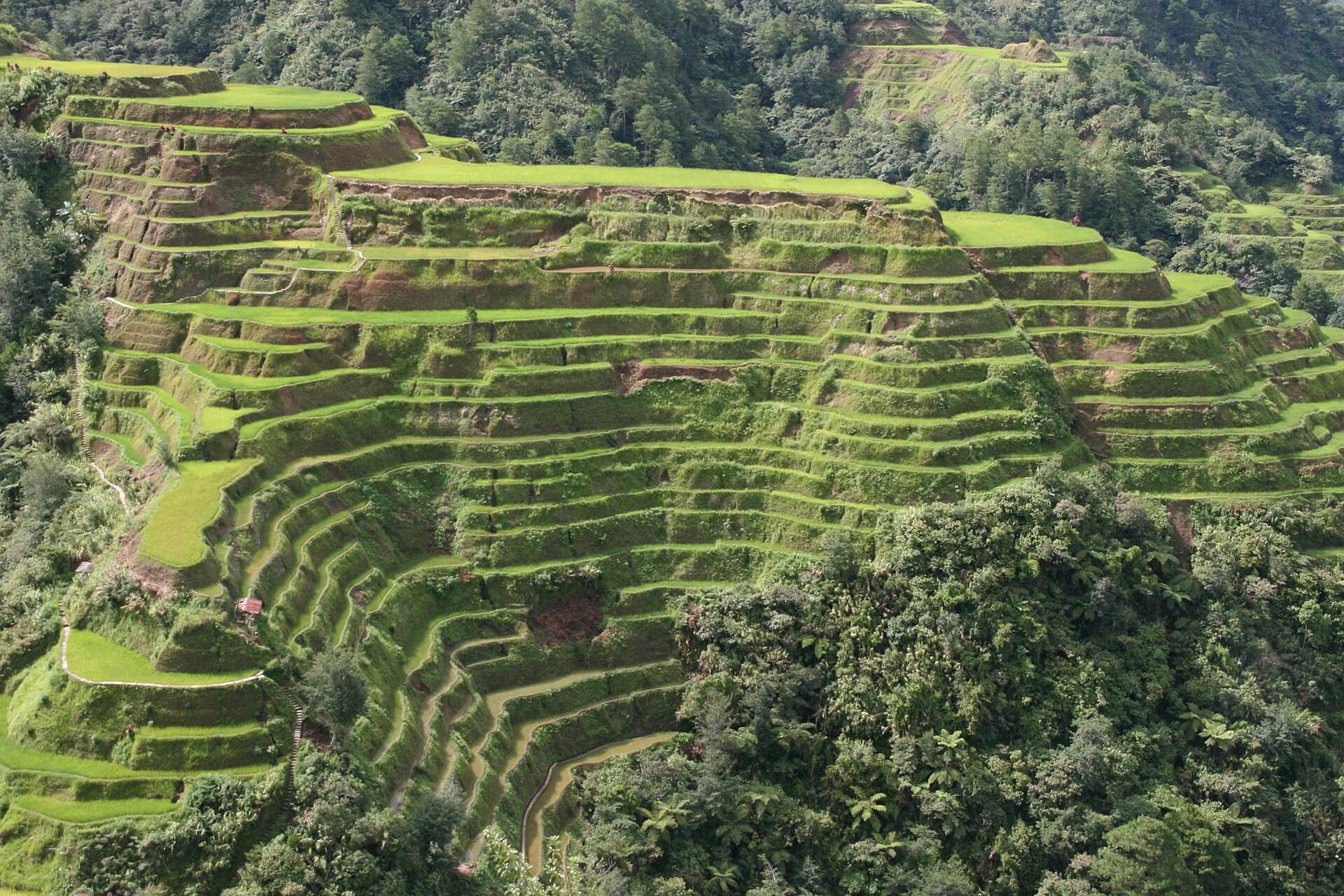 User: (WT-shared) Roundtheworld at wts wikivoyage / Public domain, via Wikimedia Commons
Visite audio autoguidée de Banaue — parcours GPS à pied, lecture hors ligne, narration en 32 langues.
“Là où les montagnes portent les marques de millénaires, gravées à la main et soutenues par l'esprit.”
Pas les cartes postales. Les histoires que même les habitants ignorent — soufflées à l'oreille, là où elles se sont passées.
Les célèbres rizières en terrasses de Banaue, souvent surnommées la 'Huitième Merveille du Monde', recèlent un détail surprenant concernant leur statut UNESCO.
Le peuple Ifugao, gardien de ces anciennes terrasses, observe une pratique culturelle captivante liée à sa récolte, qui pourrait sembler distinctive aujourd'hui.
Malgré l'étendue des rizières, le riz cultivé ici est souvent plus cher qu'à Manille, pour une raison spécifique.
Découvrez tous les secrets de Banaue
Chaque adresse, chaque révélation en entier — dans ton oreille, là où elle s'est passée.
Tu choisis tes lieux. Tu marches. La voix te révèle ce que les autres ignorent.


Votre visite audioguidée de Banaue vous attend — choisissez vos lieux, votre langue, et lancez-vous dès votre arrivée.
AcheterLume intègre un guide en réalité augmentée. Levez votre téléphone : sa caméra montre la rue devant vous, avec une flèche lumineuse posée sur l'image réelle qui pointe toujours vers votre prochain arrêt — aucune carte à déchiffrer, aucun mauvais virage. Comme tout dans Lume, ça fonctionne entièrement hors-ligne.
Banaue, une municipalité des hautes terres de la province d'Ifugao aux Philippines, est célébrée pour ses spectaculaires rizières en terrasses. Ces paysages en terrasses, souvent appelés la 'Huitième Merveille du Monde', ont été sculptés à flanc de montagne il y a plus de 2 000 ans par les ancêtres du peuple indigène Ifugao. Cet exploit remarquable d'ingénierie et d'agriculture durable a transformé des pentes abruptes en rizières productives, irriguées par un ancien système puisant l'eau des forêts tropicales d'altitude. L'échelle impressionnante et la conception complexe de ces terrasses témoignent de l'ingéniosité et des pratiques culturelles durables des Ifugao.
La région offre un aperçu profond d'un paysage culturel vivant où les méthodes agricoles traditionnelles persistent. Le peuple Ifugao continue de cultiver le riz et les légumes sur ces terrasses, maintenant un mode de vie profondément lié à leurs terres ancestrales et à leurs traditions animistes. Bien que le voyage à Banaue puisse être exigeant, impliquant un long trajet en bus depuis Manille, il récompense les voyageurs intrépides par une splendeur naturelle inégalée, une atmosphère sereine et l'opportunité de s'engager avec une culture indigène résiliente.
L'histoire des rizières en terrasses de Banaue est gravée dans les flancs mêmes des montagnes qu'elles habitent, un récit qui s'étend sur plus de deux millénaires. L'anthropologue Otley Beyer a estimé leur âge à plus de 2 000 ans, bien que certains chercheurs suggèrent une construction plus récente. Indépendamment de la chronologie exacte, il est largement admis que les terrasses ont été méticuleusement façonnées à la main, sans l'aide de machines modernes, par les ancêtres du peuple Ifugao. Cette entreprise monumentale a impliqué la construction de murs de soutènement en pierre et en terre battue, conçus pour canaliser l'eau d'un système d'irrigation complexe alimenté par des sources de montagne et des forêts tropicales.
Les terrasses ne sont pas seulement une merveille agricole ; elles sont une expression profonde de la culture Ifugao et de leur relation harmonieuse avec la nature. Le peuple Ifugao, dont le nom signifie 'peuple de la terre', a développé une méthode agricole durable transmise de génération en génération. Leur culture tourne autour du riz, en particulier le riz noir kalinayan, et leurs rites agricoles, de la culture à la consommation, sont entrelacés avec des célébrations élaborées. Les saisons des récoltes sont marquées par de somptueux festins de remerciement, où le vin de riz coule à flots et la noix de bétel est consommée.
Au fil des siècles, les Ifugao ont résisté à l'influence coloniale espagnole, ce qui leur a permis de préserver nombre de leurs anciennes traditions, coutumes et pratiques ancestrales. Cette résilience est évidente dans leurs maisons traditionnelles Ifugao, appelées 'Bale', caractérisées par de hauts toits en herbe de cogon et des planchers en bois surélevés soutenus par quatre poteaux robustes, ainsi que dans leurs vêtements colorés tissés à la main. Les statues 'Bulul', figures en bois sculptées considérées comme des gardiens du riz, restent également partie intégrante de la culture Ifugao et sont utilisées lors de cérémonies liées à la production de riz.
Aujourd'hui, les terrasses sont confrontées à des défis modernes, notamment l'érosion, l'émigration des jeunes générations à la recherche d'opportunités au-delà de l'agriculture, et les impacts du changement climatique. Malgré ces pressions, des programmes communautaires s'efforcent activement de revitaliser les méthodes agricoles traditionnelles et de promouvoir l'éducation culturelle, assurant ainsi l'héritage durable de ce patrimoine extraordinaire.
L'attrait principal de Banaue est sans aucun doute les rizières en terrasses elles-mêmes, et les découvrir implique souvent d'explorer divers points de vue et villages voisins. Le Point de vue des rizières en terrasses de Banaue offre une vue panoramique sur le paysage emblématique, un endroit populaire pour les photographies. Cependant, pour une expérience vraiment immersive, une excursion d'une journée au village isolé de Batad est fortement recommandée.
Batad abrite des rizières en terrasses en forme d'amphithéâtre, considérées comme un site du patrimoine mondial de l'UNESCO et l'un des exemples les plus frappants de l'ingéniosité agricole Ifugao. Pour atteindre Batad, il faut généralement prendre un tricycle jusqu'à la selle de Batad, puis faire une randonnée de 30 à 40 minutes jusqu'au village. Une fois sur place, vous pouvez traverser des sentiers forestiers, passer devant des cascades et franchir des ponts suspendus. Une excursion populaire depuis Batad est la randonnée jusqu'aux chutes de Tappiya, un endroit rafraîchissant pour une baignade.
Au-delà de Batad, d'autres rizières en terrasses remarquables dans la province d'Ifugao incluent Bangaan, Hungduan, Mayoyao et Nagacadan, toutes faisant partie de l'inscription au patrimoine mondial de l'UNESCO 'Rizières en terrasses des Cordillères des Philippines'. Le Musée de Banaue offre une petite mais détaillée collection d'objets artisanaux et d'artefacts Ifugao, offrant des aperçus précieux de la culture locale. Pour une compréhension plus approfondie de la vie traditionnelle Ifugao, envisagez de visiter le village de Tam-awan ou le village de Bangaan, qui offrent des aperçus des coutumes et pratiques locales.
Le meilleur moment pour visiter Banaue dépend du paysage souhaité. Pour admirer les terrasses à leur apogée luxuriante et verdoyante, planifiez votre voyage entre avril et juillet, qui correspond à la saison de plantation du riz. Septembre est également excellent pour les terrasses vertes. Si vous préférez voir les terrasses dans des tons dorés lorsque le riz mûrit, visez juin ou octobre. Les mois plus frais et plus secs de janvier à mars offrent un temps agréable pour l'exploration, avec des températures moyennes allant de 15°C à 25°C (59°F à 77°F) et moins de pluie. Cependant, entre décembre et mars, certaines terrasses, en particulier dans les zones plus isolées comme Batad, peuvent être boueuses après la récolte. La saison des pluies s'étend généralement de mai à décembre, août étant le mois le plus nuageux et le plus humide. Janvier, février, mars, avril et novembre offrent généralement le temps le plus optimal.
Pour atteindre Banaue, il faut généralement prendre un bus de nuit depuis Manille, ce qui peut prendre environ 9 à 10 heures. Des compagnies de bus comme Coda Lines et Ohayami Trans proposent des trajets directs, partant généralement le soir et arrivant à Banaue tôt le matin. Il est conseillé de réserver les billets à l'avance, car les places peuvent se remplir rapidement. À l'arrivée, des taxis-motos sont facilement disponibles pour transporter les visiteurs. À Banaue et pour les excursions vers les villages voisins comme Batad, les tricycles et les jeepneys sont des modes de transport courants. Pour ceux qui recherchent des sensations fortes et des vues inspirantes, monter sur le toit d'un jeepney avec les bagages est une coutume locale.
Les options d'hébergement à Banaue sont généralement modestes, avec une prédominance d'auberges familiales et de séjours chez l'habitant. Bien que la ville de Banaue offre une infrastructure plus développée et de meilleurs signaux téléphoniques, séjourner dans un village plus isolé comme Batad offre une expérience vraiment sereine et déconnectée, bien que le service cellulaire et le Wi-Fi puissent être limités. Il est fortement recommandé d'engager un guide local, surtout pour la randonnée dans les terrasses, car ils offrent des informations précieuses et assurent une navigation sûre sur les chemins parfois escarpés et glissants.
Banaue en coréen, en chinois ou en hébreu — et dans 29 autres langues, chaque étape narrée par une voix native. La plus large gamme de langues de tous les audioguides autoguidés.
Disponible en :