In June 1943, a wooden crate arrived at Bandol station addressed to a naval officer with a taste for the deep. What came out of that crate changed everything humans know about the ocean floor.
A.Schneider83 / CC BY-SA 3.0, via Wikimedia CommonsBandol
“Where the sea aged the wine — and the wine outlasted the voyage.”
Bandol, as no one tells it.
Not the postcards. The stories even locals don't know — whispered in your ear, right where they happened.
In 1950, the only inhabitant of a small island just off Bandol was a sheep. Within a decade, Salvador Dalí, Josephine Baker, and Gilbert Bécaud were sleeping there — because one man decided a barren rock was the ideal canvas for a dream.
The entire Bandol AOC — one of France's most distinctive appellations — exists largely because a young man tasted a single bottle of pre-phylloxera wine from an old cellar on his wedding day and couldn't stop thinking about what it meant.
Discover every secret of Bandol
Every address, every reveal in full — in your ear, right where it happened.
You pick your stops. You walk. The voice reveals what the others miss.


How long do you have in Bandol?
No tours available yet. Check back soon — we're preparing them.
The story of Bandol
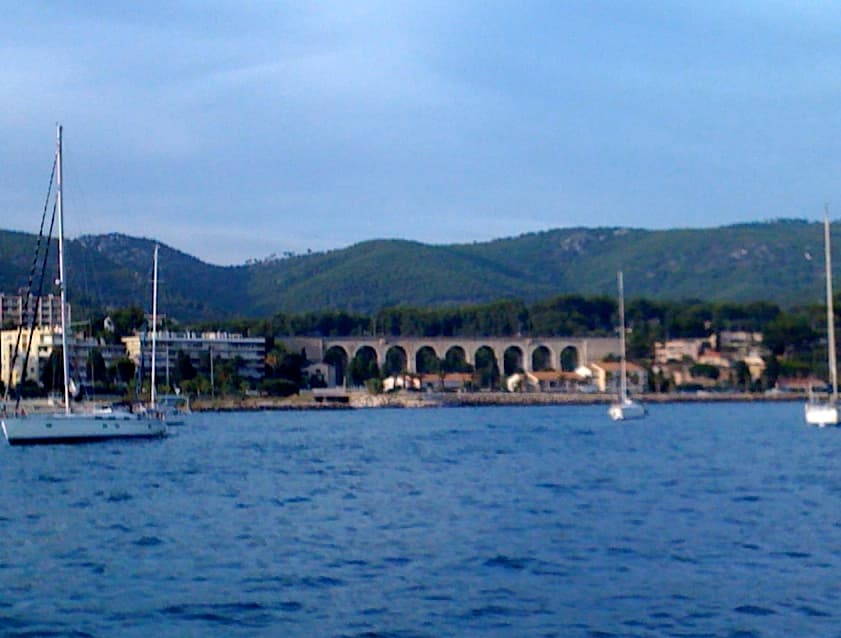
Bandol sits on a broad, south-facing bay between Toulon and Marseille, sheltered from northern winds by the Sainte-Baume and Mont Caume massifs. It is compact enough to walk in an afternoon and layered enough to reward a week. The town built itself around two things the sea makes possible: shipping wine and catching fish. The wine is still here — the Bandol AOC, one of France's oldest, produces reds built on Mourvèdre that age for decades. The fishing is still here too, most visible at the Tuesday market when the quay fills before 8 AM with boxes still wet from the boat. In between: a pleasure port with 1,700 moorings, a seven-minute ferry to Île de Bendor, and a promenade lined with palms where, depending on the year, you might be walking past the hotel where Katherine Mansfield worked, or the street where Louis Lumière built his private laboratory, or the cove where Jacques Cousteau first breathed underwater.
Bandol's bay appears in documents as early as 1259. The town itself was only separated from La Cadière in 1715, which allowed it to grow as a distinct port community. Its strategic value was recognized earlier: a defensive fort was built on the coast in 1594 by Antoine Boyer.
The town's commercial identity was always maritime and viticultural simultaneously. By the 18th century, Bandol wines were known for an unusual property: the rolling motion of ships in the Mediterranean improved rather than damaged them, making the port the natural export point for a wide region of Provence. Around 1860, the port's own shipyard was building tartanes and mourres de pouar — the traditional Provençal vessels of the trade.
The 19th century brought the grand jetty (1847–1858), built with stone quarried from Île de Bendor and transported by a water-spanning railway on stilts. The railway connection to Toulon arrived in 1858, and with it a different kind of visitor: artists, writers, and the first wave of what would become Riviera tourism. The Grand Hotel (originally Hotel Brandin, 1900) housed Thomas Mann, Marcel Pagnol, and Louis Lumière, the cinematograph's inventor, who built his personal laboratory — Villa Lumen — here in 1936.
Bandol obtained official health-resort status in 1923, a legal prerequisite for a casino. The Casino Municipal opened in July 1930 in a deliberately sober Art Deco style. The kiosque à musique on the promenade, designed in a Greco-Moorish idiom by architect Fleury Linossier, was inaugurated in 1933.
The Bandol AOC was formally granted on November 11, 1941, making it one of the earliest appellations in Provence. The 1958 purchase of Île de Bendor by Paul Ricard, and his construction of the Exposition Universelle des Vins et Spiritueux that same year, added another layer to a town already unusually dense with cultural associations for its size.
The port and the Tuesday market
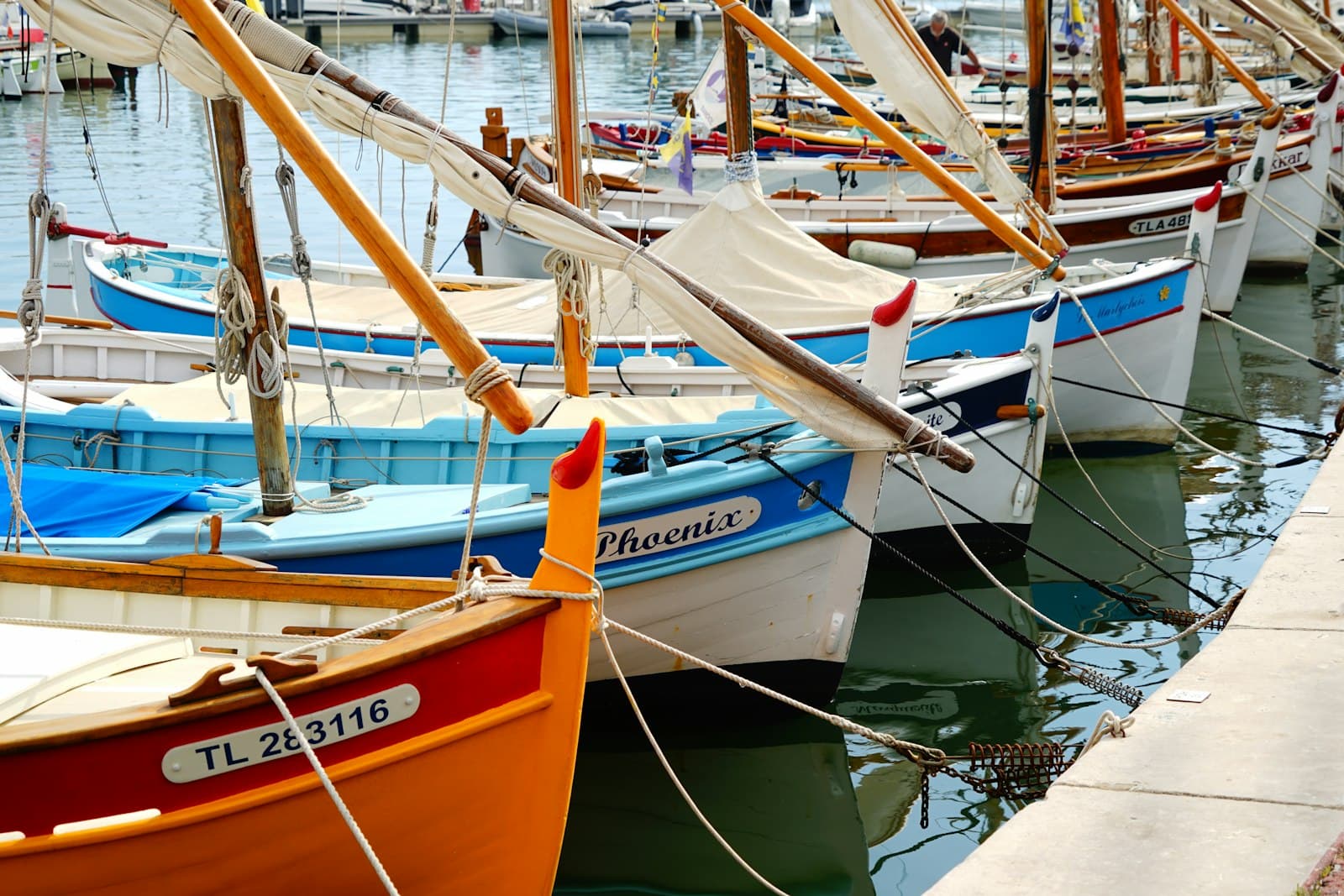
The port is the organizing fact of Bandol. The quay is where the town's rhythms become visible: fishermen unloading before dawn, the Tuesday market running from 8 AM to 1 PM with fresh catch, anchoiade, cade toulonnaise (a chickpea-flour flatbread local to the Toulon coast), olives, nougat, and Provençal honey. The ferry to Île de Bendor departs from the same quay every 30 minutes in season.
Île de Bendor
Seven minutes by ferry. Paul Ricard's former island project reopened in May 2026 after a five-year renovation. The Exposition Universelle des Vins et Spiritueux — open July and August, free, closed Wednesdays — holds 8,000+ bottles and more than 2,700 spirits from 35 categories. The stone monolith at the marina reads 'Nul bien sans peine.'
The Bandol AOC wine route
The appellation covers a compact area of terraced limestone vineyards (restanques) on hillsides visible from the port. Domaine Tempier, Château de Pibarnon, Domaine de Terrebrune, Château Pradeaux, and Château Vannières all offer tastings. The Maison des Vins de Bandol on the promenade is the logical starting point. Reds require 18 months' minimum oak aging; vines for red wine must be at least 8 years old before their fruit can carry the AOC — double the requirement in most other appellations.
Villa Pauline and the literary trail
A plaque on Villa Pauline's wall marks where Katherine Mansfield wrote 'Prelude' (January–April 1916). D.H. Lawrence also had a documented stay in Bandol in 1929. The Bandol tourism office publishes a walking route connecting sites associated with writers and artists who lived here.
Église Saint-François de Sales
Built in 1748, blessed by the Bishop of Marseille who had refused to leave the city during the 1720 plague. The church's two lateral naves — added in 1772 and 1776 by competing brotherhoods — give it an asymmetrical interior logic that rewards a closer look. Listed as a monument historique since 1990.
The coastal path
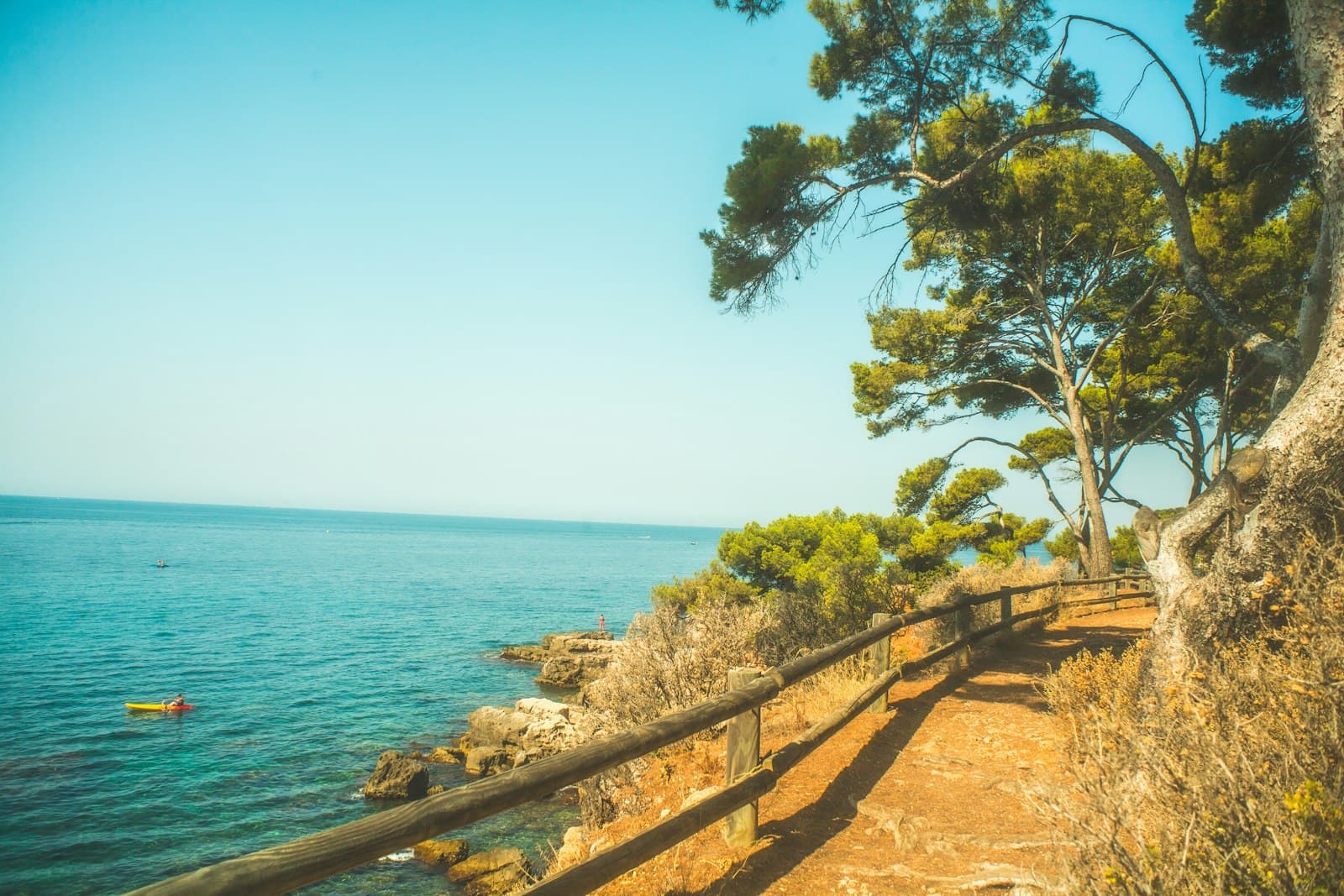
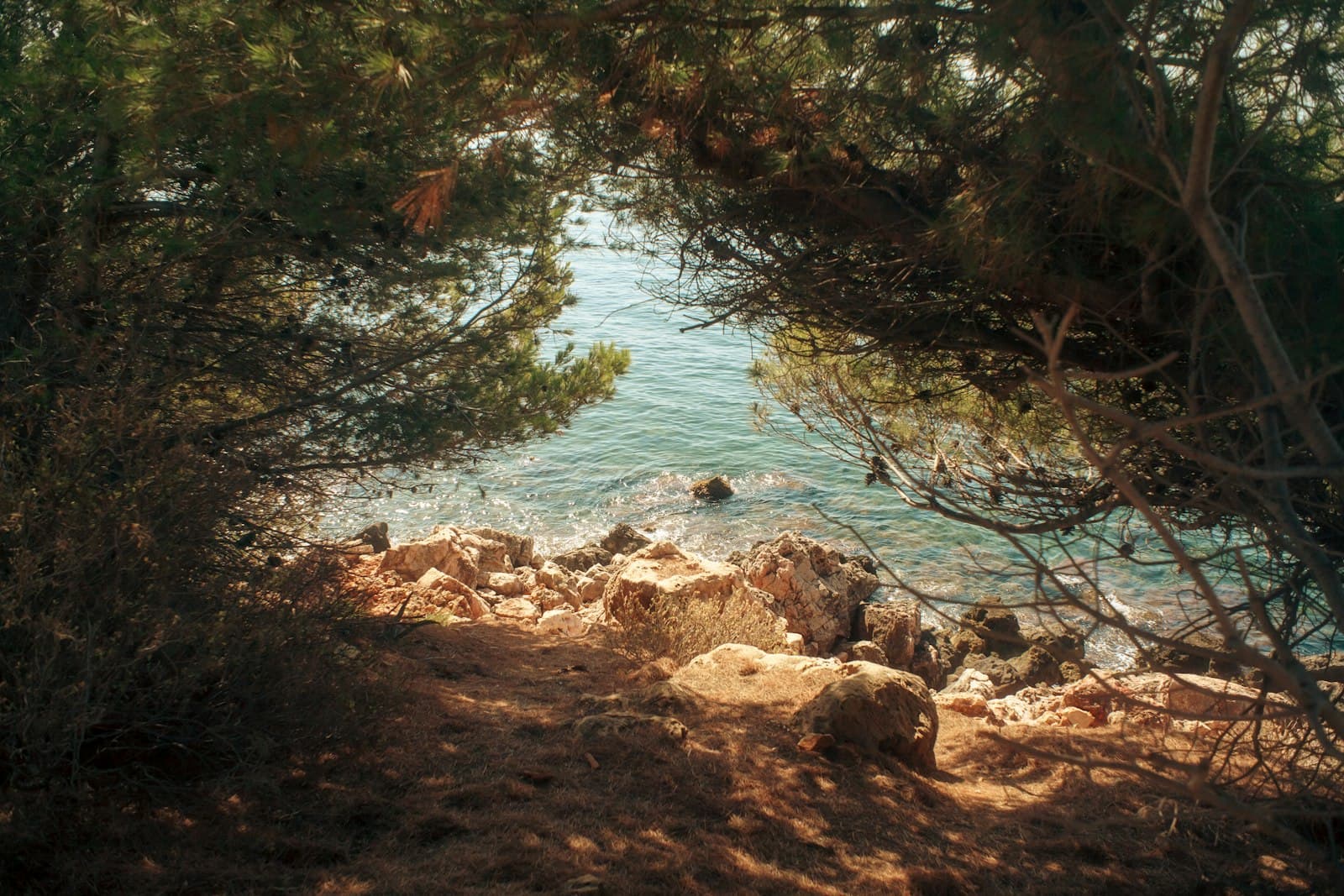
The sentier du littoral west of the port passes the Plage de Barry, where Cousteau made the first SCUBA dives in June 1943. A plaque marks the site.
The AOC harvest runs from late August through September — the period when Mourvèdre is picked last, sometimes into October, after the other varietals. This is the best time to visit working vineyards.
The Tuesday market operates year-round. The summer night market (marché artisanal nocturne) runs July and August evenings, 7 PM to midnight.
The Exposition Universelle des Vins et Spiritueux on Île de Bendor is open July and August only.
May and June offer the most agreeable weather before the height of summer crowds. October and November, when the mimosa begins flowering and the harvest is in, is the local favourite: prices drop, the port is navigable without a reservation, and the wine estates are less crowded.
Avoid the last two weeks of July and the first two weeks of August if you want to move freely. The port reaches capacity and the town's population multiplies several times over.
Getting there: Bandol has a direct train station on the Marseille–Toulon line. Journey time: 40 minutes from Marseille, 15 minutes from Toulon. By car: A50 motorway, exit Bandol.
Getting around: The town centre is walkable. The ferry to Île de Bendor runs every 30 minutes in season from the port quay (approx. €8 return). The coastal path westward is well-signed.
Wine: The Maison des Vins de Bandol (1 Allée Alfred Vivien, on the promenade) offers tastings and sells across the appellation's producers. Open year-round.
Market: Tuesday, 8 AM–1 PM, on the main quay. Produce, fish, and Provençal goods.
Accommodation: Most hotels are concentrated on or near the promenade. Book well ahead for July–August. Several chambres d'hôtes operate within the AOC vineyards.
Currency and costs: Euro. Wine at domaines starts around €15–20 for whites and rosés; reds suitable for aging are €25–60+. Restaurant menus on the port average €30–50 for a full meal with wine.
- What grape variety defines Bandol red wine?
- Mourvèdre, which must make up at least 50% of any Bandol red blend under AOC rules. The remaining varieties are Grenache and Cinsault. The grape requires the region's warm, dry conditions to ripen fully, which is why it thrives in Bandol and struggles in most other French appellations. The minimum vine age for red wine production is 8 years — double the requirement in Burgundy or Bordeaux.
- How do I get to Île de Bendor?
- By ferry from Bandol port. The crossing takes about 7 minutes. Services run roughly every 30 minutes in summer. The ferry is operated from the main quay (embarcadère) and costs approximately €8 return. The island is served less frequently or not at all in the off-season — check current schedules with the ferry operator or the Bandol tourism office.
- When is the Exposition Universelle des Vins et Spiritueux open?
- July and August only, closed on Wednesdays. Admission is free. The collection holds over 8,000 bottles of wine and spirits from around the world, plus labels, menus, and glassware dating back to 1860. It was founded by Paul Ricard in 1958.
- Is Bandol too small to warrant more than a day?
- A day covers the port, the church, and a ferry trip to Bendor. Two to three days lets you visit two or three wine estates (Domaine Tempier, Château de Pibarnon, and Domaine de Terrebrune are the most visited), walk the coastal path to Plage de Barry, do the Tuesday market, and eat properly. If you are using it as a base for the surrounding AOC villages — La Cadière d'Azur, Le Castellet, Le Beausset — a week is reasonable.
- Can you visit wine estates without a reservation?
- Some domaines accept walk-in visitors, particularly in the off-season. In July and August, reservations are strongly advised, especially at Domaine Tempier, which has a high international profile. The Maison des Vins de Bandol on the promenade offers tastings without appointment and can advise on current availability at individual estates.
- What is the coastal path near Bandol worth seeing?
- The sentier du littoral heading west from the port passes Plage de Barry — a sheltered cove where Jacques Cousteau made the first successful SCUBA test dives in June 1943. A plaque marks the location. The path also passes several of the region's named villas, including sites associated with Louis Lumière and D.H. Lawrence. The full coastal path connecting Bandol to Sanary-sur-Mer takes 2–3 hours at a walking pace.