Gedung Sate
O distinto edifício Gedung Sate, um símbolo de Bandung, guarda um segredo delicioso em seu próprio nome.
História completa desbloqueada no tour
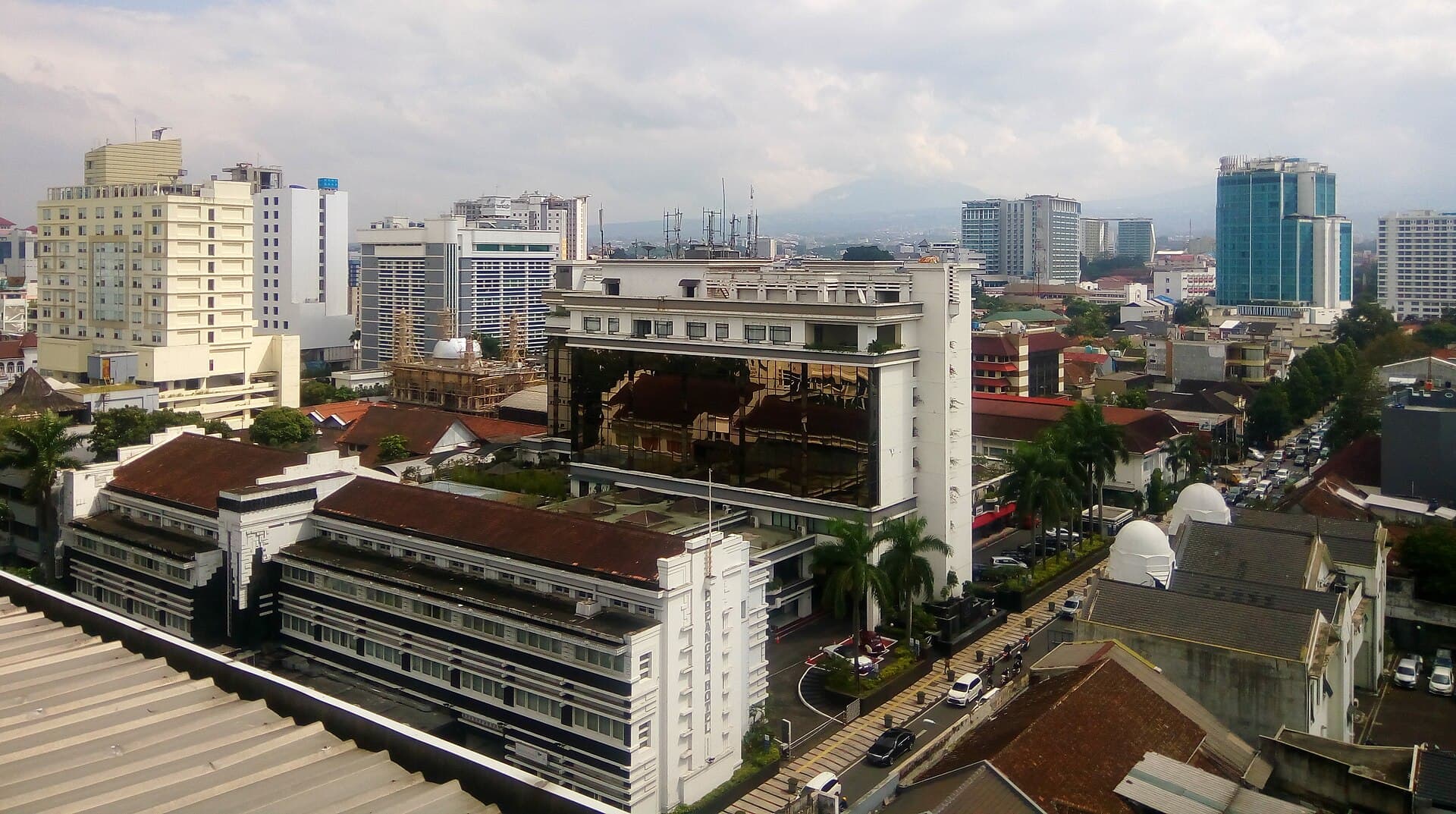 F1fans / CC0, via Wikimedia Commons
Tour de áudio autoguiado por Bandung — rota GPS a pé, reprodução offline, narração envolvente em 32 idiomas.
“Onde paisagens vulcânicas encontram a elegância Art Déco e uma criatividade vibrante.”
Não os postais. As histórias que nem os locais conhecem — sussurradas ao seu ouvido, exatamente onde aconteceram.
O distinto edifício Gedung Sate, um símbolo de Bandung, guarda um segredo delicioso em seu próprio nome.
Bandung é carinhosamente conhecida como 'Kota Kembang' ou 'Cidade das Flores', mas a origem dessa charmosa denominação pode surpreendê-lo.
Muito antes de Bandung zumbir como um centro urbano movimentado, ela jazia submersa sob um vasto lago pré-histórico.
Descubra cada segredo de Bandung
Cada endereço, cada revelação na íntegra — no seu ouvido, exatamente onde aconteceu.
Você escolhe as suas paragens. Você caminha. A voz revela o que os outros perdem.


O seu tour áudio autoguiado de Bandung está pronto — escolha os seus pontos de interesse, selecione o seu idioma e comece no momento em que chegar.
ComprarA Lume inclui um guia de realidade aumentada. Levante o telemóvel: a câmara mostra a rua à sua frente, com uma seta luminosa sobreposta à imagem real que aponta sempre para a sua próxima paragem — sem mapa para decifrar, sem voltas erradas. Como tudo na Lume, funciona totalmente offline.
Bandung, a capital provincial de Java Ocidental, Indonésia, é uma cidade onde um clima fresco de planalto converge com um vibrante espírito criativo. Posicionada aproximadamente 135 quilômetros a sudeste de Jacarta, Bandung repousa a 708 metros acima do nível do mar em uma bacia fluvial abraçada por montanhas vulcânicas. Este abraço geográfico não só oferece uma defesa natural, mas também contribui para suas temperaturas refrescantemente amenas, uma mudança bem-vinda em relação a muitas outras cidades indonésias.
Frequentemente chamada de "Parijs van Java" ou "Paris de Java", Bandung ganhou essa designação durante a era colonial holandesa por sua atmosfera europeia, arquitetura Art Déco graciosa e uma cultura emergente de moda e cafés. Hoje, permanece um refúgio apreciado, atraindo visitantes com sua mistura particular de encanto histórico, energia moderna e acesso a paisagens naturais cativantes.
Além de sua beleza arquitetônica, Bandung funciona como um nexo educacional, com mais de 25 instituições de ensino superior, promovendo um ambiente universitário dinâmico. É também reconhecida como uma Cidade Criativa da UNESCO, celebrada por sua arte culinária, tendências de moda e uma cultura florescente de artes e música.
A narrativa geológica de Bandung começa há milhões de anos. A Bacia de Bandung, onde a cidade se encontra hoje, foi outrora um vasto lago pré-histórico, formado por volta de 55.000 a.C. após uma erupção substancial do Monte Sunda ter obstruído o rio Citarum. Evidências sugerem que a habitação humana na área remonta a 6.000 anos, com descobertas arqueológicas indicando a presença de hominídeos primitivos como o Australopithecus e o Java Man ao longo do rio Cikapundung e nas margens deste antigo lago.
A primeira menção escrita de Bandung aparece em 1488. Em 1614, Juliaen de Silva documentou um assentamento composto por 25 a 30 casas. A Companhia Holandesa das Índias Orientais (VOC) começou a notar a fértil região de Bandung no início do século XVIII, levando ao estabelecimento de plantações de café, chá e quinino. O quinino, em particular, foi crucial para a produção de quinina, um tratamento para a malária.
Um momento crucial chegou em 1810, quando o Governador-Geral Herman Willem Daendels ordenou a construção da Grande Estrada Postal, uma rota de 1.000 quilômetros através de Java, que atravessava Bandung. Esta via estratégica levou à fundação oficial de Bandung como capital de regência em 25 de setembro de 1810. A cidade obteve status de município em 1906, marcando o início de sua "Era de Ouro".
Ao longo do início do século XX, o governo colonial holandês vislumbrou Bandung como uma nova capital, realocando quartéis militares e construindo edifícios governamentais proeminentes como o Gedung Sate. Seu clima fresco e planejamento urbano de estilo europeu, completo com avenidas largas e lojas elegantes, transformaram-na em um exclusivo resort europeu. Jalan Braga, com seus cafés, restaurantes e lojas, tornou-se um passeio elegante, cimentando a reputação de Bandung como a "Parijs van Java".
Bandung desempenhou um papel significativo na busca pela independência da Indonésia. Em 1946, durante o evento "Bandung Lautan Api" (Mar de Fogo de Bandung), mais de 200.000 residentes incendiaram suas casas para evitar seu uso pelas forças aliadas. Após a independência, Bandung foi designada capital da província de Java Ocidental. Em 1955, a cidade sediou a histórica Conferência Afro-Asiática, uma reunião marco que promoveu a solidariedade entre as nações asiáticas e africanas e inspirou movimentos de independência globalmente. Hoje, Bandung continua sua evolução, equilibrando seu profundo legado histórico com uma identidade contemporânea e dinâmica.
Comece sua exploração na Jalan Braga, uma rua histórica celebrada por sua arquitetura colonial Art Déco e atmosfera vibrante. Aqui, você pode passear por lojas boutique e cafés, vislumbrando o passado de Bandung como a "Paris de Java". Nas proximidades, o Museu da Conferência Afro-Asiática, abrigado no Gedung Merdeka, oferece um exame aprofundado da conferência de 1955 que influenciou a diplomacia global. O Gedung Sate, com seu distinto ornamento 'satay', destaca-se como outro ponto alto arquitetônico, servindo como escritório do Governador de Java Ocidental e contendo um museu.
Para uma jornada pelo passado geológico da Indonésia, visite o Museu de Geologia de Bandung, que exibe fósseis, minerais e um esqueleto reconstruído de um Elefante de Blora. Além do centro da cidade, Bandung oferece acesso a atrações naturais envolventes. O vulcão ativo Tangkuban Perahu, que se assemelha a um "barco virado", permite que os visitantes cheguem à borda de sua cratera e observem vapores de enxofre. Outra maravilha natural notável é Kawah Putih (Cratera Branca), um lago vulcânico turquesa a aproximadamente duas horas da cidade. Perto dali, as plantações de chá de Ciwidey oferecem passeios cênicos e oportunidades para colher morangos. Para uma experiência de mercado distinta, o Mercado Flutuante em Lembang apresenta vendedores vendendo comida local de barcos.
A estação seca, que geralmente se estende de abril ou maio a setembro ou outubro, é geralmente considerada o período mais favorável para visitar Bandung. Durante esses meses, você pode esperar céus limpos, sol abundante e temperaturas agradáveis, perfeitas para atividades ao ar livre, como caminhadas em vulcões e exploração de plantações de chá. As temperaturas durante a estação seca geralmente variam de 26°C a 28°C durante o dia. A estação chuvosa, de outubro ou novembro a março ou abril, traz temperaturas mais frias (cerca de 18°C a 24°C) e chuvas diárias à tarde, o que pode tornar as excursões ao ar livre menos ideais. Esteja ciente de que Bandung é um refúgio popular de fim de semana para residentes de Jacarta, portanto, espere tráfego mais intenso durante esses períodos, independentemente da estação.
Chegar a Bandung é simples. De Jacarta, você pode optar por um trem (aproximadamente três horas) ou um ônibus. Um novo trem de alta velocidade também conecta Jacarta a Bandung. O Aeroporto Internacional de Kertajati (KJT) atende a região, com viagens de carro até a cidade de Bandung levando cerca de 1,5 horas. Dentro de Bandung, aplicativos de transporte como Gojek e Grab são amplamente utilizados para transporte conveniente e acessível. Embora ônibus públicos estejam disponíveis, eles podem ser lentos para turistas. Alugar um carro com motorista é aconselhável para explorar áreas além do centro da cidade, como Lembang ou Ciwidey.
O clima de Bandung é mais frio do que muitas outras cidades indonésias devido à sua elevação, então uma jaqueta leve é prudente, especialmente para noites e excursões a altitudes mais elevadas. Carregar algum dinheiro também é benéfico, pois barracas de comida menores e áreas de estacionamento podem preferi-lo em vez de pagamentos digitais ou cartões. Para evitar multidões em atrações populares, considere iniciar suas viagens à natureza cedo no dia.
Bandung — coreano, chinês, hebraico e mais 29 idiomas, cada parada narrada por uma voz nativa. A maior variedade de idiomas entre os passeios de áudio autoguiados.
Disponível em: