La Salle Capitulaire
La voûte élancée et non supportée de la Salle Capitulaire était une merveille d'ingénierie médiévale, mais sa construction était accompagnée d'une sombre rumeur.
L'histoire complète se débloque dans le tour
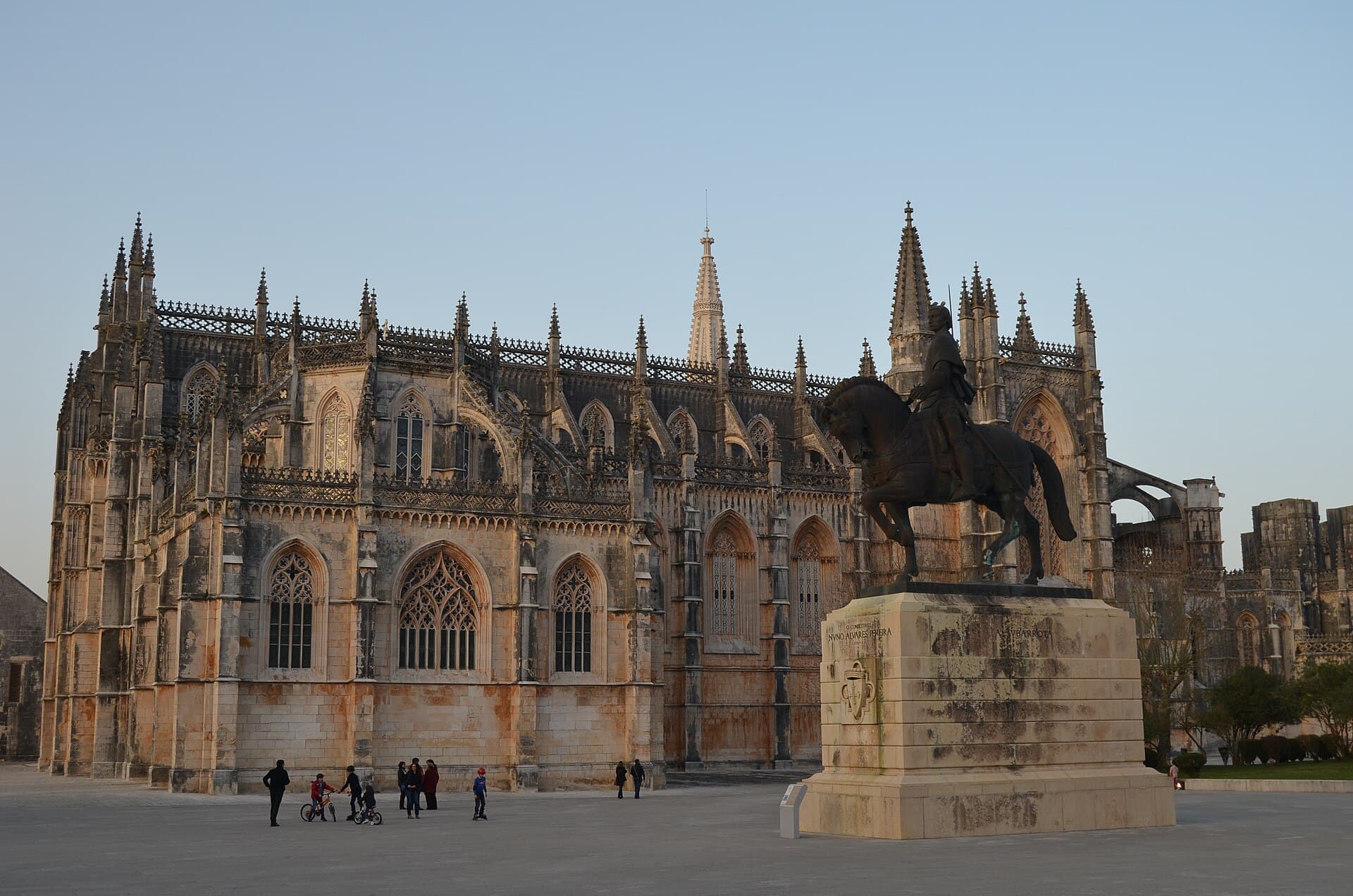 Pedro from Maia (Porto), Portugal / CC BY 2.0, via Wikimedia Commons
Visite audio autoguidée de Batalha — parcours GPS à pied, lecture hors ligne, narration en 32 langues.
“Là où la pierre même raconte la genèse d'une nation.”
Pas les cartes postales. Les histoires que même les habitants ignorent — soufflées à l'oreille, là où elles se sont passées.
La voûte élancée et non supportée de la Salle Capitulaire était une merveille d'ingénierie médiévale, mais sa construction était accompagnée d'une sombre rumeur.
Ces chapelles sont ouvertes au ciel, un témoignage non pas de négligence, mais de priorités royales changeantes et de la mort prématurée d'un roi.
Dans les entrelacs de pierre du Cloître Royal, cherchez attentivement les détails subtils et surprenants qui relient le sacré au quotidien.
Découvrez tous les secrets de Batalha
Chaque adresse, chaque révélation en entier — dans ton oreille, là où elle s'est passée.
Tu choisis tes lieux. Tu marches. La voix te révèle ce que les autres ignorent.


Votre visite audioguidée de Batalha vous attend — choisissez vos lieux, votre langue, et lancez-vous dès votre arrivée.
AcheterLume intègre un guide en réalité augmentée. Levez votre téléphone : sa caméra montre la rue devant vous, avec une flèche lumineuse posée sur l'image réelle qui pointe toujours vers votre prochain arrêt — aucune carte à déchiffrer, aucun mauvais virage. Comme tout dans Lume, ça fonctionne entièrement hors-ligne.
Batalha, une ville du centre du Portugal, est dominée par l'impressionnant Mosteiro de Santa Maria da Vitória, communément appelé le Monastère de Batalha. Ce site classé au patrimoine mondial de l'UNESCO est un vaste complexe d'architecture gothique et manuélinienne, érigé pour commémorer la victoire décisive du Portugal lors de la Bataille d'Aljubarrota en 1385. Ses pierres finement ouvragées, ses nefs élancées et les poignantes Chapelles Inachevées créent une atmosphère à la fois grandiose et méditative.
La ville elle-même, dont le nom « Batalha » signifie littéralement « bataille », s'est développée autour du monastère et conserve une ambiance calme et conviviale une fois que les foules de visiteurs d'un jour se dispersent. Bien que le monastère soit incontestablement l'attraction principale, Batalha offre un aperçu de la vie portugaise authentique avec ses places tranquilles, sa cuisine traditionnelle et ses boutiques locales. C'est une excellente base pour explorer la région du centre du Portugal, y compris les villes voisines de Fátima, Alcobaça et Tomar.
L'histoire du Monastère de Batalha commence le 14 août 1385, dans les plaines d'Aljubarrota. Face à une armée castillane largement supérieure en nombre, le roi João Ier du Portugal fit un vœu solennel à la Vierge Marie : s'il était victorieux, il construirait un magnifique monastère en son honneur. Les Portugais, aidés par des archers anglais, remportèrent une victoire décisive en seulement une heure, assurant l'indépendance du Portugal et établissant la dynastie d'Aviz. Fidèle à sa parole, la construction du Mosteiro de Santa Maria da Vitória, ou Monastère de Sainte Marie de la Victoire, commença en 1386 près du champ de bataille.
La construction de Batalha fut une entreprise colossale, s'étalant sur plus de 150 ans et les règnes de sept rois. Le premier maître d'œuvre, Afonso Domingues, établit le plan général et l'empreinte structurelle de 1386 à 1402, mêlant le gothique rayonnant français aux influences anglaises, un clin d'œil à l'alliance anglo-portugaise. Il fut suivi par Huguet, un architecte catalan, qui travailla sur le monastère de 1402 à 1438, concevant la Chapelle du Fondateur et achevant le Cloître Royal. La Chapelle du Fondateur, construite entre 1426 et 1434, devint le premier panthéon royal du Portugal, abritant les tombeaux du roi João Ier et de son épouse anglaise, Philippa de Lancastre, ainsi que de quatre de leurs fils, dont Henri le Navigateur.
Le roi Duarte Ier, successeur de João Ier, initia un mausolée royal encore plus grandiose : les Chapelles Inachevées. Cependant, lui et Huguet moururent tous deux en 1438, laissant la structure octogonale ouverte au ciel, sa magnifique voûte jamais réalisée. Les monarques suivants continuèrent d'ajouter au complexe, Fernão de Évora achevant le plus simple Cloître d'Afonso V. Le dernier épanouissement significatif du monastère eut lieu sous le roi Manuel Ier (1495–1521), qui introduisit le style manuélin distinctement portugais, particulièrement évident dans le portail orné des Chapelles Inachevées et la dentelle de pierre complexe du Cloître Royal. La construction s'arrêta en 1533, le roi João III ayant redirigé les ressources vers le Monastère des Hiéronymites à Lisbonne.
Après la suppression des ordres religieux en 1834, le monastère fut abandonné et tomba en ruine, davantage endommagé par les troupes françaises lors des invasions napoléoniennes en 1810. Un programme de restauration complet, l'un des premiers efforts à grande échelle du Portugal, commença en 1840 sous le roi Ferdinand II, redonnant progressivement sa grandeur à Batalha. Il fut déclaré Monument National en 1907 et désigné site du patrimoine mondial de l'UNESCO en 1983, assurant sa préservation en tant que témoignage de l'histoire portugaise et de l'innovation architecturale. Aujourd'hui, il est un musée, accueillant des visiteurs du monde entier.
Le Monastère de Batalha offre un voyage à travers des siècles d'art et d'histoire portugais. Commencez par l'Église Principale, un vaste espace aux plafonds vertigineux et aux impressionnants vitraux, parmi les premiers exemples au Portugal. Le jeu de la lumière du soleil à travers le verre crée des couleurs dansantes sur les sols en pierre.
Ensuite, explorez la Chapelle du Fondateur (Capela do Fundador), un chef-d'œuvre gothique flamboyant. Ici, sous une voûte élaborée en forme d'étoile, reposent les tombeaux conjoints du roi João Ier et de son épouse anglaise, Philippa de Lancastre, leurs mains jointes. Leurs enfants, dont le Prince Henri le Navigateur, y sont également inhumés.
La Salle Capitulaire est remarquable pour sa voûte gothique en étoile non supportée, un exploit d'ingénierie significatif pour l'époque. Cet espace sert également de lieu de sépulture pour deux Soldats Inconnus de la Première Guerre mondiale, avec une cérémonie de garde d'honneur organisée périodiquement.
Traversez le Cloître Royal (Claustro Real), un mélange saisissant d'arches gothiques et de maçonnerie de pierre manuélinienne complexe. Les sculptures détaillées, y compris la croix de l'Ordre du Christ et les sphères armillaires, témoignent de l'Âge des Découvertes. Enfin, visitez les évocatrices Chapelles Inachevées (Capelas Imperfeitas). Accessibles depuis l'extérieur du monastère principal, ces chapelles octogonales, destinées à un mausolée royal, sont ouvertes au ciel, leur portail manuélin orné encadrant les cieux.
Les périodes les plus agréables pour visiter Batalha sont le printemps (mars à mai) et l'automne (septembre à octobre). Ces saisons offrent des températures confortables, moins de foules et une excellente lumière pour la photographie. Les journées de printemps varient de 16°C à 23°C, tandis que l'automne voit des températures entre 18°C et 25°C. L'été (juin à août) est plus chaud, avec des températures moyennes d'environ 28°C, mais connaît également de plus grandes foules, surtout en juillet et août. Si vous visitez en été, visez tôt le matin ou en fin d'après-midi pour éviter les pics de foule et de chaleur. L'hiver (novembre à février) est plus frais et plus humide, mais offre une expérience plus contemplative avec moins de visiteurs.
Batalha est située dans le centre du Portugal, à environ 120 km au nord de Lisbonne. C'est une excursion d'une journée facile en voiture depuis Lisbonne, prenant environ 90 minutes via l'autoroute A1. Des services de bus directs de la gare Sete Rios de Lisbonne à Batalha prennent environ deux heures. Si vous conduisez, un parking gratuit est disponible sur place au monastère et dans les rues environnantes. Le centre-ville est compact et accessible à pied, avec le monastère en son cœur.
L'accès à la zone de l'église principale du monastère est gratuit. Pour accéder aux cloîtres et aux Chapelles Inachevées, un billet est requis. Prévoyez au moins 90 minutes à deux heures pour explorer entièrement le complexe monastique ; les amateurs de photographie pourraient vouloir plus près de trois heures. Des visites guidées sont disponibles pour une compréhension plus approfondie de l'histoire du monastère.
Batalha offre un niveau élevé d'hôtels et de restaurants, avec des coûts d'hébergement généralement inférieurs à ceux de Lisbonne. Cela peut être une base relaxante pour explorer la région, avec des services de bus reliant les villes voisines comme Fátima, Alcobaça, Nazaré et Tomar.
Batalha en coréen, en chinois ou en hébreu — et dans 29 autres langues, chaque étape narrée par une voix native. La plus large gamme de langues de tous les audioguides autoguidés.
Disponible en :