Castelgrande
Bellinzona's oldest castle holds a secret from its time as a place of confinement.
Full story unlocks in the tour
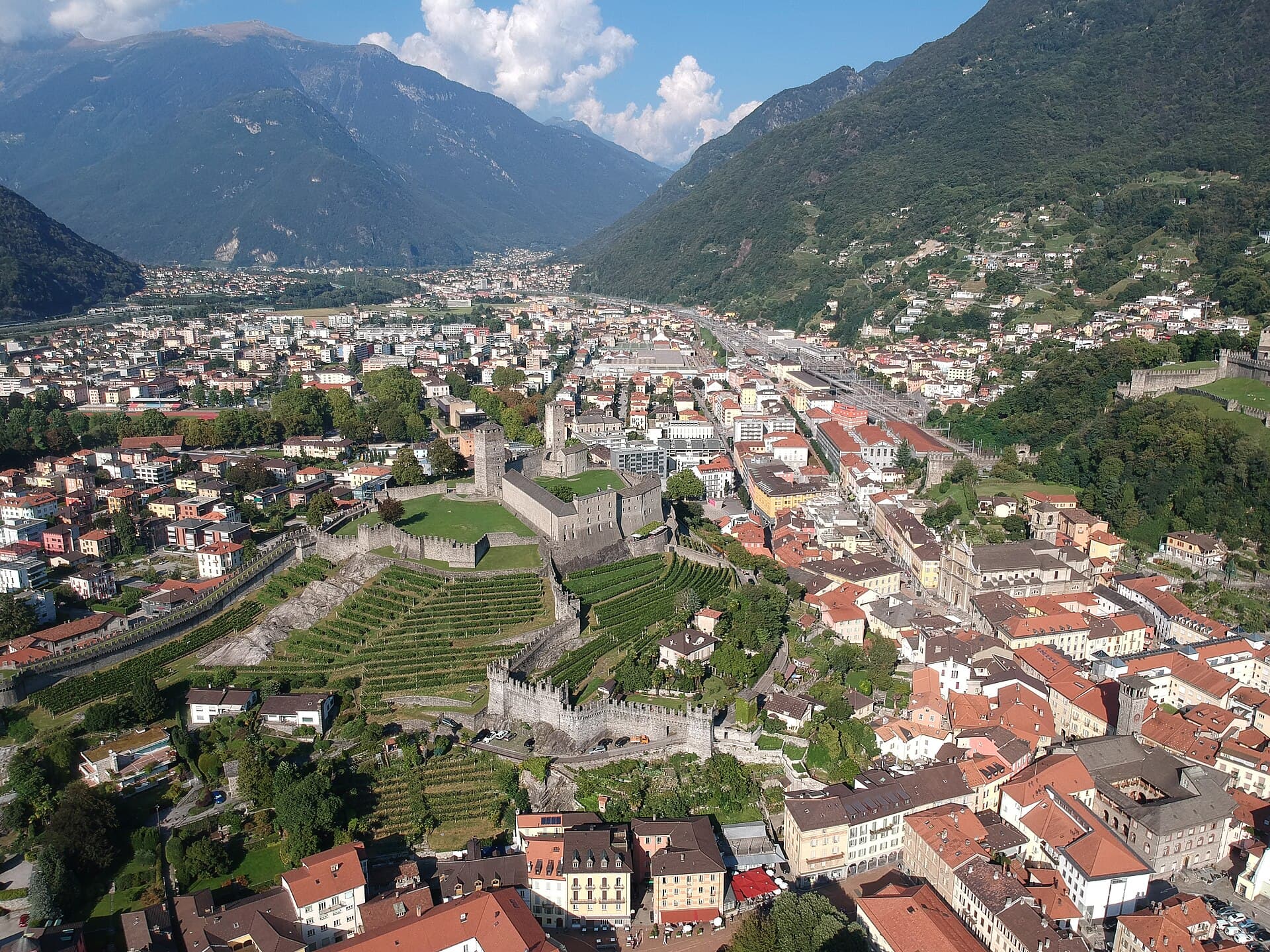 Ealgiuas / CC BY-SA 4.0, via Wikimedia Commons
“Where medieval fortresses stand sentinel over an Italian-speaking heart in the Swiss Alps.”
Not the postcards. The stories even locals don't know — whispered in your ear, right where they happened.
Bellinzona's oldest castle holds a secret from its time as a place of confinement.
The lively Saturday market here offers a tangible connection to Bellinzona's enduring commercial spirit.
The highest of Bellinzona's three castles reveals a surprising detail about its rapid construction.
Discover every secret of Bellinzone
Every address, every reveal in full — in your ear, right where it happened.
You pick your stops. You walk. The voice reveals what the others miss.
No tours available yet. Check back soon — we're preparing them.
Bellinzona, the capital of Switzerland's Ticino canton, is a city where the echoes of a deep past resonate through its stone streets and formidable fortifications. This Italian-speaking enclave, settled at the foot of the Alps, is celebrated for its three remarkably preserved medieval castles: Castelgrande, Montebello, and Sasso Corbaro. These fortresses, recognized as a UNESCO World Heritage Site since 2000, are not merely relics but integral parts of the city's identity, dramatically shaping its skyline and offering expansive views of the surrounding valleys and mountains.
More than just a collection of castles, Bellinzona offers a singular blend of Swiss precision and Italian flair. Its strategic position at the crossroads of major Alpine passes—including the St. Gotthard, Lukmanhoh, and San Bernardino—has made it a crucial gateway between northern and southern Europe for millennia. This historical significance is palpable in the city's architecture, cuisine, and the inviting atmosphere of its piazzas and outdoor cafés. Bellinzona serves as an excellent base for exploring the wider Ticino region, with easy train connections to other picturesque towns like Lugano and Locarno.
## From Roman Outpost to Cantonal Capital Bellinzona's history stretches back to the Neolithic age, with evidence of settlements on the Castelgrande hill dating back 5,500 years. Its strategic importance became clear during the Roman Empire, when a fort was built on the Castelgrande rock in the 1st century BC to protect northern borders and control vital Alpine trade routes. The city was first mentioned in written chronicles in 590 AD as 'Bilitio'.
Throughout the Early Middle Ages, Bellinzona saw various powers vying for control, including the Frankish Kingdom and later the bishops of Como. The town's fortifications were continually expanded and modified. By the late 13th century, the Rusca family of Como built Montebello Castle. The 14th and 15th centuries were marked by intense conflict between the Lombardian cities of Como and Milan for dominance over Bellinzona. Under the Visconti and Sforza dynasties of Milan, Bellinzona flourished, and its defenses were significantly strengthened. The impressive 'Murata,' a long wall built across the Ticino valley in the second half of the 14th century, allowed Milan to control and tax trade over the St. Gotthard Pass. Ludovico il Moro, Duke of Milan, ordered a major reconstruction of the city's fortifications and the construction of Sasso Corbaro Castle in the late 15th century, solidifying Bellinzona as an unyielding stronghold.
In 1499, Milan's rule ended with the French invasion. However, a popular uprising in Bellinzona in 1500 drove out the French, leading the city to join the Swiss Confederation for protection. For centuries, Bellinzona was governed by the Swiss cantons of Uri, Schwyz, and Nidwalden. Following the Act of Mediation in 1803, Bellinzona became part of the independent canton of Ticino. Initially, it alternated as the cantonal capital with Lugano and Locarno, but in 1878, Bellinzona became the permanent political capital of Ticino. The opening of the Gotthard railway in 1874 further cemented Bellinzona's role as a vital transport hub.
Bellinzona's primary appeal is its trio of UNESCO-listed medieval castles. Begin with Castelgrande, the oldest and largest, situated on a rocky peak in the city center. You can reach it via a sloping walkway or a lift from Piazza del Sole. Explore its grounds, walk the ramparts, climb the towers, and visit the museum detailing the castle's history from a Neolithic village to the 20th century.
Next, make your way to Montebello Castle, which is connected to Castelgrande by ancient walls. This castle, with its deep moats and visible layers of construction from the 13th to 17th centuries, houses the Archaeological and Civic Museum, showcasing artifacts from the Ticino region. Finally, ascend to Sasso Corbaro Castle, the highest of the three. Its geometric architecture is characteristic of a Sforza castle, and it offers expansive views of Bellinzona, the Riviera valley, and even Lake Maggiore on clear days. Sasso Corbaro also features temporary exhibitions and a collection of weapons and armor.
Beyond the castles, wander through Bellinzona's historic center. Visit the Collegiata dei Santi Pietro e Stefano, a 16th-century Renaissance church with a richly embellished Baroque interior. Explore the Palazzo Civico Municipio and the Teatro Sociale, and stroll through the arcades and narrow streets. Do not overlook the Saturday market in Piazza Collegiata for local specialties and handicrafts. For a distinctive experience, consider hiking to the Ponte Tibetano Carasc, a suspension bridge offering an exhilarating crossing and scenic views.
The best time to visit Bellinzona is from early April to mid-November. Spring (April, May, June) and autumn (mid-September to mid-November) are particularly appealing, with pleasant temperatures and colorful surrounding hills. While summer (July to mid-September) is also good, it can be quite warm. Bellinzona is not a typical winter destination, as the landscape can appear muted between mid-November and March, and chances of snow in town are not high. However, the main castle, Castelgrande, remains open year-round.
Bellinzona is easily accessible by train, with direct connections from major Swiss cities like Zurich, Lugano, and Locarno, as well as Milan. The Bellinzona train station is centrally located. While the outer grounds of the castles are generally free to visit, there are admission fees to explore the ramparts, climb towers, and enter the museums within Castelgrande, Montebello, and Sasso Corbaro. A 'Fortezza Pass' combo ticket covers all three castles. If you're staying at a local hotel, hostel, or campsite, inquire about the Ticino Ticket, which offers discounts on attractions and free public transportation throughout the Ticino region. A shuttle tour is available to navigate between the three castles, or you can explore them on foot via scenic paths. Guided walking tours of the old town and castles are also offered. Bellinzona is a walkable city, making it easy to explore the old town on foot.