Wall Street
La Wall Street di Bend non onora i mercati finanziari.
La storia completa si sblocca nel tour
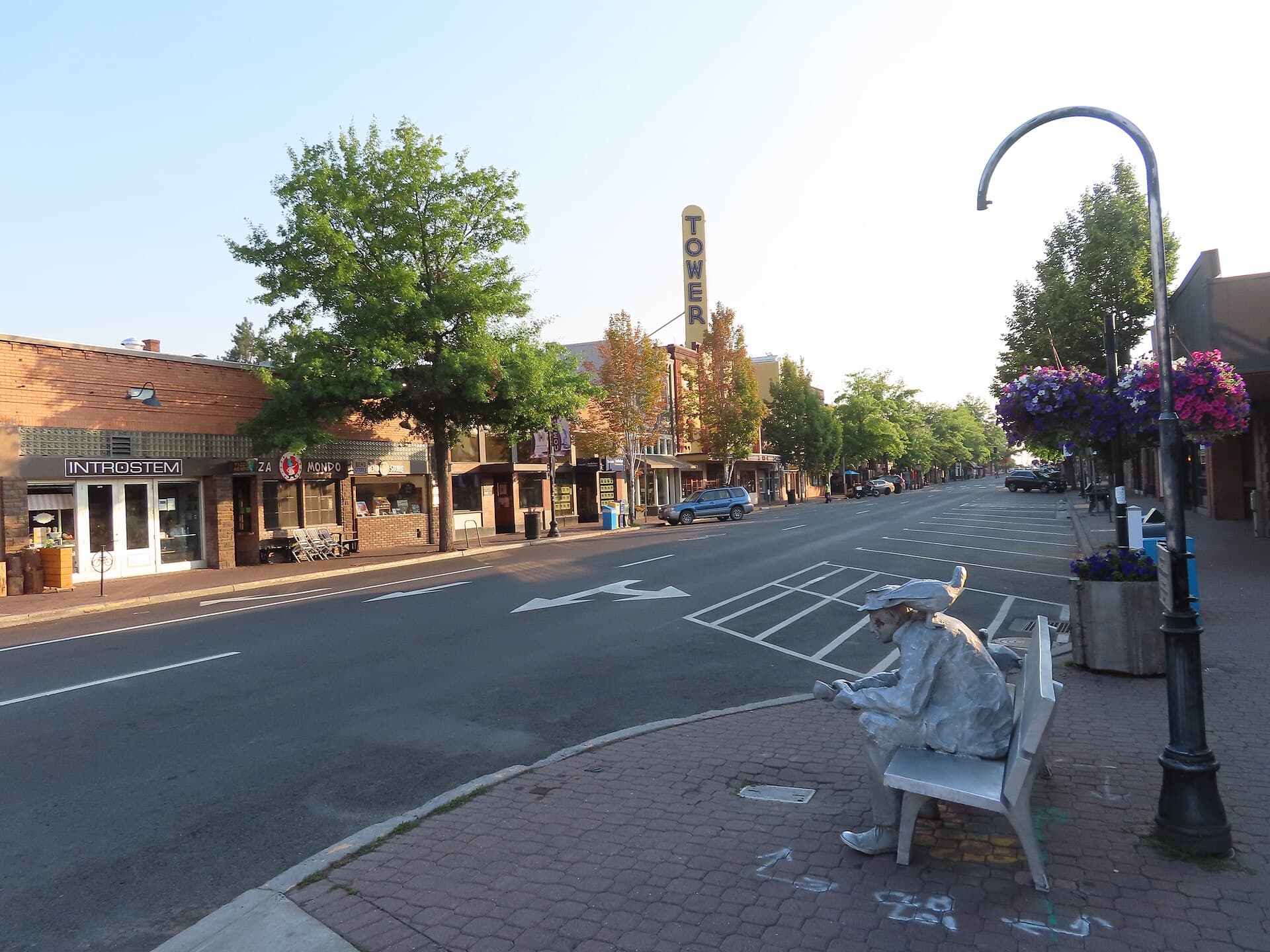 David Wilson / CC BY 2.0, via Wikimedia Commons
Tour audio autoguidato di Bend — percorso GPS a piedi, riproduzione offline, narrazione coinvolgente in 32 lingue.
“Dove il sole dell'alto deserto incontra le cime delle Cascate, e ogni sentiero porta alla scoperta.”
Non le cartoline. Le storie che nemmeno i locali conoscono — sussurrate nel tuo orecchio, proprio dove sono accadute.
La Wall Street di Bend non onora i mercati finanziari.
Bend presenta una notevole collezione di incroci circolari.
L'Oregon è un centro inaspettato per un particolare animale lanoso.
Scopri ogni segreto di Bend
Ogni indirizzo, ogni rivelazione completa — nel tuo orecchio, proprio dove è accaduta.
Scegli le tue tappe. Cammini. La voce rivela ciò che gli altri perdono.


Il tuo tour audio autoguidato di Bend è pronto — scegli i tuoi punti di interesse, seleziona la tua lingua e inizia nel momento in cui arrivi.
AcquistaLume include una guida in realtà aumentata. Alza il telefono: la fotocamera mostra la strada davanti a te, con una freccia luminosa sovrapposta all'immagine reale che punta sempre verso la tua prossima tappa — nessuna mappa da decifrare, nessuna svolta sbagliata. Come tutto in Lume, funziona completamente offline.
Bend, Oregon, si trova a un'altitudine di 3.623 piedi (1.104 metri) sul fianco orientale della Cascade Range, divisa dal fiume Deschutes. Questa città dell'Oregon centrale, con oltre 99.000 residenti, è spesso descritta come parte dell'"high desert" dell'Oregon per il suo clima elevato e arido. Detiene il primato di essere una delle uniche tre città negli Stati Uniti continentali con un vulcano estinto, Pilot Butte, all'interno dei suoi confini comunali.
Bend ha coltivato la reputazione di un paradiso per gli amanti della vita all'aria aperta, offrendo una vasta gamma di attività durante tutto l'anno. Dalla mountain bike all'escursionismo, dallo sci al rafting, i dintorni naturali della città offrono infinite opportunità di esplorazione. Oltre alle attività all'aperto, Bend è anche riconosciuta per la sua vivace cultura della birra artigianale, con numerose birrerie che contribuiscono al carattere locale.
Per millenni, la terra che sarebbe diventata Bend fu abitata dalle tribù Wana Łama, Wasq'u e Northern Paiute, che cacciavano e pescavano le abbondanti risorse della regione. I primi esploratori europei di pellicce arrivarono negli anni '20 dell'Ottocento, seguiti da spedizioni dell'esercito. I pionieri in viaggio verso ovest scoprirono infine un punto di guado sul fiume Deschutes, una drammatica curva di 90 gradi che divenne nota come "Farewell Bend."
Negli anni '70 dell'Ottocento, i rancher iniziarono a rivendicare appezzamenti nelle praterie del Deschutes. John Y. Todd acquisì terre da un precedente proprietario e chiamò il suo ranch "Farewell Bend", consolidando il nome per l'insediamento emergente. L'ufficio postale, istituito nel 1886, abbreviò ufficialmente il nome in "Bend". Inizialmente, Bend funzionò come un modesto centro commerciale per le operazioni agricole e di allevamento circostanti.
I primi anni del '900 segnarono un cambiamento cruciale per Bend. Nel 1900, Alexander M. Drake arrivò con piani per sviluppare sistemi di irrigazione, formando la Pilot Butte Development Company e delineando la rete stradale della città. Bend fu ufficialmente incorporata come città nel 1905 con una popolazione di circa 300-500 persone. Il completamento della Oregon Trunk Line Railroad fino a Bend nel 1911 fornì un collegamento cruciale per il trasporto di persone e merci. Seguì l'istituzione di due importanti segherie, Brooks-Scanlon e Shevlin-Hixon, che trasformarono Bend in una fiorente città del legname per il mezzo secolo successivo. Sebbene le segherie non siano più operative, l'ex segheria Brooks-Scanlon è stata riqualificata nel Old Mill District, un centro per lo shopping, la ristorazione e l'intrattenimento.
Esplora le diverse attrazioni di Bend, a partire dal Old Mill District, un'area rivitalizzata lungo il fiume Deschutes con negozi, ristoranti e intrattenimento. Da qui, puoi accedere al Deschutes River Trail per passeggiate panoramiche o escursioni in bicicletta. Per un'esperienza urbana distintiva, considera il river surfing o il tubing al Bend Whitewater Park di McKay Park.
A breve distanza in auto, lo Smith Rock State Park presenta spettacolari formazioni rocciose, una destinazione popolare per l'escursionismo e l'arrampicata, con sentieri come Misery Ridge che offrono ampie viste. Avventurati nel Newberry National Volcanic Monument per esplorare antiche colate laviche, crateri vulcanici e l'intrigante Lava River Cave, il tubo di lava continuo più lungo dell'Oregon. Non perdere l'opportunità di percorrere la Cascade Lakes Scenic Byway, una strada che serpeggia tra numerosi laghi alpini.
All'interno della città, sali al Pilot Butte State Scenic Viewpoint, un cono di scorie estinto, per ammirare viste a 360 gradi di Bend e delle circostanti montagne Cascade. Per un assaggio della storia locale e della fauna selvatica, visita l'High Desert Museum, con mostre sul passato della regione e sugli animali nativi. E per coloro che apprezzano le bevande artigianali, il Bend Ale Trail offre un tour autoguidato dei numerosi birrifici della città.
Bend offre un fascino tutto l'anno, anche se il periodo migliore per visitarla dipende dalle attività preferite. Per un clima ideale, con un equilibrio tra giornate calde e notti fresche, si consigliano la tarda primavera (maggio) e l'inizio dell'autunno (settembre-ottobre). Queste stagioni intermedie vedono anche meno visitatori e potenzialmente tariffe di alloggio migliori. L'estate (giugno-agosto) è il periodo più affollato, offrendo la più ampia gamma di attività all'aperto e un clima costantemente caldo, sebbene porti anche folle più numerose e prezzi più alti. L'inverno (dicembre-marzo) è ideale per gli sport sulla neve nel vicino Mt. Bachelor.
Bend si trova nell'Oregon centrale, a circa 163 miglia a sud-est di Portland. L'aeroporto più vicino è Roberts Field (RDM) a Redmond, a circa 15 miglia a nord di Bend, che offre voli diretti da diverse città della West Coast. Sebbene Bend sia una città adatta alle biciclette con numerosi percorsi, un'auto è spesso consigliata per esplorare la più ampia regione dell'Oregon centrale e raggiungere le attrazioni oltre il centro città. I parcheggi sono disponibili in tutta la città, con alcuni parcheggi gratuiti di due ore in centro e opzioni gratuite più estese in aree come l'Old Mill District. L'Oregon non ha tasse di vendita, il che può rendere lo shopping più attraente. Molti sentieri nelle aree selvagge vicino a Bend richiedono permessi giornalieri dal 15 giugno al 15 ottobre, e i permessi Sno-Park sono necessari per le aree designate in inverno (dal 1 novembre al 30 aprile). Anche in estate, le serate possono essere fresche, quindi è consigliabile portare strati di abbigliamento.
Bend — coreano, cinese, ebraico e altre 29 lingue, ogni tappa narrata da una voce madrelingua. La più ampia scelta di lingue tra i tour audio autoguidati.
Disponibile in: