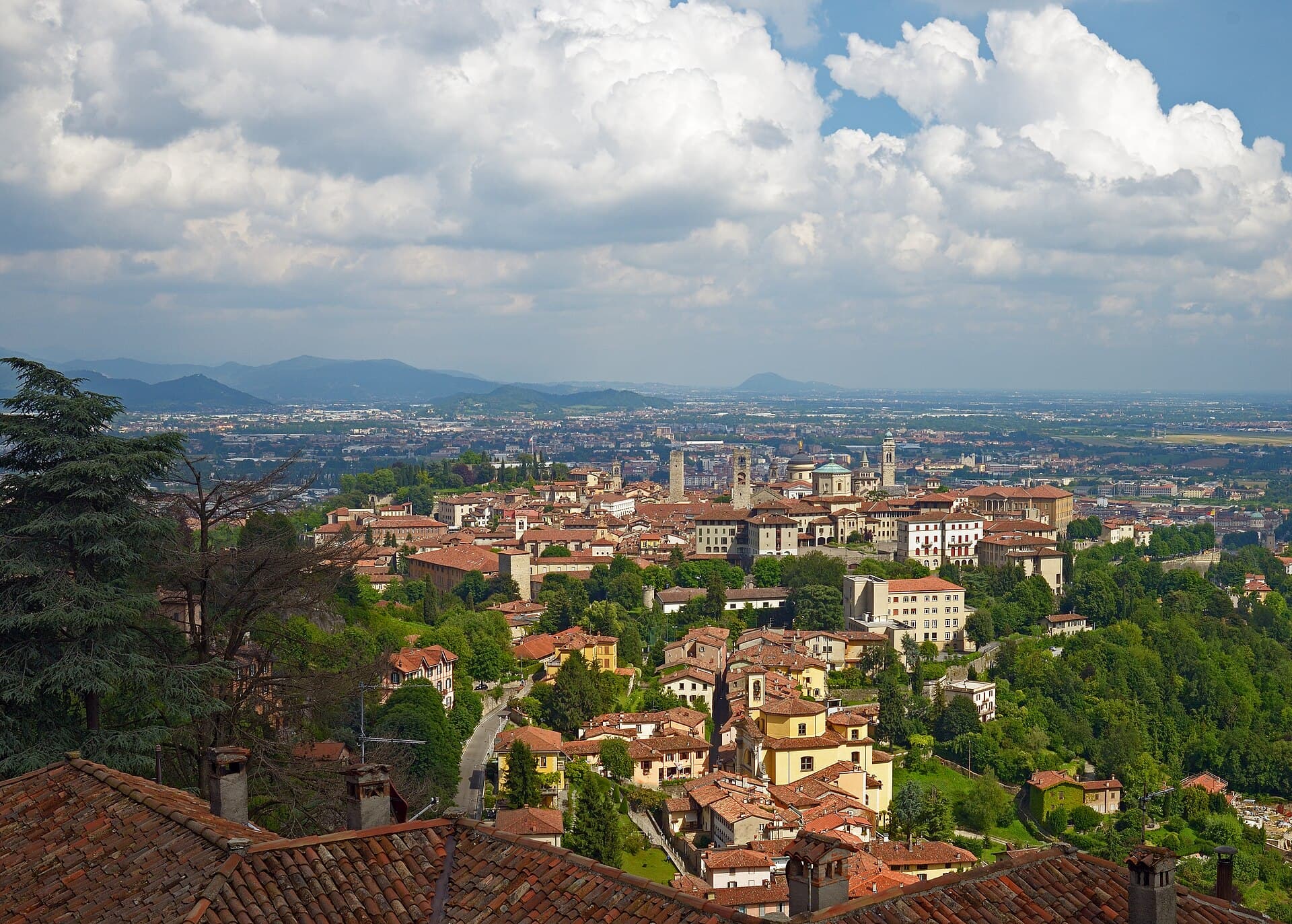
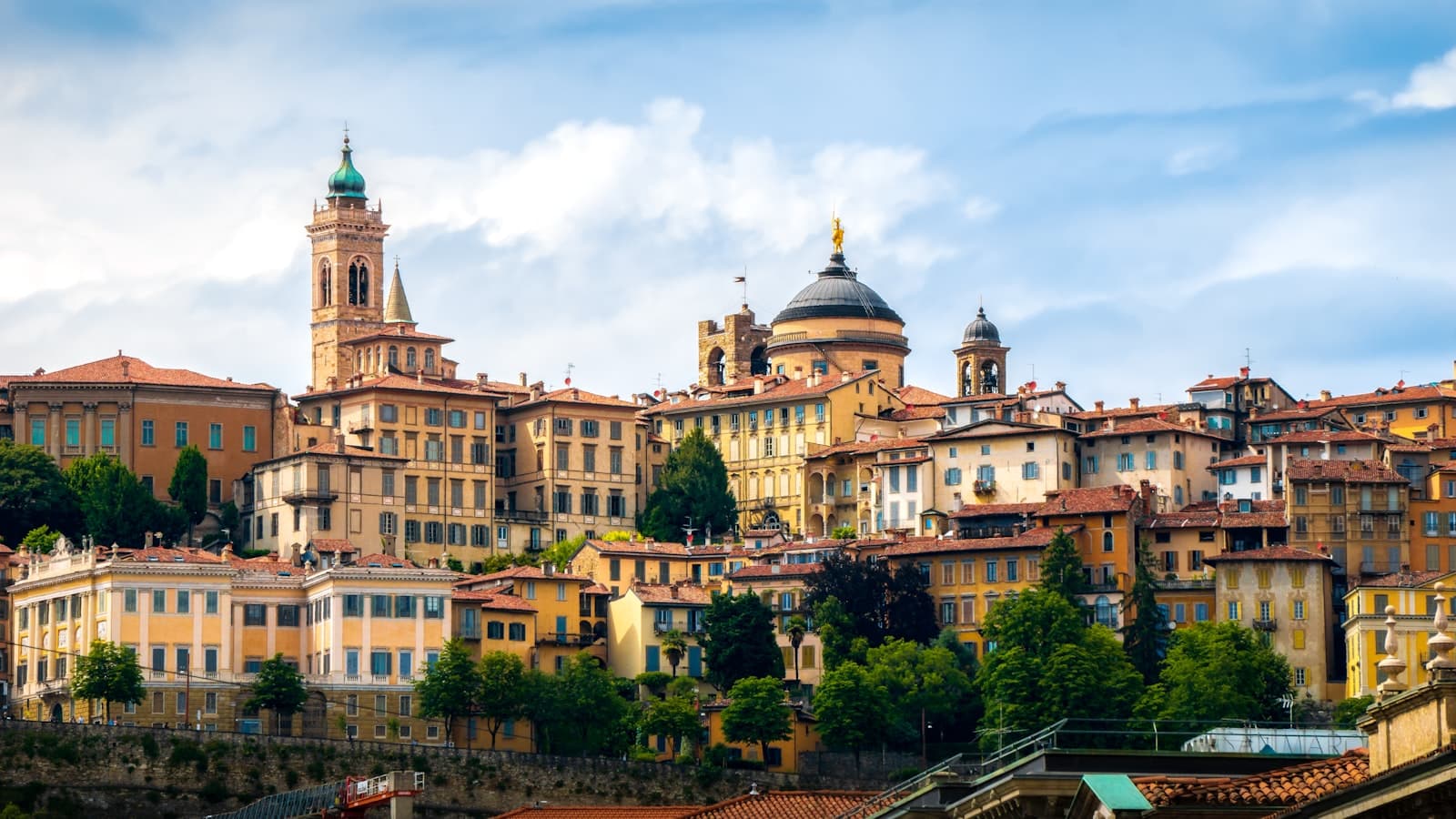
Bergamo, ItalyВвласенко / CC BY-SA 3.0, via Wikimedia Commons
IT

Bergamo

Ancient walls embrace a lively present; Bergamo unfolds as two distinct cities.

The secrets of Bergamo

Bergamo, as no one tells it.

Not the postcards. The stories even locals don't know — whispered in your ear, right where they happened.

3 secrets below. Many more wait inside the tour.
Colleoni Chapel, Piazza Duomo

Before entering the ornate Colleoni Chapel, observe a peculiar detail on its iron gate. Local lore suggests touching this spot can invite good fortune.

Full story unlocks in the tour
Campanone (Civic Tower), Piazza Vecchia

Every evening at 10 PM, the Campanone bell in Bergamo Alta tolls 100 times. This is far more than a simple chime marking the hour.

Full story unlocks in the tour
Via Gombito, Città Alta

Walk along Via Gombito, a primary artery of Città Alta, and you traverse a path with a surprising past extending deep beneath your feet.

Full story unlocks in the tour
The full tour

Discover every secret of Bergamo

Every address, every reveal in full — in your ear, right where it happened.

Get the key to Bergamo

You pick your stops. You walk. The voice reveals what the others miss.

Choose your time

How long do you have in Bergamo?

No tours available yet. Check back soon — we're preparing them.

About Bergamo

The story of Bergamo

Bergamo, a city within Italy's Lombardy region, presents a compelling duality with its distinct 'Città Alta' (Upper City) and 'Città Bassa' (Lower City). Città Alta, embraced by formidable Venetian walls—a UNESCO World Heritage site—is a medieval wonder of narrow, winding streets, historic plazas, and venerable architecture. The lower city, Città Bassa, offers a contemporary, active urban experience, with elegant storefronts, wide boulevards, and modern daily life. A charming funicular connects the two, providing not only transport but also sweeping views that highlight the city's singular geography.

This division allows visitors to experience centuries of history alongside modern Italian culture within a confined area. From the fortified splendor of the upper city to the lively pulse of the lower, Bergamo invites exploration, presenting art, history, and daily Italian existence.

History

## From Celtic Origins to Venetian Dominion Bergamo's story begins with a settlement of the Orobii, a Celtic tribe, followed by Roman conquest in 49 BC, when it became a Roman municipality named Bergomum. After the Roman Empire's decline, it endured incursions by Huns and Goths, eventually evolving into a significant Lombard duchy.

## Medieval Conflicts and Venetian Influence During the Middle Ages, Bergamo prospered as a free commune, frequently clashing with nearby cities like Brescia and Milan. The city's strategic position made it a coveted prize, leading to periods of governance by various powerful families, including the Visconti and Malatesta. In 1428, Bergamo came under the Venetian Republic's authority, marking a crucial era in its growth. The Venetians fortified Città Alta by constructing its formidable walls, which endure today, shaping the city's recognizable outline and safeguarding it from invaders. This period saw considerable architectural and artistic development, leaving a lasting Venetian character upon the city.

## Unification and Modernity Venetian rule concluded with Napoleon's arrival in 1797, and following the Congress of Vienna, Bergamo became part of the Austrian Empire. The city actively participated in the Risorgimento, the movement for Italian unification, earning the epithet 'Città dei Mille' (City of a Thousand) for its contribution of volunteers to Garibaldi's expedition. In 1859, Bergamo officially joined the Kingdom of Italy. The 19th and 20th centuries witnessed the expansion of Città Bassa, transforming it into a modern urban core while Città Alta preserved its historic allure. Today, Bergamo continues to balance its profound historical legacy with a dynamic contemporary identity.

What to see

Begin your journey in Città Alta, ascending via the Funicolare di Bergamo Alta for an immediate appreciation of the city's distinct layout. At the core of Città Alta lies Piazza Vecchia, a historic public space framed by architectural wonders such as the Palazzo della Ragione and the Torre Civica, also known as Campanone. Ascend the Campanone for expansive views of the city and surrounding valleys. Adjacent to Piazza Vecchia is Piazza Duomo, home to the Bergamo Cathedral, the Colleoni Chapel, and the Basilica di Santa Maria Maggiore, each revealing intricate artistry and historical depth.

Walk along the Venetian Walls, a UNESCO site, for a leisurely promenade and sweeping vistas. Explore the Rocca di Bergamo, a medieval fortress offering further historical insight and views. Descend to Città Bassa to experience a different aspect of Bergamo. Here, the Accademia Carrara holds a significant collection of Renaissance art, including pieces by Botticelli and Raphael. Stroll along Via Sentierone, the primary promenade, and discover modern architecture and active city life.

When to visit

The most pleasant times to visit Bergamo are spring (April to May) and early autumn (September to October). During these months, the weather is comfortably mild, perfect for walking and exploring both Città Alta and Città Bassa. Crowds are generally smaller than during the summer peak, allowing for a more relaxed experience. Summer (June to August) can be warm and more active with visitors, while winter (November to March) brings cooler temperatures and a quieter ambiance, though some attractions might have reduced hours.

Practical

Bergamo is readily accessible. Orio al Serio International Airport (BGY) serves as a significant hub for low-cost airlines, located just a brief bus ride from the city center. The city's main train station in Città Bassa provides connections to Milan and other Italian cities. Within Bergamo, the Funicolare di Bergamo Alta offers a scenic and efficient link between the upper and lower cities. A second funicular connects Città Alta to San Vigilio. Public buses serve both parts of the city. Consider acquiring a Bergamo Card for unlimited public transport and reduced admission to attractions. Walking offers the best way to experience Città Alta's character. Comfortable footwear is highly recommended due to the inclined and paved streets.

Good to know
How does one travel to Città Alta from Città Bassa?
The most popular and picturesque way to reach Città Alta from Città Bassa is by taking the Funicolare di Bergamo Alta. Bus services and walking paths are also available.
Are the Venetian Walls open for walking?
Indeed, the Venetian Walls are largely open for walking, providing expansive views of the city and its surrounding landscape.
What culinary specialties is Bergamo known for?
Bergamo is celebrated for its Casoncelli alla Bergamasca (stuffed pasta), Polenta e Osei (a sweet cake resembling polenta with birds), and Stracciatella ice cream, which originated here.
Is Bergamo a city that encourages walking?
Città Alta is very conducive to walking, though it includes inclines and paved surfaces. Città Bassa is also walkable, with broader, flatter streets. Public transport, especially the funiculars, assists in navigating the slopes.
What is the Accademia Carrara?
The Accademia Carrara is an art gallery in Città Bassa, housing a notable collection of Italian Renaissance paintings, featuring works by masters such as Botticelli, Bellini, and Raphael.
Can Bergamo be visited as a day trip from Milan?
Yes, Bergamo is a popular and convenient day trip from Milan, with frequent train connections taking approximately 45-60 minutes.
Bergamo
From€9.00
No booking · activate anytime · 12h to walk it
Get the key to Bergamo