Karvės Ola (Cow's Cave)
Imagine a cow, peacefully grazing, suddenly vanishing into the earth.
Full story unlocks in the tour
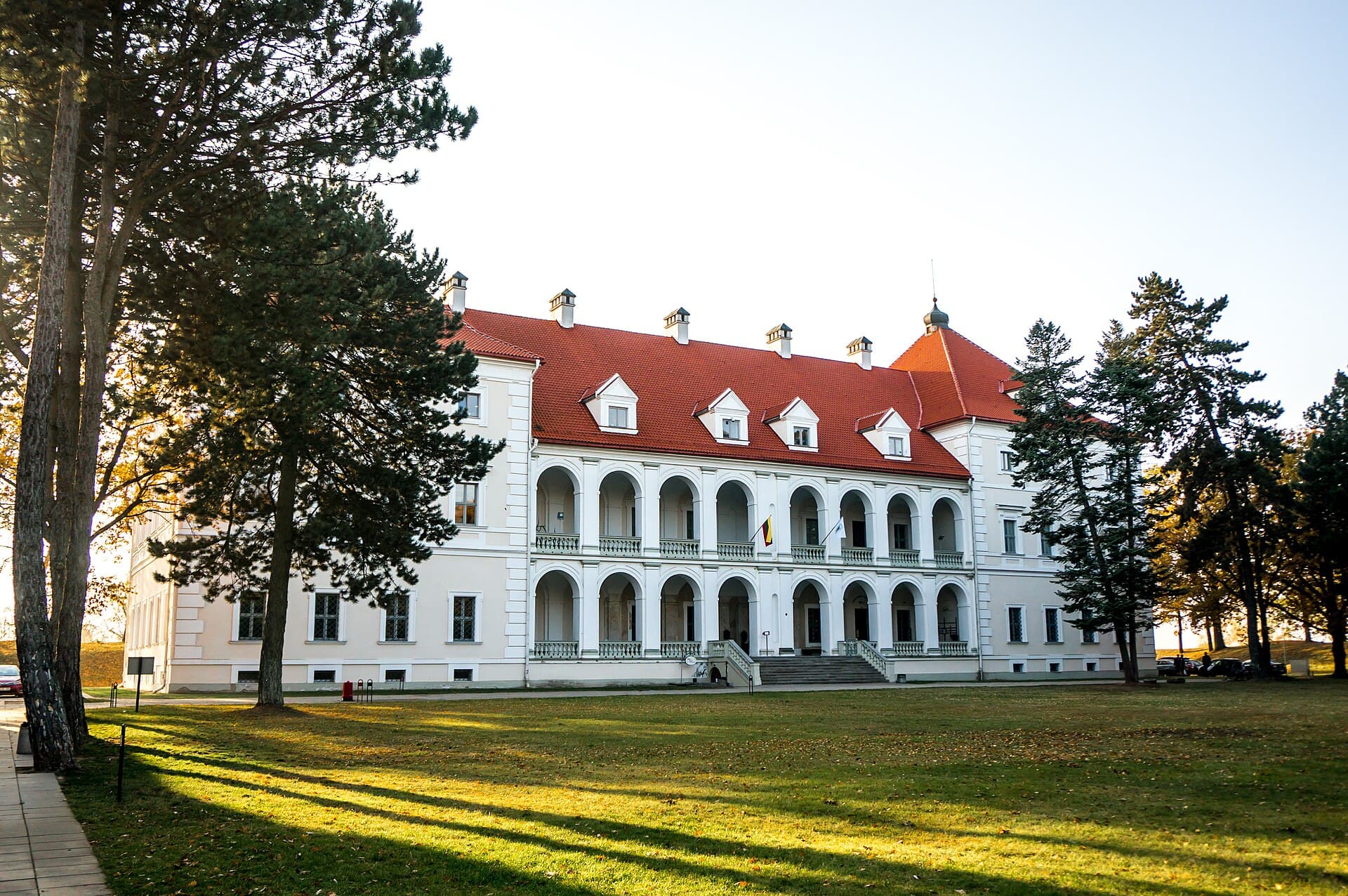 Dosmi / CC BY-SA 4.0, via Wikimedia Commons
Self-guided audio walking tour of Biržai — GPS route, offline playback, story-driven narration in 32 languages.
“Where the earth breathes deep and local brews flow.”
Not the postcards. The stories even locals don't know — whispered in your ear, right where they happened.
Imagine a cow, peacefully grazing, suddenly vanishing into the earth.
This formidable fortress once hosted a secret pact between two of Europe's powerful rulers.
The ground beneath Biržai is like Swiss cheese, riddled with thousands of natural holes.
Discover every secret of Biržai
Every address, every reveal in full — in your ear, right where it happened.
You pick your stops. You walk. The voice reveals what the others miss.
Your self-guided audio tour of Biržai is ready — pick your landmarks, choose your language, and start the moment you arrive.
BuyLume has a built-in augmented-reality guide. Hold your phone up and its camera shows the street ahead of you, with a glowing arrow laid over the real view that always points to your next stop — no map to puzzle over, no wrong turns. Like everything in Lume, it works fully offline.
Biržai, a compelling town in northern Lithuania, invites exploration with its unique blend of history, nature, and authentic regional culture. Situated near the Latvian border, it offers a refreshing alternative to Lithuania's larger cities, providing depth without the crowds. The town's name is believed to derive from the Lithuanian word for birch, or perhaps from an ancient term for a felled forest area, hinting at its verdant surroundings.
At its heart lies the formidable Biržai Castle, a testament to centuries of noble heritage and strategic importance. Beyond the castle walls, Biržai is celebrated for its distinctive karst landscape, a geological marvel within Biržai Regional Park, where thousands of sinkholes dot the terrain. The town's identity is also deeply intertwined with its traditional brewing culture, a source of local pride and a delight for visitors.
Biržai's recorded history stretches back to 1455, when it was first mentioned in written sources. The town's destiny became closely tied to the powerful Radziwiłł family, who acquired the lands around 1500. In 1575, Duke Kristupas Radvila initiated the construction of a dam at the confluence of the Apaščia and Agluona rivers, creating the artificial Lake Širvėna, Lithuania's oldest artificial lake, to serve as a defensive measure. This monumental undertaking paved the way for the construction of Biržai Castle, a modern Italian-style bastion fortress, which began in 1586 and was largely completed by 1589.
The Radziwiłłs, having converted to Protestantism, established a Protestant church and school, transforming Biržai into a significant center of the Reformation in Lithuania. The castle played a crucial role as a Lithuanian stronghold during the protracted wars with Sweden in the 17th and 18th centuries. It suffered significant damage in 1625 and was rebuilt in the Dutch style between 1637 and 1652, featuring strong ramparts and bastions. Despite these efforts, the castle was repeatedly attacked and ultimately destroyed by the Swedes in 1704, after which it lay in ruins for centuries.
In the 19th century, with the decline of the Radziwiłł family's influence, Biržai was sold to the Tyszkiewicz family in 1811. They built the elegant neoclassical Astravas Manor across Lake Širvėna, adding another architectural delight to the region. The 20th century brought immense hardship, particularly during World War II, when Biržai's flourishing Jewish community, which once comprised over half the town's population, was tragically annihilated in 1941. The town itself was also heavily damaged.
Post-war, efforts were made to restore Biržai's heritage. The castle underwent extensive reconstruction in the Renaissance-Baroque style from the 1970s to the late 1980s, culminating in the opening of the Biržai Region Museum "Sėla" in 1989. Today, Biržai stands as a testament to resilience, preserving its deep history while embracing its unique natural wonders and cultural traditions.
Begin your exploration at Biržai Castle, a magnificent reconstructed 17th-century bastion fortress. Inside, the Biržai Region Museum "Sėla" offers insights into the area's past, including archaeological exhibits and a fascinating display on ancient brewing traditions. Walk the star-shaped earthworks for panoramic views of the brick ramparts and Lake Širvėna.
Cross Lake Širvėna on Lithuania's longest pedestrian bridge, a romantic spot offering enchanting views, leading to the elegant Astravas Manor. This neoclassical palace, with its landscaped park and Roman aqueduct-inspired old dam, provides a glimpse into 19th-century aristocratic life.
No visit to Biržai is complete without experiencing the Biržai Regional Park. This unique karst landscape is dotted with over 9,000 sinkholes, a geological wonder. Visit the Kirkilai Karst Lakes and observation tower for sweeping views of this unusual terrain. Don't miss the famous Karvės Ola (Cow's Cave), the largest sinkhole in Lithuania, with its intriguing legend. The park's visitor center offers interactive exhibits to help understand these natural phenomena.
For a taste of local culture, explore Biržai's renowned brewing heritage. Many local breweries offer tours and tastings, allowing you to sample traditional Lithuanian beers. In the town center, you can also find local markets and cafes, and visit the Neo-Gothic Biržai Reformed Church, a reflection of the region's Protestant past.
The most pleasant time to visit Biržai is from late spring to early autumn, specifically May through September, when the weather is generally warm and conducive to outdoor activities. Summer (June to August) offers long daylight hours, ideal for exploring the sinkholes, lakes, and castle, and often features cultural events and festivals. For fewer crowds and potentially better value, consider the shoulder seasons of late spring or early autumn. Winter, while quieter, offers a unique, often snowy, perspective on the landscape.
Biržai's town center is compact and easily explored on foot. For venturing further afield, such as to the regional park's more distant sinkholes, a bicycle or car is recommended. Bike rentals are available at the tourist office. Local buses operate to outlying villages, and taxis are available at the bus station; it's advisable to negotiate the fare before starting your journey.
Accommodation options in Biržai include hotels, guesthouses, and apartments, catering to various budgets. Dining offers a range of traditional Lithuanian dishes, often served with local produce, alongside European cuisine. Biržai's brewing heritage means you'll find unique local beer flavors. While Lithuanian is the official language, many people in the tourism sector speak English. Biržai is generally a safe destination, but travel insurance is always a good idea.
Biržai in Korean, in Chinese or in Hebrew — and 29 more languages, every stop narrated by a native voice. The widest language range of any self-guided audio tour.
Available in: