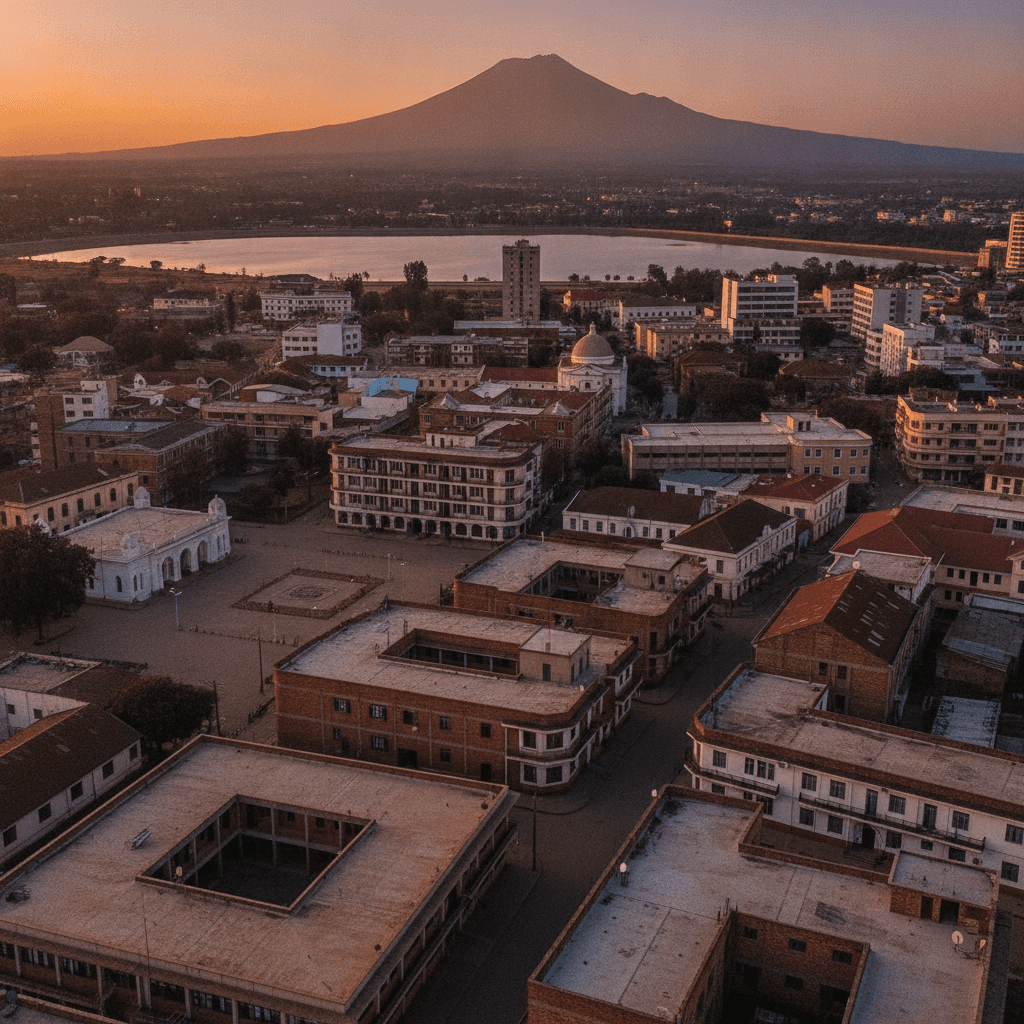
As an urbanist, I approach any new city with a specific lens: how does it breathe for the pedestrian? In Arusha, Tanzania, often seen merely as a transit hub for safaris, I found a surprisingly engaging and compact city center, ripe for exploration by foot. It possesses a distinct urban rhythm, a vibrant tapestry of commerce, history, and daily life that reveals itself best when you slow down and walk. Forget the safari vehicle for a day; this is a city designed for discovery, and with a tool like a self-guided audio tour, you truly control the narrative.
Unveiling Arusha's Pedestrian Pulse
Unlike many sprawling African cities, Arusha's downtown core, bounded roughly by areas like Soko Kuu (the Central Market) and the Arusha Declaration Museum, is remarkably walkable. While pavements can occasionally be a patchwork, the general awareness of pedestrians and the relatively flat terrain encourage strolling. The constant hum of activity – the calls of vendors, the cheerful chaos of dala-dalas, the aroma of street food – creates an immersive experience. It's an organic urbanism, where public spaces are defined by human interaction rather than rigid planning. To truly appreciate this, a flexible approach is key. You need to be able to pause, observe, and divert at will, which is precisely where a self-guided audio tour Arusha excels.
Crafting Your Own Arusha Journey
Imagine starting your day at the iconic Clock Tower, widely considered the midpoint between Cairo and Cape Town. From here, your options branch out like arteries from a central heart. Do you delve immediately into the sensory overload of the Central Market, or perhaps seek the historical gravitas of the Arusha Declaration Museum? This is the beauty of an Arusha walking tour app; you dictate the pace and the points of interest. My ideal route balances the city's commercial energy with its significant historical markers.
Consider these focal points for your customized walk:
- The Clock Tower (Mnara wa Saa): A natural starting point. Take a moment to appreciate its symbolic significance and the bustling crossroads it oversees.
- Boma Road: Home to administrative buildings, this street offers a glimpse into colonial architecture and more orderly public spaces, a stark contrast to the market's dynamism.
- Arusha Declaration Museum: A pivotal site in Tanzanian history. The museum and its surrounding grounds offer a quiet respite and a deep dive into the nation's socialist past and independence. It’s an essential stop to understand the country's foundations.
Diving into the City's Core: Markets, Monuments, and Modern Life
From the Clock Tower, a short walk along India Street or Sokoine Road will lead you to the vibrant pulse of Arusha: the Soko Kuu (Central Market). This is where the city's energy is most palpable. Here, you'll navigate narrow aisles overflowing with fresh produce, spices, fabrics, and artisanal crafts. It’s a place to engage with local vendors, practice a few Swahili phrases, and perhaps sample some freshly squeezed juice or local snacks like chips mayai (fries in an omelet). The sheer volume of human activity, the impromptu negotiations, and the kaleidoscope of colors make it an urbanist's delight – a true example of a living, breathing marketplace.
Beyond the market, if time and interest allow, you might extend your exploration to the Cultural Heritage Centre. While a bit further out, it's accessible via a short taxi ride or a longer, purposeful walk, and offers a curated experience of Tanzanian art, gemstones (Tanzanite!), and crafts. It provides another perspective on the city's cultural richness, a quieter, more reflective counterpoint to the market's hustle. Having an Arusha offline audio guide means you can venture a little off the beaten path without worrying about data connectivity, maintaining your immersive experience.
Navigating and Reflecting on Arusha's Walkability
As you explore Arusha on foot, pay attention to the details: the small street food vendors grilling mishkaki (meat skewers), the intricate designs on kangas (traditional printed fabrics) in textile shops, the lively conversations. While not every street boasts perfectly paved sidewalks, the density of activity and the relatively short distances between key points make it an immensely rewarding walking city. The freedom to pause your audio narration, observe a street scene, or simply soak in the atmosphere before continuing your story, is invaluable.
This self-guided approach to Arusha allows for genuine discovery. You're not merely following a flag; you're engaging with the city on its own terms, shaping your experience to your curiosities. It is a truly liberating way to understand Arusha, making every step a chapter in your personal story of this fascinating East African urban landscape.