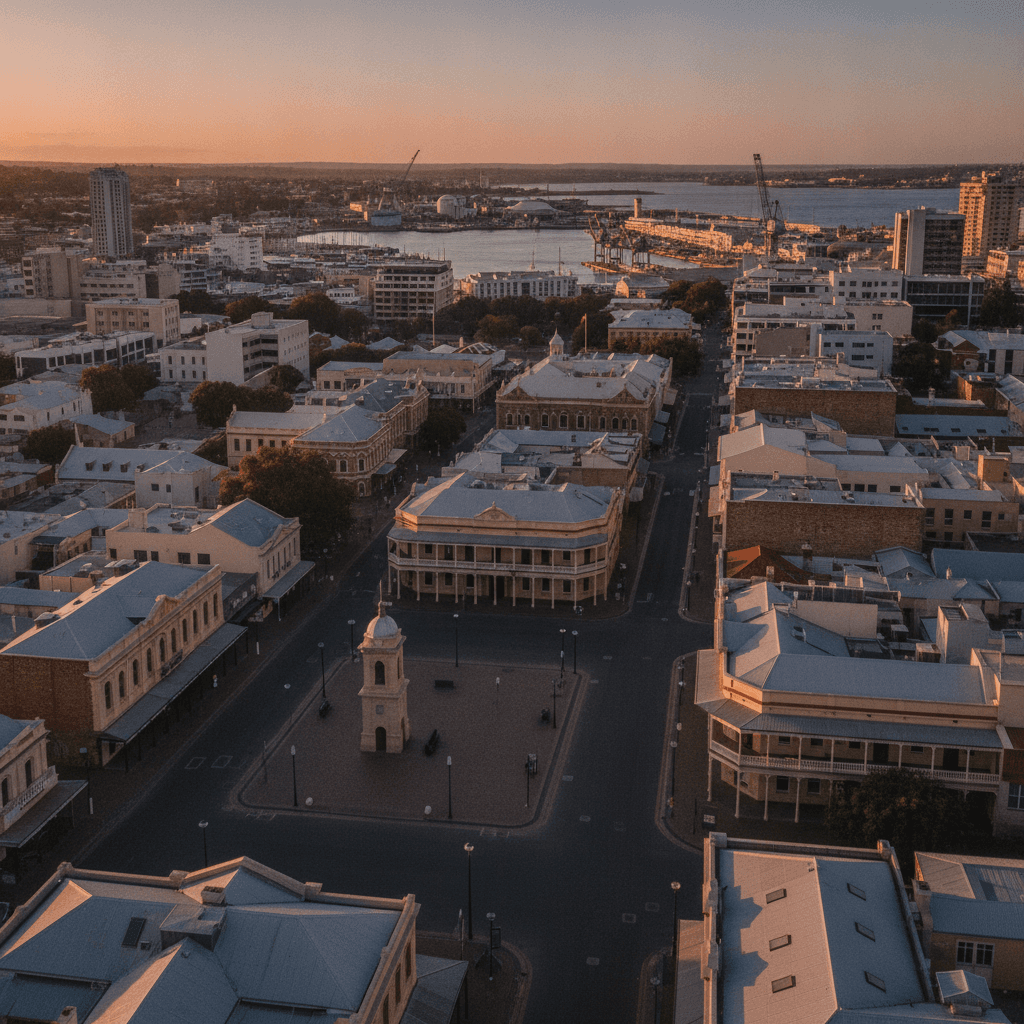
Guten Tag, fellow urban explorers! As someone who spends considerable time dissecting the very fabric of cities, seeking out places where the pedestrian reigns supreme, I find myself continually drawn to the unique charm of Fremantle, Western Australia. It's a city that, despite its relative youth compared to Europe's ancient centres, presents a compelling case study in human-scaled design and historical preservation, all ripe for exploration on foot.
Fremantle isn't just a port city; it's a meticulously planned urban environment where history, commerce, and daily life converge within easy walking distance. From its well-preserved Victorian and Georgian architecture to the lively pulse of its markets and harbour, the city invites you to slow down and absorb its layers. With a self-guided audio tour Fremantle truly comes alive, allowing you to curate your journey and delve into the stories that shape its distinctive character. It’s an ideal setting for a Fremantle walking tour app, offering freedom and depth.
The Harbour's Embrace: A Working Port in Harmony
My first port of call (pun intended!) for any city exploration is often its connection to water. Fremantle’s Fishing Boat Harbour is not merely a scenic spot; it's a vibrant, working entity that integrates seamlessly with public life. Here, the aroma of fresh seafood mingles with the salty sea air, and the clang of rigging provides a natural soundtrack. This area demonstrates excellent pedestrian access, with wide boardwalks connecting eateries like Cicerello's and Kailis' Fish Market Café directly to the bustling activity of the port.
Moving eastward along Marine Terrace, you encounter the impressive Western Australian Maritime Museum, its striking architecture a testament to the city's seafaring heritage. This seamless transition from active port to cultural institution, all accessible without needing a car, speaks volumes about Fremantle's commitment to walkability. For those truly wanting to explore Fremantle on foot, beginning here offers a superb orientation to the city's soul.
High Street & Walyalup Koort: A Historical Backbone
The heart of Fremantle's historical urban fabric beats strongest along High Street and in the newly revitalised Walyalup Koort (Fremantle's civic centre). Walking this stretch feels like stepping back in time, yet with a distinctly contemporary hum. The streetscape is defined by:
- Victorian and Edwardian facades: Meticulously restored, these buildings house a mix of galleries, independent shops, and cafes, encouraging lingering and discovery.
- Wide pavements: Generous pedestrian zones allow for comfortable strolling, window shopping, and people-watching without feeling cramped.
- Strategic public spaces: Walyalup Koort, once a car park, is now a beautifully designed public square, a true community hub that links the Town Hall, the Fremantle Library, and the civic administration building. This transformation prioritises human interaction over vehicular dominance, a principle I heartily endorse.
The iconic Round House, Western Australia's oldest public building, stands proudly overlooking Bathers Beach, offering panoramic views and a stark reminder of the city's convict past. Its proximity to the city centre and the harbour makes it an essential stop, easily reached on foot and often a focal point of any comprehensive Fremantle offline audio guide.
The Cappuccino Strip & Fremantle Markets: Urban Vitality
No urbanist's appraisal of Fremantle would be complete without a deep dive into the Cappuccino Strip on South Terrace and the iconic Fremantle Markets. These areas are epitomes of urban vitality, driven almost entirely by pedestrian flow.
- Cappuccino Strip: This tree-lined boulevard is a masterclass in activating street life. Cafes spill out onto the pavement, creating an inviting atmosphere that encourages social interaction. The rhythm of conversation, the clatter of cups, and the scent of coffee define this space.
- Fremantle Markets: A true sensory experience, these markets are housed in a magnificent Victorian building. Navigating its aisles, from fresh produce to artisanal crafts, is an exercise in delightful discovery. The sheer volume of foot traffic here underscores its role as a vital community and visitor magnet. It’s a testament to how well public markets can anchor and animate a city district.
These areas are not just destinations; they are arteries of pedestrian life, demonstrating how well-designed public spaces and vibrant commercial activity can coalesce to create a genuinely walkable city. Utilizing a Fremantle walking tour app here allows you to understand the history of these institutions and their impact on the city's culture.
Discovering Fremantle's Layers, Your Way
What makes Fremantle particularly exciting for the independent explorer is its scale and the density of its points of interest. From the imposing Fremantle Prison, a UNESCO World Heritage site, situated on a ridge offering impressive city views, to the smaller laneways adorned with street art, there's always something new around the next corner.
The true beauty of exploring Fremantle on foot, especially with a self-guided audio tour Fremantle, lies in the freedom it affords. You decide your pace, your focus, and your duration. You might spend an hour soaking in the market's atmosphere or dedicate a full afternoon to the harbour's maritime tales. With Lume, you have the flexibility to follow a suggested loop or deviate as your curiosity dictates, confident that your Fremantle offline audio guide will be there to narrate the city's fascinating narratives, wherever your feet may lead you.